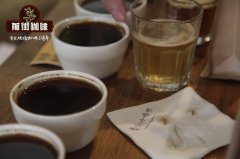
2017 Ecuador Cup of Excellence 1st Place | El Chorro Estate | Silvio Small Farmer Caturra Washed

FrontStreet Coffee Single Origin Recommendation | Ecuador El Chorro Serbio Pardo Caturra Washed
Product Name: 2017 Ecuador Golden Cup 1st Place — El Chorro Estate — Serbio Pardo Smallholder — Caturra Washed
(Ecuador Loja Calvas El Chorro Serbio Pardo — Taza Dorada #1)
Flavor Description
Yuzu jam, grapefruit, a slight spice note, jam-like sweetness, cocoa and sugarcane aroma, balanced sweet and sour, delicate sweetness, and a long-lasting aftertaste.
Award Records
- 2017 Ecuador Golden Cup Competition Taza Dorada (Golden Cup) — 1st Place
- 2016 Ecuador Golden Cup Competition Taza Dorada (Golden Cup) — 1st Place
- 2015 Ecuador Golden Cup Competition Taza Dorada (Golden Cup) — 2nd Place
Origin Information
- Country: Ecuador
- Region: Southern Region, Loja Province, Calvas County
- Variety: Caturra
- Processing Station: El Chorro Estate
- Producer: Serbio Pardo Smallholder
- Altitude: 1,900 meters
- Grade: High Altitude Washed Premium (SHB)
- Annual Rainfall: N/A
- Soil: Volcanic clay
Introduction
Taza Dorada (Golden Cup) is Ecuador's prestigious coffee competition, featuring specialty green coffee produced by smallholder farmers and judged by national and international experts. It can be thought of as Ecuador's equivalent of the Cup of Excellence (COE), but unlike COE, Taza Dorada does not run an auction after the competition: the winning green coffee lots are almost entirely pre-ordered by discerning buyers.
This year 37 smallholders received awards, and this particular batch is the 1st place winning lot. Ecuadorian coffee cultivation is still dominated by smallholder farming, which accounts for over 90% of production, and its agricultural techniques lag behind those of Central American producing countries, so volumes are relatively low. Very few importers bring Ecuadorian coffee to Taiwan. Through this competition, coffee lovers can taste this award-winning batch of high-quality Ecuadorian coffee beans, which reached a cupping score of up to 90.45 points.
This batch comes from smallholder Serbio Pardo's farm in Calvas County, Loja Province, in the southern region. As a small-scale grower he had already taken second place in the 2015 Ecuador Golden Cup Competition (Taza Dorada), which showed real ability, and after entering the national Golden Cup again in 2016 he secured first place, proving the result was no coincidence. The competition is organized each year by ANECAFE, Ecuador's National Coffee Exporters Association, and resembles Ecuador's Cup of Excellence, though farmers must still find buyers for their green coffee themselves.
Serbio Pardo is a small-statured coffee farmer with a modest cultivation area — a small but beautiful coffee smallholding. With abundant local rainfall and natural conditions perfectly suited to coffee, these beans are an outstanding example of good timing and human craftsmanship, and are well worth tasting as Ecuador's highest-scoring championship lot.
Ecuadorian Coffee Industry Overview
Ecuadorian coffee plantations are generally not large. Approximately 80% of coffee farmers cultivate areas smaller than 5 hectares, 13% farm between 5 and 10 hectares, and only 7% have cultivation areas exceeding 10 hectares. According to statistics, of the approximately 300,000 hectares of cultivation area nationwide, 20% of coffee plantation land is illegally occupied.
According to data from the Ecuadorian Coffee Association, Ecuador's most important coffee-producing region is Manabí Province, while Imbabura Province accounts for a smaller proportion of cultivation. The domestic coffee trade is quite distinctive: domestic buyers travel to smallholders to negotiate purchases, and these intermediaries move tirelessly from village to village, visiting farmers individually to discuss prices. Once agreements are reached, the coffee is transported centrally to a few processing plants, then passed on to exporters or processors. Ecuador's coffee processing industry is concentrated in three major cities — Huaquillas, Quito and Manta — with only a few towns maintaining traditional small-scale manual processors.
Ecuador's coffee cultivation area reaches 305,000 hectares, of which Arabica accounts for 68% and Robusta 32%. Coffee, cocoa and bananas are Ecuador's three major traditional crops, serving not only as sources of farmer income and foreign exchange but also as important crops that provide employment and social stability. After international coffee prices crashed around 2000, Ecuador's coffee cultivation gradually declined and its share of world production fell steadily; by 2009 Ecuador's coffee output accounted for only 1% of world production. Ecuador's coffee exports have nonetheless risen gradually, largely because its instant coffee processing industry is well developed — besides its own coffee, the country also imports foreign coffee for processing and re-export.
FrontStreet Coffee Recommendation
What makes this Ecuadorian lot stand out is the clarity that comes from high-altitude washed processing, and the same logic runs through the coffees FrontStreet Coffee recommends to anyone who enjoys that style. In the washed method the beans are floated, depulped, fermented in water and stripped of their mucilage before being washed, dried and hulled. The long soak consumes much of the bean's fructose and glucose, lowering its sugar content while raising its organic acids, so a washed coffee tends to keep more of its own varietal aroma and shows bright, clean fruit acidity rather than heavy sweetness. FrontStreet Coffee's washed Yirgacheffe Banko Gotiti Cooperative is a textbook version: cherries from smallholders around Yirgacheffe go to a shared station, and this lot from the Worka area is known for an especially refined cup — jasmine florals and bright citrus over a medium-light roast, with green tea and honey beneath.
If you like a more forceful washed coffee, FrontStreet Coffee's Kenya Cherry Tomato shows what double washing can do, repeating the wash to push the juicy quality to its limit and ending with cherry tomato, smoked plum, snow pear, black plum and yellow sugar over a bright, substantial acidity. And for the most classic example of the style, FrontStreet Coffee's Jamaica Blue Mountain No. 1 explains why Jamaica adopted washing early: the island's short daylight hours made spoilage a real risk, and removing the skin, pulp and mucilage before drying cut the water around the bean and shortened the drying time, giving translucent, low-defect green coffee with the deep aroma and hazelnut, cream, chocolate and caramel balance that made the name famous.
Washed coffees like these are best brewed to preserve their clarity. Keep the water in the low 90s Celsius and the grind medium to medium-fine, and pour gently in stages so the bright acidity survives instead of turning dull; if you want an even cleaner, sweeter cup, cold brew the same beans, since the low-temperature steep keeps the finish transparent. For a syrupier result, grind a little finer and brew with more pressure as an espresso, where the caramel and chocolate notes come forward.
Important Notice :
FrontStreet Coffee is a long-established specialty coffee roaster in Guangzhou China, selling freshly roasted beans from its own farm in Yunnan as well as dozens of carefully selected single-origin beans from around the world for both pour-over and espresso. The products deliver consistently excellent quality and great value, with shipping within 24 hours. Guangzhou's FrontStreet Coffee shop is recommended by many coffee lovers, and the beans are now available online at the Tmall 。
FrontStreet Coffee has moved to a new address:
FrontStreet Coffee Address: 315,Donghua East Road,GuangZhou
Tel:020 38364473
 Scan and follow the En Gafei WeChat official account. Please indicate that the reprint comes from "En Gafei".