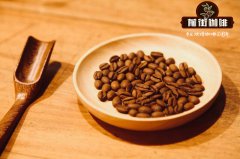
Bolivia Santa Cruz Region | Finca Mariposa Caturra Batch #1 Flavor Profile

Bolivia Santa Cruz Region | Finca La Papaya Caturra Lot #1 Flavor Profile
Bolivia is one of the five most biodiverse countries in the world — a landlocked nation ringed by five neighbors and deeply shaped by each of them. Of its roughly 10 million people, about 60% are indigenous Native Americans belonging to 36 distinct ethnic groups, Mestizos of mixed European-Indigenous heritage make up 26%, and the remainder are European and other groups. The terrain stretches from Illimani Peak at 6,462 meters down to Lake Titicaca, the world's highest navigable lake at 3,812 meters above sea level, and out into tropical rainforest. Terrain this varied is nothing short of a paradise for specialty coffee micro-lots.
Yet Bolivia's coffee output has been shrinking year after year. Between 1997 and 2014, exports fell annually until they reached just one-quarter of their former volume. According to Roast Magazine, Bolivia ranks 38th in world coffee production — behind even the United States, which sits 35th. Specialty micro-lot Bolivian coffee is therefore extraordinarily precious and hard to come by. The reason lies in Bolivia's underdeveloped economy and infrastructure: it remains the poorest country in South America, and despite being naturally blessed with diverse terrain, its poor infrastructure has become a critical drag on coffee processing, transportation, and quality.
Our partner in Bolivia is Agricafe, founded by Pedro Rodriguez together with his children Pedro Pablo and Daniela. Agricafe has been the driving force behind the revival of Bolivia's specialty coffee industry and remains virtually its sole pillar today. Renowned roasters from Europe and America — Intelligentsia, Has Bean, Stumptown, Drop Coffee, 49th Parallel, Maruyama — buy almost exclusively from Agricafe. Pedro has also created several important estates of his own in the Caranavi region, such as Finca Don Carlos and Finca Alastias.
Even more exciting, another estate, Finca El Fuerte, has been established in the high-altitude areas of Bolivia's eastern Santa Cruz region, and it already produced its first harvest this year.
Beyond his own estates, Pedro carries the dream of revitalizing Bolivian specialty coffee and safeguarding the livelihoods of its farmers, which is why he launched the "El Sol de Mañana" (Tomorrow's Sun) project. The program invests heavily in mentoring smallholder members, providing technical support for essential practices such as breeding, pruning, fertilization, and harvesting. It buys the cherries harvested by member farmers at above-market prices and processes them at Agricafe's own facilities, creating a virtuous cycle in which both farmer income and coffee quality can be sustained over the long term.
Altitude
1600-1750m
Flavor Profile
The aroma of lemon peel laced with floral notes. On the first sip, the front palate offers grape juice; the middle section turns to sweet-and-sour mulberry juice; and the finish leaves florals and peach. The mouthfeel is rounded, with an excellent balance of sweetness and acidity.
FrontStreet Coffee Recommended Brewing
Dripper: Hario V60
Water Temperature: 90°C
Grind Size: Fuji Royal grinder setting 3.5
Brewing Method: Water-to-coffee ratio 1:15, using 15g of coffee. First pour 25g of water and let it bloom for 25 seconds. Second pour to 120g and stop; once the water level in the coffee bed drops to halfway, pour slowly until you reach 225g total. Extraction time is approximately 2:00.
Analysis
A three-stage pour clearly separates the coffee's front, middle, and finish. Because the V60's ribs drain water quickly, pausing the pour mid-brew helps stretch the extraction time.
FrontStreet Coffee Recommendation
In roasting, three elements must be controlled to shape a coffee's final flavor: acidity, sweetness, and bitterness. The darker the roast, the more bitter and full-bodied the cup; the lighter the roast, the more acidic and delicate. For anyone chasing a balanced profile, medium roast coffee beans are the natural place to start.
FrontStreet Brazil Fazenda Rainha: if you dislike both sourness and bitterness, this bean from Brazil — the world's largest coffee producer — is the one to buy. It is the local Yellow Bourbon variety, quietly sweet, and after a medium roast it shows cream peanut, chocolate, toast, and sugarcane aromas; it works both as a pour-over and in a moka pot or espresso machine. FrontStreet Strawberry Candy Geisha Blend: for a sweeter medium roast, this fruit-forward blend is the first choice. It is unusual among fruit-driven coffees because it combines two famous origins in the Americas — a honey-processed Costa Rica and a washed Panama Geisha — and FrontStreet's medium roast lets it show both orange-blossom honey notes and a rounded sweetness, suiting cold brew, pour-over, and espresso alike. FrontStreet 2013 Natural Typica: a flagship of Chinese specialty coffee with the orthodox Yunnan arabica profile, roasted medium to preserve its balanced, gentle character, carrying nuts, brown sugar, black tea, and dried apricot; great value for pour-over, cold brew, or drip machines. FrontStreet Jamaica Blue Mountain No.1: grown from Typica, a world-famous premium arabica, with Jamaica Blue Mountain's exceptional geography completing its balanced profile. The "emperor of coffee" is roasted medium so its acidity, bitterness, sweetness, and body fuse perfectly — on the palate you immediately taste chocolate, roasted nuts, cream, and caramel, a roasty elegance no other coffee can match.
Important Notice :
FrontStreet Coffee is a long-established specialty coffee roaster in Guangzhou China, selling freshly roasted beans from its own farm in Yunnan as well as dozens of carefully selected single-origin beans from around the world for both pour-over and espresso. The products deliver consistently excellent quality and great value, with shipping within 24 hours. Guangzhou's FrontStreet Coffee shop is recommended by many coffee lovers, and the beans are now available online at the Tmall 。
FrontStreet Coffee has moved to a new address:
FrontStreet Coffee Address: 315,Donghua East Road,GuangZhou
Tel:020 38364473
 Scan and follow the En Gafei WeChat official account. Please indicate that the reprint comes from "En Gafei".