How to Reduce Bitterness in Yirgacheffe? The Correct Method for Adjusting Iced Pour-Over Coffee Strength

What is Yirgacheffe?
Yirgacheffe was originally just a small town in the Sidamo province of Ethiopia, and it has become beloved by many coffee enthusiasts for the beans grown here, which offer fresh flavors and bright acidity. It is also one of the most closely watched coffee-producing regions in the industry.
Where traditional coffee offered mainly rich, mellow flavors, the arrival of Yirgacheffe beans overturned many people's understanding of how coffee could taste. Bright citrus acidity, fresh floral aromas, honey-like sweetness in the aftertaste, and a tea-like lingering sweetness after swallowing have captivated countless drinkers raised in tea culture.

Why Yirgacheffe Coffee is So Exceptional
FrontStreet Coffee believes Yirgacheffe beans taste so good for three reasons: high-altitude cultivation, naturally mixed coffee varieties, and pure, traditional processing methods.
Yirgacheffe originally belonged to the Sidamo province of Ethiopia, but in 1995, when Ethiopia's administrative regions were reorganized, Sidamo ceased to be an administrative region and Yirgacheffe was classified under the Gedeo Zone.
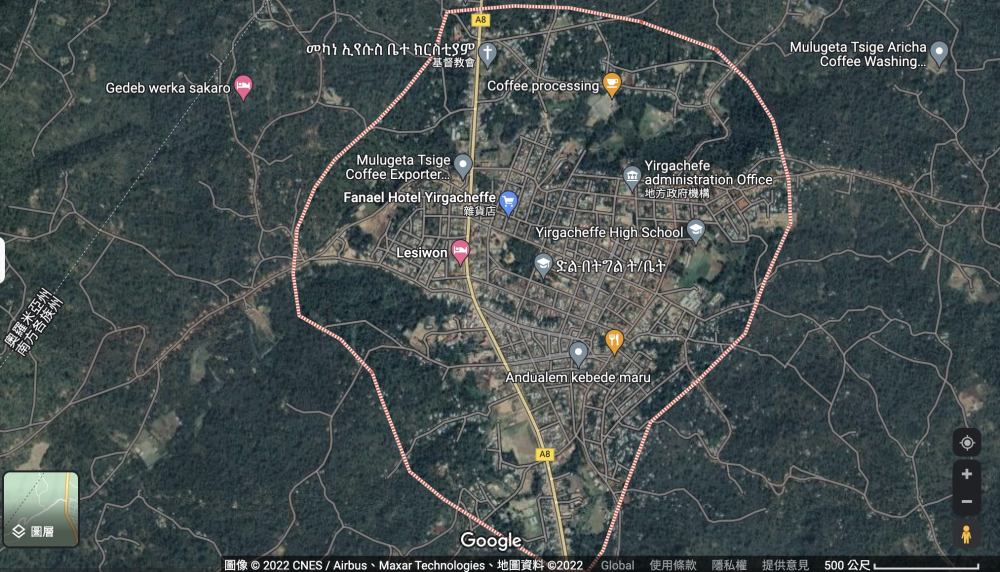
Later, coffee traders discovered that beans from the Yirgacheffe area had a very special white floral aroma along with lemon and citrus scents, which consumers loved. As a result, many traders would specially select beans from the Yirgacheffe region before export, hoping to sell them at better prices.
It was not until 2009 that the Ethiopia Commodity Exchange introduced a certification across several specific regions (Wenago, Yigacheffe, Kochere, Gelena~Abaya), dividing them into those with the classic Yirgacheffe flavor (Yigacheffe A) and those without (Yigacheffe B). This means the Yirgacheffe you drink in coffee shops today may not actually come from the "Yirgacheffe" area, yet it still carries the name.
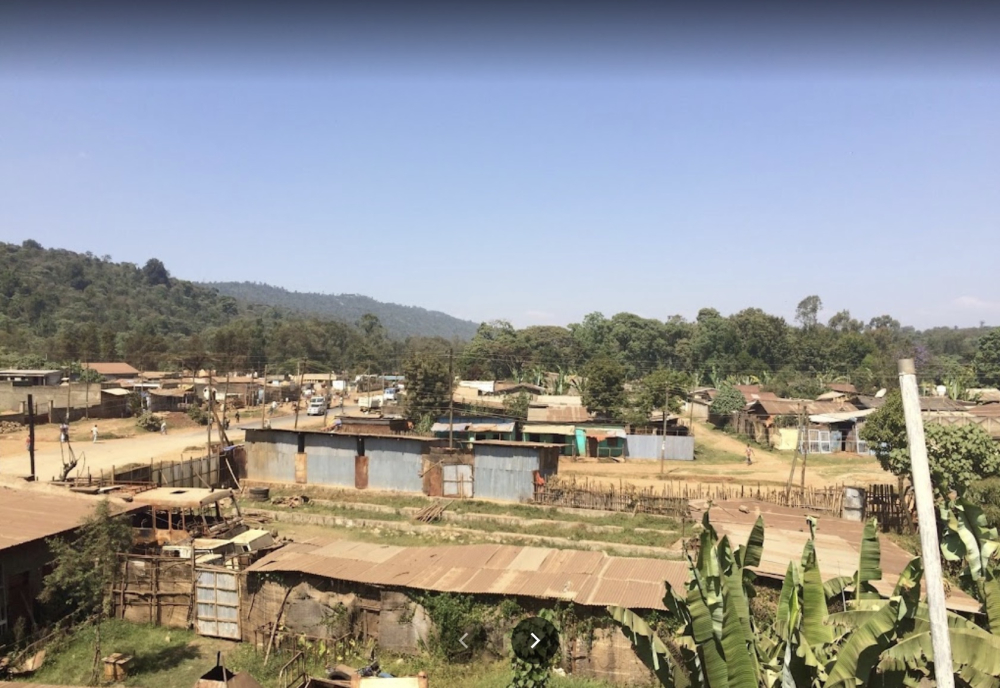
Yirgacheffe Subregions
Today, most of the Yirgacheffe we drink refers to the producing region or area. The Yirgacheffe area also has many centralized coffee processing cooperatives, such as Kochere, Worka, Gotiti, Chelelektu, Misty Valley, and Konga, which are the better known and more commonly heard of.
When trading these beans, green bean merchants usually label them as Yirgacheffe plus the cooperative name to indicate that the beans come from that village and cooperative in Yirgacheffe. Most Ethiopian coffee is tied to place names, but not all varieties are classified that way. The Sidamo Flower Queen 8.0 on FrontStreet Coffee's bean list, for example, is a nice name given by green bean traders to highlight its selling points.

Unique Characteristics of Ethiopian Coffee
Since Ethiopia is the origin of all coffee varieties, many wild and native varieties in the region remain undiscovered or uncertified to this day. Because the number of varieties is large and complex, most trees planted by Ethiopian farmers are not subdivided by variety: they are mixed cultivation and mixed harvesting. These varieties are named Heirloom.

As a result, coffee cherries of different varieties vary in size. FrontStreet Coffee has observed that beans from the Ethiopian region show varying sizes, which is normal and is itself a characteristic of Ethiopian coffee.
In the Ethiopian region, climate and conditions mean people often use the most traditional processing methods when preparing coffee: washed and natural.

Processing Methods
The reason Yirgacheffe can have such a distinctive style, beyond its innate terroir, is largely the washed processing technology the Ethiopian government introduced from Central and South America in 1972. Farms using the washed method must build washing pools and supply continuous fresh water, which raises production costs. During processing, the fermented beans are placed in the pool and moved back and forth, using the friction of the beans and the power of flowing water to wash them until they are smooth and clean. Each step removes impurities and defective beans, so the green beans are more uniform and the final trading price is higher than for naturally dried coffee.
Washed coffee involves picking out bad fruits after harvest, then removing the pulp and placing the beans in clean water pools to ferment and decompose the mucilage, followed by washing with clean water and sun-drying. Through cupping, FrontStreet Coffee has found that washed beans have very clean, bright acidity and flavors, and clearly reveal the quality of the beans.

Natural processed coffee involves picking out bad fruits after harvest, then taking the cherries directly for sun-drying until they reach the appropriate moisture content before bagging. Through cupping, FrontStreet Coffee has found that natural beans have a very full sweet-and-sour sensation along with soft fermentation aromas.
In the Yirgacheffe region, abundant water resources mean beans from the Yirgacheffe producing area are mainly washed. The most representative is the light-medium roasted Yirgacheffe Gotiti Cooperative Coffee Beans sold by FrontStreet Coffee.

FrontStreet Coffee - Yirgacheffe Gotiti Cooperative Coffee Beans
Region: Yirgacheffe Gedeo Zone
Producer: Gotiti Cooperative
Altitude: 1900-2300m
Variety: Local Heirloom
Processing: Washed Process
Since Yirgacheffe beans are grown at high altitude and have a relatively hard texture, light-medium roasting does not bring too much change to their structure. For high-altitude, floral, fruity beans like these, FrontStreet Coffee uses a water temperature of 90-91°C and a fine-sugar grind (80% pass-through on a China #20 standard sieve).

Brewing Method
Three-Stage Extraction: The first stage uses 30g of water for a 30-second bloom. The second stage injects 95g of hot water. When the coffee bed drops to halfway, begin the third stage of 100g until all the coffee has finished dripping. Start pouring from the center point and use a small stream with gentle circular motion throughout to avoid uneven extraction.
Gotiti Pour-Over Coffee Flavor Profile: After grinding, it has an elegant jasmine and citrus-like acidity. The extracted coffee enters the mouth with a clear lemon brightness and prominent cane sugar sweetness, and as the temperature drops it presents a green-tea mouthfeel with a persistent aftertaste.

Iced Pour-Over Coffee Parameters
On what parameters to use for iced pour-over, FrontStreet Coffee once mentioned a formula in an article: Iced Pour-Over = Coffee Powder (fine grind) + 10x Hot Water + 5x Ice Cubes. Here, combined with fruit-acid, light-medium roast beans, we also use a water temperature of 91-93°C, a small circular pour, and a three-stage technique to keep extraction time between 1 minute 50 seconds and 2 minutes, making it easy to brew a flavorful pot of iced coffee.

The juice-like sensation in coffee usually comes from the rich fruit aroma you smell combined with the sweet, sour, and juicy sensations in the mouth when drinking, reminiscent of eating certain fruits. Applied to today's iced pour-over theme, it means needing to extract both the acidic aromatic compounds from the front stage and pursue the sweetness of the middle and later stages to achieve that sweet-and-sour juice mouthfeel. Such requirements cannot be met by water flow and stirring alone, so FrontStreet Coffee adds one more action: stirring.
Iced Gotiti Recipe
Coffee Beans: Ethiopia Washed Gotiti Cooperative
Dose: 15 grams
Ratio: 1:11 (160g hot water)
Ice: 75 grams
Grind: EK43s setting 9.5 (C40 approximately 22)
Dripper: Hario V60
Three-Stage: 30g, 90g (+ stir), 45g

Before pouring, put the ice cubes in the serving pot and add all the coffee powder. The first bloom stage stays the same, keeping a small stream and pouring 30g in a circular motion from the center outward.
After 30 seconds, begin pouring 90g of hot water with a large stream in a circular motion while raising the water level. When the scale reads 120g, stop pouring and use a small spoon to draw five circles along the filter cup wall in one direction, then wait for the coffee liquid to flow down slowly.

When the water in the filter cup is about to run out, use a small stream and small circular motion, as in the first stage, to pour the remaining 45g of hot water until all the coffee liquid has dripped through. You can then remove the filter cup to end extraction. The time will typically fall between 1 minute 55 seconds and 2 minutes 5 seconds.
Coffee brewed this way: the washed Gotiti first presents a mouth-watering sweet-and-sour sensation like yellow peach, sweet orange, and grapefruit, with an overall tendency toward yellow stone fruit. Thanks to the added stirring, the coffee has not only rich fruit acidity but also a refreshing sweetness, and under the cooling of the ice it is like drinking a cup of refreshing fruit tea.
FrontStreet Coffee Recommendation
If Yirgacheffe's bright citrus and floral character is what draws you in, FrontStreet Coffee's Washed Yirgacheffe is the classic way to begin. Known for white jasmine, bright citrus and lemon acidity, and a tea-like body, it is an affordable and welcoming introduction to Ethiopian coffee. For the exact profile brewed above, choose the Yirgacheffe Gotiti Cooperative beans, washed and roasted light-medium, with jasmine aromas, lemon brightness, cane sugar sweetness, and a green-tea finish. And if you want the fruitier, naturally processed side of the region, the Sun-Dried Red Cherry is made from fully ripe all-red cherries, adding tropical fruit, berry juice, honeyed sweetness, and a creamy texture to the classic Yirgacheffe character. All three shine in the iced pour-over recipe above.
Important Notice :
FrontStreet Coffee is a long-established specialty coffee roaster in Guangzhou China, selling freshly roasted beans from its own farm in Yunnan as well as dozens of carefully selected single-origin beans from around the world for both pour-over and espresso. The products deliver consistently excellent quality and great value, with shipping within 24 hours. Guangzhou's FrontStreet Coffee shop is recommended by many coffee lovers, and the beans are now available online at the Tmall 。
FrontStreet Coffee has moved to a new address:
FrontStreet Coffee Address: 315,Donghua East Road,GuangZhou
Tel:020 38364473
 Scan and follow the En Gafei WeChat official account. Please indicate that the reprint comes from "En Gafei".