Differences Between Starbucks Flat White and Australian Latte Coffee - Italian Espresso Milk Coffee Taste and Flavor Characteristics Introduction
On first hearing the name "Flat White," you might naturally connect it to white coffee, or to a drink with less coffee and a paler color. These days, plenty of people walk into a café and order one without a second thought: "Hi, I'd like a Flat White." But what exactly is a Flat White, and where did it come from?
Starbucks and the Flat White
The milk coffee everyone knows best is the latte — the very drink on which Starbucks built its global empire. Until around 2015, Starbucks had been pushing the Flat White hard in the Chinese market with little success. Only when its arch-rival, the Australian chain Gloria Jean's Coffee, threatened to enter the Chinese market did Starbucks redouble its Flat White promotion.
Starbucks had, after all, tried to conquer Australia before. Around 2000, after investing heavily in the Australian market, it was ultimately beaten by Gloria Jean's Coffee, which then operated more than 500 stores across the country, and had to withdraw from Australia in defeat.
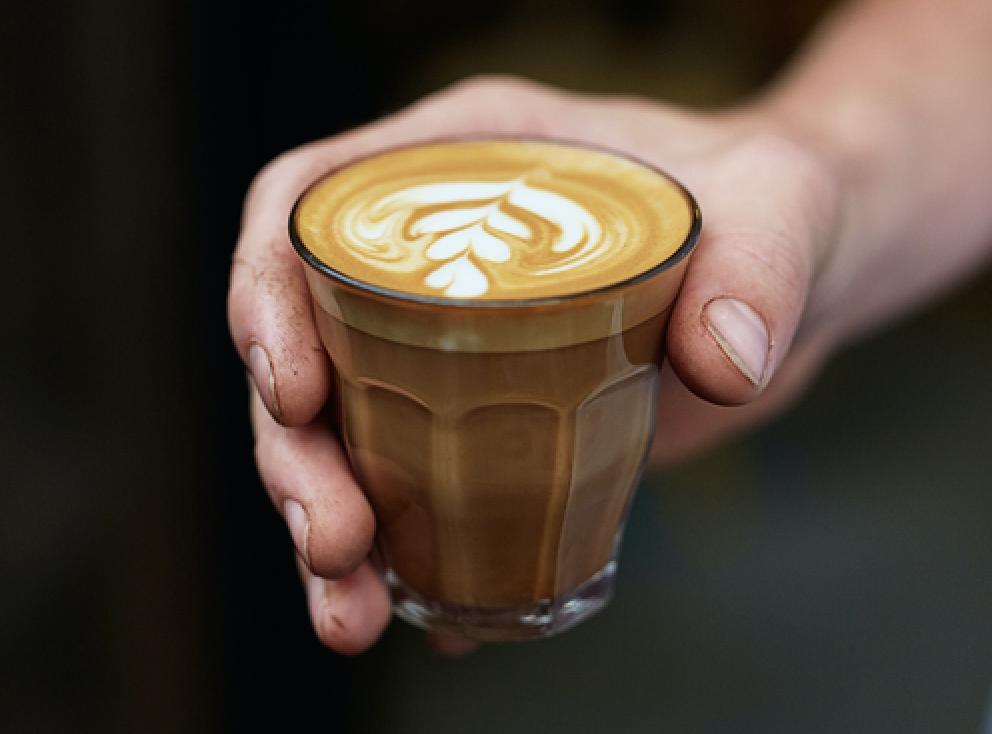
Starbucks' enthusiasm for the Flat White is not hard to explain: the drink originated in Australia, which is why it is commonly rendered in Chinese as "Australian White Coffee," or "Aussie White" for short.
The Origin and Controversy of Flat White
The name "Flat White" only surfaced in the 1960s. It appears in the 1962 British film Danger by My Side, but there it was not a coffee name at all — it described coffee of mediocre quality, thin and unpleasant.
Not until the 1980s did "Flat White" come to mean an actual drink. And the origin story is genuinely contested: one camp claims Australia, the other New Zealand.
New Zealand's claim: One version holds that the Flat White appeared on a 1985 menu at the Canberra Parliament House, where seasonal conditions made proper milk frothing impossible. Another version credits a New Zealand barista named Frank Mlnnes who, in 1989, made a cappuccino with skim milk. Since skim milk lacks the fat to build a proper foam, the result was a milk coffee with a paper-thin layer of foam — hence "flat."
Australia's claim: In the mid-1980s, "Flat White" appeared on the menu of an Australian café, and a coffee-shop magazine mentioned the drink as well. An Australian newspaper, meanwhile, once used "Flat White" as a tongue-in-cheek translation of latte — a jab at the latte craze of the day.
Understanding Ristretto
To many people, Starbucks' Flat White and the latte taste quite similar, except the Flat White is more coffee-forward, with a deeper bitterness and a longer coffee finish. In truth, the two share the same roots but evolved into different schools. North Queensland, Melbourne, and Sydney all have long-standing Italian communities, making Australia the second home of espresso culture after Italy itself.
Whether it was born in Australia or New Zealand, the Flat White is ultimately a drink from Oceania. And even its recipe is disputed: New Zealanders favor a double-shot ristretto, while Australians prefer a single-shot espresso.
So what exactly is a ristretto? The word comes from "restrict" and "narrow" — literally a restricted-extraction espresso, built on the espresso base but with less liquid yield. From the same dose of grounds, a ristretto runs a shorter extraction and produces less coffee.
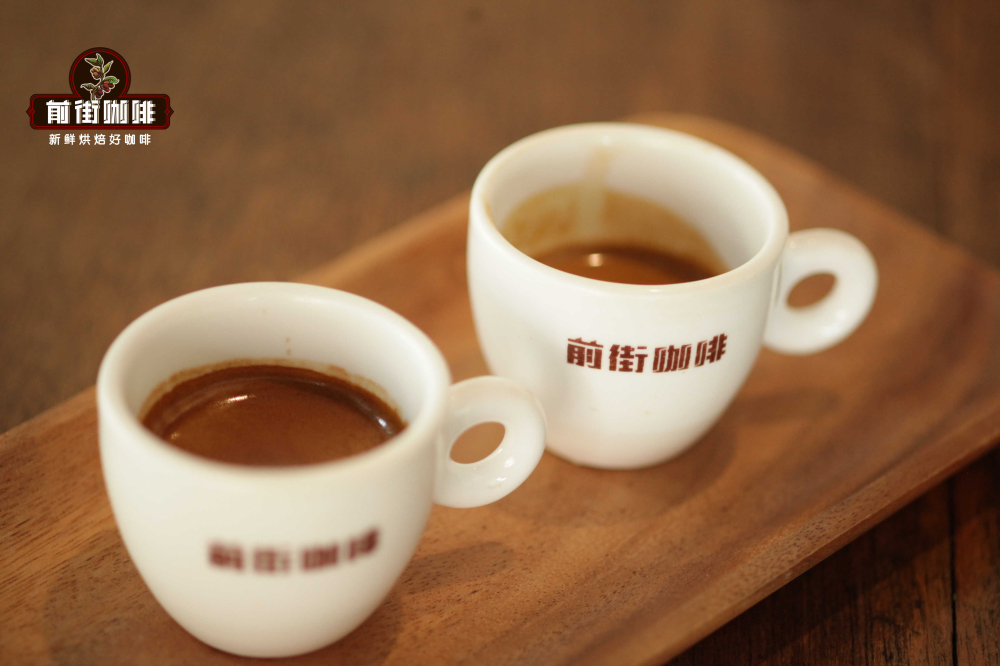
Put simply, a ristretto is a high-concentration, low-extraction espresso. Because it captures only the front, "essential" portion of the shot, its flavor is more concentrated, with less bitterness and a richer, fuller mouthfeel.
Flat White Preparation and Characteristics
A Flat White blends fine, silky microfoam with a shot of espresso or a double ristretto. To some extent it resembles a traditional 5-ounce (150mL) cappuccino or latte, but with a higher proportion of coffee and thinner, finer foam — bold espresso flavor that still leaves room for the aroma of milk.
Since all three drinks are built on frothed milk, people often ask what separates cappuccino, latte, and Flat White. A quick search turns up the classic comparison chart: the three are distinguished by the coffee-to-milk ratio and the thickness of the foam.

When FrontStreet Coffee makes the three, different cup sizes help tell them apart: the latte goes into a 300ml wide-mouth ceramic cup, the cappuccino into a 180ml narrow-mouth ceramic cup, and the Flat White into a 210ml glass.
Of the three, the latte carries the highest proportion of milk and the Flat White the least. That means the latte tastes milkier while the Flat White tastes more intensely of coffee. Foam thickness is an even easier discriminator: cappuccino has the thickest foam, latte comes next, and the Flat White has the thinnest of all.
FrontStreet Coffee's Flat White Recipe
FrontStreet Coffee prepares its Flat White as follows:
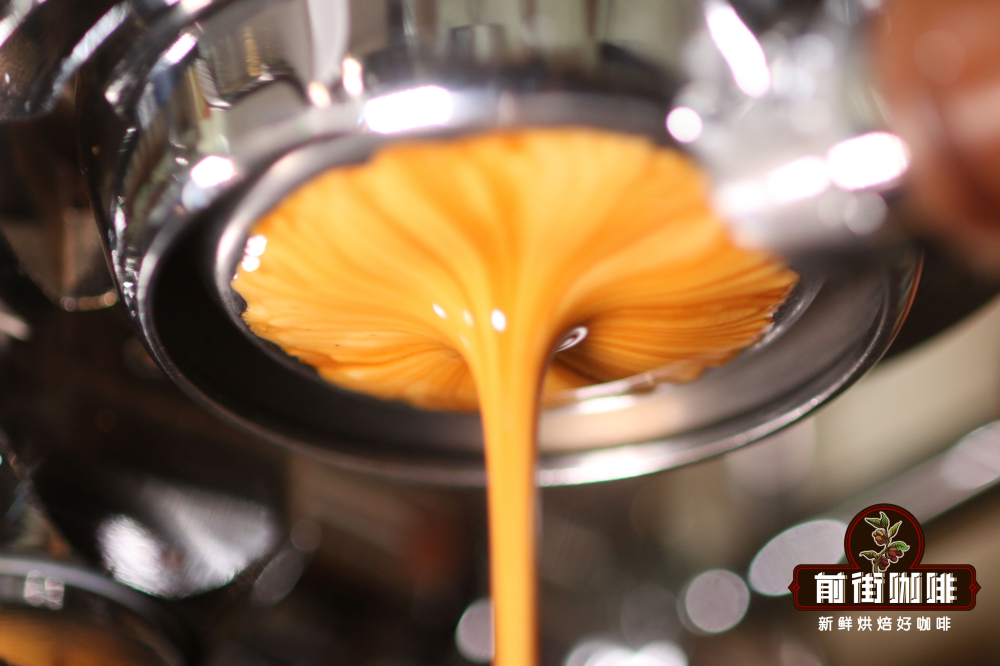
The base is a double-shot ristretto. With the parameters tuned, FrontStreet Coffee extracts 40 grams of ristretto from 20 grams of grounds in roughly 28 seconds.
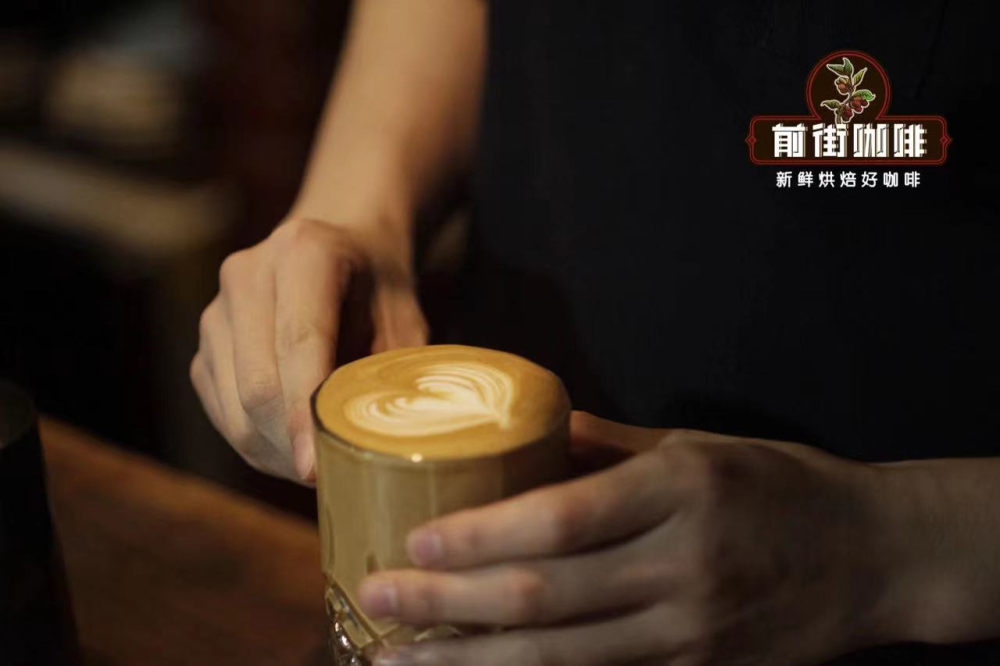
Because the Flat White's signature is its rich coffee flavor, less milk is used, and when steaming, the amount of air injected matters. FrontStreet Coffee suggests letting the milk spin first, injecting only a little air, then moving into the texturing phase. And since the foam on a Flat White is very thin, it is difficult to pour elaborate latte art — after fusing, you can inject at the center point to form a small dot, or draw a simple heart.
FrontStreet Coffee's stores pull the Flat White from the Sunflower Warm Sun Blend, an espresso blend of 70% Honduras Sherry beans and 30% natural Yirgacheffe beans. The Honduran component is Caturra, Catuai, and Pacas, and thanks to 30-40 days of low-temperature fermentation in sherry whiskey barrels, those beans have taken on rich wine-like aromatics — the vanilla depth of the sherry casks flows straight into the blend's flavor.
Beans this distinctive naturally get more than one treatment behind the bar. The Sherry beans also appear on FrontStreet Coffee's pour-over menu, where the same whiskey, vanilla, and cream notes come through — equally worth tasting.
The Flat White served at FrontStreet Coffee carries a rich whiskey aroma with vanilla and cream, finishing like a bite of dark chocolate.
For more coffee bean information, please follow Coffee Workshop (WeChat official account: cafe_style)
For professional coffee knowledge exchange, please add WeChat ID: kaixinguoguo0925
FrontStreet Coffee Recommendation: Beans for Your Home Flat White
Making a Flat White at home? The formula never changes: less milk, thinner foam, bolder coffee. FrontStreet Coffee recommends matching the milk with a bean that has a strong flavor signature. The butter-and-cheese flavored FrontStreet Classic Blend is thick-bodied and low in acidity, with lush, fine crema and excellent richness against milk. If you prefer florals and fruit, pick the low-bitterness FrontStreet Strawberry Candy espresso blend — pulled as a ristretto it bursts with grape and blueberry notes, and with fresh milk it drinks like a strawberry milkshake. Steam cold fresh milk with just 1-2 seconds of air, texturing to a foam about 0.3cm thick at 50-55°C, and pair it with a 20g-to-32g ristretto base for a silky, coffee-forward cup.
Important Notice :
FrontStreet Coffee is a long-established specialty coffee roaster in Guangzhou China, selling freshly roasted beans from its own farm in Yunnan as well as dozens of carefully selected single-origin beans from around the world for both pour-over and espresso. The products deliver consistently excellent quality and great value, with shipping within 24 hours. Guangzhou's FrontStreet Coffee shop is recommended by many coffee lovers, and the beans are now available online at the Tmall 。
FrontStreet Coffee has moved to a new address:
FrontStreet Coffee Address: 315,Donghua East Road,GuangZhou
Tel:020 38364473
 Scan and follow the En Gafei WeChat official account. Please indicate that the reprint comes from "En Gafei".