What is Indian Malabar Coffee? What are the Processing Methods for Indian Coffee? Malabar Coffee
Professional coffee knowledge and more bean information - follow us for regular brewing guides and origin stories.
Introduction to Indian Monsooned Malabar Coffee
India's Monsooned Malabar is one of the world's most distinctive specialty coffees. In Taiwan, monsooned beans are also known as "monsoon coffee beans," a direct translation of their English name.
The processing is remarkably complex and unique, building its layered, one-of-a-kind flavor through the interplay of land and sea winds. "Monsooned Malabar" refers to the coffee made from monsooned beans in the Malabar region on India's western coast. After undergoing the region's meticulous and rigorous monsooning treatment, the coffee is shipped to markets around the world.
Processing Method
Monsooned coffee must be made from sun-dried beans. Every processing facility for monsooned coffee faces west, to catch the salty, humid monsoon winds blowing in from the southwest sea. The process is time-consuming and labor-intensive, with a monsooning period of roughly twelve to sixteen weeks.
After maturation, the beans are smoked to drive away weevils, then hand-sorted to remove any beans that failed to turn the characteristic golden yellow.
Flavor Characteristics
When Malabar beans emerge from first crack, they give off special aromas of sesame, walnut, and peanut. On sipping, you can pick up subtle sea-breeze notes and a corn-like sweetness. The aroma climbs from the tongue to the nose, and even your exhaled breath is perfumed with coffee fragrance, while waves of sweet aftertaste surge up from the throat.
Roasting Recommendations
How should Indian Malabar be roasted? Because the beans have average density, FrontStreet Coffee recommends steady roasting over medium heat. Aim for the yellowing point around 4 minutes 50 seconds, then reduce heat and open the air valve to enter the Maillard phase. At first crack, open the air valve wide while holding the heat at approximately 184.4°C, and drop the beans 2 minutes 30 seconds after first crack.
Coffee Bean Information
Indian Monsooned Malabar AA
■ Country: India
■ Region: Malabar
■ Altitude: 1000-1500 meters
■ Processing Method: Monsooned
■ Grade: AA
■ Variety: Arabica
■ Flavor Notes: Cream, wheat, drupes, brown sugar, with rich body
Brewing Recommendations
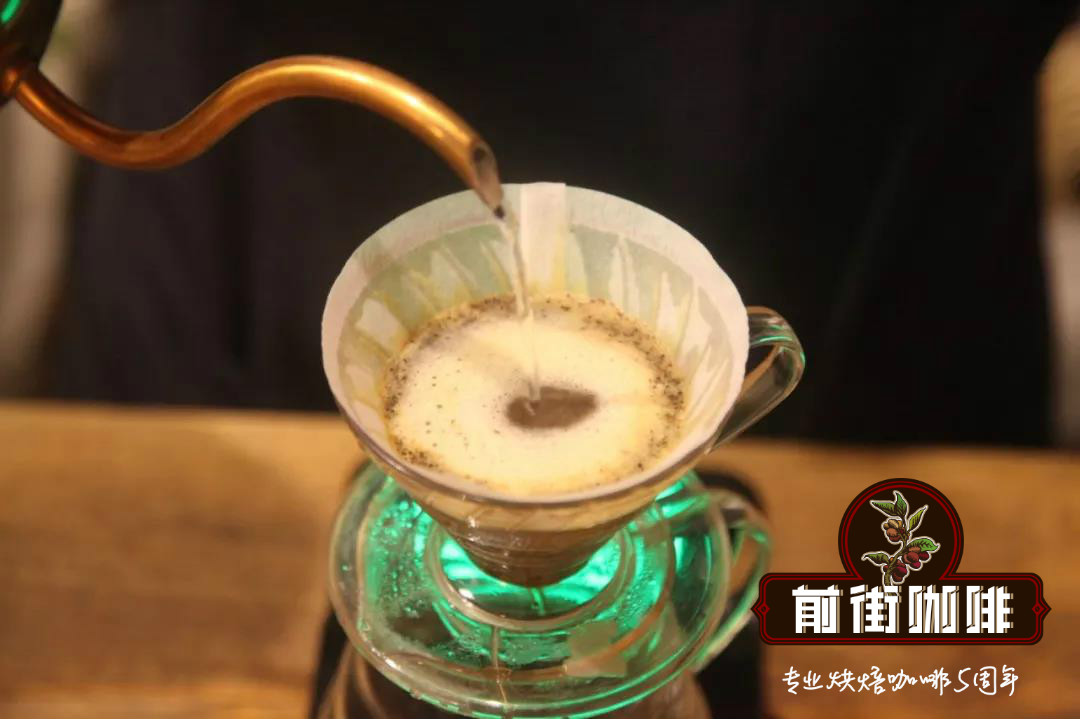
FrontStreet Coffee recommends brewing Indian Monsooned Malabar as a pour-over.
Grind Size: 4 (Japan Fuji R440)
Water Temperature: 83°C
Use a Kono dripper with 17g of coffee, water at 83°C, grind size 4, and a water-to-coffee ratio close to 1:13.
Technique: Bloom with 30g of water for 30 seconds.
Stages: Pour to 120g, pause, then pour with a slightly larger flow up to 221g.
In short: 30-120-221, with a total extraction time of 1:50 to 2 minutes.
FrontStreet Coffee is a roastery with a small shop but a diverse selection of beans, where you can find both famous and lesser-known varieties. Online ordering is also available.
FrontStreet Coffee Recommendation
Monsooned Malabar is one of coffee's most unusual processing stories, but if its low-acid, richly sweet profile is what you enjoy, FrontStreet Coffee's Brazil Queen Estate (Fazenda Rainha) beans are another excellent choice. Brazil favors the pulped natural (semi-dried) method, and Queen Estate dries its cherries on raised drying racks, turned constantly so every cherry meets the sun, before finishing with mechanical drying to the target moisture. The stable, low-moisture beans yield a cup of fresh sugarcane sweetness, black tea, smooth fruit sweetness, and prominent nutty notes, with balanced, gentle acidity, faint clean bitterness, and rich chocolate aroma - bright yet silky, and wonderful through a pour-over, French press, or drip bag.
For a naturally processed option with more fruit, FrontStreet Coffee's Natural Red Cherry Yirgacheffe delivers elegant florals, bright acidity, and pronounced tropical fruit with full fermentation sweetness after a medium-light roast.
Important Notice :
FrontStreet Coffee is a long-established specialty coffee roaster in Guangzhou China, selling freshly roasted beans from its own farm in Yunnan as well as dozens of carefully selected single-origin beans from around the world for both pour-over and espresso. The products deliver consistently excellent quality and great value, with shipping within 24 hours. Guangzhou's FrontStreet Coffee shop is recommended by many coffee lovers, and the beans are now available online at the Tmall 。
FrontStreet Coffee has moved to a new address:
FrontStreet Coffee Address: 315,Donghua East Road,GuangZhou
Tel:020 38364473
 Scan and follow the En Gafei WeChat official account. Please indicate that the reprint comes from "En Gafei".