Introduction to Famous Panamanian Geisha Estates: Flavor Characteristics of Elida Estate Geisha Coffee

Whenever guests come into FrontStreet Coffee and ask specifically for "Geisha," FrontStreet Coffee lines up several Geisha coffees from different origins to choose from. That is because the bean menu includes Geisha from three countries: Panama, Ethiopia, and Guatemala. Among them, Panama's Geisha carries the highest recognition and is the most popular Geisha origin at FrontStreet Coffee. In this article, FrontStreet Coffee takes a close look at one famous Geisha estate in Panama.
Panama's Coffee Growing Regions
Panama's coffee cultivation is concentrated in the western highlands: Boquete, Volcan, and Renacimiento. The Boquete valley and the Volcan area around the Baru volcano are the most celebrated of the three. Both sit in Chiriqui Province, almost perfectly centered in the coffee belt, blessed with fertile volcanic soil and old-growth forest. The Boquete region is a town in Chiriqui Province on a plateau at roughly 1,000-2,000 meters on the eastern flank of Baru Volcano. It catches the warm, humid monsoon off the Caribbean Sea, with cold Atlantic currents behind it. The mountains are high and steep, and Baru Volcano National Park serves as an ecological conservation area. The region's rich biodiversity spans seven microclimates, and near-perpetual mist with abundant rainfall creates superb growing conditions.
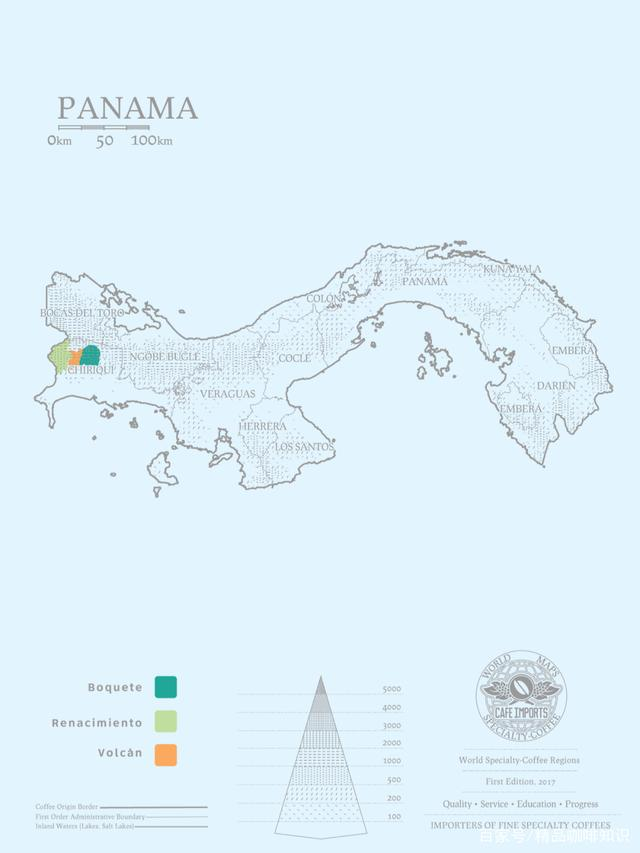
The Boquete Region
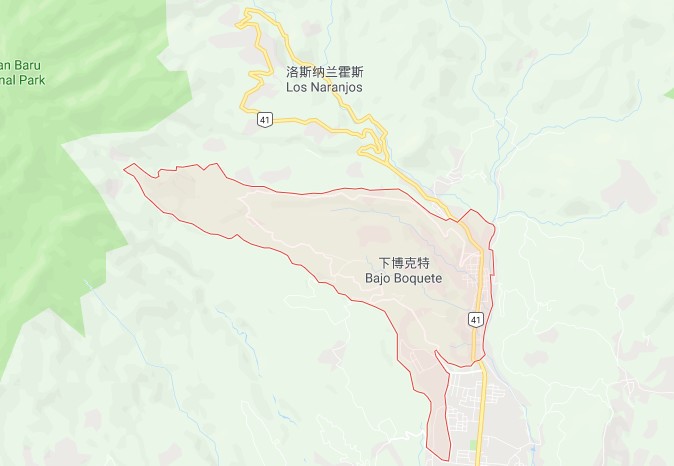
Boquete is a town in Chiriqui Province near the Panama-Costa Rica border, in the shadow of the famous Baru Volcano. With its beautiful scenery and rich, fertile soil, the climate and land are close to ideal for producing high-quality coffee. The highland microclimate of Boquete is the region's unique specialty-coffee resource. The east-to-west layout of the terrain forces cold air currents to converge above 6,500 feet in the central mountains, generating multiple microclimates across the area. Temperature and rainfall suit plant growth perfectly, so coffee trees here - Panama Boquete Geisha above all - thrive exceptionally well.
Plantations in Boquete use three main cultivation systems: sun-grown, fully shade-grown, and semi-shade-grown. Farms with more than 50 shade trees per hectare count as fully shade-grown; 25-50 trees make a semi-shade farm; fewer than 25 is sun-grown. What does shade actually do for coffee on two neighboring farms with otherwise identical conditions? Shade slows the maturation of the coffee fruit, allowing more flavor compounds to develop inside the cherries. Shade cultivation raises costs and lowers yield, but under the same conditions the cup quality beats that of sun-grown farms. Many Colombian farms, meanwhile, keep coffee trees in symbiosis with banana trees: as Arabica varieties have become increasingly dwarfed, the taller bananas supply the shade.
Most Panama estate Geisha beans are hand-selected specialty Arabica, and every batch is traceable - back to a specific plot of a specific estate, or to a particular cooperative or farmer - in pursuit of the flavor of origin. Only by visiting coffee country and walking into the estates themselves can you grasp what makes a coffee what it is: how its charming flavors and shifting aromas arise from microclimate, variety, processing, or the farmer's own secret techniques.

The Geisha Variety
Geisha is a coffee variety whose name happens to echo the Japanese word "Geisha," which is why some people use the term loosely. The variety was discovered in 1931 in the Geisha forest of Ethiopia. It later traveled to Kenya's Coffee Research Institute, reached Uganda and Tanzania in 1936, Costa Rica in 1953, and Panama in 1970.
For decades hardly anyone paid Geisha any attention - until Panama's Hacienda La Esmeralda separated it from its other varieties in 2003 and won the Best of Panama competition in 2004. Only then did Panama Geisha step into the spotlight. The variety's flavor is exquisite, but such elegance demands a specific growing environment: Geisha is particular, needing high altitude, cloud or heavy shade-tree cover, and fertile soil. Panama's Boquete region is the most representative home it has found, and the Geisha grown there is adored by coffee lovers worldwide. The famous Hacienda La Esmeralda sits in this very region.

Elida Estate
The farm's history reaches back to 1918. It belongs to the Lamastus family, and the name "Elida" was that of the wife of Robert Louis Lamastus, the owner at the time. Elida Estate sits in the Boquete region at an altitude nearly the highest in all of Panama, with almost half its land inside a national protected park - a rare ultra-high-altitude estate in Central America. Elida covers 65 hectares in total, more than half of it within Baru Volcano National Park: 30 hectares are planted with coffee, and the remaining 35 hectares are primary forest. Coffee is grown between 1,670 and 1,850 meters, making Elida one of the two highest coffee estates in Panama (the other is Carmen Estate, in the Volcan valley).

Baru is a rugged, young volcano exceeding 3,400 meters and still active. Because of the sharp difference between day and night temperatures, coffee at Elida needs 5 years of care after planting before the first harvest - a long wait (most coffee regions get by with 3). Growth is slow, but the flavor payoff is substantial. During harvest season the cold means ripening stretches past a month. If a hurricane or torrential rain arrives shortly before ripening, the estate refuses to pick early because the beans have not met its harvest standards - a stance on quality that produces significant losses. The risks run far higher than at lower-altitude farms.
Elida grows three main varieties: Catuai, Typica, and Geisha. The estate's mill sits halfway up the mountain, so picked cherries reach the processing floor immediately and their quality never suffers in transit. Elida's environment also suits fine temperate crops, especially tree tomatoes and some uncommon high-altitude fruits - and, rather charmingly, the flavors of those fruits often show up in Elida's coffee too.
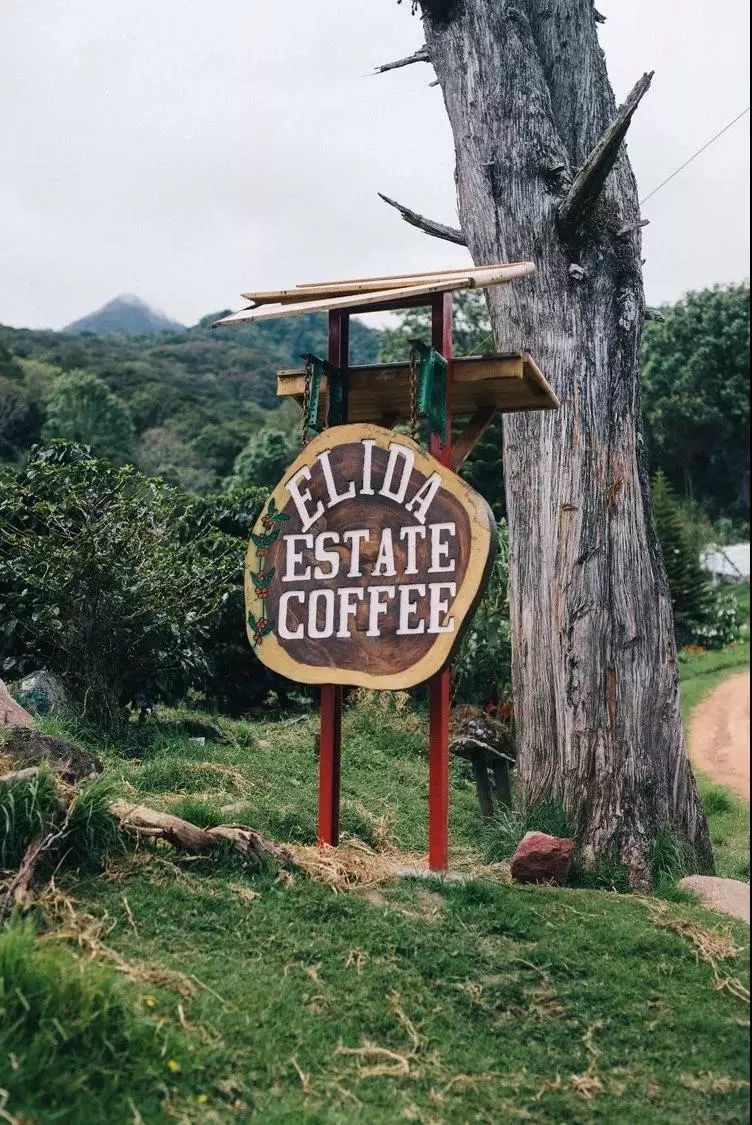
Beyond its unique ultra-high altitude and microclimate, estate owner Mr. Wilford has poured enormous effort into harvesting and processing. To hold the highest standard, Elida's coffee is picked only from the ripest fruit (Ripe on Pinton). That maturity naturally raises the sugar content of the mucilage - the very foundation of Elida's flavor quality.
And Mr. Wilford is stricter than most of the industry about "purifying" the green beans after processing. Taking Elida as the example: once processing is complete, the green beans rest at low temperature for more than 5 months to shed any greenness and let the coffee's flavor mature into balance. (Low-temperature resting is a green-bean purification concept championed by coffee authority George Howell since 2006. We have found that while green beans from subtropical regions all need cold storage, the required resting time changes with processing method and altitude - for Panama's Elida, 5 months is the sweet spot.)

FrontStreet Coffee's Elida Estate ASD Process Geisha

FrontStreet Coffee: Panama · Elida Estate
- Country: Panama
- Region: Boquete
- Estate: Elida Estate
- Altitude: 1,900 meters
- Variety: Geisha
- Process: Anaerobic Fermentation Low-Temperature Slow Natural
Processing Method
This lot is an anaerobic, low-temperature, slow natural process. The harvested cherries ferment in sealed containers for 4-5 days, then are spread in thick layers of their own pulp on drying beds to dry slowly. The low-temperature slow natural method demands far more time and labor from the producer. Given time, slow drying lets the cherries reach an optimal water activity - which develops the flavor more fully and, just as importantly, helps the green beans keep their quality longer through the seasonal storage cycle. The method depends on cooperative weather and stretches out each production batch, which raises the cost of the green beans.

FrontStreet Coffee Roasting Analysis
These beans are medium in size and density, and they absorb considerable heat during roasting, with the Maillard reaction moving relatively quickly. Open the air damper as the beans begin to yellow to develop more fermentation aroma and build sweetness and balance. Charge the drum at 160°C with heat at 100% and the damper at 3; turning point at 1'42''. When the drum probe reaches 146°C, open the damper to 4. At 146°C the bean surface turns yellow and the grassy smell disappears entirely. At 166°C, cut heat to 80% with the damper unchanged. At 7'31'', ugly wrinkles and black spots appear on the bean surface and the toast smell clearly turns to coffee aroma - the prelude to first crack. Listen carefully from here. First crack begins at 8'28''; reduce heat to 50% and open the damper fully to 5. Develop for 1'45'' after first crack and drop the batch at 194.5°C.

FrontStreet Coffee Roast Color Values
Agtron bean color 68.2 (left image), Agtron ground color 75.7 (right image); Roast Delta 7.5.
FrontStreet Coffee Brewing Recommendations
Origami Dripper
The Origami dripper's ribs form a mesh-like pattern. During brewing, the coffee bed vents smoothly, extraction rarely clogs, and water flows freely down all sides, lowering the risk of over-extraction.
Parameters & Technique: 15g coffee; medium-fine grind (BG 6M: 80% pass-through on China standard #20 sieve); water 90°C, coffee-to-water ratio 1:15. Bloom with 28g of water for 30 seconds, then pour a small center stream to 128g; once the water level drops until the coffee bed is nearly exposed, continue pouring to 229g; lift the dripper when the bed is again nearly exposed (timing starts from the bloom). Extraction time: 1'51''.
Flavor: A subtle fermentation note; lemon, grapefruit, cream, and honey on entry; an oolong tea sensation in the finish with noticeable juiciness.
Ice Eye Dripper
The Ice Eye dripper's ribs run vertically in a step-like pattern. At the bottom, the filter paper hangs suspended from the walls; at the top, the dripper and paper seal completely.

That design has a virtue: because the top seals shut, if too much water floods in at once, or the water temperature is high enough to block the flow channels, there is nowhere for air to escape. The water level drops slowly, creating an immersion effect like the KONO dripper and guarding against under-extraction.
Parameters & Technique: 15g coffee; medium-fine grind (BG 6M: 80% pass-through on China standard #20 sieve); water 90°C, ratio 1:15. Bloom with 31g of water for 30 seconds, small center pour to 124g; when the bed is nearly exposed, continue pouring to 228g; remove the dripper once the bed is nearly exposed again (timing starts from the bloom). Extraction time: 1'45''.

Flavor: A fermentation note up front, with nectarine, strawberry, mixed berries, cane sugar, and cream on entry.
Cake Dripper
The cake dripper has a flat bottom with three small holes beneath it, using the creases of the filter paper in place of flow channels and reducing the contact area between dripper and paper. First, water drips through evenly and smoothly, making extraction more reliable; second, it slows the rate at which the brew cools.
Parameters & Technique: 15g coffee; medium-fine grind (BG 6M: 80% pass-through on China standard #20 sieve); water 90°C, ratio 1:15. Bloom with 30g of water for 30 seconds, small center pour to 125g; once the bed is nearly exposed, pour on to 227g; lift the dripper when the bed is nearly exposed again (timing starts from the bloom). Extraction time: 1'54''.

Flavor: Jasmine aroma; plum, sweet orange, grapefruit, and cream on entry; an oolong tea sensation and a smooth mouthfeel.
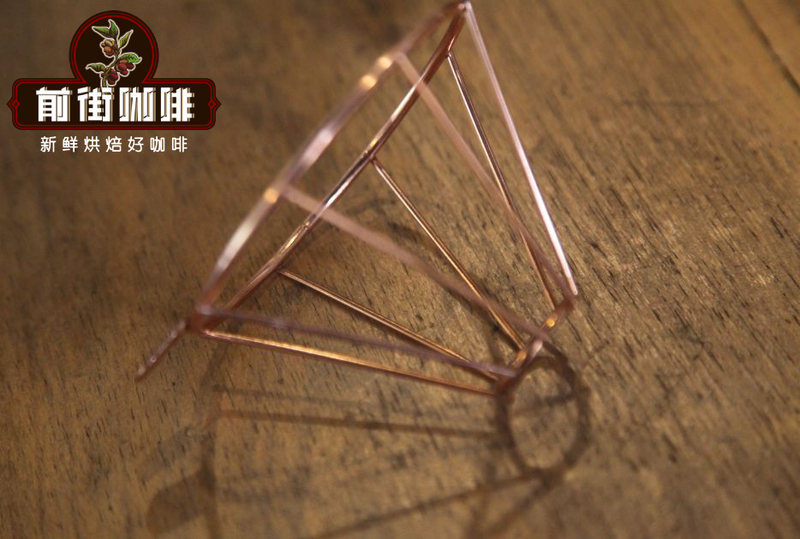
Diamond Dripper
The diamond dripper borrows a diamond-cut facet pattern in a cone with a large central hole. The faceted texture evens out the flow, and the wide hole raises the flow rate, partly compensating for uneven extraction. It does ask for steady pouring technique.

Parameters & Technique: 15g coffee; medium-fine grind (BG 6M: 80% pass-through on China standard #20 sieve); water 90°C, ratio 1:15. Bloom with 30g of water for 30 seconds, small center pour to 118g; when the bed is nearly exposed, pour on to 228g; remove the dripper once the bed is nearly exposed again (timing starts from the bloom). Extraction time: 1'43''.
Flavor: A subtle fermentation note; tropical fruits, lemon, grapefruit, almond, and honey on entry, with a black tea aftertaste.

The cake and Origami drippers flow more slowly, and their cups lean balanced. The cake dripper yields the smoothest mouthfeel; the Origami gives a fuller body with pronounced juiciness; Elida Geisha through the Ice Eye carries the most intense fermentation aroma with flavors leaning toward berries; while the fast-flowing diamond dripper trades some body for rich, well-layered flavor.
FrontStreet Coffee Recommendation
If Elida has kindled a taste for Panama Geisha, FrontStreet Coffee's Boquete Geisha is the friendliest way in: an entry-level Panama Geisha that delivers the classic Panamanian signature of orange blossom and honeyed sweetness, an oolong-tea sensation, delicate fruit acidity, and cleanly separated layers at a far gentler price than estate competition lots.
For connoisseurs, the Hacienda La Esmeralda line is the benchmark. The Red Label (Esmeralda Special) grows at 1600-1800 meters, each batch must cup above 90 points, and every batch comes entirely from a single named plot - FrontStreet's Red Label, for example, comes from the Jaramillo plot - so buyers can choose batches by subtle flavor nuance. The Green Label (Private Collection) blends lots from multiple high-altitude plots to express the estate's signature Geisha profile as a whole, and its more accessible price makes it outstanding value for a daily-drinking Geisha.
Important Notice :
FrontStreet Coffee is a long-established specialty coffee roaster in Guangzhou China, selling freshly roasted beans from its own farm in Yunnan as well as dozens of carefully selected single-origin beans from around the world for both pour-over and espresso. The products deliver consistently excellent quality and great value, with shipping within 24 hours. Guangzhou's FrontStreet Coffee shop is recommended by many coffee lovers, and the beans are now available online at the Tmall 。
FrontStreet Coffee has moved to a new address:
FrontStreet Coffee Address: 315,Donghua East Road,GuangZhou
Tel:020 38364473
 Scan and follow the En Gafei WeChat official account. Please indicate that the reprint comes from "En Gafei".