Characteristics and Story of Costa Rican Honey-Processed Coffee Beans - Which Costa Rican Honey Coffee is Best
FrontStreet Coffee's daily bean series covers the major coffee producing regions, including Ethiopian Yirgacheffe, Brazilian Bourbon, Colombian Huilan, Indonesian Mandheling, Costa Rican Tarrazú, Guatemalan Vivette Nango, and Yunnan small bean coffee. FrontStreet Coffee's daily beans mostly use the washed processing method, since washing represents the basic flavor of a region and is the starting point for understanding regional flavors. After trying washed beans for some time, you might want to explore other processing methods such as natural and honey. Among FrontStreet Coffee's long-time customers, some friends particularly love Costa Rican honey processed coffee beans because their well-balanced fermentation aroma and sweetness leave a deep, memorable impression. Today, FrontStreet Coffee will discuss the flavor profile of Costa Rican honey processed coffee beans.

Costa Rican Coffee
Coffee beans produced in the high-altitude regions of Costa Rica are world-renowned, known for their rich flavor, mild taste, and excellent balance.
Costa Rica has a long history of coffee cultivation, and over the past decade the honey processing method has been widely used and continuously improved. Besides a washed coffee bean from Costa Rica's representative region in FrontStreet Coffee's daily bean series, FrontStreet Coffee also offers several honey processed Costa Rican coffees that are very popular among new and loyal customers.

Costa Rican Coffee Regions
Costa Rica currently has 7 main coffee producing regions: Western Valley (Valley Central Occidental), Central Valley (Valley Central), Tarrazú, Tres Ríos, Orosi, Brunca, and Turrialba.
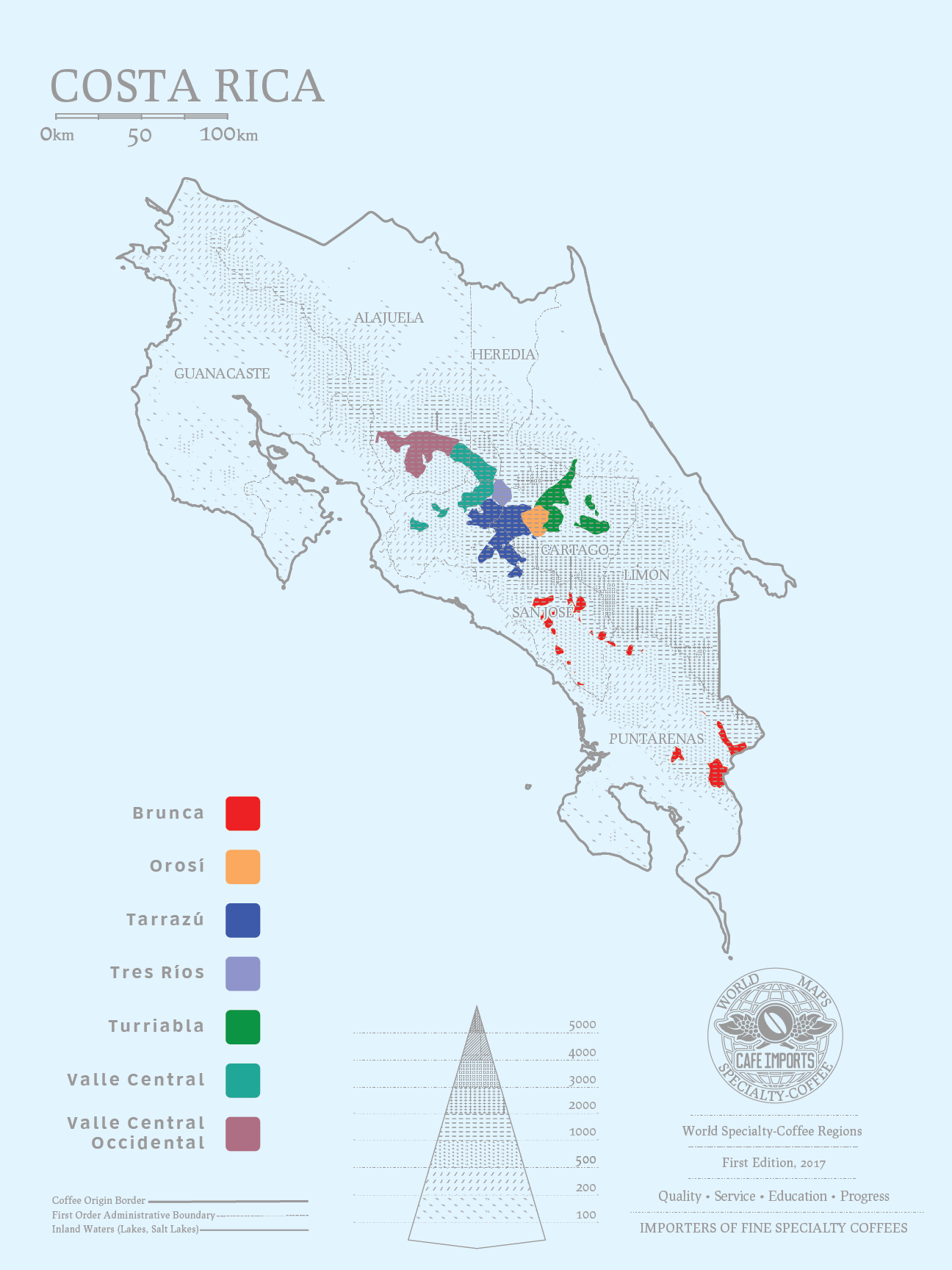
Tarrazú, with elevations of 1,200-1,700 meters and a harvest season from December to March, is located south of the country's capital, San José. It is one of Costa Rica's main coffee producing areas and one of the world's major coffee regions. The coffee-growing soil is very fertile with good drainage. Despite the small production volume, the land has been owned by the McAlpine family for the past three generations. FrontStreet Coffee's daily bean series selects coffee beans from Costa Rica's Tarrazú region.
Western Valley (Valley Central Occidental), with elevations of 1,000-1,200 meters and a harvest season from November to March, is considered a region with a relatively long harvest period. Affected by more Pacific air currents, the temperature is often cooler than in other, higher mountain areas, resulting in excellent quality coffee cherries and seeds. Its acidity is not as bright as in the Tarrazú region, with a steadier, more conventional flavor and slight almond and peach notes.

Central Valley (Valley Central), with elevations of 1,200-1,600 meters and a harvest season from November to March, is Costa Rica's earliest coffee cultivation area. With rich volcanic soil, its overall flavor profile presents chocolate cocoa, bright fruit acidity, and elegant aromas.
Tres Ríos, with elevations of 1,200-1,650 meters and a harvest season from December to March, lies not far east of the capital, where Irazú Volcano and the rivers create an excellent microclimate. In recent years, however, the city has gradually expanded into the suburbs and farmlands have been sold to developers, causing a sharp decrease in coffee production in the Tres Ríos region. Most of the production has been contracted by Starbucks, making it difficult for the industry to purchase. The climate conditions here are good, with a distinct mouthfeel, gentle fruit acidity, rich nutty aroma, and excellent balance - these are the characteristics of coffee from this region.

Orosi, with elevations of 900-1,200 meters and a harvest season from September to February, is located in a valley 40 kilometers from San José. The coffee history here can be traced back over 100 years, and the region developed because of coffee cultivation. The coffee has a smooth mouthfeel, full-bodied beans, a fragrant aroma, a smooth taste, and sufficient balance.
Brunca, with elevations of 800-1,200 meters and a harvest season from August to January, has moderate acidity, full body, and a common aroma. It is the newest producing region, with flavors compatible with those of other regions.

Turrialba, with elevations of 600-900 meters and a harvest season from July to December, has moderate acidity, relatively thin beans, and a fragrant aroma. It has the earliest harvest season of all Costa Rican producing regions, mainly due to abundant rainfall.
Honey Processed Coffee Beans
The honey processing method, called Honey Process or Miel Process, produces what is known as Honey Coffee. Coffee plantations in countries such as Costa Rica, Panama, and Guatemala have adopted this method, and Costa Rican honey processed coffee is particularly well known. The so-called honey process refers to the production process of drying raw beans with the mucilage (also called pectin) still attached. After the outer pulp of the coffee beans is removed, a layer of viscous, gelatinous substance remains. Traditional washed processing would use clean water to wash it away, but because of water limitations in some high-altitude regions, this direct-drying method was born.

Comparing the three common processing methods of honey, washed, and natural, FrontStreet Coffee can clearly feel that the sweetness of honey processed coffee sits between washed and natural, with excellent body. The advantage of honey processing is its ability to best preserve the original sweet flavor of ripe coffee cherries, presenting coffee with subtle brown sugar flavors and nut-kernel sweetness, while also bringing out red-wine-toned aromas - a very elegant product.

Differences Between Yellow Honey, Red Honey, and Black Honey
The honey processing method allows coffee to retain the cleanliness of washed processing. Although the brightness of the coffee decreases, it increases sweetness and caramel flavors. According to the degree of honey processing, honey processed coffee is divided into yellow honey, red honey, and black honey.
Yellow Honey: About 40% of the mucilage is removed; the drying method requires the most direct heat absorption, receiving the most sunlight for drying, lasting about 8 days until the moisture content reaches about 11%.
Red Honey: About 25% of the mucilage is removed; compared with yellow honey, the drying time is longer, with reduced direct sunlight exposure, even using shade nets, lasting about 12 days.
Black Honey: Retains nearly 80% of the mucilage; takes the longest drying time, at least 2 weeks, using coverings to avoid overly strong sunlight and prevent drying too quickly, allowing more thorough sugar conversion.

Sweetness: Black Honey > Red Honey > Yellow Honey
Cleanliness: Yellow Honey > Red Honey > Black Honey
Balance: Red Honey = Yellow Honey > Black Honey
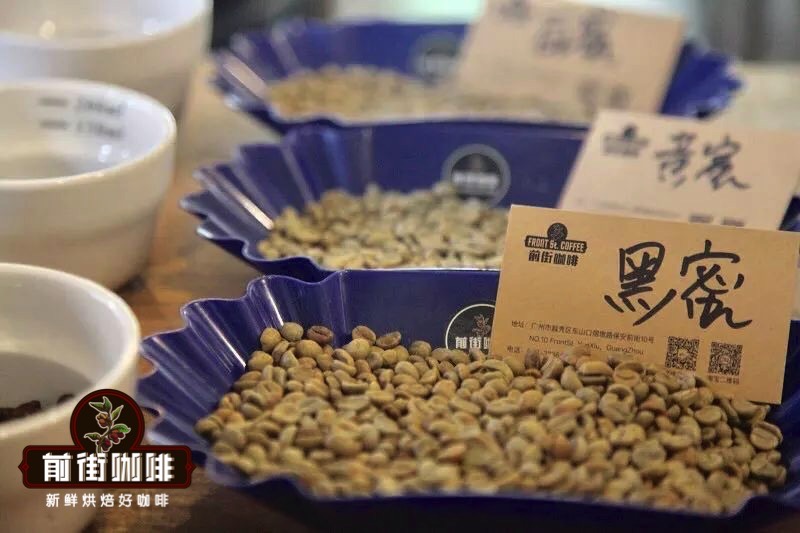
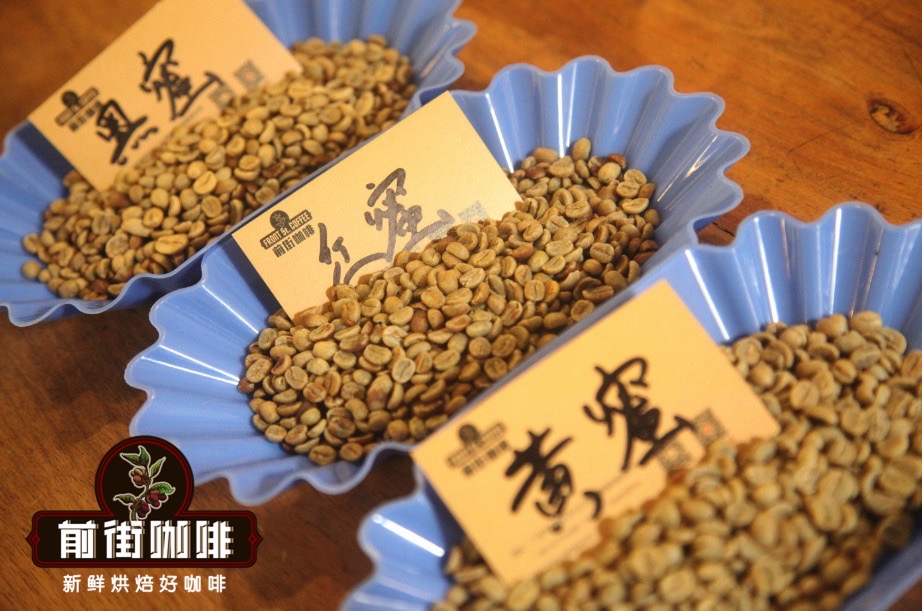
Green Bean Comparison
From a color perspective, black honey processed beans, because they retain more mucilage, show obvious unevenness in color and have a rich fermentation aroma and a fresh pear-like fragrance. Yellow honey processed beans, retaining relatively less mucilage, appear more uniform in yellow-green color and have grass and brown-rice aromas. Red honey falls in between, with light fermentation and grass aromas.
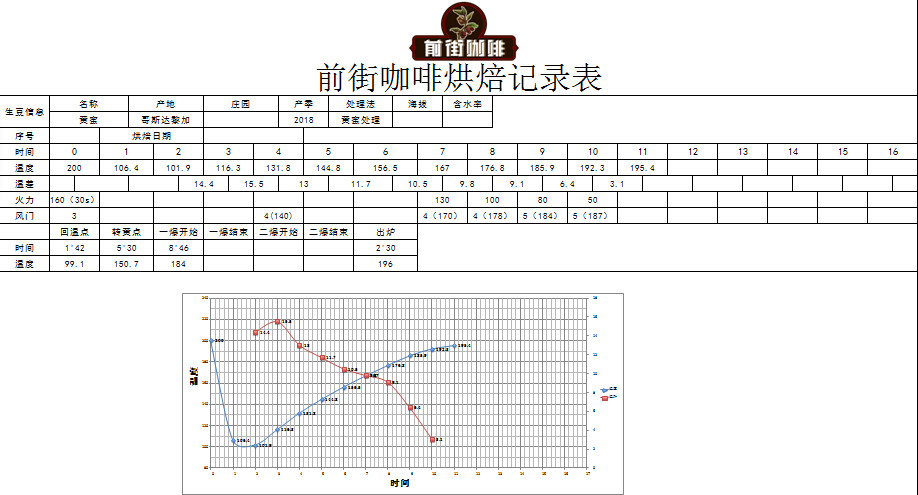
Roasting Comparison
FrontStreet Coffee roasted these three different Costa Rican honey processed coffee beans.
[Yellow Honey] Yellowing point at 5 minutes 30 seconds, first crack begins at 8 minutes 46 seconds at 184°C, development for 2 minutes 30 seconds, discharged at 196°C.

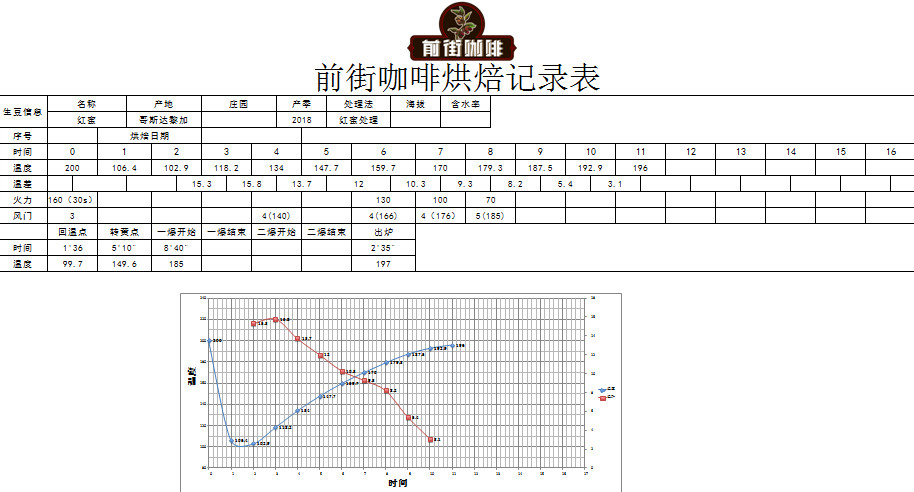
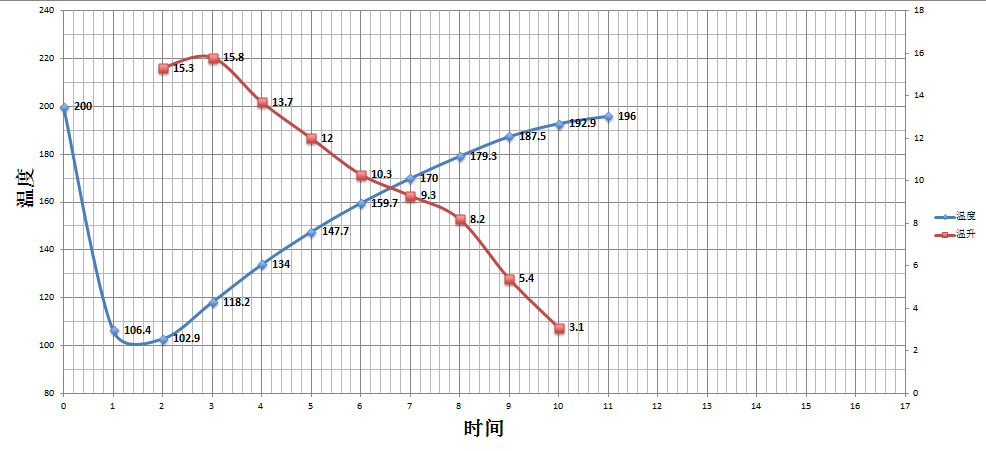
[Red Honey] Yellowing point at 5 minutes 10 seconds, first crack begins at 8 minutes 40 seconds at 185°C, development for 2 minutes 35 seconds, discharged at 197°C.
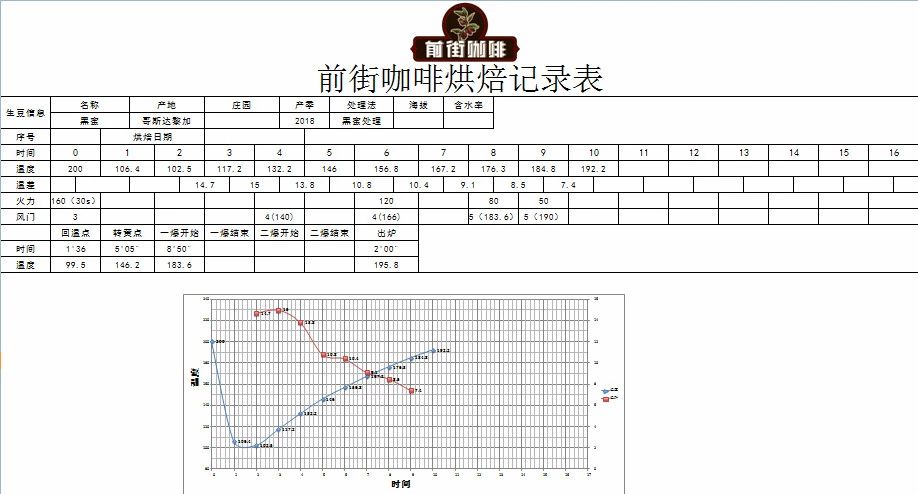
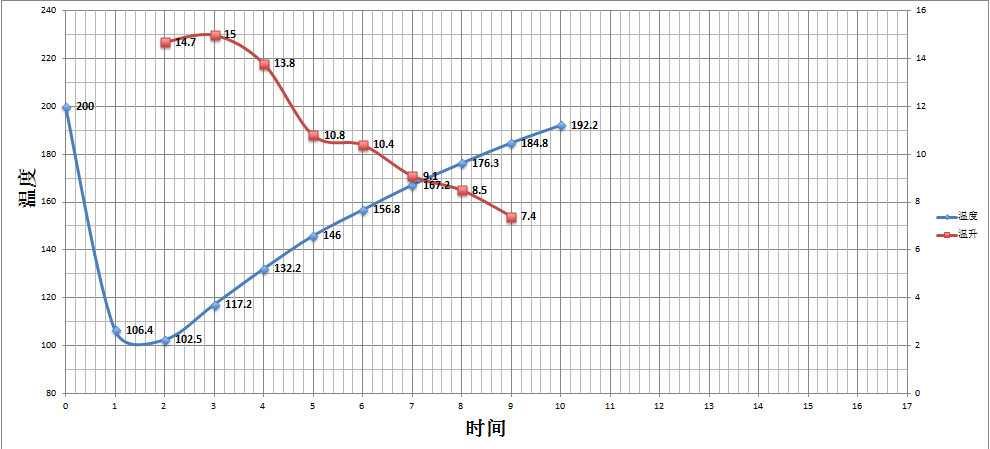
[Black Honey] Yellowing point at 5 minutes 05 seconds, first crack begins at 8 minutes 50 seconds at 183.6°C, development for 2 minutes, discharged at 195.8°C.
Flavor Comparison
FrontStreet Coffee conducted a cupping 8 hours after roasting, weighing 11.3 grams of powder, ground to fine-sugar consistency (Chinese standard 20-mesh sieve pass rate 70-75%), with the water temperature at 94°C, poured 200ml of water, and broke the crust and removed the grounds after four minutes.
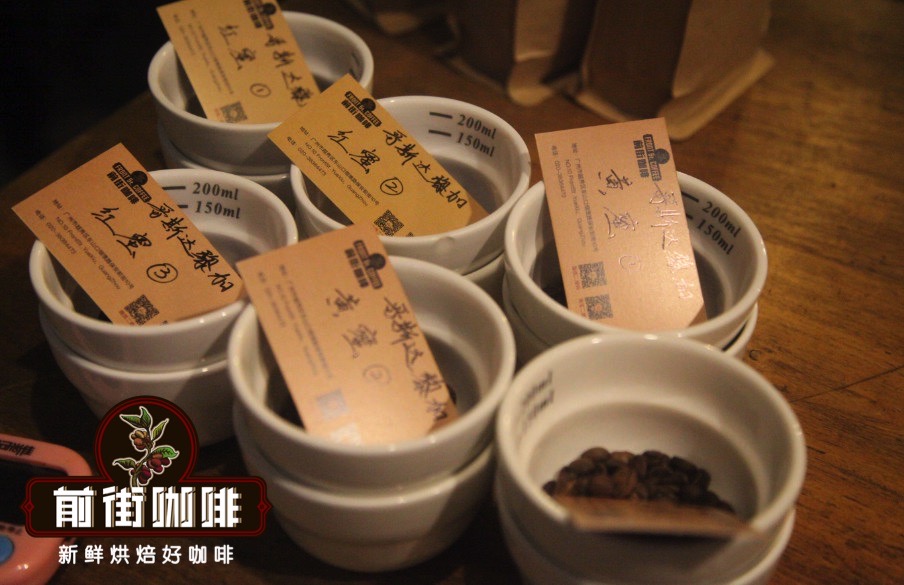
[Yellow Honey] Smells of light fermented fruit aroma, with citrus, cocoa, nuts, honey, and caramel flavors when sipped. The overall flavor is relatively light.
[Red Honey] Has a rich fermented red-wine aroma, with pineapple, sweet orange, nectarine, grapes, cream, raisins, and maple syrup flavors when sipped.
[Black Honey] Smells of rich jackfruit, raisins, and fermented-wine aroma, with plum, citrus, raisins, caramel, and spice flavors when sipped.

Comparing these three Costa Rican honey processed coffee beans, FrontStreet Coffee can clearly feel that [Black Honey] processed beans have a rich fermentation aroma with more complex notes, [Red Honey] processed beans have slightly weaker aromas, while [Yellow Honey] processed beans have relatively light fermented fruit aromas. In terms of flavor, [Black Honey] processed beans have distinct sweet-and-sour notes with some juice-like characteristics, [Red Honey] processed beans are more balanced with distinct grape flavors, while [Yellow Honey] processed beans are cleaner with less fermentation taste, leaning toward citrus-type flavors.
FrontStreet Coffee Recommendation
If the honey process here has you craving ripe, fruit-forward sweetness, FrontStreet Coffee's Ethiopia Yirgacheffe Red Cherry is a natural next step. Harvested as fully ripe fruit and sun-dried on raised beds, it layers citrus-like acidity, a juicy berry profile, and honeyed sweetness over a creamy texture. For a cleaner, tea-like cup that keeps the same delicate floral character, the washed FrontStreet Ethiopia Yirgacheffe remains a classic starting point.
Important Notice :
FrontStreet Coffee is a long-established specialty coffee roaster in Guangzhou China, selling freshly roasted beans from its own farm in Yunnan as well as dozens of carefully selected single-origin beans from around the world for both pour-over and espresso. The products deliver consistently excellent quality and great value, with shipping within 24 hours. Guangzhou's FrontStreet Coffee shop is recommended by many coffee lovers, and the beans are now available online at the Tmall 。
FrontStreet Coffee has moved to a new address:
FrontStreet Coffee Address: 315,Donghua East Road,GuangZhou
Tel:020 38364473
 Scan and follow the En Gafei WeChat official account. Please indicate that the reprint comes from "En Gafei".