What Coffee Brands Are There in Sumatra, Indonesia? What Are the Flavor Characteristics of Cupped Java Coffee Beans?
Indonesian Coffee Brands and Java Coffee Characteristics
What coffee does Indonesia's Sumatra have to offer? What are the flavor characteristics of cupped Java coffee beans, and how should they be brewed for the best taste?
Among coffee-producing countries, Indonesia deserves serious attention. It is an island nation in the Indian Ocean, its islands straddling the equator, and three of them, Java, Sumatra, and Sulawesi, produce coffee of global importance. In the mid-17th century, the Dutch brought coffee trees to what was then Ceylon (Sri Lanka) and to Java in Indonesia. By the 18th century, Indonesia had become a major coffee producer, its high-quality Arabica almost entirely supplied to Europe. But in the 19th century, coffee leaf rust, first seen in Ceylon in 1869, spread to Indonesia as well. By 1877, most plantations across the Indonesian islands had been destroyed by rust, forcing the Dutch to import a hardier variety from Africa: Robusta. Robusta resists pests and disease better but is inferior in quality. About 90% of Indonesian coffee today is Robusta, roughly 6.8 million bags annually, with less than 10% Arabica.
Java Coffee: From Arabica to Robusta
Java coffee, grown on Indonesia's Java Island, was originally Arabica. Pest and disease pressure drove Java, once celebrated for its high-quality Arabica, to switch to Robusta, and the precious Arabica Java coffee disappeared from view, taking Java's former prestige with it.
Indonesian coffee grading is based on defect ratios, divided into six levels from G1 to G6, with G1 the highest. Java coffee beans undergo washed processing.
Flavor Profile of Java Arabica Coffee
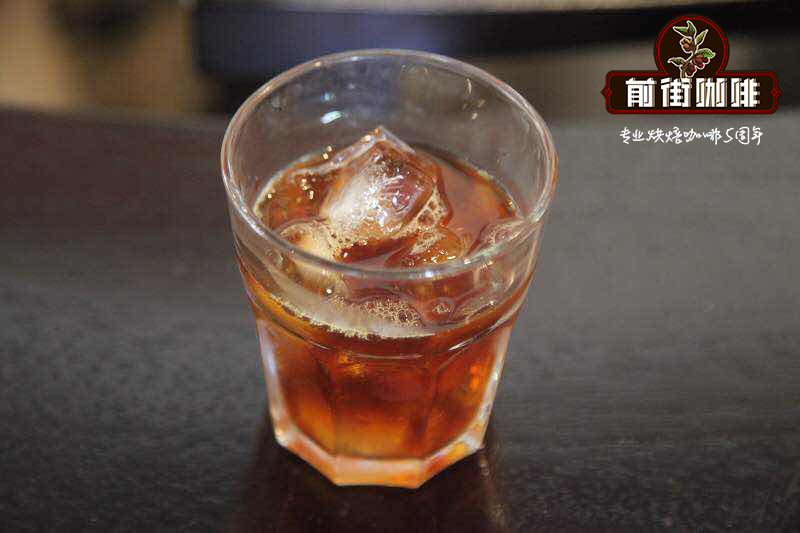
Java's remaining Arabica has a wonderful fruity flavor with notes of blackberry and grapefruit, a favorite among connoisseurs. It shows excellent medium body with a crisp, clean mouthfeel, a refreshing cup best suited to iced coffee in summer. Paired with acidic fruits like pomelo, it makes for a truly memorable coffee moment.
The bitterness and richness of Java coffee, combined with the sweet depth of chocolate syrup, make it even mellower and smoother.
Dry Aroma: Rich and full-bodied, with nutty sweetness.
Wet Aroma: Nutty fragrance with special tobacco notes.
Flavor: Sweetness of blackberry, chocolate syrup, and grapes, with clear, balanced acidity and bitterness.
Indonesian Coffee: Rich Aroma, Low Acidity, Excellent Body
At the end of the 17th century, the Dutch East India Company transplanted Arabica (Typica) trees from India to Jakarta on Java. With the suitable climate and soil, Arabica quickly spread northwest to Sumatra and northeast to Sulawesi. In the 1880s, however, Java suffered a devastating leaf rust outbreak that wiped out nearly all of its Arabica. The Dutch switched to the more disease-resistant Robusta, stabilizing Indonesia's coffee industry. To this day Robusta remains the mainstay, about 90% of national production, grown in the lowlands of Java and Bali. The more elegant Arabica is concentrated in northern Sumatra, Sulawesi, and Java's higher altitudes. Although it accounts for only about 10% of production, the reputations of Mandheling, Golden Mandheling, Lake Tawar, Gayo Mountain, Ache, Sulawesi, Aged Mandheling, and Old Brown Java have kept Indonesian coffee famous in the specialty world for decades, untainted by the inferior Robusta.
Mandheling: The Misnomer of Indonesian Specialty Coffee
Through widespread popularization, "Mandheling" has become shorthand for Indonesian specialty coffee. In reality, Mandheling is neither an Indonesian place name, a region, a port, nor a coffee variety, it is a mispronunciation of the Mandheling people who once inhabited Sumatra. (For the full story, see the recommended reading in Coffee Studies.) Research indicates the Mandheling people were direct descendants of the Batak, a people skilled at coffee cultivation. The truth is that it is the Batak, not the Mandheling, and certainly not any "Mandheling" ethnic group, who still grow coffee in the mountains of central and northern Sumatra today.
Sumatra: Four Types of Coffee Systems
Sumatra is the heartland of Indonesian specialty coffee, with a coffee system so complex that books divide it roughly into four types:
(1) Mandheling: The semi-dry or natural-processed beans most famously from the Lintong mountain area at 900-1200 meters on the southwest shore of Lake Toba in central-northern Sumatra. The Batak people are the main farmers here. Its hallmark is a deep aroma of herbs and forest wood.
(2) Golden Mandheling: Taken through four manual screenings, it grades higher than regular Mandheling, rich, bright, with excellent sweetness.
(3) Lake Tawar Coffee: Washed, semi-washed, or occasionally natural-processed beans from the Gayo Mountain area at 800-1600 meters near Lake Tawar in Sumatra's northernmost Ache region. Its acidity is brighter and musty notes less pronounced. "Sumatra Ache Gold" shows the classic fruity sweetness of La Minita, with distinct peach and almond flavors, gentle fruit acidity, and a finish carrying Indonesia's unique woody aroma.
(4) Aged Mandheling: Sweet as honey, similar to Java's Old Brown. Aging the beans takes about 2-3 years, making these genuinely artisanal. Aged beans are yellowish-brown to dark brown, not a pretty color, but their sweetness is exceptional. Aged Java Old Brown actually surpasses Aged Mandheling in sweetness, body, and cleanliness.
Sulawesi: Small Quantity, High Quality, Rich Floral Aroma
The burlap bags of "Sulawesi" coffee often carry three English words: "Celebes," "Toraja," and "Kalossi." "Celebes" is the island's old Dutch colonial name ("Sileberi Island"), long since changed to Sulawesi. "Toraja" is not a place, city, or variety name, but the Toraja (also rendered Tarloka) people of the island's central mountains, skilled at growing coffee, and also the name of the island's specialty beans. Like the Mandheling and Gayo peoples of Sumatra, they belong to ethnic groups proficient in coffee cultivation. "Kalossi" is the small central-island town that serves as the central trading post for Toraja (Tarloka) beans.
Toraja (Tarloka) is one of the world's rarest specialty beans, with annual production of about 1,000 metric tons, grown on the rugged slopes at about 1,200 meters in central and southwestern Sulawesi. Both cultivation and harvesting are difficult, and the average yield is only 300 kg per hectare, far below the 1,000-plus kg average of Central and South America. Three major estates dominate: "PT Kapal Api" with 2,000 hectares of coffee gardens; "CSR" second with 1,100 hectares; and Japan's "Key Coffee" with its "Toarco Jaya" estate third at 700 hectares. In other words, Toraja is more precious and rare than Mandheling or Golden Mandheling.
Toraja (Tarloka) is washed or semi-washed, with a brighter acidity than Sumatra's Mandheling or Golden Mandheling and more distinct layers. It has rich caramel sweetness, but its earthy, woody notes and body are far more restrained, with a slight floral fragrance.
FrontStreet Coffee's Recommended Brewing Method
Dripper: Hario V60
Water Temperature: 90°C
Grind Size: Fuji Royal grinder setting 3.5
Brewing Method: Water-to-coffee ratio 1:15, using 15g of coffee. First pour 25g of water and bloom for 25 seconds. Second pour to 120g, then stop. When the water level in the coffee bed drops to halfway, continue pouring slowly until reaching 225g total. Extraction time should be around 2:00.
Analysis: The three-stage pour clearly separates the front, middle, and back-end flavors. Because the V60 has many ribs and drains quickly, stopping the pour helps extend the extraction time.
FrontStreet Coffee Recommendation
For the classic taste of Sumatra, start with FrontStreet Coffee's wet-hulled Mandheling from the Lake Toba area of the Lintong region. Because the beans are hulled in a half-dry, half-wet state and dry fully exposed to the air, the cup carries the style's signature herbal and spice notes; a medium-dark roast renders it low-acid and full-bodied, layered with caramel, dark chocolate, and toasted bread aromas and a long sweet finish, ideal for lovers of strong coffee. At the top of the range sits FrontStreet's PWN Golden Mandheling: PWN is a trading company that buys only premium Mandheling lots and screens them rigorously on density, size, shape, and color, with machine and hand sorting to remove defects, producing uniformly plump, translucent beans with less earthy and grassy taint. Freshly roasted, it reveals sandalwood, herbal, and spice tones with roasted hazelnut, caramel, and dark chocolate, clean, mellow, and deeply aromatic. And for espresso or moka pot lovers, FrontStreet's Classic Blend carries on the Mamba tradition, Mandheling's wildness fused with Brazil's smooth nuttiness, plus a touch of Robusta for rich golden crema, with dark chocolate, nut, and caramel aromas pushed to the maximum by a deep roast.
Important Notice :
FrontStreet Coffee is a long-established specialty coffee roaster in Guangzhou China, selling freshly roasted beans from its own farm in Yunnan as well as dozens of carefully selected single-origin beans from around the world for both pour-over and espresso. The products deliver consistently excellent quality and great value, with shipping within 24 hours. Guangzhou's FrontStreet Coffee shop is recommended by many coffee lovers, and the beans are now available online at the Tmall 。
FrontStreet Coffee has moved to a new address:
FrontStreet Coffee Address: 315,Donghua East Road,GuangZhou
Tel:020 38364473
 Scan and follow the En Gafei WeChat official account. Please indicate that the reprint comes from "En Gafei".