How to Order Americano Coffee Beans at a Coffee Shop_Can Single-Origin Beans Be Used for Americano_How to Choose Americano Coffee Beans

Since black coffee can have such rich flavors, why do cappuccinos and mochas exist? The question is somewhat challenging, and I can only explain it this way: the world needs so many complex variations to support people's busy lives, and each complex setting brings countless story materials that become cultural conversation topics, making people's lives rich, colorful, and full of fun.
The truth is that in the 16th century, coffee roasting technology was not that advanced. The delicate European nobility could not bear the bitterness of brewed coffee, so they mixed it with various milks and spices, creating a variety of coffee drinks, and then began writing stories that have been passed down to this day.
European coffeehouses in the 16th century.
However, today's focus is not on cappuccinos and mochas, but on solving a more advanced question: where does the sophistication of American coffee lie?
First, what is American coffee? And how did American coffee come about?
Generally speaking, a cup of espresso plus a certain proportion of water makes American coffee. However, this is just one form of American coffee. Another type is black coffee made with a drip coffee machine, which is also called American coffee.
Here we need to tell another story about the invention of the American drip coffee machine. It should be noted that the principle of the American drip coffee machine is the filter-style brewing method. This brewing method was invented by a German housewife, Melitta Bentz, over 100 years ago. Melitta was a perfectionist who hated coffee grounds left between her teeth. One day, she had a sudden idea: she punched a hole in the bottom of a copper bowl, took a piece of blotting paper from her son's schoolbag, placed it on top, and poured in hot water. Instantly, mellow coffee dripped through the blotting paper into the pot. She thus invented a filtration method that could remove grounds while preserving the authentic coffee aroma. Before this invention, people used cloth bags to filter coffee grounds. However, cloth filter bags were not only troublesome to clean but also unhygienic after multiple uses, and the coffee grounds remaining in the cloth's crevices could easily ruin the original mellow taste of coffee.
But what does this have to do with American coffee?
That is because in the early 20th century, Melitta's hand-pour filter cups began to improve in the direction of automation. After countless improvements, they finally achieved great success in the United States, becoming the most common automatic American coffee filter machines we see today. But if you take apart an American coffee machine, the principle of the filtration method invented by Mrs. Melitta remains almost unchanged to this day, with only optimizations to the filter shape and filter paper.
Why did it achieve great success in the United States and become representative of American coffee? Because Americans are casual, unrestrained, and without taboos when they drink coffee—like playing a game without rules. This type of fully automatic drip coffee machine is the simplest and most direct way to solve the problem.
Secondly, simplicity and directness do not mean American coffee lacks style.
American coffee made by adding water to espresso is divided into three types: Americano, Long Black, and Lungo.
Americano is made by mixing espresso with water, meaning you first extract the espresso, then add hot water, which is essentially diluting the espresso with water.
Long Black is made in the opposite way to Americano—you first add hot water, then pour the espresso into the cup, letting it disperse naturally.
Surprised? Unexpected!
What is the difference between these two? On the surface, Americano's crema is relatively thin, with part of the crema dissolving in the water, part dispersing into the air, and part being broken down. Because Long Black has espresso added later, its crema floats on top of the liquid, presenting a beautiful white-gold color.
So what is the difference in taste? If using Italian blend beans to make these two coffees, Long Black will have more layers, because as the espresso is poured into water, the oils disperse and the coffee settles at the bottom, blending slowly.
The soul of flavored coffee, espresso.
As for Lungo, it is even more peculiar. "Lungo" means "long" in Italian, meaning a longer extraction time. With a certain amount of coffee grounds, Lungo typically yields less liquid than regular American coffee but more than espresso. Lungo is coffee without additional water—it is extracted entirely by an espresso machine. Simply put, it is coffee made using the working principle of an espresso machine to replace a fully automatic drip coffee maker.
So, do you still think American coffee made by adding water to espresso is simple?
Making simple things to the extreme is not a simple task. If the details of making American coffee are not controlled well, they will have a significant impact on the final coffee product.
Finally, something about hand-pour drip coffee.
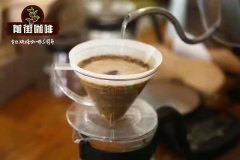
The hand-pour drip coffee that is currently popular is actually the drip brewing method invented by Germany's Melitta. It is just that later, Europeans found it quite troublesome and gradually stopped doing it. However, since the 1950s, the Japanese have reached a state of obsession with Melitta filter cups, with filter-style and drip-style coffee utensils in various materials emerging endlessly, establishing a complete set of theories and operational techniques for hand-pour filter coffee. Following this logic, since all are coffees made by the drip-style brewing method, every cup of coffee made with a hand-pour drip pot can also be called "American coffee."
So, American coffee is quite stylish after all.
FrontStreet Coffee Recommendation
For an Americano, the espresso base sets the tone, so an espresso-oriented blend is the practical choice. FrontStreet Classic Blend is built for espresso and the moka pot, and its standout strength is a rich, abundant crema that even a beginner on a non-professional home machine can pull dense and fine; it follows the traditional Mamba recipe for a full, warm, easy-drinking body. FrontStreet Black Cocoa Blend uses 100% Arabica beans with ample crema and a full body at a friendly price, balancing quality and value, and FrontStreet Premium Blend combines Brazil Cerrado and Colombia Huila for the classic, familiar espresso flavor.
If you prefer a fruit-forward coffee, FrontStreet Strawberry Candy is a popular espresso blend that recreates a distinct strawberry gummy sweetness from the native flavors of Arabica beans from different origins. For those who want to push the style further, FrontStreet Ethiopia Grana Gesha SOE—medium roasted from a single Ethiopian estate—brings the variety's floral-fruit character with dried-fruit sweetness and a bright white-floral and lemon acidity; pulled as espresso it turns to dried apricot, caramel, and nut.
For a cappuccino served at cafe standard, FrontStreet suggests a richer, denser milk foam and a concentrated base: pull about 20 g of coffee at a 1:2 ratio in roughly 30 seconds, steam the milk thicker and finer than for a latte, then spoon the foam into the center to fill a circle. FrontStreet's blends are a fine base for this, while the fruit-toned FrontStreet Strawberry Candy and Grana Gesha SOE suit a floral-fruit cappuccino.
Important Notice :
FrontStreet Coffee is a long-established specialty coffee roaster in Guangzhou China, selling freshly roasted beans from its own farm in Yunnan as well as dozens of carefully selected single-origin beans from around the world for both pour-over and espresso. The products deliver consistently excellent quality and great value, with shipping within 24 hours. Guangzhou's FrontStreet Coffee shop is recommended by many coffee lovers, and the beans are now available online at the Tmall 。
FrontStreet Coffee has moved to a new address:
FrontStreet Coffee Address: 315,Donghua East Road,GuangZhou
Tel:020 38364473
 Scan and follow the En Gafei WeChat official account. Please indicate that the reprint comes from "En Gafei".