How to Choose Coffee Beans for Americano_What Coffee Beans to Use for Americano_How to Brew Coffee Beans for Americano

Americano Coffee
"Americano" (Italian: Caffè Americano) is a type of coffee and the most common variety of all. It is black coffee made with a drip coffee maker, or espresso diluted with a large amount of water.
Americano coffee has a relatively light taste. Because the general extraction time is fairly long (about four to five minutes), its caffeine content is higher.
Brewing Methods
Equipment
After each use, rinse with clean hot water and wipe dry with an absorbent paper towel or cloth. This keeps your coffee equipment absolutely clean.
Americano Coffee Beans
Try to buy freshly roasted coffee beans. Freshly roasted beans are very important for a top-quality cup. Buy coffee in small amounts and try to use it within a planned period. Ideally, buy fresh coffee every one to two weeks.
Grinder
If you buy whole beans, the best time to grind is just before brewing. A burr grinder or mill grinder is preferable, because it grinds all the beans to the same size. A blade grinder produces uneven particle sizes, which is why it is less popular. If you usually use a blade grinder at home, try visiting a store to use a burr grinder. You might be surprised by the difference!
Don't underestimate how much the grinder matters for flavor. If your coffee tastes bitter, it may be because it was ground too finely or for too long. If it lacks flavor, on the other hand, it may be because it was ground too coarsely.
Never reuse coffee grounds. Once brewed, the flavors you want have already been extracted, leaving only bitter compounds behind.
Water
The water you use matters greatly. If you use tap water, let the faucet run for a few minutes before filling the coffee pot. Remember to use cold water—not distilled or softened water.
Water to Coffee Ratio
A general rule is six ounces of boiling water (about 175.62ml) to 1 or 2 tablespoons of ground coffee. Adjust to your personal preference.
Water Temperature
For optimal extraction, the water in your coffee maker should stay between 90 and 96 degrees Celsius. If the temperature is too low, extraction will be insufficient and the coffee will taste flat and dull. If it is too high, the taste will also suffer. If you brew manually, bring the water to a boil but don't overdo it. Turn off the heat and let the water cool for one minute before brewing.
Enjoy Freshly Brewed Coffee Immediately
Pour the coffee into a pre-warmed large mug or cup to hold its temperature as long as possible. Brewed coffee begins losing its best flavors immediately, so brew only what you need. Never leave coffee on a stove for more than 15 minutes, or it will take on a burnt taste. If the coffee isn't used right after brewing, pour it into a pre-warmed, insulated thermos and drink it within 45 minutes.
Never reheat your coffee.
A carefully prepared coffee deserves to be savored slowly, just like the process of making it. Take time to smell its aroma. Take a small sip and notice the flavor. How does the coffee you brewed compare with others in body, acidity, and balance? Savor and enjoy every sip!
Characteristics
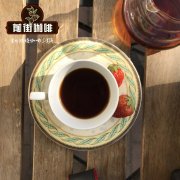
Americano coffee is light and clear, almost transparent, letting you see the brown coffee at the bottom of the cup.
Observing Aroma and Color
You can add a little sugar and milk to pure black coffee; you can also take the European approach and add spices like cinnamon, as they do in African and Arab regions; and if you're not used to the bitter taste of coffee, you can add a little juice you enjoy. Still, drinking a cup of original black coffee lets you taste the rich flavor of the coffee itself and is seen as the mark of a connoisseur. However you drink it, tasting coffee has its own etiquette and knowledge.
Steps
- When a cup of coffee is set before you, don't rush to drink it. Enjoy a gradual process like tasting tea or wine, to reach relaxation, refreshment, and enjoyment.
Step 1: Smell the aroma and take in the rich fragrance wafting from the coffee;
Step 2: Observe the color. The coffee should ideally show a deep brown, not a pitch-black, unfathomable depth;
Step 3: Taste. First take a sip of black coffee to experience the flavor of the original brew. When the coffee enters your mouth, it should carry some sweetness, a slight bitterness, and a slight acidity without astringency. Then sip in small amounts, and don't rush to swallow the coffee in one gulp. Hold it briefly in your mouth, let it mix lightly with saliva and air, then swallow.
Temperature
The optimal temperature for drinking coffee is 85 to 88 degrees Celsius. Because the texture of regular coffee is not very stable, it's best enjoyed while hot. To avoid reducing the flavor, pre-warm the cup in boiling water. The ideal temperatures are 83 degrees Celsius at the moment of brewing, 80 degrees when poured into the cup, and 61 to 62 degrees when it reaches the mouth.
Generally speaking, enjoying the coffee your host serves while it's hot is also basic coffee etiquette. With a quality coffee, besides reduced aroma as it cools, the taste stays consistent with—or even better than—when it's hot.
Flavor
Coffee beans contain about 5% to 8% sugar, most of which converts to caramel during roasting—the source of aroma and bitterness—while the unconverted sugar retains a slight sweetness; tannic acid is released during roasting and combines with caramel to produce a slightly bitter sweet taste. So people's perception of coffee generally includes bitterness, acidity, sweetness, aroma, and astringency.
- Americans drink coffee as if playing a game without rules—casual, unrestrained, and without taboos.
Simple Americano coffee splits into two categories: strong and light. The American East Coast drinks stronger coffee than the West Coast, and the South drinks stronger than the North. By ethnicity, Southern Europeans and Latinos prefer stronger coffee than British, German, and Nordic immigrants. Americans disregard the refinements Europeans apply when brewing coffee. Americans drink coffee freely, and coffee is so woven into their lives that life without it hardly counts as life. Whether at home, in the office, in public places, or at roadside vending machines, Americans are almost inseparable from coffee 24 hours a day. They consume one-third of the world's coffee production, making them the largest coffee-consuming country on earth. It is said that during the Apollo 13 mission, the third manned moon landing, a life-or-death malfunction occurred. At that moment, ground staff comforted the three astronauts with these words: "Keep going! Delicious hot coffee is waiting for your return."
Generally speaking, American life is busy and tense. Unlike people in Europe and the Middle East who can enjoy life at a leisurely pace, this shows up in their coffee consumption—often a large pot of electric drip coffee from morning to night. Because more water is added and less coffee is used (10 grams of coffee to 200cc of water), the taste is particularly weak, which is why many people criticize Americano coffee as truly unpalatable. In fact, coffee lovers throughout the United States can still find the flavors they prefer with a little extra effort.
Additionally, although the United States is the largest exporter of instant coffee, not many Americans actually drink instant coffee themselves. In recent years, as attention to healthy eating has grown, the market for decaffeinated coffee has gradually expanded, and the trend of drinking coffee without sugar has become increasingly common.
Anecdotes
Editor
- Americano coffee is very, very light coffee. The French jokingly call it "jus de chaussette," meaning sock water. In Europe (France and Italy), ordering Americano coffee might invite ridicule.
There are several aspects of how Americans drink coffee that Europeans disapprove of:
First, drinking coffee during meals. This is a uniquely American habit.
Second, excessive frugality. Actually reheating cold coffee before drinking it!
Third, keeping coffee pots brewing for hours until the coffee dehydrates—and even then, not throwing it away!
Fourth, overemphasizing convenience and pushing ground coffee. Little do they know that no matter how well-sealed canned coffee is, once it's ground, freshness falls off sharply.
FrontStreet Coffee Recommendation
For an Americano, the bean does most of the work. FrontStreet Coffee's Classic Blend is our first choice for beginners and anyone brewing with a home espresso machine. Built on a traditional Italian-style recipe of Indonesian Mandheling, Brazilian Red Bourbon, and a washed component, it combines the low-acid, full, herbal-woody depth of Asian coffees with the balanced, creamy smoothness of the Americas. Pulled as espresso, it delivers butter, nuts, spice, and dark chocolate, and it holds up beautifully whether you top it with hot water for an Americano or steam milk for a latte—its signature wildness and generous crema are the blend's greatest strengths.
If value is your priority, FrontStreet Coffee's Black Cocoa Base Blend, pairing Yunnan small-bean with Brazilian Cerrado, brings nuts, chocolate, and cream with the ripe-plum acidity of Yunnan. It stays soft and rounded in the cup and is forgiving enough for daily brewing. Either way, start with a 1:2 espresso ratio, then dilute to taste: a classic Americano runs roughly one part espresso to three or four parts hot water, so a 20g dose pulled to 40g yields a balanced, easy-drinking cup with sweetness up front and a clean, chocolatey finish.
Important Notice :
FrontStreet Coffee is a long-established specialty coffee roaster in Guangzhou China, selling freshly roasted beans from its own farm in Yunnan as well as dozens of carefully selected single-origin beans from around the world for both pour-over and espresso. The products deliver consistently excellent quality and great value, with shipping within 24 hours. Guangzhou's FrontStreet Coffee shop is recommended by many coffee lovers, and the beans are now available online at the Tmall 。
FrontStreet Coffee has moved to a new address:
FrontStreet Coffee Address: 315,Donghua East Road,GuangZhou
Tel:020 38364473
 Scan and follow the En Gafei WeChat official account. Please indicate that the reprint comes from "En Gafei".