What is Sumatra Wet Hulling? Introduction to the Characteristics of Wet-Hulled Coffee Beans

What Is Sumatran Wet Hulling? A Closer Look at the Characteristics of Wet-Hulled Coffee Beans
Wet hulling (giling basah) is a green coffee processing method invented by Indonesian farmers to cope with the island's extreme climate. It doesn't just shorten the drying time of coffee beans — it also creates the unmistakable style of Mandheling coffee. Today, wet hulling is the most common post-harvest method in Indonesia, and here FrontStreet Coffee walks you through this unique way of processing green coffee.
What Is Indonesia's Most Famous Coffee?
As Indonesia's largest island, Sumatra is bounded by the Indian Ocean to the west and the South China Sea to the east, with the equator running right through its middle. It also sits on the Pacific Ring of Fire, so volcanoes are scattered across the land, leaving behind fertile volcanic ash soil. The mountainous interior, perpetually wrapped in cloud and mist, has considerable altitude, abundant rainfall, and comfortable temperatures, making the land remarkably productive — and coffee one of the crops best suited to it.

As the signature coffee of Sumatra, Mandheling began as a tiny place name that gradually evolved into a designation for an ethnic group — the Mandailing people. Mandheling is grown mainly around the two great lakes of Aceh Province and North Sumatra Province: Lake Toba and Lake Tawar.
Lake Toba is the largest volcanic lake in the world and also Indonesia's largest alpine freshwater lake. The average annual temperature here is around 22°C, in a tropical rainforest climate. That rainy, humid environment, combined with mountain elevations of about 1,400 meters, produces spices, timber, palm oil, and other agricultural products — coffee among them. Under the cloudy, rainy skies, most fruit trees grow on the higher slopes, and several types of ferns shelter them; together these provide natural sun protection for the coffee, so growers don't need to plant dedicated shade trees.

The Gayo Mountains, in the central part of Aceh Province, have a strikingly unique microclimate beside the famous volcanic Lake Tawar. The lake water is clear and the natural environment pristine. Coffee trees are planted on mountainsides of 1,200–1,800 meters, shrouded in mist year-round, with big day-night temperature swings and volcanic soil rich in minerals and nutrients; fallen fruit serves as fertilizer. Farmers grow coffee widely with organic methods, and thanks to the region's long cultivation history, both quality and yield here are high. Many green coffee merchants prize this area — including Sumatra's own famous Pawani Coffee Company (PWN).

From September to April each year, when the coffee cherries ripen, you can see farmers busily picking across the mountains. Traditional Lintong Mandheling is cultivated by the Mandailing and Batak peoples, while the "rising star" Lake Tawar Mandheling is grown by the Gayo people.
Why Wet Hulling?
The biggest difference between Indonesia and many other coffee origins is the humidity: it stays between 70–90% all year, typhoons can arrive at any time, and annual rainfall can top 2,000 mm. In weather this harsh, the sun-drying method used in Africa — two to three weeks outdoors — is simply impossible. The fully washed process, meanwhile, is time-consuming and consumes more labor and water than mass-production-focused Indonesia could afford. So farmers developed a unique semi-washed method: wet hulling.

Coffee cherries with the peel and pulp removed are poured directly into a pool for a brief fermentation of several hours. A little mucilage still clings to the bean at this stage, which is brushed off. Then the parchment beans are dried — the first drying only needs to bring them down to 30–40% moisture, taking about two to three days, at which point farmers sell them to buyers. The buyers machine-hull the semi-dry parchment immediately, stripping it off to get at the green bean inside.
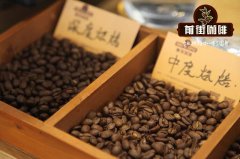
Because the hulling machine uses strong friction to tear away the parchment still clinging tightly to the beans, a white or greenish moisture typically seeps out during this stage. After their long soak in mucilage and humid air, the green beans end up soft, pale, and swollen, taking on a gray-green color. Agitated by friction, they are also easily chipped or crushed, especially at the ends, forming small splits and "elephant beans." These "naked beans," stripped of their parchment, dry very quickly — but they are also directly exposed to the humid environment and to all sorts of microorganisms. That is what gives the coffee its signature woody, spicy, and herbal aromas — the flavor we call "Mandheling."

Which Grade of Mandheling Is the Highest?
The Indonesian green coffee merchant PWN Company focuses on acquiring top-quality lots of Mandheling green beans and produces only specialty-grade Mandheling. "Golden Mandheling" is their exclusive signature product. Back in the day, the Japanese took a liking to Sumatran coffee and planned to buy it long-term, only to find the quality of local lots frustratingly inconsistent. So they paid closer attention to Mandheling production and began setting strict defect-screening standards and methods, starting with measurements like bean density, size, shape, and color. The resulting Mandheling requires machine and hand sorting to remove defects, ensuring whole, uniform, plump, translucent beans while also dialing back Mandheling's earthy, grassy flavors. Legend has it the beans gleam golden in the sun — hence the name "Golden Mandheling."
Worth mentioning: to protect the prestigious "Golden Mandheling" name, the forward-thinking PWN Company quickly registered it as an exclusive trademark — so only their Golden Mandheling beans are the genuine article. Unlike many local Indonesian green coffee merchants, PWN is the sole supplier of high-grade Golden Mandheling, contracting the best Mandheling producing areas in Indonesia, and every lot they release is a superior product. The Golden Mandheling that consistently occupies the top of FrontStreet Coffee's bean list is produced by PWN, and FrontStreet's Dongshankou store even displays the burlap bags used for the green beans along with the certification documents.

Wet hulling saves enormous time and labor in green bean processing, but the speed comes at the cost of a higher defect rate. Only rigorous hand sorting can remove the defects machines can't catch. PWN runs every lot of purchased Mandheling through one machine selection plus three rounds of hand selection, with quality far exceeding Indonesia's own top G1 grade. To meet PWN Golden Mandheling standards, the following must all be satisfied:
- Green bean size: 18–19 mesh or above after the first hand selection
- Fewer than 3 defective beans in a 300-gram green bean sample
- Green coffee grade of G1
- Dark green color, uniform size, regular shape

Before launching any coffee bean, FrontStreet Coffee always evaluates it through cupping — a standardized assessment of a coffee's quality and flavor. Uniform protocols make it far more objective to judge the strengths, weaknesses, and character of what the beans present. Through cupping, FrontStreet Coffee found that PWN's wet-hulled Golden Mandheling carries not only aromas of dark chocolate, nuts, and caramel, but also herbal spice and pine; the finish echoes dark chocolate, with a full-bodied lingering aftertaste, high cleanliness, and a touch of light fruit acidity as the cup cools.
FrontStreet Coffee Recommendation
Coffee, as everyone knows, originated in Ethiopia, and it wasn't until the late fifteenth century that it appeared outside Ethiopia as a beverage; by the seventeenth century it had swept through Europe. To monopolize the market, European colonizers began a kind of planting race, transplanting coffee seedlings to their colonies. At the end of that century the Dutch brought coffee to Java in Indonesia, where it thrived in the mild climate and fertile soil and spread to Sumatra. Java's coffee industry boomed so thoroughly that the word "Java" became a synonym for coffee itself. But the good times didn't last: in the early twentieth century, coffee leaf rust swept across Java, devastating the island's trees. Indonesia's coffee industry shifted north to Sumatra, and Java ceded its place as the archipelago's production powerhouse. Today Sumatra is Indonesia's largest source of both Arabica and Robusta, accounting for more than 60% of output, with the higher-elevation provinces of Aceh and North Sumatra in the north focusing on Arabica — the beans people habitually call Mandheling.
For a taste of the classic traditional profile, FrontStreet Coffee's Lintong Mandheling — from the Lintong region around Lake Toba in North Sumatra — is the one. With the special wet-hulled process and the local microbial fermentation shaping its aroma, it delivers the mysterious, unmistakable Mandheling character: intense fragrance, thick body, and forceful flavor. It's fragrant and rich, sweet yet bitter, striking the palate with a bold, bracing character — clove and woody aromatics, and at a medium-dark roast a low acidity with spice and mint notes and a powerful, lasting, full sweetness. And if you want Mandheling at its very best brewed as pour-over, FrontStreet PWN Golden Mandheling — sourced from the Gayo mountains around Lake Tawar in Aceh — is the flagship: built on beans of 18 mesh and above, with fewer than 3 defects per 300 g sample and three rounds of hand sorting for maximum cleanliness and sweetness, it brews a cup with a clean mouthfeel, full body, and rich roasted aroma. To brew it well, use water at 87–88°C, 15 g of coffee ground to a coarse-sugar texture, a 1:15 ratio, and a three-pour method: a 30 ml bloom to wet the grounds and degas, a 100 ml second pour to lift the golden crema and raise the bed, and a final gentle 95 ml center pour to heighten the sweetness — yielding a full, syrupy body with caramel sweetness and chocolate and nut flavors. And if you'd rather enjoy it on an espresso machine, FrontStreet Coffee's highest-repurchase Classic Blend adds medium-dark Mandheling to Brazil's creamy nuttiness — butter, roasted chestnut, and caramel in the spotlight, with Mandheling lifting the body and adding sandalwood, herbal, and spice notes, plus a touch of Robusta for richer crema — perfect for latte art or a Dirty.
Important Notice :
FrontStreet Coffee is a long-established specialty coffee roaster in Guangzhou China, selling freshly roasted beans from its own farm in Yunnan as well as dozens of carefully selected single-origin beans from around the world for both pour-over and espresso. The products deliver consistently excellent quality and great value, with shipping within 24 hours. Guangzhou's FrontStreet Coffee shop is recommended by many coffee lovers, and the beans are now available online at the Tmall 。
FrontStreet Coffee has moved to a new address:
FrontStreet Coffee Address: 315,Donghua East Road,GuangZhou
Tel:020 38364473
 Scan and follow the En Gafei WeChat official account. Please indicate that the reprint comes from "En Gafei".