Complete Process and Operation Steps of Wet Hulling Coffee Bean Processing_Sumatra Mandheling Coffee Bean Wet Hulling Method
Wet hulling is the signature processing method of Sumatra, Indonesia — a technique found nowhere else in the coffee world. According to the chairman of the Indonesian Specialty Coffee Association (SCAI), it is properly called "Semi-washed Wet hulled." Here is exactly how it works, step by step.
Step 1: Harvesting
March to May and September to December are the harvest seasons for Sumatran coffee, when each farmer picks coffee cherries. With the rise of specialty coffee and the implementation of the Full Red Cherry Program, more and more farmers now harvest only fully red, ripe cherries.
Step 2: Depulping and Fermentation
Every day after noon during harvest season, farmers deliver the cherries picked that morning to depulping workshops. There, the skin and fruit pulp are stripped away, leaving wet parchment coffee.
Sumatra's natural environment is superb, and most of the water used in the process comes straight from mountain springs.
Farmers then ferment the parchment coffee, typically for 12-36 hours depending on conditions. After fermentation, the parchment is laid out to dry. During harvest season, sacks of drying parchment coffee sprawl in front of every household — this is their coffee income taking shape.
Nothing goes to waste: the removed skins and pulp are fermented into fertilizer, and plantations using this kind of ecological fertilizer earn extra points when applying for organic coffee plantation certification.
Step 3: Hulling and Drying
Once the moisture content of the parchment coffee drops to 35-40%, farmers pack it into woven bags — 40kg or 80kg each — and send it off to coffee processing factories for hulling.
In recent years, Sumatra has seen more certified coffees enter the pipeline. Processing plants typically handle certified coffees — organic, fair trade, UTZ, and so on — separately, and after hulling those green beans are bagged separately too, so that different coffees never mix.
The moisture content of these beans is usually still high at this stage, so they require continued drying down to about 15%.
Step 4: Machine Sorting and Hand Sorting
When the beans reach 15%-14% moisture, they go through machine sorting to remove impurities and classify them by particle size — a step done almost entirely by machine, hence the name.
To push quality further, machine-sorted coffee is then sent to hand-sorting warehouses for a finer classification, where workers with sharp eyes and deft hands pick out two categories of defective beans.
In countries with higher labor costs, that volume of manual sorting is impossible. To hold quality steady, they instead have to buy expensive machines and high-end color-sorting equipment to replace human quality control.
Wet hulling is what creates the unmistakable flavor of Sumatran coffee. Although some new processing methods have been tried, I personally hope Sumatra keeps using wet hulling — it is the surest way to keep the product quality stable.
FrontStreet Coffee is a roastery in Guangzhou with a small storefront but a remarkably diverse bean selection, where you can find both famous and lesser-known lots, alongside full online shop service.
FrontStreet Coffee Recommendation
Coffee originated in Ethiopia and did not appear as a beverage elsewhere until the late fifteenth century. By the seventeenth century it had swept through Europe, and to monopolize the market, European colonists began a planting race, transplanting seedlings to their colonies. At the end of that century the Dutch moved coffee seedlings to the Indonesian island of Java, where the trees thrived in the mild temperatures and fertile soil before spreading to Sumatra. Java's coffee industry boomed so thoroughly that the word JAVA became a synonym for coffee itself. But the good times did not last: in the early twentieth century, coffee leaf rust swept across Java and devastated its trees. Indonesia's coffee cultivation pushed north to Sumatra, and Java was forced to surrender its place as the archipelago's production heartland.
Today Sumatra is Indonesia's largest source of both Arabica and Robusta, accounting for more than 60% of production. The high-altitude northern regions — Aceh and North Sumatra Province — focus on Arabica, which is what people habitually call Mandheling coffee. The Aceh growing region means the Gayo mountains near Lake Tawar, surrounded by thousands of hectares of vegetation; as this newer Mandheling region has risen, coffee lovers have come to prize Aceh Mandheling for its delicate aromatics and bright mouthfeel. The traditional Mandheling region, meanwhile, lies around Lake Toba in the Lintong area of North Sumatra Province, where a wide range of plant species and suitable altitudes, combined with wet hulling and local microbial fermentation, produce the mysterious, distinctive classic Mandheling profile: dense aroma, heavy body, intense flavor.
Indonesia's rainy season overlaps with cherry ripening, which makes sun-drying coffee nearly impossible — so the islanders developed the regionally distinctive Sumatra-style process, wet hulling, which has shaped Mandheling's unique flavor since the 1970s. Growers first remove the skin and pulp, give the beans a brief wash, and dry them; when the fruit reaches a half-dry, half-wet state, machines strip away the parchment, exposing the green beans directly to the air to accelerate drying — while also absorbing airborne fungi, which is precisely where the wild flavor comes from.
Golden Mandheling is the showpiece of top-grade Mandheling, and FrontStreet's comes from Indonesia's PWN company, which applies exceptionally strict standards: only beans above 18 mesh screen size are selected in the first place, and every 300g sample of green beans must contain fewer than 3 defective beans to meet the top G1 grade. On top of that, three rounds of hand sorting completely eliminate defects, boosting cleanliness and sweetness. Pure Golden Mandheling is imported mainly for the Japanese and American markets, so supply is genuinely limited — FrontStreet's product listings show the PWN certificates and the PWN-stamped bags that distinguish the genuine article.
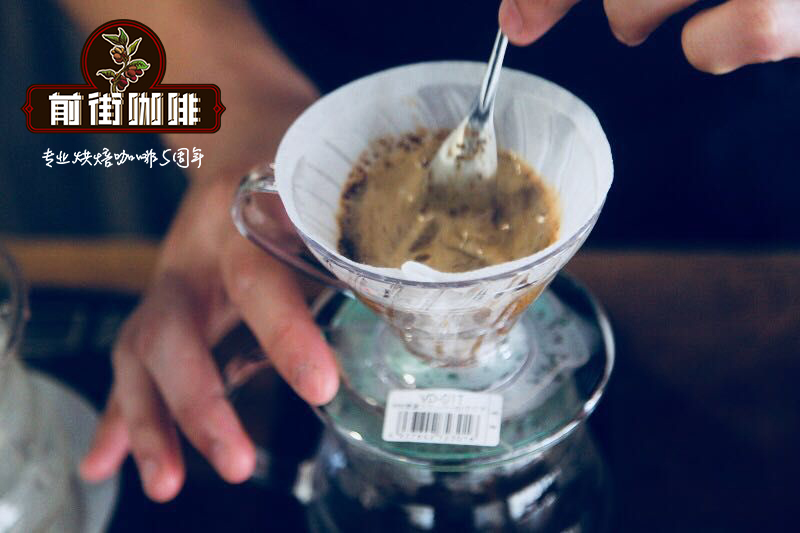
FrontStreet brews PWN Golden Mandheling as a pour-over to show it at its best: water at 87-88°C, 15g of coffee at a 1:15 ratio, ground to coarse-granulated-sugar size, poured in three stages. The first pour of 30ml fully saturates the grounds and lets them degas; the second pour of 100ml pushes up the golden foam and lifts the coffee bed; the final gentle center pour of 95ml heightens sweetness — together delivering a thick, syrupy body with caramel sweetness and chocolate and nut flavors.
Important Notice :
FrontStreet Coffee is a long-established specialty coffee roaster in Guangzhou China, selling freshly roasted beans from its own farm in Yunnan as well as dozens of carefully selected single-origin beans from around the world for both pour-over and espresso. The products deliver consistently excellent quality and great value, with shipping within 24 hours. Guangzhou's FrontStreet Coffee shop is recommended by many coffee lovers, and the beans are now available online at the Tmall 。
FrontStreet Coffee has moved to a new address:
FrontStreet Coffee Address: 315,Donghua East Road,GuangZhou
Tel:020 38364473
 Scan and follow the En Gafei WeChat official account. Please indicate that the reprint comes from "En Gafei".