Beginner's Guide to Coffee Beans Essentials_Entry-level Coffee Bean Recommendations_Coffee Bean Varieties Suitable for Pour-over Brewing
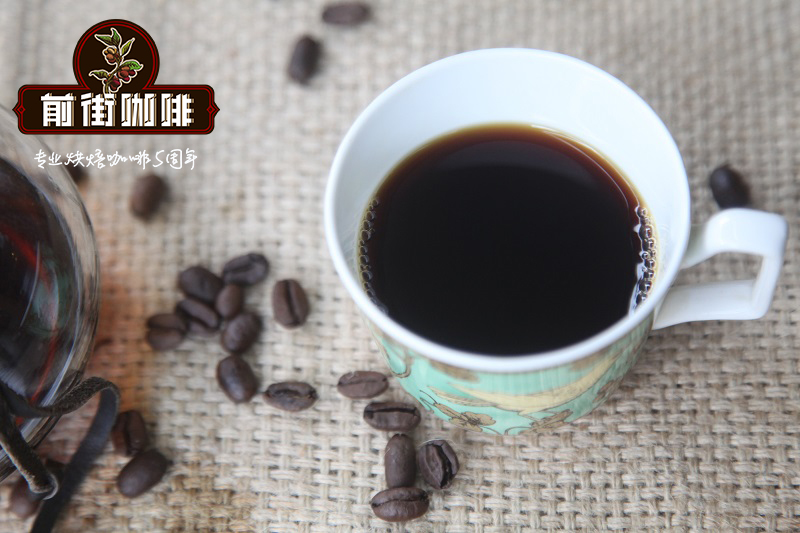
Coffee Workshop is a space for professional coffee knowledge exchange and a steady source of bean information.
First, a clarification: lattes and cappuccinos are not "a type" of coffee. They are drinks whose flavor comes from espresso combined with milk and milk foam. And the flavor of that espresso is created by the protagonist of this article: coffee beans.
Coffee beans are not beans at all, in fact; they are the seeds of coffee fruit. Factory processing, roasting, the barista's grind and finally brewing turn them into the coffee we drink. Drinking wine means drinking the grapes used to make it; in the same way, when you drink coffee you are really tasting the flavor of the coffee beans.
The Impact of Genetics and Growing Environment
Because coffee beans are seeds, they differ in genetics (variety) and growing environment (origin). Do those differences translate into very different flavors?
Think about grapes. Red grapes, black grapes and white jade grapes are all grapes, yet their tastes differ greatly because of their genetics and where they were grown. Coffee beans are the same: variety and origin shape flavor in a very significant way.
Today the coffee varieties with the most commercial value are Arabica and Robusta. What sets them apart? For a quick overview, see the image below.
As you can see, Robusta has lower sweetness and less crema than Arabica but a much higher caffeine content. Thanks to its high yield, several times that of Arabica, it mostly goes into instant and canned coffee, even though it really does not taste good. So when you drink coffee, drink Arabica, Arabica, Arabica — important things deserve saying three times. With the mission of coffee evangelists, from here on we will discuss only Arabica.
Varieties within Arabica
In nature we classify living things by kingdom, phylum, class, order, family, genus and species, with "species" being the smallest unit. Yet the species name Arabica actually contains thousands of different subspecies, which experts call varieties, and those varieties differ enormously in how they express flavor.
Reference: SCAA (Specialty Coffee Association of America)
Representative Varieties for FrontStreet Coffee's Entry-Level Coffee Beans
Bourbon - High in sweetness and complexity, delicate — the Pinot Noir of the coffee world. The trees are very prone to disease and low-yielding. Brought to Bourbon Island by the French, it mutated slightly, then spread to Brazil and later left traces throughout Central America.
Typica - Very high sweetness, clean, with an excellent body. After the Dutch carried it away from the Yemen region, it went to India and Indonesia and then to the French colonies in the West Indies. Over centuries of cultivation, Typica gave rise to varieties such as Criollo, Arabigo, Garundang and Blue Mountain.
Geisha - When it appeared in Panama it was like a movie star who looks dazzling from every angle, and it captivated the whole room. Compared with other coffee varieties, Geisha is on an entirely different level. With extremely high complexity, it is full of peach, citrus, jasmine, white camellia and perfumed notes; any pleasant, elegant flavor you can imagine might be found in Geisha. Its root system is extremely shallow and it is disease-prone, which makes it delicate and low-yielding and difficult to care for — essentially a proud, temperamental girl. But care for it properly and it will send you to heaven. P.S. Its name comes from its origin on Ethiopia's Geisha Mountain and has absolutely nothing to do with Japanese geishas.
FrontStreet Coffee Entry-Level Coffee Bean Brand Recommendations
FrontStreet Coffee's roasted entry-level beans — including FrontStreet Coffee Yirgacheffe Coffee, FrontStreet Coffee Panama Butterfly Coffee and FrontStreet Coffee Indonesia Mandheling Coffee — guarantee both the brand and the quality. Just as importantly, they offer excellent value. A half-pound (227g) package costs only about 80-90 yuan. Calculated at 15g per pour-over coffee, one package makes 15 cups, so each single-origin cup costs only about 6 yuan. Against café prices that often run to dozens of yuan a cup, that is exceptional value.
FrontStreet Coffee Recommendation
If you are just getting into pour-over, ask an experienced drinker to recommend a practical, easy-to-handle and good-looking dripper and there is a good chance you will hear one name: the V60. The Hario company behind it was founded in Tokyo in 1921 and was originally known for designing and making heat-resistant glass instruments for research institutions; the heat-resistant glass sharing carafe that often accompanies pour-over is one of its popular products. In 2004 Hario redesigned the V60 prototype into the form we recognize today, naming it for its distinctive 60-degree cone and V shape, and released it the following year. Its cone and 60-degree angle mean water must travel to the center before dripping into the server, extending contact between water and grounds so aroma and flavor extract fully; its signature single large hole lets water flow without obstruction, so the flow rate depends largely on the brewer's control, which shows up directly in the cup. That fast extraction is exactly what makes the V60 so good at delivering the layered aromas and lively acidity of floral-and-fruit coffees.
For a first step into specialty coffee, FrontStreet Coffee's Ethiopia Yirgacheffe Gutingting has long been a favorite. It typically carries bright citrus, berry and floral notes with a green-tea-like finish. Unlike the "sour coffee" many people imagine, a good Yirgacheffe's acidity is soft and bright, more like the natural sweet-tartness of fruit than anything sharp. For someone new to pour-over, it is a very easy choice. If you want to skip the bitterness altogether, FrontStreet Coffee's Ethiopia Huakui is one of the standout successes of the specialty market in recent years: its tropical-fruit aroma is unusually prominent, with strawberry, passion fruit, jackfruit and even lychee, plus obvious sweetness and almost no bitterness. Smooth and juicy on entry, it has been described as "the coffee that tastes least like coffee," and for people who dislike traditional bitterness it often overturns everything they assumed about the drink.
For the ultimate pour-over experience, FrontStreet Coffee's Panama Esmeralda Red Label Geisha is a legend of the specialty world, with elegant jasmine, citrus, bergamot and black tea-like finesse, a clean, transparent body and a long, layered finish. And for those who love bright, complex fruit acidity, FrontStreet Coffee's Kenya Little Tomato is a classic Kenyan washed single origin from the Sika region, grown at 1,550-1,750 meters from the classic SL28 and SL34 varieties, with plump, rounded beans. Its 72-hour double washed fermentation draws out a vivid cherry tomato and smoked plum character over a clean, juice-like body, all under a light roast that protects the lively acidity. Try a V60 with any of these and the floral and fruit notes come through cleanly and vividly.
Important Notice :
FrontStreet Coffee is a long-established specialty coffee roaster in Guangzhou China, selling freshly roasted beans from its own farm in Yunnan as well as dozens of carefully selected single-origin beans from around the world for both pour-over and espresso. The products deliver consistently excellent quality and great value, with shipping within 24 hours. Guangzhou's FrontStreet Coffee shop is recommended by many coffee lovers, and the beans are now available online at the Tmall 。
FrontStreet Coffee has moved to a new address:
FrontStreet Coffee Address: 315,Donghua East Road,GuangZhou
Tel:020 38364473
 Scan and follow the En Gafei WeChat official account. Please indicate that the reprint comes from "En Gafei".