
An Introduction to Sumatran Coffee Beans? Differences Between 【Gold Mandheling】 and 【Aged Mandheling】? Sum
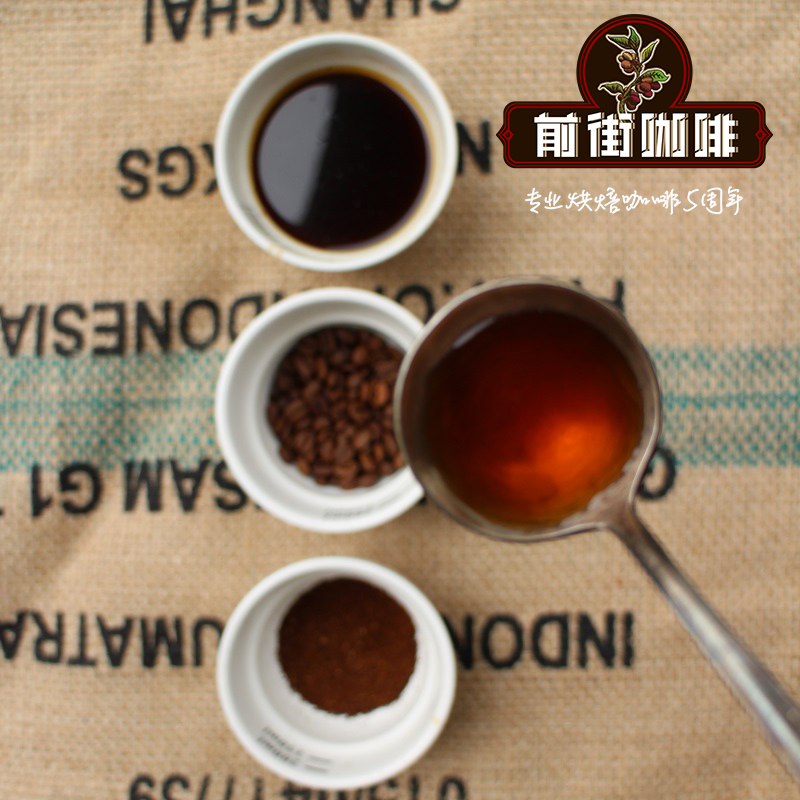
Sumatra Coffee: Golden Mandheling, Aged Mandheling, and the Price of Tiger Mandheling
Mandheling grows on Sumatra, in Indonesia — which is why it is often called Sumatra coffee. The cup is rich and full, fragrant, bitter yet mellow, with a faint sweetness. Most drinkers take it as a single origin, but it is also an indispensable component of many blends. Sumatra is one of Indonesia's largest islands, and Indonesia itself is a nation of thousands of islands, with about 90% of its coffee grown on small independent farms. The label on this coffee carries the famous Sumatran tiger, a nod to the country's character, and the flavor has distinct herbal and spicy notes backed by an aroma rich enough to suggest Indonesia's abundant natural resources and generous sun.
Before Blue Mountain became world-famous, Mandheling was regarded as the finest coffee there was. The roasted beans are large, while the green beans appear brown to dark green. It carries a particular caramel-like fragrance and a mellow, full body — sweet and bitter, without soft acidity, yet with real bitterness. Production is relatively small, so the price runs a little above ordinary beans. The best-known Mandheling comes from around Lake Toba in northern Sumatra, and the finished cup has a singular fresh herbal and woody fragrance.
Where Mandheling Comes From
The main producing areas are Java, Sulawesi, and Sumatra, and 90% of the crop is Robusta; among them, Sumatra's "Mandheling" is the most famous. The finest of the refined traditional Arabicas from northern Sumatra reach the market as Lintong and Mandheling. Strictly speaking, Lintong refers to coffee grown in a small part of the Lintong administrative region southwest of Lake Toba, where farms are scattered across high, undulating clay plateaus covered in ferns — grown without shade and without chemicals, and almost entirely in the hands of small private owners. Mandheling is the broader term, covering Lintong plus growing areas in Diari (capital Sidikalang) and northern Lake Toba under similar conditions.
How the Name Began
Mandheling is not a region, a place, a port, or a variety. The name is a phonetic mishearing of the Mandailing ethnic group. During World War II, when Japan occupied Indonesia, a Japanese soldier drank an extraordinarily fragrant coffee in a cafe and asked the owner its name. The owner thought he was being asked about his ethnicity and answered: Mandheling. After the war the soldier remembered that cup, and commissioned an Indonesian coffee merchant to ship 15 tons to Japan, where it became unexpectedly popular. The name spread from there — and that merchant is today's well-known PWN (Pawani Coffee Company).
Golden Mandheling
Golden Mandheling holds a high reputation in the coffee world, produced in the Lake Toba mountain area of North Sumatra. Pawani sells it exclusively as the finest of the Mandheling coffees. The green beans go through three rounds of careful manual selection and refined processing, and are roasted using the Arashiyama light roast approach (approximately City Roast). Alongside the rich, wild aroma Mandheling should have, the cup adds real thickness and a pure flavor with a touch of extra elegance.
More than a decade ago, Japanese buyers applied stricter quality control, using four rounds of manual sorting to remove defective beans and producing Golden Mandheling with a dark green color and uniform bean shape. That created a second wave of demand, one Europeans and Americans chased just as eagerly.
Aged Mandheling
Aged Mandheling is defined by a honey-like sweetness. A successful aged batch has shed Mandheling's less elegant acidity: astringent compounds mature into sugars, making the coffee smoother and sweeter to drink. A failed aged Mandheling is something else entirely — flat and lifeless, hard to finish.
Tiger Mandheling
Tiger Mandheling grows in Indonesia across three main islands: Sumatra, Java, and Sulawesi. Northern Sumatra is higher in elevation, and Aceh Province around Lake Tawa together with North Sumatra around Lake Toba form the main Arabica regions. Lake Tawa sits in the Gayo mountains north of Aceh Province.
Mandheling Coffee Characteristics
The flavor is rich, fragrant, bitter, and mellow with a slight sweetness. Most people drink it as a single origin, but it is also essential in blends. Mandheling has a rich, heavy taste with full body and lively character. It is neither astringent nor acidic, with body and bitterness fully expressed. Mandheling beans may be the ugliest in coffee, and fans like to say the less attractive a Sumatra bean looks, the better, richer, and smoother it tastes. It is often described as the world's most full-bodied coffee. On the tongue you feel a distinct smoothness; the acidity is low but still clearly present. That dancing micro-acidity, wrapped in the richest aroma, lets you sense the lively elements inside the gentle richness — plus a faint earthy note that some describe as herbal.
Because Mandheling has no strongly acidic character of its own, it is often used as a brewing base. Held warm for a long time, or served as iced coffee, it never turns unpleasantly astringent. After roasting the beans are quite large, the green beans brown to dark green, with that particular caramel fragrance and a mellow, full body.
FrontStreet Coffee's [Golden Mandheling] is 89 yuan for 227g, [Aged Mandheling] is 89 yuan for 227g, and [Tiger Mandheling] is 79 yuan for 227g.
FrontStreet Coffee's Recommended Brewing Method
Dripper: KONO dripper
Water Temperature: 88°C
Grind Size: Small Fuji grinder setting 4
Brewing Technique: 1:14 water-to-coffee ratio, 17g of grounds. First pour 25g of water for a 30-second bloom, then pour up to 238g, with an extraction time of about 2:30.
Why KONO
The KONO dripper has few ribs at the bottom and the filter paper sits tightly against the wall, which restricts airflow. Water and grounds stay in contact longer, holding extraction time and rate steady even with a coarse grind, so the coffee extracts fully — lifting body and concentrating the taste.
Flavor
High balance, clean, thick and solid mouthfeel, with a persistent dark chocolate aftertaste.
FrontStreet Coffee Recommendation
If Mandheling's wild, earthy depth is what draws you in, FrontStreet Coffee's own Mandheling is a natural place to start. FrontStreet PWN Golden Mandheling comes from PWN in Indonesia, produced to unusually strict standards: beans of 18 mesh and above, with fewer than three defective beans per 300g sample to meet the top G1 grade, then three rounds of hand sorting to remove every remaining defect. That work is what gives the cup its cleanliness and the intensity of its sweetness — and it is why supply is limited, with much of the genuine Golden Mandheling historically going to Japan and the United States. If you want the more untamed traditional expression, FrontStreet Lintong Mandheling is the choice, full-bodied and bittersweet with clove and woody aromatics, medium-dark roasted for low acidity and a long, dense sweetness.
For those who want Mandheling's character in milk drinks, FrontStreet Classic Blend is the returning favorite: a traditional mamba-style recipe built on Brazil's creamy, nutty base and lifted with medium-dark Mandheling, so butter, roasted chestnut, and caramel come through clearly. The Mandheling raises the body of the whole cup and adds sandalwood, herbal, and spice notes, while a small amount of Robusta boosts the crema — which makes latte art and layered Dirty drinks easy to pour.
For pour-over, FrontStreet PWN Golden Mandheling shows its best side. Use 87-88°C water, 15g of coffee at a 1:15 ratio, and a grind about the size of coarse sugar. A three-stage pour works best: 30ml to bloom and let the bed breathe, 100ml to bring out the golden foam and lift the bed, then a gentle 95ml center pour to round out the sweetness — finishing with a thick, mouth-filling body and caramel, chocolate, and nut flavors.
Important Notice :
FrontStreet Coffee is a long-established specialty coffee roaster in Guangzhou China, selling freshly roasted beans from its own farm in Yunnan as well as dozens of carefully selected single-origin beans from around the world for both pour-over and espresso. The products deliver consistently excellent quality and great value, with shipping within 24 hours. Guangzhou's FrontStreet Coffee shop is recommended by many coffee lovers, and the beans are now available online at the Tmall 。
FrontStreet Coffee has moved to a new address:
FrontStreet Coffee Address: 315,Donghua East Road,GuangZhou
Tel:020 38364473
 Scan and follow the En Gafei WeChat official account. Please indicate that the reprint comes from "En Gafei".
![Origin of Sumatra Coffee Beans? FrontStreet Coffee's [Sumatra Coffee Beans] Pricing? How to Brew](https://en.gafei.com/uploads/allimg/180920/14-1P92021141A59-lp.jpg)