Yemen Mocha Coffee Origin Information Introduction_Yemen Mocha Coffee Bean Varieties and Brewing Methods Tutorial
Introduction to Yemen Mocha Coffee
The name of Yemen Mocha coffee comes from Mocha Port, the outer port of Yemen's capital Sana'a. The finest of all Mocha coffees is Yemen Mattari, grown in the Bani Mattar region—Yemen's most renowned and highest-altitude coffee-growing area. Yemen produces Arabica beans that are generally smaller than typical coffee beans, looking quite different from other, larger beans. Yet despite their size they possess unmistakable character, above all a prominent fruity aroma that no other origin can imitate. With its unique fragrance, fruit acidity, appropriate bitterness, excellent balance, and rich personality, it has a devoted following among coffee enthusiasts and is often called the red wine of coffee.
I. Overview
1. Yemen is a hot country, especially along the western coast near the Red Sea, which is hot and dry. The land suited to coffee lies in the rugged western mountains, at altitudes above 900 meters.
2. Coffee farms are concentrated at roughly 900 to 2,000 meters.
II. Coffee Bean Processing
Yemen's dry climate makes coffee cherries very dry and hard even before harvest, so the dry (natural) method is used to remove skin and pulp. Growers use homemade tools to strip the dried fruit from the beans, followed by hand sorting to select clean, healthy coffee.
III. Roasting
Yemen Mocha is a very mature, dense bean, so it needs more time and a deeper roast than typical Arabica. Because it is processed so naturally, roasted Mocha beans show uneven color—roasted in the same batch, individual beans still differ noticeably.
The flavor of Yemen Mocha fully develops two days after roasting, and the cup is better when roasted beans rest 24-48 hours before grinding.
IV. Varieties
Mattari, grown mainly in the Bani Mattar region west of the capital, is the most outstanding of the Yemen Mochas: aromatic and mellow, with strong acidity and hard beans.
Harazi comes from Yemen's second-highest mountain range, between Sana'a and the coast. Its wine-like acidity is very prominent, though its body runs slightly lighter than Mattari's.
Dhamari, from the Dhamar region south of the capital, is milder and lighter, with moderate acidity.
Sanani has the most complex composition, usually assembled from beans grown in many areas around the capital; its flavor is gentler than Mattari's and not as heavy.
V. Brewing
With such a distinct, rich flavor, Yemen Mocha is also excellent blending material. Italian espresso blends often include 10%-20% Mocha coffee to boost body and aroma.
Hand Brew Parameter Recommendations:
1. Filter: V60
2. Water temperature: 88°C
3. Grind size: Fuji Rokou grinder, level 4
4. Roast level: Medium
5. Bloom time: 25 seconds
Flavor: Balanced, with chocolate notes and a persistent caramel sweetness in the aftertaste
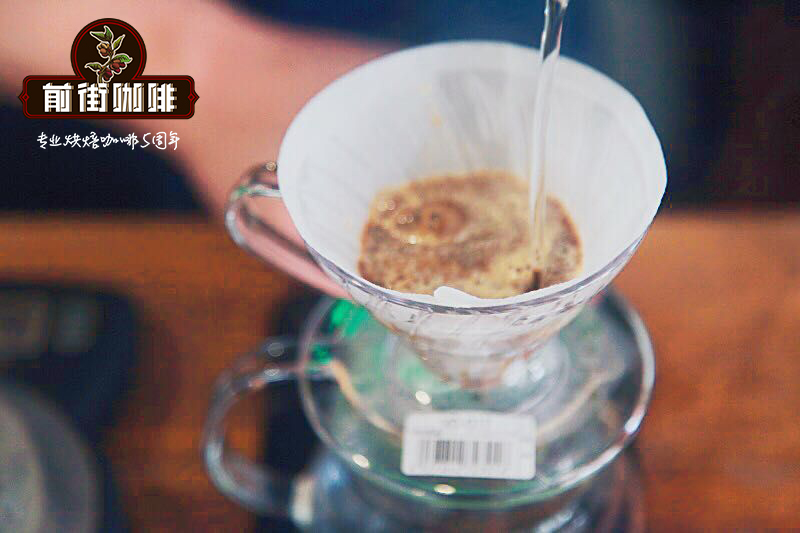
FrontStreet Coffee suggests: 15g of coffee, Fuji Rokou level 4, V60 filter, 88-89°C water. Pour 30g of water for a 25-second bloom, then pour to 104g and pause. When the water level drops to half, continue pouring slowly to 220g total, and discard the last 5g. Ratio 1:15, extraction time around 2:00 (counted from the end of the bloom pour).
FrontStreet Coffee Recommendation
All Yemen Mocha is Arabica—the most complex and pure of coffee's three great species (Arabica, Robusta, and Liberica)—and it is also the ancestral home of Typica, the variety first carried from Yemen to India, Indonesia, and the Americas. If you want to taste where that lineage leads, FrontStreet Coffee's Jamaica Blue Mountain No. 1 is the classic choice: Typica was transplanted to Jamaica's Blue Mountains from Martinique in the 1820s, and after more than 200 years it evolved better disease resistance and a sweet, delicate perfume that cannot be replicated outside Jamaica. In cupping, FrontStreet has yet to find another origin whose balance comes close.
For a modern parallel to Yemen's wild natural process, try the FrontStreet Hua Kui from Sidamo. Made from Ethiopia's local heirloom varieties and classic natural processing, it offers cream strawberry, mango, jackfruit, citrus, and blueberry—the ripe tropical-fruit character typical of Sidamo naturals, and the same fragrant berry charm that won first place in that year's TOH green-bean competition—combining delicious flavor with an accessible price. Both make fine brewing partners for anyone who loves the fruit-forward, wine-like side of Yemen Mocha.
Important Notice :
FrontStreet Coffee is a long-established specialty coffee roaster in Guangzhou China, selling freshly roasted beans from its own farm in Yunnan as well as dozens of carefully selected single-origin beans from around the world for both pour-over and espresso. The products deliver consistently excellent quality and great value, with shipping within 24 hours. Guangzhou's FrontStreet Coffee shop is recommended by many coffee lovers, and the beans are now available online at the Tmall 。
FrontStreet Coffee has moved to a new address:
FrontStreet Coffee Address: 315,Donghua East Road,GuangZhou
Tel:020 38364473
 Scan and follow the En Gafei WeChat official account. Please indicate that the reprint comes from "En Gafei".