Brazilian Coffee Bean Grading and Flavor Profiles: How to Brew Red Bourbon Coffee
As a major coffee-producing nation, Brazil is also the world's second-largest coffee consumer, behind the United States. Brazilian coffee beans move global coffee prices. Hit especially hard by the COVID-19 pandemic, Brazil's harvest progress once slowed, and combined with tight shipping schedules, Arabica coffee futures soared.
FrontStreet Coffee believes the greatest characteristic of Brazilian beans is their large production volume and stable flavor. That is inseparable from Brazil's flat plateau terrain, which allows for mechanized operations. Brazilian coffee is generally grown at low altitudes, around 1,000 meters, which makes it hard to rank among specialty coffees, so it is often exported as a bulk commodity.
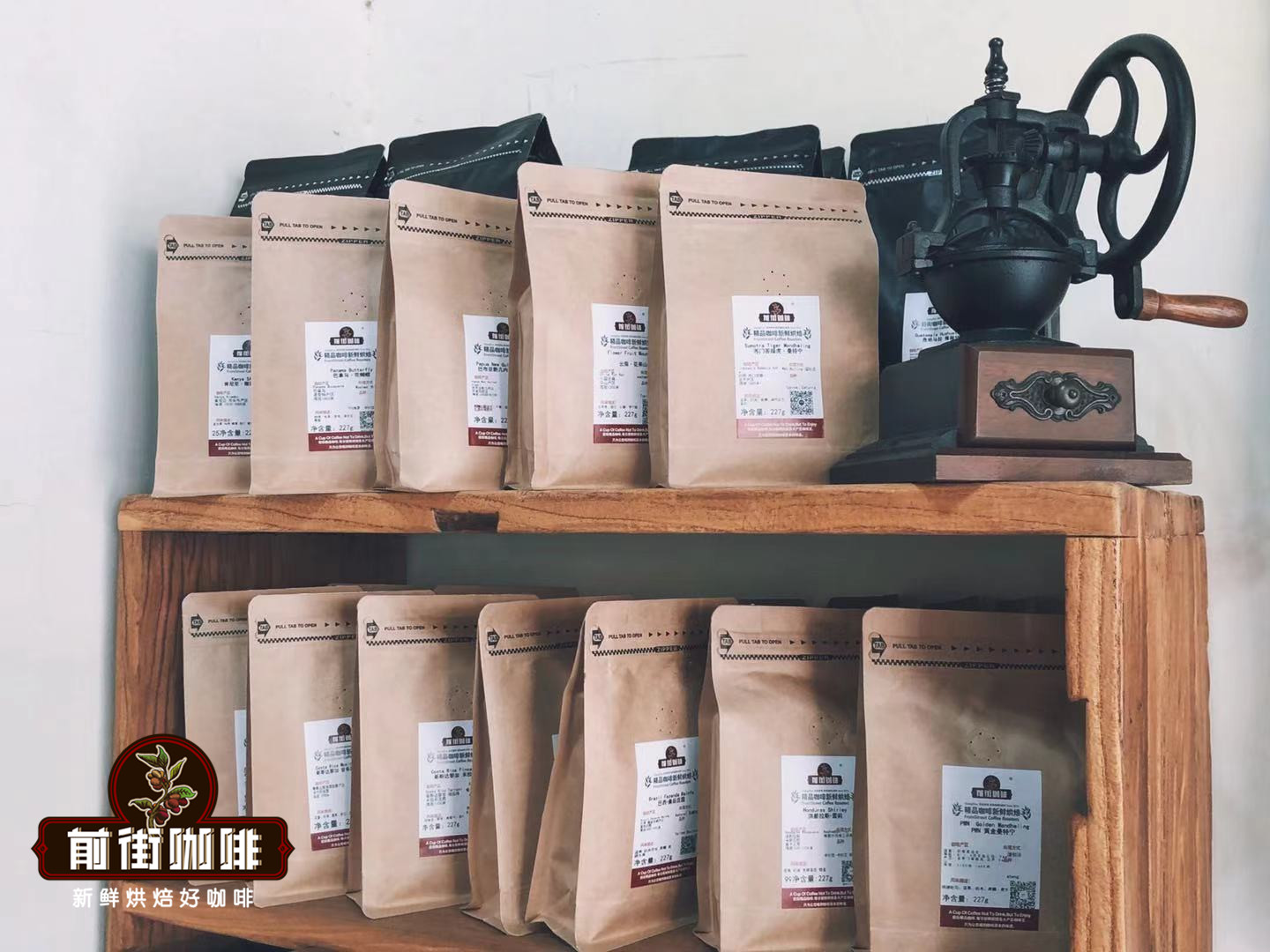
Brazil is not without specialty estates, though. These differ from large farms: they pursue coffee flavor more passionately. As the country of origin for the Cup of Excellence, Brazil focuses on both quality and quantity. The two Brazilian coffees from FrontStreet Coffee reflect those two priorities: one representing the flavor of Brazil's basic producing regions, FrontStreet Coffee's Brazil Cerrado coffee beans, and the other representing specialty estates, FrontStreet Coffee's Brazil Queen Estate Yellow Bourbon coffee beans.
FrontStreet Coffee's Brazil Cerrado Coffee Beans
FrontStreet Coffee's Brazil Cerrado beans are part of the Daily Brew series. The original idea behind that series was to let more friends who want to get into coffee taste beans from specialty regions at a relatively low price. So FrontStreet Coffee looks for beans around the world that carry the flavor of their local region, and they must combine excellent flavor with an affordable price.
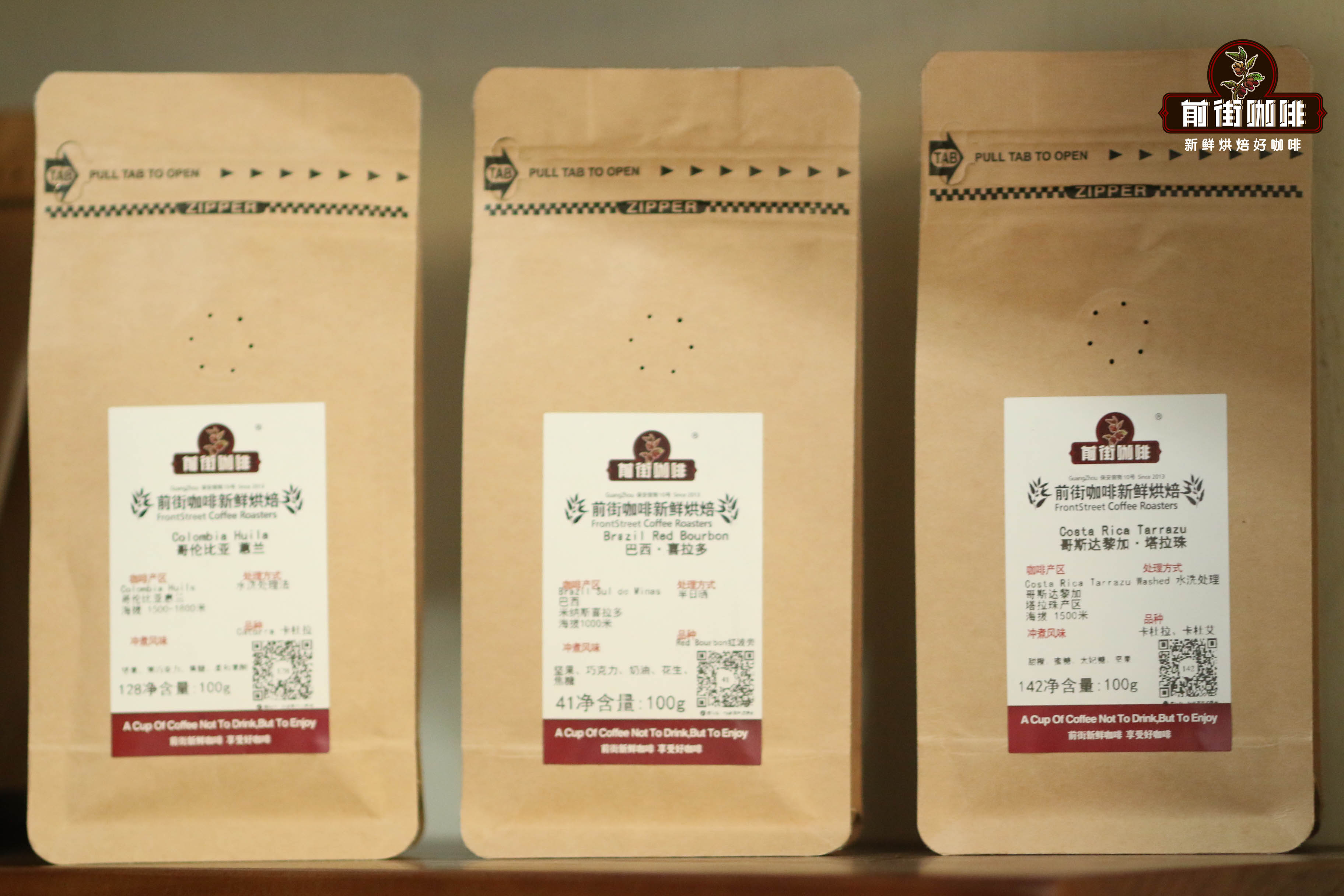
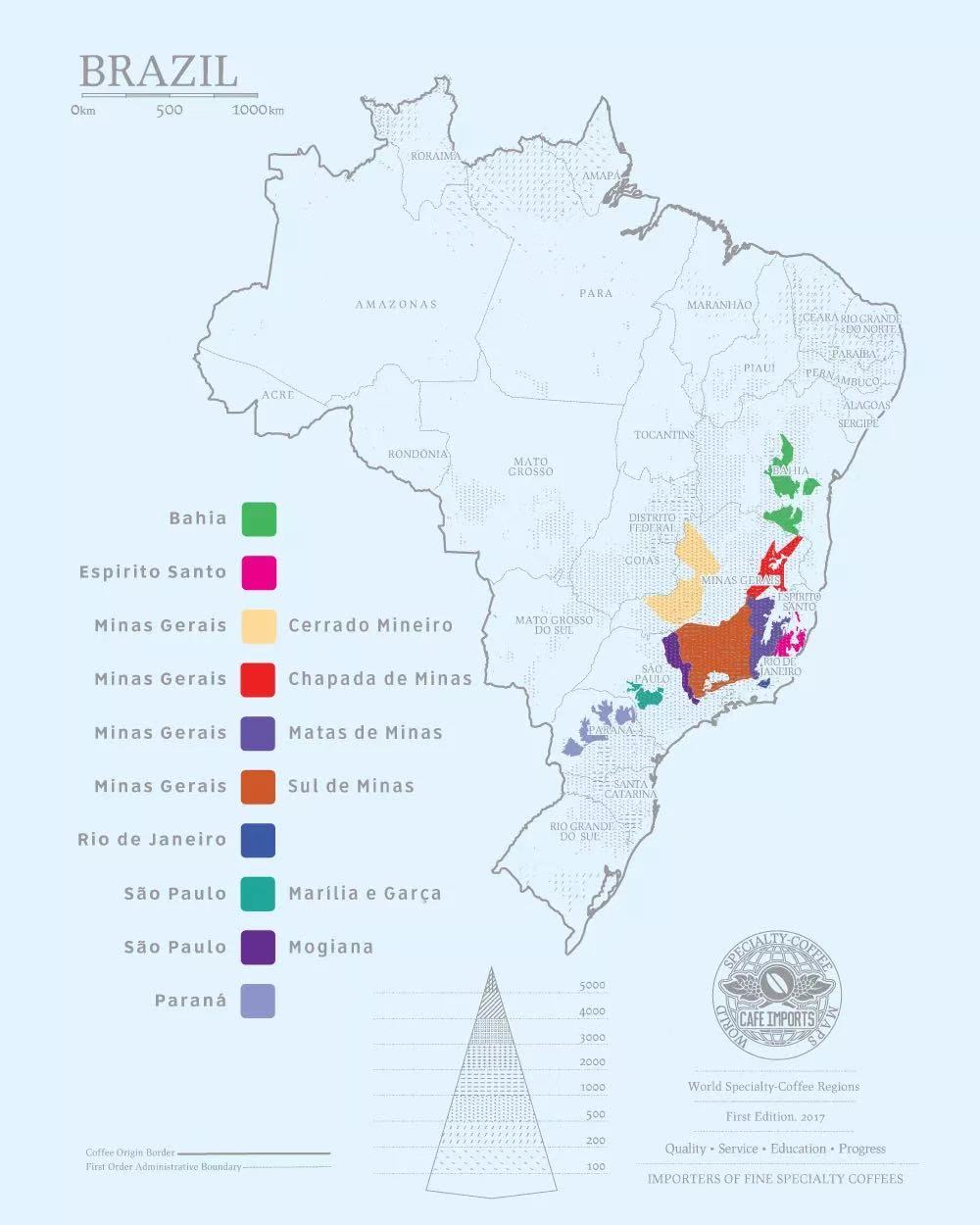
Cerrado is a high-quality Arabica producing region in Brazil, with flat terrain and an altitude of around 1,000m. It is Brazil's most advanced mechanized cultivation area, growing mainly Red Bourbon. Red Bourbon is a pure, ancient Arabica variety with a solid mouthfeel, high-quality acidity and a wine-like aroma. In processing, the Cerrado region uses a locally appropriate semi-dry method, which greatly reduces the defect rate and improves overall quality. So in this FrontStreet Coffee Brazil Cerrado bean we taste a very clean mouthfeel, with chocolate and peanut flavors and a caramel-like aftertaste.

FrontStreet Coffee's Brazil Queen Estate Yellow Bourbon Coffee Beans
FrontStreet Coffee's other Brazilian coffee comes from the famous COE-winning Queen Estate, in the Mogiana region. This region is dominated by small and medium-sized individual estates producing high-quality, flavorful coffee. Queen Estate grows Yellow Bourbon, which accounts for 30% of its annual production. Yellow Bourbon is a variety of Red Bourbon, named for its yellow color when ripe. In flavor, Yellow Bourbon has better fruit acidity and aroma than Red Bourbon.
For this FrontStreet Coffee Brazil Yellow Bourbon, Queen Estate uses a refined natural process. This differs from the natural processing in Brazil's large producing regions by applying the standards of specialty estates, with strict control over the drying degree of the beans and the management process. Drinking this FrontStreet Coffee Brazil Queen Estate coffee, we experience very high sucrose sweetness, along with a balanced flavor of dark chocolate and nuts.
Brazilian Coffee Bean Grades
Among the many coffee-growing countries in Central and South America, Brazil has relatively low altitudes. Brazil therefore does not emphasize the hard beans that only grow at high altitude, as Colombia and other countries do. Instead, Brazilian coffee grades are classified by four criteria: particle size, defect rate, cupping score and flavor.
Flavor Grade Classification
From high to low: Strictly Soft, Soft, Softish, Hardish, Rioy.
Defect Rate Classification
Classified by the number of defective beans: in every 300g of raw beans, 6 defective beans constitute NY.2. Completely defect-free beans can become NY.1, but such beans are rare and cannot be supplied in consistent volume. Therefore, among Brazil's raw beans, the best is NY.2.

| Type | Defective Beans (per 300g) |
|---|---|
| NY.2 | 6 |
| NY.2/3 | 9 |
| NY.3 | 13 |
| NY.3/4 | 21 |
| NY.4 | 30 |
| NY.4/5 | 45 |
| NY.5 | 60 |
| NY.5/6 | >60 |
Cupping Quality Classification
From high to low: Fine Cup, Fine, Good Cup, Fair Cup, Poor Cup, Bad Cup. FC (Fine Cup) and GC (Good Cup) are the most common.
Particle Size Classification
The largest mesh size for Brazilian beans is 19, but production is limited. Therefore, 17 and 18 mesh are considered the highest grades.
| Type | Quality |
|---|---|
| NY.2 | 17-18 mesh FC |
| NY.2/3 | 14-16 mesh FC |
| NY.3/4 | DD Quality |
| NY.4/5 | 14-16 mesh GC |
FrontStreet Coffee Roasting Recommendations
FrontStreet Coffee believes Brazilian beans carry the balance characteristic of South American regions. We therefore use medium roasting for Brazilian coffee, appropriately extending the caramelization reaction during the development stage to convert acidic substances into sweetness as fully as possible. During roasting, heat is adjusted in small increments with a slow temperature rise, keeping the color value of the bean surface and the core similar to ensure balance.

FrontStreet Coffee Brewing Recommendations
Brewing Parameters
Use a Kono dripper, 88°C water temperature, 15g coffee dose, 1:15 coffee-to-water ratio, medium-fine grind with an 80% pass-through rate on a China standard #20 sieve.
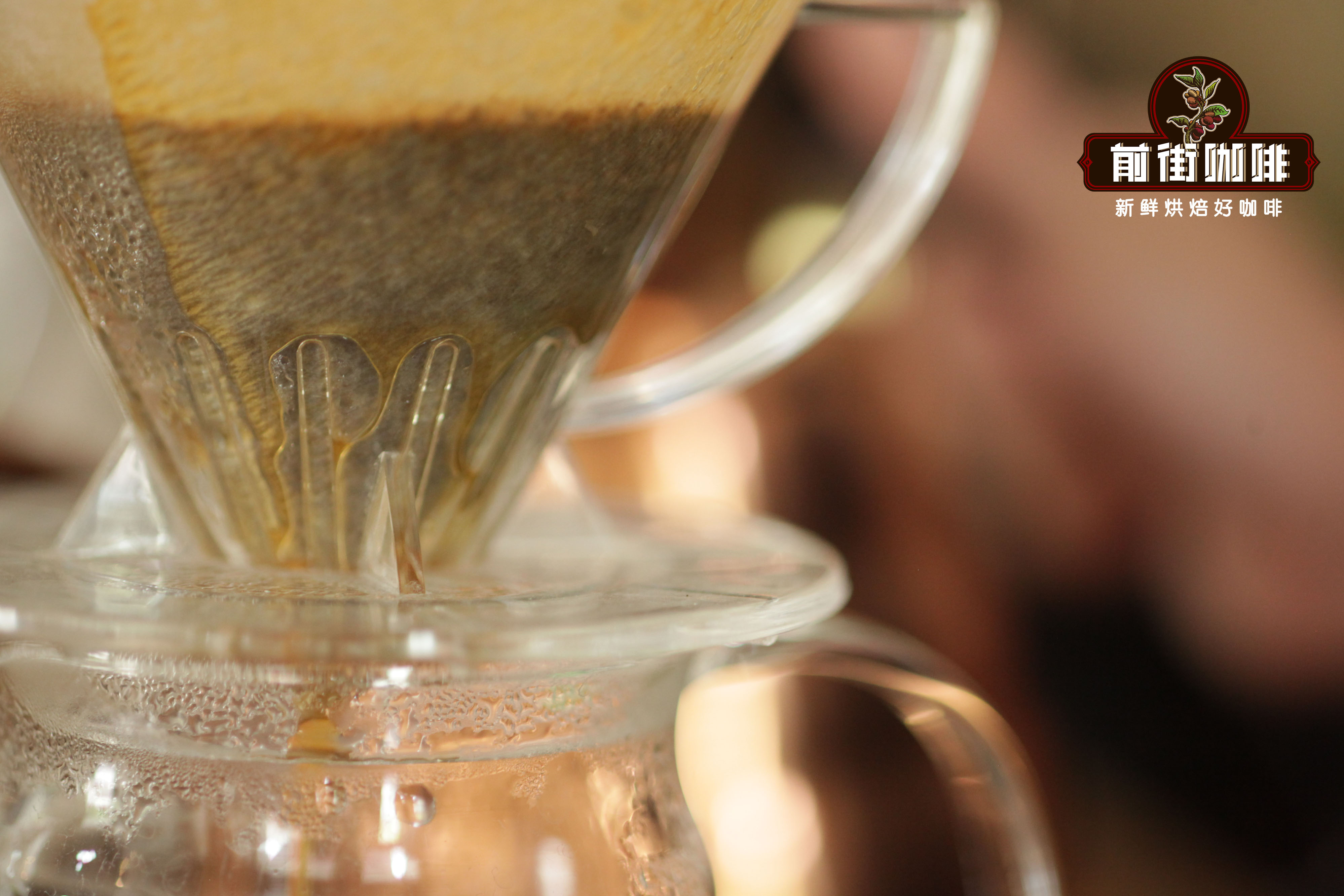
For darker-roasted Brazilian beans, and to highlight their richness, FrontStreet Coffee chooses the Kono dripper. The Kono's characteristic is its immersion function, which extracts more coffee material through immersion and enhances the rich mouthfeel. Because its ribs are few and located at the bottom, the filter paper clings closely to the dripper to restrict airflow, slowing the water flow and increasing contact time between water and coffee. Incidentally, the Kono dripper is not only suited to the darker-roasted FrontStreet Coffee Brazil Queen Estate, but also to medium-dark beans such as FrontStreet Coffee Jamaica Blue Mountain No. 1 and FrontStreet Coffee PWN Golden Mandheling.
A water temperature of 88°C is chosen as a relatively low brewing temperature to avoid extracting too many undesirable flavors, because the darker the roast, the more undesirable flavors can appear.
FrontStreet Coffee Brewing Technique
Adopt segmented extraction: 30g of water for a 30-second bloom, then continue pouring in small circular motions to 125g. When the water level drops and the coffee bed is about to show, continue pouring to 225g and stop. Timing starts from the bloom, and extraction time is 2 minutes. Keep the technique for both beans as consistent as possible.

Brazilian Coffee Bean Flavor Descriptions
FrontStreet Coffee Brazil Queen Estate Coffee Beans: prominent chocolate and nutty flavors, with floral and spice aromas, caramel sweetness and a Pu-erh tea aftertaste. Overall a relatively rich, smooth mouthfeel with balanced flavor.
FrontStreet Coffee Brazil Cerrado Coffee Beans: obvious sweetness on entry, with a faint lemon aroma, rich nutty flavors and obvious dark chocolate in the later stage. The overall feel is relatively round.
FrontStreet Coffee Recommendation
Beyond single origins, Brazil is the backbone of great espresso. FrontStreet Classic Blend, one of the most popular recipes in the lineup, adds a little Robusta to a base of coffee from three regions and roasts it medium-dark, drawing on the old "Mamba" style of Mandheling and Brazil. The result is a rich, golden crema and a full-flavored shot that even beginners can pull with confidence.
For a gentler, more everyday espresso, FrontStreet Fine Blend is the longest-serving recipe in FrontStreet's stores, built from Brazil Cerrado and Colombia Huila. Its classic, familiar espresso flavor suits both home and commercial use, with nut, dark chocolate and caramel notes and a comfortable bittersweet balance that stays smooth with milk and holds latte art well.
And for something balanced yet distinctive, FrontStreet Black Cocoa Blend combines Yunnan washed small bean with Brazil semi-dry coffee. It brings the ripe-plum acidity of the nutty profile together with creamy chocolate and cocoa cookie aromas, with a balanced taste and a golden, glossy crema - a strong choice for shops and home machines alike.
Important Notice :
FrontStreet Coffee is a long-established specialty coffee roaster in Guangzhou China, selling freshly roasted beans from its own farm in Yunnan as well as dozens of carefully selected single-origin beans from around the world for both pour-over and espresso. The products deliver consistently excellent quality and great value, with shipping within 24 hours. Guangzhou's FrontStreet Coffee shop is recommended by many coffee lovers, and the beans are now available online at the Tmall 。
FrontStreet Coffee has moved to a new address:
FrontStreet Coffee Address: 315,Donghua East Road,GuangZhou
Tel:020 38364473
 Scan and follow the En Gafei WeChat official account. Please indicate that the reprint comes from "En Gafei".