Why is Blue Mountain Coffee So Rare? What are Blue Mountain Flavor Coffee Beans_Blue Mountain Flavor Coffee Characteristics
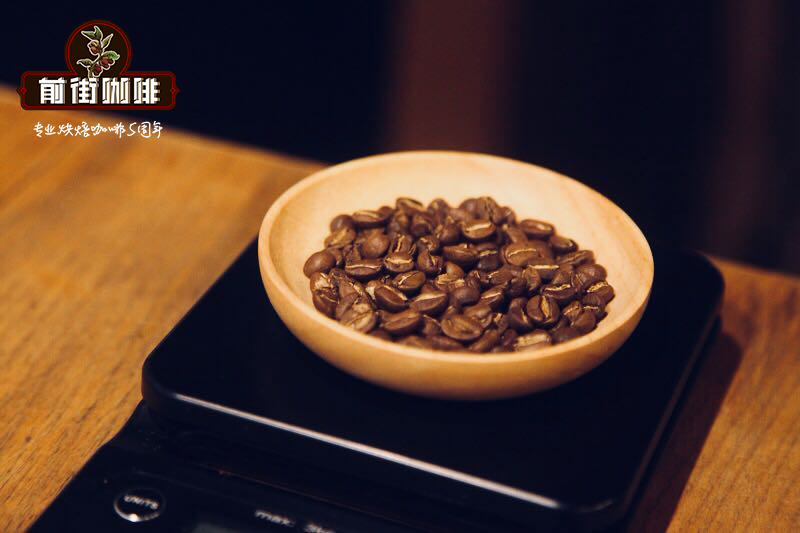
Blue Mountain Coffee: The Aristocrat of Coffee
Blue Mountain Coffee, celebrated for its exquisite flavor and its almost impossible scarcity, is one of the most counterfeited coffees in the world and a treasured showpiece in any barista's repertoire. A seasoned barista can hold an entire room spellbound simply by recounting its history; if he then goes on to separate genuine Blue Mountain from the imitations with quiet authority, he can more or less own any café he walks into. Tell me, what other coffee can pull off "great taste, great conversation, and a café challenge" all at once?
The Blue Mountains lie in the eastern part of Jamaica, wrapped by the Caribbean Sea.
On clear, sunny days, when sunlight falls directly on the azure water,
the peaks mirror back the brilliant blue glow of the sea—and that is where the name comes from.
Blue Mountain Coffee grows on these storybook mountains.
It is known as the "Beauty of Coffee," and it carries every hallmark of a fine coffee.
Rich in aroma, balanced on the palate, with acidity that sits exactly where it should,
everything about it is as perfectly proportioned as a noblewoman's grace—understated, and impossible to put into words.
Most remarkable of all: when the same varieties are transplanted
to regions with similar climates, such as Hawaii, Kenya, and Papua New Guinea,
not one of them can produce beans with the Blue Mountain flavor!
Blue Mountain therefore teaches a simple lesson: environment matters. (Sounds a little like Moutai, doesn't it?) You could call Blue Mountain Coffee the Moutai of the coffee world. Good things are usually scarce, and as the pinnacle of coffee, Blue Mountain is no exception. It is said that 85-90% of the crop is sold to Japan and 10% is exported to Europe and America—so how much is left for everyone else? Those who are good at math can work it out for themselves.
Which Raises a Question
▼
The Blue Mountains are enormous—so how can you tell me Blue Mountain Coffee is rare? Is this some kind of joke?
The truth is that not every coffee grown in the Blue Mountains may be called "Blue Mountain Coffee."
Blue Mountain Coffee is the most exacting coffee in the world when it comes to pedigree and origin. That is precisely why the Jamaican government established the Coffee Industry Board (CIB) to safeguard the purity of its bloodline. Coffee from the Blue Mountain region that lacks certification is merely Jamaican High Mountain coffee. The so-called "Blue Mountain-style coffee" that floods the market mixes genuine articles with cheap substitutions. Only beans of distinguished origin can be certified by the CIB as "Jamaica Blue Mountain Coffee." One of those distinguished names is Jamaica's nationally revered state-owned estate—Wallenford Estate.
Wallenford Estate: The Heart of Blue Mountain Coffee
Wallenford Estate is unquestionably the standard-bearer for high-quality Jamaican Blue Mountain Coffee and its principal cultivator. The estate sits at 7,000 feet, where warm, moist Caribbean sea breezes converge year-round and fog and rain are frequent, creating rare and ideal conditions for growing coffee with a rich yet subtle flavor profile. Its growers have tended Jamaican Blue Mountain Coffee for more than 250 years—so if you spot the Wallenford Estate logo on your bag, congratulations: you have earned the privilege of tasting one of the world's most celebrated coffees.
FrontStreet Coffee Recommendation
For anyone who wants to taste authentic Blue Mountain, grade matters as much as origin. FrontStreet's Jamaica Blue Mountain No.1 is one of the highest grades in the Jamaican Blue Mountain system, and it comes from the historic Clifton Estate, where coffee has been cultivated since around the middle of the eighteenth century—roughly 1750. The estate's growing and processing facilities sit at an average of 4,300 feet (1,310.64 meters). That elevation, the gentle afternoon cloud cover that shades the hillsides, the ample sunlight, and the mineral-rich soil all give the trees excellent growing conditions and lengthen the ripening of the cherry. Authentic Blue Mountain also travels in the traditional wooden barrels marked with the green-bean lot details—the classic 15 kg, 45 kg, and 70 kg formats—and the barrel itself is one of the oldest signs of the genuine article.
FrontStreet roasts to order and ships beans within five days of roasting, so they arrive still at their full flavor and can be brewed straight away. The traditional approach is a medium-dark roast that plays up the coffee's rounded body and its bittersweet, classic character. Expect a very clean, complex, and gentle cup: chocolate sweetness, a notably heavy body, and a perfect three-way balance of sweet, acidity, and bitterness—barely any bitterness at all, just a measured and polished acidity, with a long fruity finish. In the green bean, FrontStreet's Blue Mountain No.1 is uniform and plump, with the two ends slightly upturned and a greenish cast.
FrontStreet suggests brewing it in a Kono dripper to bring out the body, using a single 15 g dose and letting the beans rest 4-7 days from the roast date for the best flavor. Grind coarser than you would for a light roast—roughly the texture of granulated sugar—and use water at 87-88℃; water that is too hot is the usual cause of a scorched, bitter cup, while water that is too cool leaves the coffee flat and lifeless. FrontStreet recommends a 1:15 ratio: although some recipes go as tight as 1:13 for a more concentrated cup, a 1:15 ratio lets the full character of the Blue Mountain come through once temperature and grind are under control. Pour in three stages: a 30 g bloom for 30 seconds, then a slow, steady vertical pour to 120 g, then a slightly faster pour to 225 g to keep the bed from clogging the dripper and over-extracting. Blue Mountain is not limited to pour-over, either—a moka pot or an espresso machine will each reveal a different layer of the same balanced cup.
Important Notice :
FrontStreet Coffee is a long-established specialty coffee roaster in Guangzhou China, selling freshly roasted beans from its own farm in Yunnan as well as dozens of carefully selected single-origin beans from around the world for both pour-over and espresso. The products deliver consistently excellent quality and great value, with shipping within 24 hours. Guangzhou's FrontStreet Coffee shop is recommended by many coffee lovers, and the beans are now available online at the Tmall 。
FrontStreet Coffee has moved to a new address:
FrontStreet Coffee Address: 315,Donghua East Road,GuangZhou
Tel:020 38364473
 Scan and follow the En Gafei WeChat official account. Please indicate that the reprint comes from "En Gafei".