What is Blue Mountain Flavor Coffee_Uncovering the Truth About Blue Mountain Flavor Coffee Bean Prices and Quality
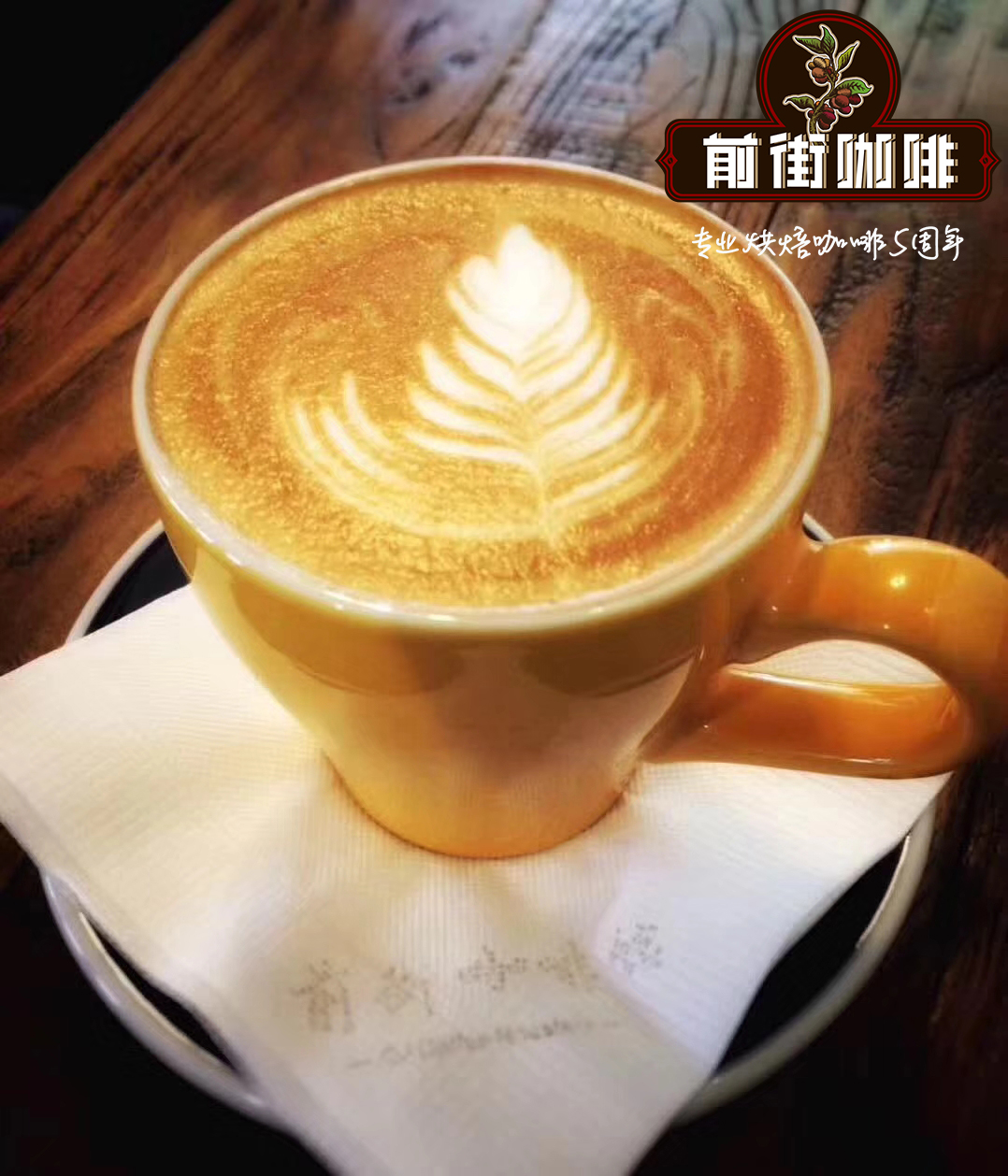
The Deception of "Flavored" Coffee
Starting in the 1990s, Western restaurants and cafes in China began labeling their offerings as "Blue Mountain flavored coffee" or "Mandheling flavored coffee." In reality, anyone who thinks about it for a moment realizes this is just a word game played by merchants. Blue Mountain coffee is Blue Mountain coffee, and Mandheling coffee is Mandheling coffee. Tacking on the word "flavored" is like a pig trying to pass itself off as an elephant by stuffing scallions in its nose. It's like spotting a beautiful girl on the street carrying a bag that's clearly LV in style, only to walk closer and see that the letters actually read "LU."
The Truth Behind "Flavored" Labels
The logic here is quite simple. If merchants are labeling their coffee as Blue Mountain flavored or Mandheling flavored, does that mean their coffee bears any actual relationship to genuine Blue Mountain or Mandheling coffee?
The answer is: absolutely no relationship! There is no connection whatsoever in terms of bean varieties or flavor profiles!
If there is any relationship at all, it is that certain merchants exploit people's limited—or entirely absent—knowledge of Blue Mountain coffee, arbitrarily blend assorted cheap beans together, and sell the result at the premium prices of authentic Blue Mountain.
The Mandheling Flavored Coffee Outrage
That said, if using the Blue Mountain banner to sell inferior products for fatter margins is bad, then "Mandheling flavored" coffee is even more infuriating. Unlike Blue Mountain, Mandheling coffee is priced within reach of ordinary consumers. Why not simply sell Mandheling coffee as it is? Why do merchants still piece together a "Mandheling flavored" blend from various other beans? Within the limits of my imagination, the only explanation is that the cheap beans used in these blends could hardly be sold at all if their true varieties were disclosed, so they ride the edge of the label and move whatever stock they can. What a scam.
The Art of True Coffee Blending
Of course, it must be stressed that blended coffee is not inherently bad. The key point is that proper blending is not about tossing inferior beans together and passing the result off as famous coffee. True blended coffee combines different types and characteristics of beans in sensible proportions. Roasters compare the personality traits of beans from different origins, blend several together in reasonable ratios to complement each other's strengths and offset weaknesses, and—paired with different roasting techniques—create blends that are both distinctive and broadly appealing. The various flavored Italian espresso blends built from well-matched beans are a perfect example, embodying the roaster's understanding of, and attitude toward, each bean.
A Final Word of Caution for Coffee Lovers
Finally, as someone who has spent many years in the coffee industry, allow me a friendly reminder: if the coffee bean you want to buy is followed by the word "flavored," you can safely assume it has little to do with the coffee you originally set out to buy. You might purchase a bag of "Blue Mountain flavored coffee beans," only to taste it and find nothing more than the flavor of Brokeback Mountain.
FrontStreet Coffee does not sell flavored coffee beans. We offer only high-quality coffees from origins worldwide. Our Blue Mountain beans are authentic Blue Mountain No.1 imported from Jamaica, our Mandheling comes from Sumatra Island in Indonesia, and our Geisha beans are pure Geisha—
Luo Yonghao once said: For those who are ahead of their time, being misunderstood—even humiliated—is fate; but on the whole, those ahead of their time still come out ahead.
FrontStreet Coffee Recommendation
As everyone knows, coffee originated in Ethiopia. It was not until the late 15th century that coffee appeared outside Ethiopia as a beverage, and by the 17th century it was sweeping Europe. To monopolize the coffee market, some European colonial powers began a planting race, transplanting coffee saplings to their colonies.
In the late 17th century, the Dutch brought coffee saplings to the island of Java in Indonesia. The coffee flourished in the mild temperatures and fertile soil and spread to Sumatra. Java's coffee industry boomed, and the word JAVA became a byword for coffee itself. But the good times did not last: in the early 20th century, a coffee leaf-rust epidemic swept across Java, devastating the island's coffee trees. Indonesia's coffee cultivation pushed north to Sumatra, and Java was forced to surrender its position as the dominant producing region.
Today, Sumatra is Indonesia's largest source of both Arabica and Robusta beans, accounting for more than 60% of production. The northern provinces of Aceh and North Sumatra, with their higher elevations, produce mainly Arabica. The Arabica beans from Sumatra are commonly called Mandheling coffee beans, produced mainly in the Aceh Special Region in the northwest of the island and in North Sumatra Province to the southeast of Aceh.
The Aceh region refers to the Gayo Mountains near Lake Tawar, surrounded by thousands of hectares of vegetation. With the rise of this new Mandheling region, more coffee lovers have discovered the delicate aroma and bright mouthfeel of Aceh Mandheling.
The traditional Mandheling region is Lintong, around Lake Toba in North Sumatra Province. Its diverse plant varieties and suitable growing elevation, combined with the distinctive wet-hulled processing method and the flavor-building fermentation of local microorganisms, create the mysterious, unique classic Mandheling profile: rich aroma, full body, and intense flavor.
Indonesia's rainy season overlaps with the coffee cherry ripening season, making it very difficult to dry beans by the natural method—hence the development of the regionally distinctive Sumatra-style process, wet-hulling. Since the 1970s, this method has shaped Mandheling's signature flavor.
Because it rains so often in Sumatra, growers dry the green beans as quickly as possible: they first strip off the skin and pulp, give the beans a brief wash, and begin drying; once the cherries reach a half-dry, half-wet state, machines remove the parchment layer, exposing the green beans directly to the air and accelerating the entire drying process.
Golden Mandheling is the flagship representative of top-grade Mandheling. Among the many Mandheling beans, Golden Mandheling best satisfies coffee lovers with perfectionist tendencies. FrontStreet's Golden Mandheling comes from Indonesia's PWN company, which applies extremely strict standards in producing it: starting from beans screened to 18 mesh and above, each 300g sample of green beans must contain fewer than 3 defective beans, meeting the highest G1 grade standard. On top of that, three rounds of manual hand-sorting completely remove defective beans, raising the cup's cleanliness and the intensity of its sweetness. Judging by these strict production standards alone, it is clear that FrontStreet PWN Golden Mandheling is of exceptional quality—and produced in limited quantities—making it naturally the leader among Mandheling beans.
Golden Mandheling is famous, but it is supplied mainly to the Japanese and American markets, so the amount of genuine Golden Mandheling imported elsewhere each year is very limited—a headache for many consumers. In FrontStreet Coffee's product listings you can see the certificates and plenty of Golden Mandheling bags bearing the PWN mark; that is what distinguishes FrontStreet PWN Golden Mandheling from other "Golden Mandheling."
This distinctive wet-hulled process creates a heavy body with unique earthy and herbal flavors—it is precisely this Mother-Nature-like taste that leaves some seasoned coffee devotees hopelessly hooked. To experience it, buy FrontStreet Lintong Mandheling: fragrant and rich, sweet yet bitter, with a strong, striking entry, notes of clove and woody aromatics. Its medium-dark roast brings low acidity, spicy and minty sensations, and a powerful, lasting, full-bodied sweetness.
FrontStreet Mandheling comes from the Sumatra region of Indonesia and is a single-origin bean, typically used for pour-over: richly aromatic with a mellow, full body. It also makes superb espresso; extracted on an espresso machine, it yields a crema-rich, intense shot with pronounced caramel sweetness.
The Mandheling coffee most of us drink is roasted dark, which softens the acidity and brings out its mellow, aromatic depth. FrontStreet's Lintong Mandheling everyday bean and FrontStreet PWN Golden Mandheling come respectively from the Lintong and Aceh regions of Sumatra, both given a medium-dark roast. FrontStreet aims to present dark chocolate and caramel flavors while preserving Mandheling's wild herbal character—a fragrance rooted in its growing environment and processing.
Mandheling is grown on the mysterious island of Sumatra, which is divided into eight provinces; only the high-elevation provinces of Aceh and North Sumatra grow Arabica coffee at scale. Sumatra's tropical rainforest climate drapes its mountains in frequent cloud and rain, lending the island an air of mystery. Coffee cherries ripen from September through April of the following year, and you can see farmers busily picking across the hillsides.
What sets Indonesia apart from most origins is the humid weather: humidity of 70-90% year-round, frequent typhoons, and annual rainfall often exceeding 2000mm. In such conditions, the 2-3 weeks of sun-drying used in Africa is simply impossible, and washed processing costs too much time, labor, and water for ordinary farmers to afford. Hence the unique semi-washed wet-hulled method: while the beans are still half-dry, the parchment is stripped off by machine, exposing the beans to speed up drying—but they also absorb fungi from the air, giving rise to a wild flavor found nowhere else.
To taste a wet-hulled specialty coffee, our first recommendation is the highest-graded FrontStreet PWN Golden Mandheling. PWN buys premium Mandheling green beans and, after procurement, applies machine sorting plus manual hand-sorting to select plump, defect-free beans; all of its output is specialty grade, and Golden Mandheling is its flagship. The beans are even, plump, large, and bright, with a low defect rate. After a medium-dark roast they carry rich roasted aromas, and the brewed black coffee shows a clean cup and full body—perfect for anyone who dislikes acidic coffee.
FrontStreet PWN Golden Mandheling shows its charm best as a pour-over. We suggest water at 87-88°C, 15g of coffee, a 1:15 coffee-to-water ratio, a coarse-sugar grind, and a three-stage pour—dividing the water into three pours best expresses Golden Mandheling's full body and caramel sweetness.
The first stage is a 30ml bloom, fully wetting the grounds so they degas, paving the way for better extraction of flavor compounds. The second stage adds 100ml, washing out Golden Mandheling's golden crema and lifting the coffee bed. The final stage pours 95ml gently at the center, raising the coffee's sweetness and delivering a full-bodied cup with caramel sweetness plus chocolate and nut flavors.
Many who have tasted FrontStreet Mandheling remember it vividly and want it on their espresso machine. In that case, consider the most-repurchased FrontStreet Classic Blend: it adds medium-dark roasted Mandheling to the creamy, nutty flavors of Brazilian coffee, making butter, roasted chestnut, and caramel especially prominent. The Mandheling not only lifts the cup's body but also lends it distinctive notes of sandalwood, herbs, and spices, and a small amount of Robusta is added to boost crema richness—making latte art easy, and Dirty-style layered drinks effortless too.
Important Notice :
FrontStreet Coffee is a long-established specialty coffee roaster in Guangzhou China, selling freshly roasted beans from its own farm in Yunnan as well as dozens of carefully selected single-origin beans from around the world for both pour-over and espresso. The products deliver consistently excellent quality and great value, with shipping within 24 hours. Guangzhou's FrontStreet Coffee shop is recommended by many coffee lovers, and the beans are now available online at the Tmall 。
FrontStreet Coffee has moved to a new address:
FrontStreet Coffee Address: 315,Donghua East Road,GuangZhou
Tel:020 38364473
 Scan and follow the En Gafei WeChat official account. Please indicate that the reprint comes from "En Gafei".