The Flavor and Profile of Ipanema Estate's Select Coffee Beans from Brazil
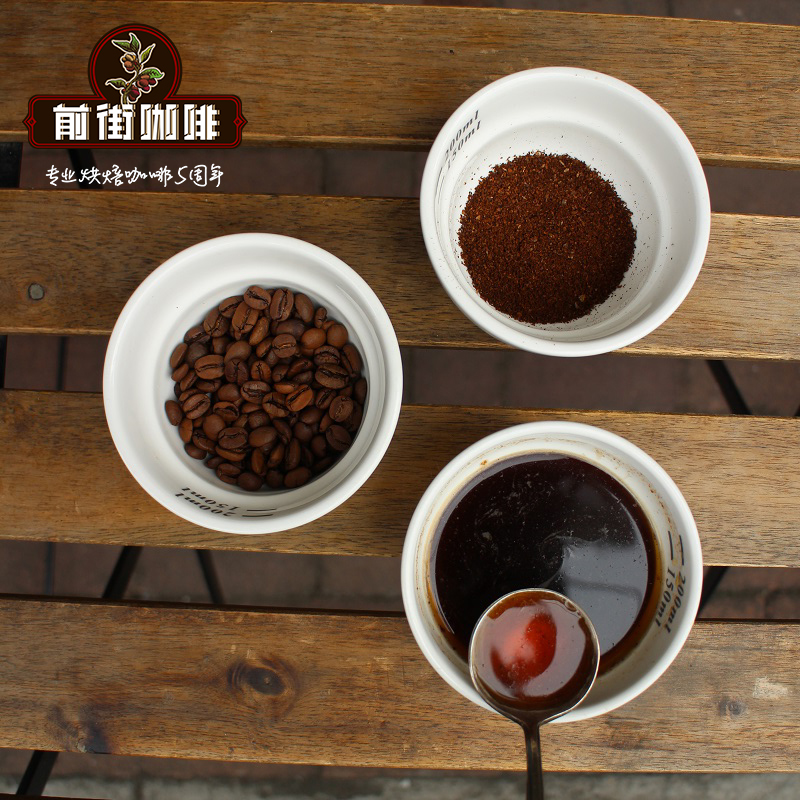
What are the flavor and mouthfeel of Ipanema Farm's selected beans from Brazil? How to brew Ipanema Farm coffee beans from Brazil?
Since coffee trees arrived from French Guiana in 1720, Brazilian coffee production has gradually become a science. Before 1990, the Brazilian government kept the industry under tight control - both through heavy-handed intervention and through price protections - always guaranteeing farmers a minimum price, which led to chronic overproduction. For a period before World War II, surplus stocks reached as many as 78 million bags, which later had to be burned or dumped into water to destroy them. Since the free market opened in 1990, the old "Brazilian Coffee Administration" (IBC) gave way to a non-investment administrative body pursuing a hands-off policy, letting producers and exporters negotiate directly. Exporters' activities are supervised by government legislation, and legitimate exporters are registered with the relevant authorities.
Brazilian Coffee
Brazilian coffee comes in many varieties. Like other Arabica coffees, the vast majority of Brazilian coffee is not washed but sun-dried, and it is classified by state of origin and shipping port.
Brazil has 21 states, 17 of which grow coffee - but 5 states account for 98% of the total production: Paraná, São Paulo, Minas Gerais, Espírito Santo, and Bahia. Paraná in the south posts the most astonishing output, fully 50% of the total.
The hallmarks of Brazilian coffee are low acidity, rich oils, and full body - ideal for medium roasting and for espresso blends.
Ipanema Farm Coffee
This coffee is a single-estate product from Fazenda Ipanema, blended through years of effort from coffees processed three different ways - washed, natural, and pulped natural - and from different varieties. Fazenda Ipanema was established in 1969, when a condominium group (the Condomínio Aliança) formed by the Bozano, Simonsen, and Gafisa groups purchased the first farm of 230 hectares near the southern city of Alfenas in Minas Gerais, named São Joaquim. It was renamed IPANEMA AGROINDÚSTRIA S.A. in 1970, and in 1972 the group bought four more farms - Campo Verde, Conquista, Vitória, and Capoeirinha - totaling 7,000 hectares, beginning to plant coffee and orange trees. By 1986, the first phase of planting was complete, with 3,000 hectares of orange trees and 3,000 hectares of coffee. In 2002, they purchased the coffee farm Fazenda Rio Verde, with a history of over 100 years, covering 1,750 hectares. Today, Ipanema Farm cultivates 5,500 hectares of coffee - the largest farm in Brazil - with 12 million coffee trees and an annual production of 7,000 metric tons of green beans. Its main business is trade and production; it ranks as the eighth-largest coffee company in the global coffee market, with sales agents in 27 countries worldwide.
This batch of Ipanema Sweet Natural is harvested from three of Ipanema's farms. The cherries go straight onto the sun and are dried with pulp and skin intact, preserving more flavor and sweetness in the green beans. Ipanema's 5,500 hectares of cultivable land are spread across three historic coffee farms - Conquistar, Capoeirinha, and Rio Verde - all in Brazil's most prestigious Sul de Minas region. From its inception, Ipanema has worked with senior Brazilian agricultural experts to analyze the soil, climate, altitude, and geology of these three areas, and with over 40 years of cultivation experience it produces today's high-quality specialty coffee.
Beyond growing coffee, sustainability is Ipanema's commitment to its customers. In collaboration with agronomists, it seeks better operating models for coffee and ecology alike; 1,200 hectares are set aside as ecological sustainable development reserves. Through these efforts, Ipanema obtained UTZ certification in 2002 and Rainforest Alliance certification in 2004.
Ipanema's Quality Control
Ipanema fields its own cupping team, whose members all hold Specialty Coffee Association of America cupper licenses and CQI Quality Institute certificates. They perform an average of over 10,000 quality inspections per year - 300 cupping tests daily. Through these strict controls, Ipanema's coffee consistently meets high standards.
Flavor Characteristics
Sweet Natural is Ipanema's classic best-seller; its full body and chocolate flavor are why it is so widely loved.
- Country: Brazil
- Product Name: Ipanema Farm Ipanema Selection
- Region: South Minas Province, Brazil
- Bean Size: Screen 16/18
- Processing Method: Pulped Natural
Ipanema Farm Introduction
Brazil's Ipanema Farm was established in 1969 and focuses on producing high-quality, traceable Brazilian specialty coffee. The farm runs highly modernized processing facilities under strict quality control. Its 5,500 hectares of cultivable land are spread across three historic farms - Conquistar, Capoeirinha, and Rio Verde - all in Brazil's most prestigious Sul de Minas region. From the start, Ipanema has worked with senior Brazilian agricultural experts to analyze the soil, climate, altitude, and geology of these three areas, and with over 40 years of cultivation experience it produces today's high-quality specialty coffee.
Sustainability, alongside coffee cultivation, is Ipanema's commitment to consumers: 1,200 hectares are designated ecological sustainable development reserves, and through this work Ipanema earned UTZ certification in 2002 and Rainforest Alliance certification in 2004.
Ipanema and Quality Control
Ipanema's in-house cupping team all hold SCAA cupper licenses and CQI Quality Institute certificates, performing an average of over 10,000 quality inspections a year - 300 cupping tests daily - which keeps the farm's coffee at a consistently high standard.
Tasting Notes
- Aroma: Fresh ripe fruit aroma, with subtle floral notes and caramel fragrance
- Acidity: Bright yet gentle, delicate, perfectly balanced fruit acidity
- Sweetness: Reminiscent of freshly ripened fruit with a hint of candy-like sweetness
- Mouthfeel: Moderate body, richness, and oily texture; smooth, gentle, easy to drink, with a pleasant aftertaste
- Special Characteristics: In the cup you find delicate, gentle, perfectly balanced fruit acidity that creates a comfortable, pleasant sensation - truly excellent quality at great value.
FrontStreet Coffee Brewing Recommendation:
- Dripper: Hario V60
- Water Temperature: 88°C
- Grind Size: Fuji Royal grinder setting 4
- Brewing Method: Water-to-coffee ratio 1:15, using 15g of grounds. First pour 25g of water for a 25-second bloom. Second pour up to 120g, then pause until the water level in the bed drops to half. Continue pouring slowly to 225g total. Extraction time approximately 2:00.
Analysis:
The three-stage pour clearly separates the front, middle, and back flavor profiles. Because the V60 has many ribs and drains quickly, pausing the pour extends the extraction time.
FrontStreet Coffee Recommendation
As the world's largest coffee producer, Brazil offers an enormous range, and its beans' moderate acidity plus the balance of sweetness, bitterness, and body make them ideal at medium roasts - nutty aromatics, mellow flavor, a whisper of acidity - whether as a single origin or in a blend. If you just want a first taste of Brazil, FrontStreet Coffee's pulped natural Cerrado Red Bourbon is a classic: creamy peanut, toast, caramel, and hazelnut aromatics with a rounded, non-acidic body and a light bitterness, equally good in a pour-over, moka pot, siphon, or French press, or as a Brazilian SOE.
For the rare Yellow Bourbon side of Brazilian coffee - the same variety family as this Ipanema selection - the FrontStreet Coffee Fazenda Rainha from Mogiana near Sul de Minas grows in fertile red volcanic soil; being a natural mutation of Red Bourbon, it offers a cleaner fruit character, and through pour-over, moka pot, or home espresso it reveals a sugarcane sweetness plus fruit and chocolate notes you will not find in other origins.
Brazil's low acidity and balanced profile also make it the backbone of many espresso formulas: the crema-rich FrontStreet Coffee Classic Blend, the nut-forward Premium Blend, the well-balanced Black Cocoa Blend recommended by many baristas, and the cafe-focused Commercial Blend all contain Brazilian components, adding chocolate and cream aromatics, gentle sweet-sour-bitter balance, and extraction stability.
Important Notice :
FrontStreet Coffee is a long-established specialty coffee roaster in Guangzhou China, selling freshly roasted beans from its own farm in Yunnan as well as dozens of carefully selected single-origin beans from around the world for both pour-over and espresso. The products deliver consistently excellent quality and great value, with shipping within 24 hours. Guangzhou's FrontStreet Coffee shop is recommended by many coffee lovers, and the beans are now available online at the Tmall 。
FrontStreet Coffee has moved to a new address:
FrontStreet Coffee Address: 315,Donghua East Road,GuangZhou
Tel:020 38364473
 Scan and follow the En Gafei WeChat official account. Please indicate that the reprint comes from "En Gafei".