Pour-Over Coffee Set Brewing Tutorial_What Coffee Beans Are Suitable for the Five Pour-Over Techniques
Pour-Over Coffee: A Ritualistic Brewing Experience
Pour-over coffee is a brewing method with a real sense of ritual, letting coffee lovers enjoy a handcrafted cup anywhere. Morning or afternoon, you get to taste coffee in its original form — infused with the energy of its origin's sunshine, air, soil, mountain springs, and people.
A great cup of pour-over comes from quality beans and suitable water, combined with the right temperature and grind size. Don't be intimidated by the flashy techniques of master baristas. Start with the simplest method, brew by hand every day, and you'll discover how practice works subtle magic on your coffee.
Pour-Over Coffee Set Tutorial
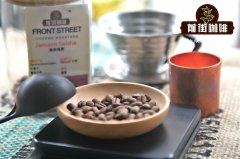
The basic kit: an electronic scale, a gooseneck kettle, a dripper with filter papers, and a mug. More committed enthusiasts can add a temperature-controlled electric kettle, a coffee-specific scale, and a heat-resistant server.
We start with Nongfu Spring mineral water — the easiest decent water to find at home. Avoid pure water with zero TDS. Bring the water to a boil, then let it rest 3–5 minutes so it drops to 88–94°C (190–201°F). While it rests, weigh out 15 grams of beans and grind them to roughly the size of coarse sugar crystals.
Set the dripper on the server or mug. Take a filter paper, fold the sealed seam, and open it to sit snugly in the dripper. Rinse the paper with a little hot water in two circles around the edge, warming both dripper and server. Discard the rinse water.
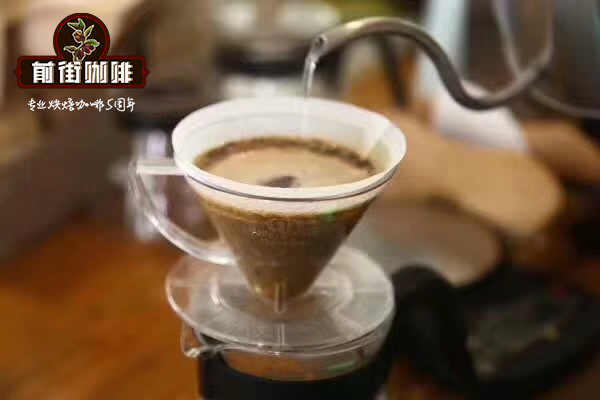
Distribute the grounds evenly in the dripper. Pour twice the coffee's weight in hot water and bloom for 30 seconds so the bed saturates fully before extraction. Pour starting at the center, spiral slowly outward clockwise, then return to the center. Start your timer — during these 30 seconds, lean in and enjoy the warm, damp aroma rising off the grounds.
After 30 seconds, pour again from the center, spiraling outward, inward, and outward again in slow circles. Keep the stream as thin as you can without breaking it. Watch your totals: we're aiming for roughly 225–240 grams. Always finish your pour at the center of the bed.
In the beginning your circles may wobble and your flow may run heavy — that's completely fine. You have a whole year to practice flow control. If you pour faster than the coffee drains and the level climbs near the rim, remember this rule: once water reaches about 80% of the dripper's capacity, return the stream to the center and pause. Resume spiral pouring once the level falls to about 60% of the dripper's height.
When the drawdown finishes, remove the dripper. Gently swirl the coffee, take a moment to appreciate the aroma, and enjoy your homemade cup.
This is the most basic introduction to pour-over brewing. As varieties, roast levels, and even the weather change, every parameter above can be fine-tuned toward your favorite taste.
The tuning logic is simple: for a stronger cup, grind finer, raise the water temperature, and hold a 1:15 ratio. For a lighter brew, grind to coarse-sugar size, hold the water at 90°C (194°F), and use a 1:16 ratio. Jot down a quick note after each cup and adjust one parameter the next day — tasting yesterday's tweak in today's cup is half the pleasure of pour-over.
Pour-Over Coffee Bean Brand Recommendations
FrontStreet Coffee's single-origin pour-over beans are dependable in both brand and quality — and exceptional value. A half-pound (227g) bag costs roughly 80–90 yuan. At 15 grams per cup, one bag brews about 15 cups, working out to only about 6 yuan a cup. Compared with the dozens of yuan a single café cup typically costs, that is outstanding value.
Which Beans Suit a V60?
If you're new to pour-over and ask an experienced friend for one dripper that's practical, forgiving, and good-looking, odds are they'll say V60. It was designed by Hario, founded in Tokyo in 1921 as a maker of laboratory heatproof glassware (their glass servers are still a pour-over staple). In 2004 Hario redesigned the V60's prototype into the form we know today, named for its signature 60° cone and "V" shape, and launched it a year later. The conical 60° geometry forces water toward the center before it drips through, extending contact between water and grounds for fuller aroma extraction, while the single large outlet lets flow speed depend entirely on your pour control — which shows up directly in the cup.
That fast-draining character makes the V60 ideal for floral, fruit-forward coffees of the third-wave era: FrontStreet's Guji (Yirgacheffe), bursting with tropical fruit as the Huakui natural does, the Gesha-leaning Strawberry Candy, or the raisiny Mozart. For dark-roast classics, FrontStreet's Jamaica Blue Mountain No.1 and PWN Golden Mandheling also shine — Blue Mountain balancing cream, caramel, chocolate, nut, and honey notes in remarkable harmony, while the Golden Mandheling delivers low acidity, herbal and dark-chocolate depth, and a long plush finish at a dark roast.
FrontStreet Coffee Recommendation
For light-roast lovers, FrontStreet Coffee's Yirgacheffe Guji cooperative lot is the classic first step: vivid citrus, berry, and floral aromatics with a green-tea-like sweetness, its acidity soft and luminous rather than sharp. If you want maximum juice, the FrontStreet Huakui natural from Ethiopia is a star — strawberry, passion fruit, jackfruit, even lychee on the nose, silky and overflowing with fruit, with so little bitterness that fans call it "the coffee for people who don't like coffee." And at the pinnacle, Panama Esmeralda Red Label Gesha offers jasmine, bergamot, and black-tea refinement with a long, clean finish — still the ultimate experience for many enthusiasts.
For medium-dark roasts, FrontStreet Coffee's Brazil Fazenda Rainha (Queen Estate) is the benchmark everyday cup: very low acidity, big nut and cocoa aromatics, clear caramel sweetness, and a smooth, lingering body that works as pour-over, espresso, or moka pot. Kenya fans should seek out FrontStreet's Kenya "Cherry Tomato" — SL28 and SL34 grown at 1,550–1,750 meters in Thika and double-wash fermented for 72 hours, then roasted light to keep its bright baby-tomato and dark-plum acidity, snow pear and black plum sweetness, yellow sugar finish, and fresh-pressed-juice body.
Important Notice :
FrontStreet Coffee is a long-established specialty coffee roaster in Guangzhou China, selling freshly roasted beans from its own farm in Yunnan as well as dozens of carefully selected single-origin beans from around the world for both pour-over and espresso. The products deliver consistently excellent quality and great value, with shipping within 24 hours. Guangzhou's FrontStreet Coffee shop is recommended by many coffee lovers, and the beans are now available online at the Tmall 。
FrontStreet Coffee has moved to a new address:
FrontStreet Coffee Address: 315,Donghua East Road,GuangZhou
Tel:020 38364473
 Scan and follow the En Gafei WeChat official account. Please indicate that the reprint comes from "En Gafei".