Yunnan Coffee Region Rankings and Variety Information: Pour-Over Brewing Methods and Flavor Characteristics

As a dark horse in China's domestic coffee scene, Yunnan coffee beans have been impressing coffee enthusiasts again and again, proving that high-quality coffee can indeed be produced within China. Few people realize that Yunnan is a coffee-producing region at all; the popularity of the film "Coffee or Tea?" starring Liu Haoran sparked a wave of interest in "Pu'er coffee."

Yunnan's Ideal Coffee Growing Conditions
According to FrontStreet Coffee's research, the natural conditions of Yunnan's Pu'er region are remarkably similar to those of Colombia. The Pu'er coffee region sits within the golden zone for coffee cultivation worldwide, as do the coffee-growing areas of Brazil, Vietnam, and Indonesia, all located between the Tropic of Cancer and the Tropic of Capricorn.
Compared with other regions in China, Pu'er boasts high-altitude conditions, with elevations ranging from 1,000 to 2,000 meters above sea level. The area is predominantly mountainous with significant elevation changes, fertile soil, abundant sunlight, plentiful rainfall, and substantial day-night temperature variation. These exceptional natural conditions are ideal for cultivating Yunnan's small-bean coffee varieties, which produce remarkably flavorful coffee.
Major Coffee Growing Regions in Yunnan
Besides Pu'er, Yunnan coffee is also cultivated in several other areas. FrontStreet Coffee would like to offer a brief introduction to these regions.

Dehong
Dehong Prefecture has a century-long history of coffee cultivation and is one of China's earliest regions to introduce coffee plants. As early as 1914, small-bean coffee was introduced sporadically from Myanmar. After successful experimental cultivation of 6 mu in 1953, commercial cultivation began. The region has registered the "Dehong Coffee" geographical indication and has been honored with the title "Hometown of Chinese Coffee."
At present, Dehong's total coffee cultivation area has reached 275,800 mu, with 140,000 mu in production, yielding 28,000 tons of dried coffee beans. This generates 616 million yuan in agricultural value and 800 million yuan in industrial value. Dehong is also the main production area for Hougu Coffee, the only national-level leading agricultural industrialization enterprise in the coffee industry. Coffee in Dehong is grown above 1,000 meters, with 30,000 mu planted on mountainous terrain above 1,600 meters. The primary use of organic fertilizers and organic pesticides results in exceptionally high-quality coffee, making Dehong one of the world's rare premium coffee-producing regions.

Lincang
Its unique geographical location and climate have made Lincang a focal point for numerous coffee companies. Quality coffee seedling nurseries have been established in Mengding Town of Gengma Autonomous County and at Lincang Xingfu Farm, covering 200 mu and 100 mu respectively. Coffee cultivation has been carried out in Gengma, Zhenkang, Yun County, Cangyuan, and Yongde. To date, Lincang has established 96 coffee nurseries covering 1,570 mu, having cultivated 67.19 million coffee seedlings sufficient for planting 203,000 mu, with 260,000 mu of coffee cultivation area confirmed. FrontStreet Coffee also has its own coffee plantation in the Lincang region.

FrontStreet Coffee began coffee cultivation experiments in Lincang as early as 2013, planting the Typica variety, the first excellent Arabica variety introduced to Yunnan. The agricultural cycle is a lengthy process, requiring 5-6 years from breeding to first fruiting. In 2018, the first batch of Typica trees planted by FrontStreet Coffee began to bear fruit. In the 2020/21 season, FrontStreet Coffee harvested 200 kilograms of green beans; because the quantity was limited, the samples were distributed to new and existing customers for tasting. By the 2021/22 season, FrontStreet Coffee's harvest increased to 600 kilograms of green beans. FrontStreet Coffee uses a medium roast for these beans, which show flavors of plum, brown sugar, and nuts.

Baoshan
Coffee cultivation in Baoshan began in the mid-1950s, with the first coffee seedling introduced by the late patriotic overseas Chinese Mr. Liang Jinshan from Southeast Asia. The locally famous Lujiangba small-bean coffee is of high quality and was rated as first-class in London, UK, as early as the late 1950s.
In recent years, with the expansion of international trade, Lujiangba's small-bean coffee has gained widespread renown. European, American, and Arab countries, particularly Britain, the United States, and Egypt, along with businesses from Hong Kong and Macau, consider it premium coffee, with demand exceeding supply. In December 2010, after review by China's General Administration of Quality Supervision, Inspection and Quarantine, "Baoshan Small-bean Coffee" was granted national geographical indication product protection.

If asked which Yunnan coffee best represents the region's foundational flavor, FrontStreet Coffee believes it is Baoshan's washed Catim coffee. Baoshan is an outstanding coffee-producing region in Yunnan, with Lujiangba situated at 1,300m altitude, ideal for coffee growth. The Catim variety accounts for 99% of Yunnan's production, and washing best showcases the inherent flavors of the beans, so Baoshan's washed Catim is also FrontStreet Coffee's representative daily brew from Yunnan.
Cultivation Challenges and Processing Methods
Because Yunnan coffee is primarily cultivated on steep slopes, harvesting fully ripe cherries is extremely labor-intensive, and even offering high wages makes it difficult to find workers willing to harvest them. Pruning and reducing yield, however, significantly improves maturity levels, greatly reducing the difficulty of harvesting and making farmers more willing to engage in intensive cultivation for better income.
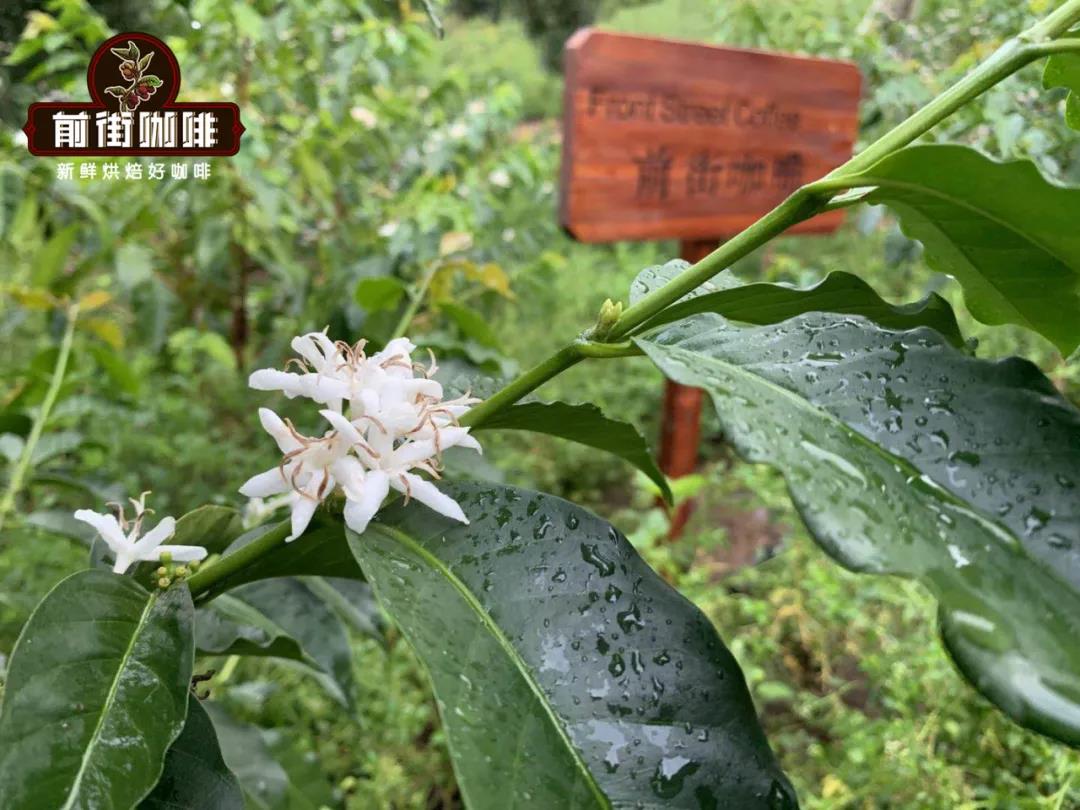
Another question of interest is which coffee varieties suit Yunnan's climate. Many regions in Central America grow Caturra and Catuai, Brazil cultivates Bourbon varieties, and Jamaica's Blue Mountain coffee is Typica.
According to FrontStreet Coffee's understanding, Yunnan currently cultivates predominantly the Catim variety, though those familiar with Yunnan coffee will notice that small amounts of Typica and Bourbon are grown as well. These two ancient varieties are the true pioneers of Yunnan's coffee cultivation. FrontStreet Coffee understands that Yunnan initially introduced Typica, but it is susceptible to leaf rust disease and yields poorly. Farmers were reluctant to plant it, because coffee trees take at least 3-4 years from planting to harvest and Typica's low yields could not sustain local livelihoods. The high-yielding Catim variety naturally became more popular. Catim also carries genes from both Arabica and Robusta, inheriting Robusta's disease resistance while producing coffee with rich crema.

As for processing methods, because Yunnan's rainy season is long and its climate unstable, the region is not well suited to natural (sun-dried) processing; washed processing is used more commonly. In washed processing, defective beans and impurities are first removed, then the pulp is removed with a depulper, followed by approximately 18 hours of washed fermentation. Because the fermentation is better controlled in washed processing, the flavor lacks the impurities sometimes found in natural-processed beans, presenting clear fruit acidity instead, though with slightly less complexity.
Brewing Methods and Flavor Profile
FrontStreet Coffee uses a three-stage pouring method to brew this Yunnan coffee. First, pour 30g of water for a 30-second bloom. Then, using a small circular pour, add water until reaching 124g for the first split. When the water level drops to just above the coffee bed, continue pouring to 227g and stop. When the water level drops to just above the coffee bed again, remove the filter cone. The total extraction time, starting from the bloom, is 2 minutes.

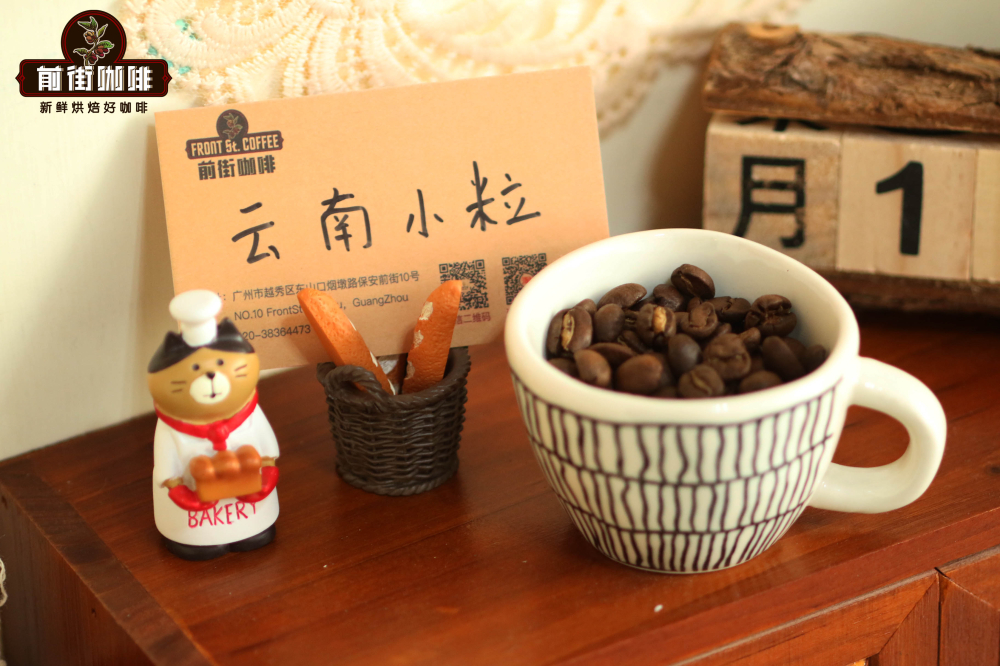
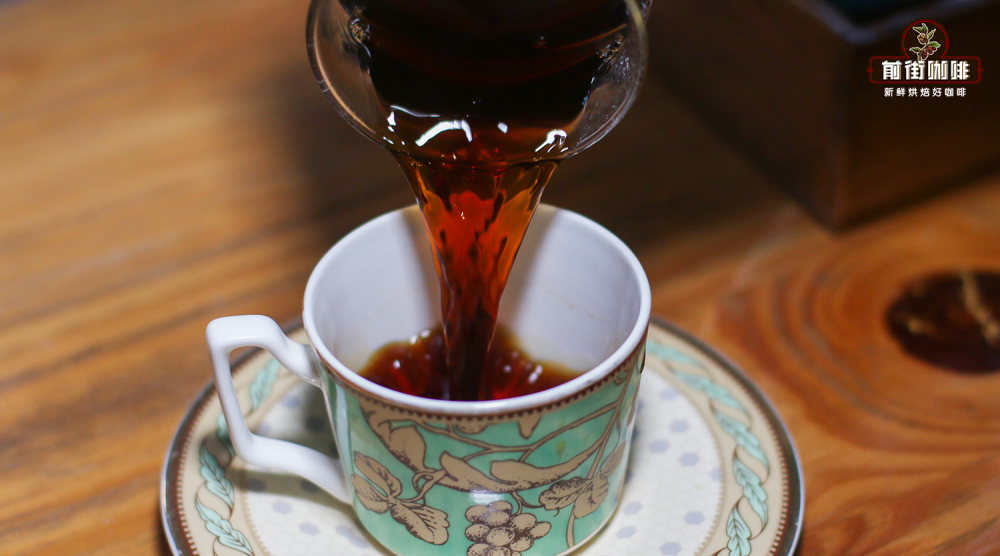
FrontStreet Coffee finds that brewed Yunnan Huaguoshan coffee beans present rich melon and fruit aromas with herbal notes. The entry is smooth, followed by nutty and chocolate flavors in the middle, then bright, lively plum acidity in the finish, with black tea and brown sugar sensations in the aftertaste. Yunnan small-bean coffee features bright acidity, a smooth texture, good balance, and rich layers, with prominent dark chocolate and caramel notes in the aftertaste; when completely cooled, brown sugar flavors emerge.
The craftsmanship of Yunnan specialty coffee continues to improve, attracting coffee professionals from many fields. An increasing number of green coffee suppliers are establishing raw material production bases in Yunnan, and even the coffee giant Starbucks has joined the ranks of those buying Yunnan coffee.
FrontStreet Coffee Recommendation
For an entry point into Yunnan's flavor, FrontStreet's Yunnan small-bean coffee comes from the Baoshan region and is washed and roasted medium, bringing soft nut and chocolate sweetness with a light plum acidity, making it the first Yunnan coffee many drinkers try. For a clearer, more distinctive cup, FrontStreet's 2013 Yunnan sun-dried Typica comes from FrontStreet's own estate; Typica, one of the oldest and purest Arabica varieties, was first brought to Yunnan from Vietnam in 1904 by the French missionary Tian Deneng, who planted the first coffee tree in Zhugula village, Binchuan County. FrontStreet uses only fully ripe red cherries, dries them in the sun, and roasts medium so the cup is more balanced and the sweet-sour notes stand out, with dark berries, caramel sweetness, chocolate, a hint of dried apricot, and a black tea finish.
If you want to taste Yunnan in an espresso drink, FrontStreet's Black Cocoa blend combines Yunnan small-bean coffee with Brazil Cerrado, a combination recommended by many baristas. Brazil provides the mixed nut aroma and a balanced body, while Yunnan small-bean coffee plays the role of chocolate and citrus; the resulting Americano balances sweet, sour, and bitter with a nutty, brown-sugar sweetness, and a latte has an almond and cream smoothness that makes it very approachable for beginners.
Important Notice :
FrontStreet Coffee is a long-established specialty coffee roaster in Guangzhou China, selling freshly roasted beans from its own farm in Yunnan as well as dozens of carefully selected single-origin beans from around the world for both pour-over and espresso. The products deliver consistently excellent quality and great value, with shipping within 24 hours. Guangzhou's FrontStreet Coffee shop is recommended by many coffee lovers, and the beans are now available online at the Tmall 。
FrontStreet Coffee has moved to a new address:
FrontStreet Coffee Address: 315,Donghua East Road,GuangZhou
Tel:020 38364473
 Scan and follow the En Gafei WeChat official account. Please indicate that the reprint comes from "En Gafei".