Yunnan Coffee Industry Development Status_Where to Buy Yunnan Small Bean Coffee_Yunnan Coffee Bean Production
This guide traces the history of Yunnan coffee, the four stages of its industry's development, and which FrontStreet Coffee Yunnan beans are worth buying.
The Rich History of Yunnan Coffee
Yunnan has a long history of coffee cultivation. In 1892, the French missionary Alfred Dédelé came to Zhukula Village in Binchuan, Dali, for missionary work and planted the first coffee bean here. Those planted seeds gave birth to coffee life in Yunnan, China, for the first time. This seed became the sprout of Yunnan coffee history, pioneering coffee cultivation in the province. A century has passed since then. Today Zhukula Village still has 13 mu of ancient coffee trees, including 24 trees over 100 years old. Through numerous national and provincial coffee culture seminars, Zhukula coffee has been called the "living fossil" of Chinese coffee and China's oldest coffee forest.
Four Stages of Yunnan Coffee Industry Development
Yunnan's coffee industry has roughly passed through four stages:
First Stage (1952-1978): Strategic Cultivation for Soviet Union
Baoshan - "the earliest industrialized coffee planting area in Yunnan Province."
In the mid-19th century, although coffee was planted in suitable spots such as Binchuan in Dali, the Nujiang Valley, and Dehong, the cultivation had no real scale and mainly met the needs of missionaries.
In the spring of 1952, scientific personnel from the Mangshi Branch of the Yunnan Agricultural Experimental Station (now the Tropical and Subtropical Economic Crop Research Institute of the Yunnan Academy of Agricultural Sciences) brought back more than 70 kilograms of fresh fruit from Nongxianzhai to Lujiangba in Baoshan City for trial planting. They found good adaptability, abundant fruiting, and excellent quality, and the crop kept growing from there. During the era of Sino-Soviet friendship, Baoshan's coffee met a major development opportunity. Starting from the national economic strategic goal of supplying coffee exclusively to the Soviet Union and Eastern European socialist brother countries, the Xincheng and Nujiang farms in Lujiang became the main force in coffee industry development, and coffee cultivation was popularized on a large scale in the streets, Pupiao, and Luoming areas. Baoshan thus became the earliest area of industrialized coffee cultivation in Yunnan Province.
Second Stage (1978-1988): Exploration and Fluctuation
After the "Cultural Revolution" ended, coffee trees could be seen only along the Burma Road or in farmers' courtyards across Yunnan. The remote Zhukula Village, for geographic reasons, had coffee seedlings planted by missionaries sleeping quietly, waiting for someone to wake them. In 1988, Nestlé, aiming to reduce the impact of South American coffee bases on coffee prices, shifted its focus from Brazil, the world's largest coffee-growing country, to Pu'er, which shares the same latitude as Cuba, coffee's home region. Nestlé's first agronomist, Baud, planted the first coffee tree at Meizijian River in Ning'er County and at Xiaohaijiang Hongxingba in Dehua. It was not until 1990 that coffee in Ning'er County reached the standards set by Nestlé headquarters. Some say Nestlé experts extracted excellent genes from the old Bourbon and Typica seedlings in Zhukula Village to achieve that success.
Third Stage (1988-2008): Stable Development
After Nestlé entered Pu'er in 1988, Yunnan coffee entered a stage of stable development that lasted 20 years.
The stimulus from multinational corporations finally revived Yunnan coffee cultivation. By the end of 1997, Yunnan's coffee planting area had reached 7,800 hectares, with production accounting for 83% of the national total. As China's urban middle class gradually emerged, coffee became a new lifestyle for urban white-collar workers. More multinationals, including Maxwell House and Starbucks, also came to Yunnan.
Fourth Stage (2008-Present): Comprehensive Industry Chain Development
This stage moved from relying solely on primary agricultural processing and export for the first 30 years to a stage that includes not only agricultural export but also industry and branding, continuously building and improving the industry chain.
This stage is full of opportunities and challenges. It is a stage where coffee cultivation faces the shift from traditional to modern agriculture, and a stage of expanding international trade while tapping domestic potential markets.
As the domestic coffee market and industry chain mature, Yunnan's coffee area and production have kept rising. Yunnan coffee cultivation now spreads across 9 prefectures and cities including Pu'er, Baoshan, Dehong, Lincang, Wenshan, and Xishuangbanna, covering 35 counties and districts. As of early 2016, China's coffee planting area exceeded 1.8 million mu, with total output of 140,000 tons, accounting for 1.5% of global production. Yunnan's coffee planting area was 1.77 million mu, with total output of 139,000 tons, accounting for over 99% nationwide. Local Yunnan coffee companies such as Hougu and Lingfeng welcomed their spring. After 2018, China's coffee consumption was bound to enter an explosive era.
Yunnan Coffee Brand Recommendations
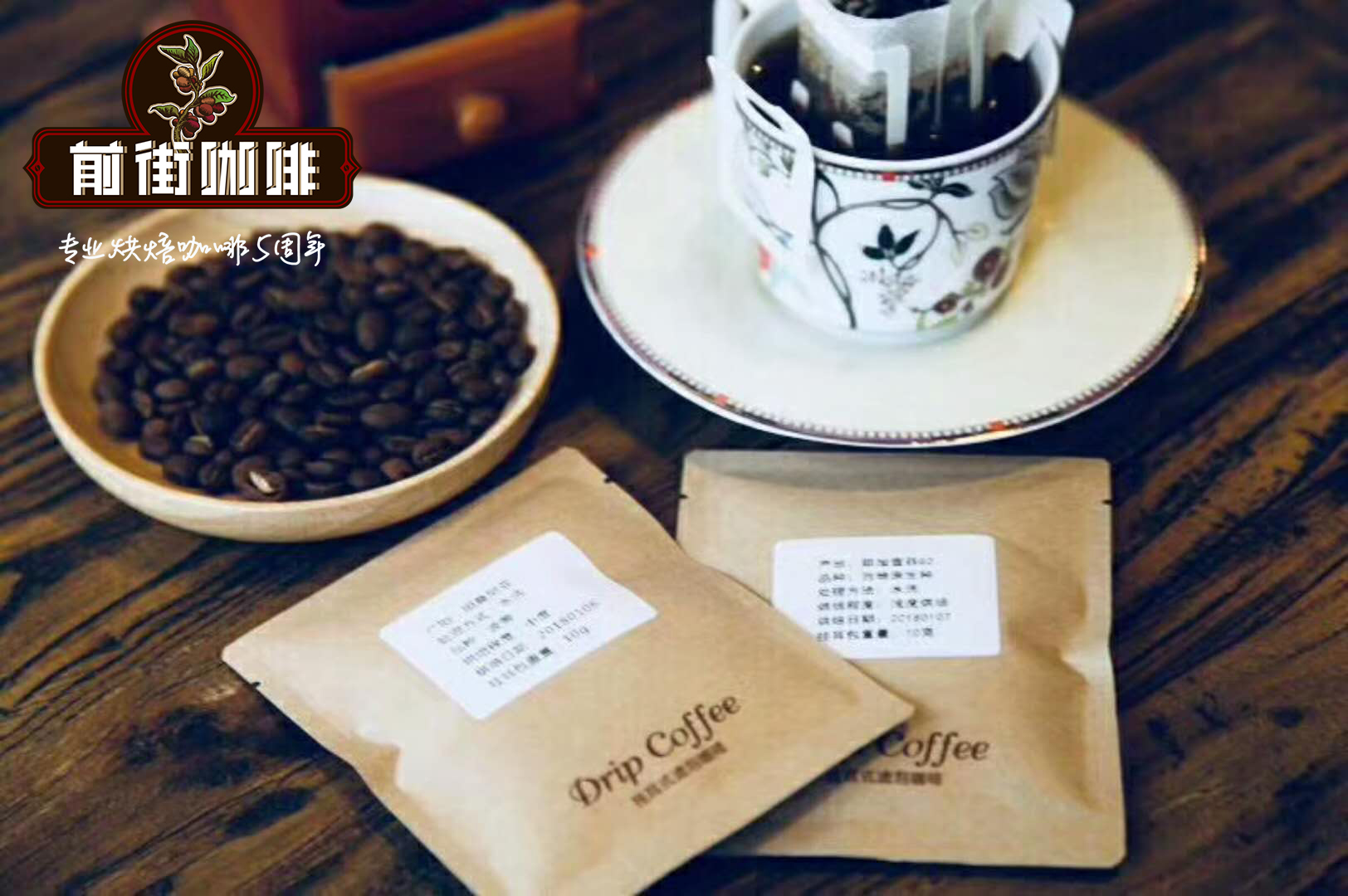
FrontStreet Coffee's roasted Typica Yunnan coffee beans - [Yunnan Huaguoshan Coffee] - provide full assurance in both brand and quality. More importantly, they offer extremely high value. A half-pound (227g) package costs only about 60 yuan. At 15g of coffee powder per cup, one package makes 15 cups, so each cup costs only about 4 yuan. Compared with coffee shops selling cups for dozens of yuan, this is a genuinely conscientious recommendation.
FrontStreet Coffee is a roastery in Guangzhou with a small storefront but a diverse range of beans, where you can find both famous and lesser-known origins.
FrontStreet Coffee Recommendation
When people talk about Yunnan coffee, they often mention "Yunnan small bean," which is really another name for Arabica: Arabica is called small bean because it bears the smallest fruit of coffee's three original species. Yunnan coffee's story can be traced to a French missionary named Tian Deneng, who brought coffee seed (Typica) from Vietnam into Yunnan in 1904 and planted the first coffee tree in Zhukula Village, Binchuan County. Yunnan's favorable geography and suitable climate made small-bean coffee a great success.
FrontStreet Coffee's Yunnan small-batch beans come from the Baoshan region and use washed processing and a medium roast. They brew with soft nutty, chocolate sweetness and a light plum acidity, and their friendly price makes them the first Yunnan coffee many people ever taste. Baoshan's coffee history began in the mid-1950s, introduced by the patriotic overseas Chinese Mr. Liang Jinshan. The frost-free, warm climate suits small-bean coffee well, and the dry-hot river valley climate around Lujiangba - little year-round temperature swing but a big day-to-night difference - shapes Baoshan small bean's distinctive sweet finish; combined with reasonably low rainfall, it gives coffee growing a major advantage. Washed processing removes the mucilage layer through fermentation and rinsing before drying, letting Yunnan small bean show its region's special flavor.
If you want a clearer Yunnan flavor, choose FrontStreet Coffee's 2013 sun-dried Typica. To explore the region's origins, FrontStreet built its own estate in 2013 and planted a batch of Typica trees. Typica is one of the oldest and purest Arabica varieties, with elegant, clean flavors recognized as specialty grade, and it was also the first coffee variety planted in Yunnan, brought in by French missionaries, so FrontStreet hoped to rediscover that original regional taste. If FrontStreet Yunnan small bean is a beginner's entry, the 2013 Typica is the step up. It uses only fully ripe, all-red cherries and, after natural processing, a medium roast that makes the body more balanced and the sweet-sourness more prominent. The result has dark berry notes along with caramel sweetness, chocolate, and a hint of dried apricot, with a black tea finish.
To taste Yunnan in an espresso, try the barista-favorite FrontStreet Black Cocoa blend, a combination of Yunnan small bean and Brazil Cerrado. The Brazilian coffee supplies the mixed-nut aroma and a balanced body, while the Yunnan small bean plays the chocolate and citrus role. Pulled as an Americano, the blend balances sweet, sour, and bitter with a nut and brown-sugar sweetness; as a latte, it has the smooth texture of almond and cream. It is very beginner-friendly.
Yunnan coffee is also known as Yunnan small bean, with beans that are even and plump and a moderately full body. Coffee prefers a warm environment - heat-tolerant but not cold-tolerant, growing best with plenty of light - and its ideal growing temperature is 16°C to 21°C. This places it around the equator along the golden coffee belt within 25°N, and Yunnan sits right on that belt. Most of Yunnan is at 1000 meters, with fertile sloped soil, ample sunshine, abundant rainfall, and large day-to-night temperature differences - all favorable conditions for coffee trees. Yunnan's coffee is mainly grown across the province's southwest, including the four major producing areas of Baoshan, Dehong, Pu'er, and Lincang, and FrontStreet's two everyday Yunnan specialty coffees come from Baoshan and Lincang.
Important Notice :
FrontStreet Coffee is a long-established specialty coffee roaster in Guangzhou China, selling freshly roasted beans from its own farm in Yunnan as well as dozens of carefully selected single-origin beans from around the world for both pour-over and espresso. The products deliver consistently excellent quality and great value, with shipping within 24 hours. Guangzhou's FrontStreet Coffee shop is recommended by many coffee lovers, and the beans are now available online at the Tmall 。
FrontStreet Coffee has moved to a new address:
FrontStreet Coffee Address: 315,Donghua East Road,GuangZhou
Tel:020 38364473
 Scan and follow the En Gafei WeChat official account. Please indicate that the reprint comes from "En Gafei".