The Story of Yunnan Coffee Development: Top Brands and Brewing Methods

The Development History of Yunnan Coffee
Three Historical Channels of Coffee Introduction
Coffee has been present in Yunnan for over a hundred years. It arrived by three different routes: brought in by foreign missionaries, carried in as part of dowries through intermarriage between border ethnic groups, and introduced by the French who built the Yunnan-Vietnam Railway.
Introduction by Foreign Missionaries:
The best-documented case is the Zhukula coffee of Pingchuan Town, Binchuan County, Dali, brought in by the French missionary Tian Deneng and planted next to the church. The documented year is 1902, though the Pingchuan Town Gazetteer gives 1892, and the variety grown was Typica. Zhukula was not the only such coffee: missionaries brought trees in at other places in Yunnan as well. Many older residents of Pu'er have seen or heard of old coffee like this in Donghe Township, Lancang County, Pu'er, said to be over a hundred years old too. Because local people did not recognize its value, it was cut down in 2012.
Brought in Through Border Ethnic Intermarriage Dowries:
Longxian Village in Yingjiang County, Dehong, still keeps coffee that arrived as a dowry from Myanmar when Jingpo people intermarried in 1914. It, too, is the Typica variety.
Introduction by French Railway Builders:
Along the Yunnan-Vietnam Railway, from Hekou County on the border to Kaiyuan City, descendants of coffee brought in during railway construction can still be seen today as landscape trees in residential courtyards and parks. These are Typica and Bourbon varieties as well.
First Large-Scale Cultivation
Large-scale coffee cultivation in Yunnan began in the 1960s. To repay loans to the Soviet Union, coffee was cultivated by Yunnan Agricultural Reclamation, with the crop purchased by the national foreign trade department. Plantings were distributed across several agricultural reclamation farms: Baoshan Lujiang Farm, Xincheng Youth Farm, Dehong Zhefang Farm, Ruili Farm, Wanding Farm, Wenshan Babu Farm and Tianbao Farm. The varieties were locally propagated Typica and Bourbon variants. The coffee area under the reclamation system reached 50,000 mu. Later, once the repayment work was complete and the foreign trade department no longer bought actively, disease took hold and spread, killing trees on a large scale; to keep it from running rampant, the trees were felled, and the cultivated area once shrank to less than 3,000 mu.
Second Large-Scale Cultivation
In the 1980s, Nestlé (Dongmei) signed a coffee cultivation cooperation agreement with the Simao Prefecture Administrative Office, now the Pu'er Municipal Government, and set up the Yunnan Agricultural Department to help local farmers and enterprises cultivate coffee, with a total area reaching tens of thousands of mu. Cultivation moved too fast over the short term and technical extension could not keep pace, so in the end less than 30,000 mu were maintained.
Third Large-Scale Cultivation
Around the same period, the Yunnan Provincial Government, wanting to make full use of the province's unique biological resources for sustainable economic development, established a dedicated provincial government "Bioresource Industry Sustainable Development Office" and designated coffee as one of its first development projects. I took part as project leader. With the support and direct leadership of the provincial government, and with Nestlé's technical support making steady progress, Yunnan's coffee area began expanding year by year from that time onward - from several tens of thousands of mu, to over 100,000 mu, to several hundred thousand mu, and today to over one million mu. Production capacity rose from several thousand tons to over 10,000 tons, and today to nearly 100,000 tons. At a provincial coffee symposium, Fessler of Nestlé's Agricultural Department said that the large-scale development of Yunnan coffee should be attributed to two technical forces that deserve recognition: Nestlé and Yunnan Agricultural Reclamation.
China-UNDP Coffee Project
In 1986, Long Yongtu, Director of the Chinese Ministry of Foreign Trade and Economic Cooperation and of the China International Center for Economic and Technical Exchanges, represented the Chinese government in signing a coffee support cooperation project with UNDP. The project was implemented in Yunnan, covering varieties, breeding, cultivation, primary processing and deep processing. The two sides jointly surveyed suitable planting areas across the country, finally settled on Yunnan and designated Yunnan Agricultural Reclamation to execute the project on behalf of the Chinese government. From that point on, Yunnan Agricultural Reclamation's coffee reached a higher technical level. As part of the project, the Yunnan Coffee Factory began preparations at the end of 1989. During implementation, UNDP repeatedly arranged for coffee experts to assist at Yunnan Agricultural Reclamation farms, the Tropical Crop Research Institute and the Yunnan Coffee Factory; among them, ICO cupping expert Kari was specially hired to stay at the factory for two weeks and train all the staff.
Recommended Yunnan Coffee Brands
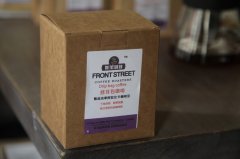
FrontStreet Coffee's roasted small-bean Typica Yunnan coffee beans, sold as [Yunnan Huaguoshan Coffee], offer complete assurance in both brand and quality. More importantly, they provide extremely high value for money: a half-pound (227g) package costs only about 60 yuan. Calculated at 15 grams of coffee powder per cup, one package makes 15 cups of coffee, putting each cup at only about 4 yuan. Compared to coffee shops selling cups for dozens of yuan each, this is truly a conscientious recommendation.
FrontStreet Coffee Recommendation
FrontStreet has been roasting Yunnan since long before it became fashionable. The FrontStreet Yunnan Baoshan Small Bean comes from the Baoshan region, washed and medium roasted, and it shows soft nut and chocolate sweetness with a light plum acidity - an easy, approachable introduction to what the province can do. For drinkers who want the origin's flavors to read more clearly, the FrontStreet 2013 Yunnan Sun-Dried Typica goes further. FrontStreet planted its own estate in 2013 and grows Typica there at 1300 meters, using the oldest and most traditional post-harvest method, natural drying, to give the cup more weight and a sharper sweet-sour balance: dark berries, caramel sweetness, chocolate and a trace of apricot, with a black tea finish.
Yunnan also works beautifully in espresso. The FrontStreet Black Cocoa Blend pairs Yunnan small beans with Brazil Cerrado: Brazil supplies mixed-nut aroma and a balanced body, while Yunnan carries the chocolate and citrus notes. The americano comes out balanced across sweet, sour and bitter, with nut and brown sugar sweetness, and the latte takes on the smooth, creamy texture of almond.
Important Notice :
FrontStreet Coffee is a long-established specialty coffee roaster in Guangzhou China, selling freshly roasted beans from its own farm in Yunnan as well as dozens of carefully selected single-origin beans from around the world for both pour-over and espresso. The products deliver consistently excellent quality and great value, with shipping within 24 hours. Guangzhou's FrontStreet Coffee shop is recommended by many coffee lovers, and the beans are now available online at the Tmall 。
FrontStreet Coffee has moved to a new address:
FrontStreet Coffee Address: 315,Donghua East Road,GuangZhou
Tel:020 38364473
 Scan and follow the En Gafei WeChat official account. Please indicate that the reprint comes from "En Gafei".