What Aromas and Flavors Does Rwandan Coffee Have? How to Roast Rwandan Coffee Beans?
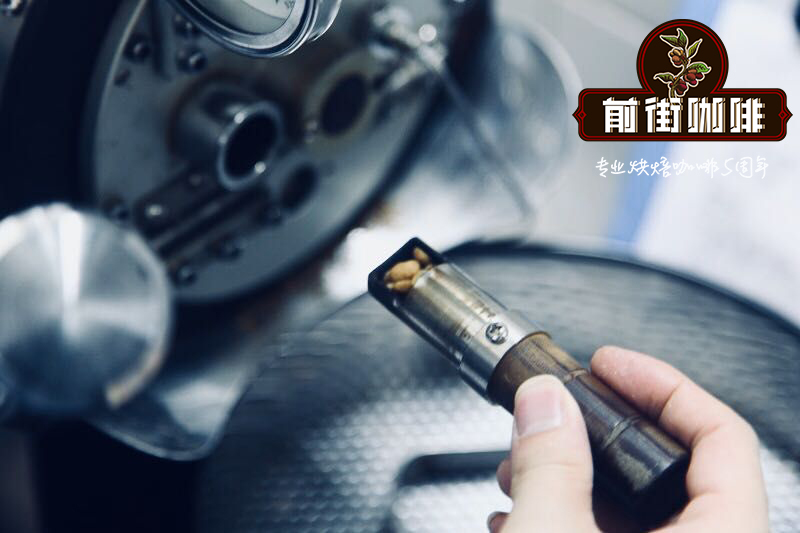
Rwanda: A Rising Star in African Coffee
This small East African country should not be overlooked by roasters or coffee enthusiasts. Known as the "Land of a Thousand Hills," it produces high-quality, high-altitude coffee even as it confronts serious economic challenges.
Rwanda is not Africa's largest producer - it harvested only 220,000 bags (60kg each) in 2016, compared with Ethiopia's 7.1 million bags and Uganda's 4.9 million. But Rwanda is steadily positioning itself as a world-class specialty coffee origin.
Rwanda Coffee Processing Stations
What should roasters know about Rwandan coffee? What are its flavors and aromas? How is it produced? And what roasting styles suit it best?
Coffee: A Symbol of Hope
Coffee is not native to Rwanda. Around the early 20th century, German missionaries introduced it, and since then coffee has become an economic lifeline for many rural families.
Yet no account of Rwandan coffee can ignore the tragedy of the 1994 genocide, during which 800,000 people were killed in just 100 days and up to 250,000 women were raped. In the aftermath, organizations such as the Partnership for Enhancing Agriculture in Rwanda through Linkages (PEARL) and Sustainable Partnerships to Enhance Rural Enterprises and Agricultural Development (SPREAD) were established. Both, funded by USAID, supported Rwanda's agricultural reconstruction.
As one of the country's most valuable crops, coffee became a focal point of that reconstruction, and the investments in infrastructure and producer training are still evident today.
Challenges remain: roughly 40% of the population lives in poverty. But as of 2016, coffee was Rwanda's fourth-largest export, worth $59.4 million annually, and the industry's development continues to support economic recovery.
Rwanda's National Agricultural Export Development Board (NAEB) frames its coffee strategy as "to position Rwanda as a specialty coffee-producing country" and "enable the coffee sector to better contribute to national development and prosperity," emphasizing rising prices as the measure of success and focusing on improved production and processing.
Rwanda Coffee Processing and Flavor Profiles
Many people love Rwandan coffee for its syrupy, full-bodied texture. That sweet richness owes much to the varieties: most Rwandan beans are Bourbon or Bourbon-derived.
The flavor palette is broad: cherry, grape, lemon, chocolate, cantaloupe, orange, nectarine, candy, apricot, plum, and more. Beyond the clean, bright citrus acidity, date notes are a Rwandan specialty.
These fruit characteristics come from outstanding growing conditions. Rwanda counts approximately 400,000 smallholder producers (NAEB), with most farms situated at altitudes of 1,700-2,000 meters - an altitude that deepens flavor complexity (and demands higher temperatures and RoR during roasting).
Most coffee comes from the south and west, but the country actually has five distinct growing regions. In the northwest lies the volcanic Virunga region, home of the famous silverback gorillas. In the west, the Kivu region runs along Lake Kivu. The center holds the Kizi Rift area; further south is Akagera, at relatively lower altitudes (1,300 meters); and finally there is the eastern Muhazi region.
Each region differs, of course. But nationwide the growing areas share high altitudes and nitrogen-rich volcanic soil - excellent conditions for quality beans.
Fully Washed Processing
In the past, Rwandan coffee was processed by individual farmers, yielding inconsistent quality that was then blended with neighboring farms' lots. After the turmoil of the genocide, however, both the government and PEARL encouraged producers to invest in fully washed processing; today there are 245 processing stations nationwide.
Note that fully washed processing - also called double washed - typically differs slightly from standard washed processing: the coffee is usually soaked twice, a practice common in Africa but rare in Latin America. Other methods exist if you look hard enough, but typical Rwandan coffee shows high sweetness, full body, and richness.
(Editor's note: Wet fermentation is sometimes called "double washed," "double fermented," or "Kenyan washed." More common in East Africa, it enhances clarity: after the cherry pulp is removed, the parchment coffee soaks in water, which extends fermentation and produces smooth body, complex acidity, and more subtle flavors. Temperature and water quality are important variables, and their effects on fermentation remain much to be explored.)
Challenges Facing Rwandan Coffee
Rwanda's coffee industry is stronger than ever but still faces hurdles. The biggest is the "potato taste defect" that affects Rwandan and Burundian coffee. It is caused by an ant-like insect that feeds on the cherry; the tiny punctures are nearly impossible to spot at harvest, but the raw-potato odor becomes obvious at cupping.
Rwandan growers also face challenges familiar worldwide: climate change, shrinking land suitable for coffee, and low prices. Still, the industry keeps developing with its focus on quality and processing.
How to Roast Rwandan Coffee
Let's look at what makes Rwandan coffee delicious and how to develop it in the roaster.
As with all coffees, the roast is shaped by variety, origin, processing, and more. But one thing to remember: Rwanda's high altitude makes its beans dense.
The general rule for African specialty coffees is to apply significant heat: hard beans like these transfer heat well, so higher drop temperatures and greater rates of rise (RoR) work better.
Rwandan coffee also has excellent body, so try extending development time and the first-crack period to emphasize fullness. Light-roasted Rwandan coffee has pleasant acidity, but do not be afraid to push for more of that syrupy body and mouthfeel.
FrontStreet Coffee Recommendation
East Africa's washed coffees reward roasters and brewers alike, and FrontStreet Coffee's Ethiopian lineup shows what the region does best. The washed Yirgacheffe Guodingding Cooperative - an experienced processing team from Guodingding village in the Worka area of Yirgacheffe, founded as an independent cooperative in 2012 with about 300 member farmers - offers jasmine florals and bright citrus acidity with green-tea and honey tones at a medium-light roast, superb as pour-over, cold brew, or even espresso.
For the natural-process side of the spectrum, the FrontStreet Coffee Natural Red Cherry sun-dries only fully ripe, defect-free cherries for three to five weeks - turning them every 2-3 hours early on to prevent uneven fermentation - yielding citrus acidity, berry juiciness, honeyed sweetness, and creamy smoothness. The FrontStreet Coffee Natural Huakui from Hambella, Guji (a 200-hectare farm drying cherries 21 days on raised beds) layers light fermented wine, florals, citrus, and mango over honeyed sweetness, cocoa, and spice, with a thick body and long finish.
And for the wildest expression, the FrontStreet Coffee Hamasho 74158 - mostly the JARC 74-series disease-resistant variety 74158 from an award-winning Sidamo washing station - smells of perfume lemon, strawberry, and starfruit, with sweet strawberry, star fruit, and green grape in the cup and delicate florals emerging on the finish.
Important Notice :
FrontStreet Coffee is a long-established specialty coffee roaster in Guangzhou China, selling freshly roasted beans from its own farm in Yunnan as well as dozens of carefully selected single-origin beans from around the world for both pour-over and espresso. The products deliver consistently excellent quality and great value, with shipping within 24 hours. Guangzhou's FrontStreet Coffee shop is recommended by many coffee lovers, and the beans are now available online at the Tmall 。
FrontStreet Coffee has moved to a new address:
FrontStreet Coffee Address: 315,Donghua East Road,GuangZhou
Tel:020 38364473
 Scan and follow the En Gafei WeChat official account. Please indicate that the reprint comes from "En Gafei".