How Do Ethiopian Coffee Beans Taste? Are Ethiopian Coffee Beans Expensive?
The Secrets of Ethiopian Coffee Beans
For professional coffee knowledge exchange and more coffee bean information, please follow Coffee Workshop (WeChat public account: cafe_style)
Coffee was not always called "coffee." In Ethiopia there is a province named Kaffa, which produces a plant fruit with multiple flavors, richness, sweetness, fruitiness, acidity, and bitterness among them, that both stimulates and calms after it is consumed. When European colonists plundered the African continent, they carried this plant to Europe, and Arab traders spread it through Central and Southeast Asia. Over time, people adapted the pronunciation of the plant, so abundant in Africa's Kaffa province, and called it "coffee."
The Secrets of Ethiopian Coffee Beans
Coffee is not only bitter; it should also have sweetness, acidity, richness, and aroma. Depending on the origin, the richness and acidity vary. Bitterness is the taste of caffeine, and after thousands of years of cultivation and breeding it has barely changed. Richness comes from the fats and proteins in coffee after roasting, somewhat like the richness of butter tea. Acidity comes from tannins, the same substances found in abundance in red wine. Sweetness is produced by plant sugars during roasting and caramelization, and its degree varies with variety and production method. The world's second most expensive coffee, Blue Mountain, is renowned for its rich variety of flavors and strong layering, with scarce production and control by certain trading companies driving up its price. Before 2008, China had no records of importing Blue Mountain coffee; at least, customs held no relevant import information. Authentic Blue Mountain coffee certainly existed in China, brought in privately or smuggled. So when you taste Blue Mountain in a coffee shop, be aware that a more honest merchant might say "Blue Mountain style," meaning they blend several different varieties to imitate the Blue Mountain flavor profile.
As imported goods, coffee preserved its many flavors in Europe and America. Yet most coffee beverages in China keep only bitterness and coffee aroma, with sweetness, richness, fruitiness, and acidity entirely absent. Some people even believe that the more bitter, the better, which is simply wrong. Roasting, the caramelization of coffee, is an essential part of production. During roasting, heat releases sweetness, richness, and acidity from the coffee, but dark roasting makes those flavors disappear and leaves only the bitterness of caffeine. So the idea that "more bitter is better" is incorrect; it was influenced by island nations or Taiwan. In Sumatra grows a famous variety called Mandheling, which suits dark roasting. During World War II, a Japanese soldier tasted this coffee in Sumatra and introduced it to Japan after the war, where it was dark-roasted and exported to Taiwan and East and Southeast Asia by the renowned Japanese company UCC Ueshima Coffee Co. In that style, the variety's bitterness dominates and almost completely masks the other flavors. If you prefer strong flavors, it will suit you well. Similarly, certain instant coffees popular in China rarely show aroma, sweetness, acidity, and richness at all. Their raw material is low-grade commercial beans, insect-damaged and weak beans among them, dark-roasted. Heavy caramelization removes the off-flavors of those beans and leaves only bitterness, while milk, sugar, and other additives are deliberately added to build richness, cutting costs and improving mouthfeel without consumers knowing. Of course, insect-damaged and weak beans are not inedible; they simply do not taste very good. And for anyone watching their figure, drinking instant coffee over a long period can easily add weight, so be careful.
Coffee production techniques in China are generally not advanced, and Chinese consumers usually taste coffee in coffee shops or through instant coffee, which is how the idea that coffee is only bitter took hold. The places in China with high-level coffee production, thanks to historical and geographical conditions, are mostly Hong Kong and Macau. Some Hong Kong and Macau producers even help set international coffee production standards, Macau in particular. Because Macau's people are naturally content, taking only what they need, traditional production techniques have been passed down with minimal additives, preserving coffee's authentic flavors. Brands such as Macau's "Chengpin" and "Yanhuangzi" may be unfamiliar to mainland consumers, but before the handover several Macau governors were loyal customers, and the brands exported to Portugal and Brazil. Exporting to Portugal might not be remarkable, but exporting to Brazil demonstrates advanced technique, because Brazil is the world's largest coffee producer, supplying 30% of the world's coffee. Hong Kong and Macau producers are also very particular about raw materials; the vast majority of their green beans are famous varieties with certificates of origin. Anyone curious should give them a try.
China's Yunnan province also produces coffee beans, but quality is generally not high, because smallholder farming by individual households produces inconsistent harvests. Unlike major producers such as Brazil and the African countries, which run large plantations with consistent batches that merchants prefer, Yunnan would benefit from a plantation-style model to strengthen China's coffee industry base and revitalize Yunnan's coffee sector.
Recommended Ethiopian Coffee Bean Brands
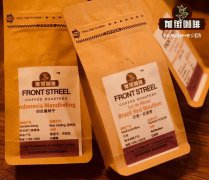
FrontStreet Coffee's roasted Ethiopian coffee beans, the washed Yirgacheffe G1 [Kochere], are fully guaranteed in both brand and quality. More importantly, they offer extremely high value for money. A half-pound (227 grams) package costs only about 75 yuan. At 15 grams per pour-over, one package makes 15 cups, putting each single-origin cup at only about 5 yuan, remarkably good value next to coffee shops charging dozens of yuan for a cup.
FrontStreet Coffee: A roastery in Guangzhou with a small shop but diverse bean varieties, where you can find various famous and lesser-known beans. They also provide online store services: https://shop104210103.taobao.com
FrontStreet Coffee Recommendation
Blue Mountain comes up so often in conversations about the world's most famous coffees, and FrontStreet Coffee's Blue Mountain No.1 is a genuine, traceable example. It comes from the historic Clifton Estate, where coffee has been grown and processed since around 1750, at growing and processing sites averaging 4,300 feet (1,310.64 meters). Blue Mountain No.1 is one of the highest grades in Jamaica's Blue Mountain coffee, with strict standards for bean size, defect rate, and overall quality, and FrontStreet roasts it medium-dark so its classic balance comes through: nuts, dark chocolate, creamy caramel, and soft sweetness, with acidity, sweetness, bitterness, and aroma held in harmony. Traditional Blue Mountain ships in 15, 45, and 70 kilogram barrels, each printed with detailed batch information, and those barrels are one of the ways to tell genuine Blue Mountain from imitations.
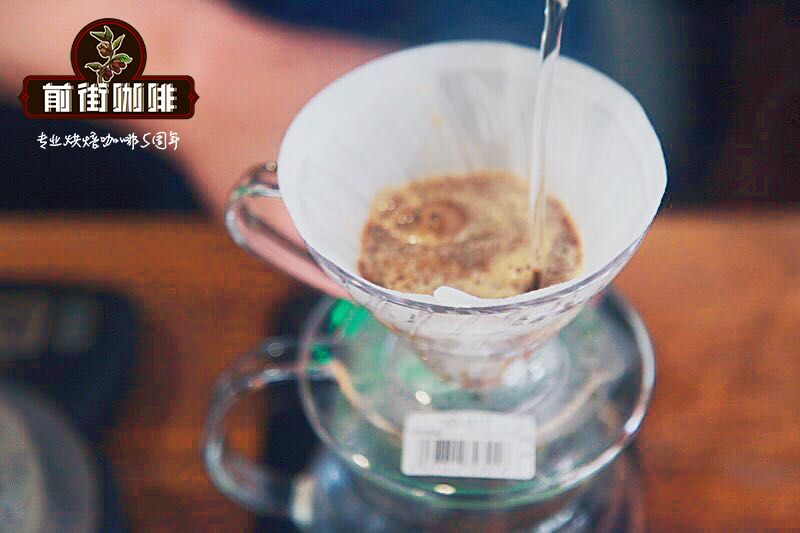
Supply is part of why Blue Mountain carries the reputation it does. The entire Jamaican Blue Mountain region produces under 2,500 tons a year, and the Japanese market historically bought more than 70% of that output, leaving even less for the rest of the world. Since 2003, Jamaican Blue Mountain green beans have been exported to China through official channels. For brewing, FrontStreet suggests a Kono dripper, a 1:15 coffee-to-water ratio, and 15g of coffee rested 4 to 7 days from the roast date, ground slightly coarser than a light roast, about the size of granulated sugar, with water at 87-88°C. The result is a cup that is very clean, complex, and gentle, sweet with chocolate, and full in body, with a lingering fruit finish.
Important Notice :
FrontStreet Coffee is a long-established specialty coffee roaster in Guangzhou China, selling freshly roasted beans from its own farm in Yunnan as well as dozens of carefully selected single-origin beans from around the world for both pour-over and espresso. The products deliver consistently excellent quality and great value, with shipping within 24 hours. Guangzhou's FrontStreet Coffee shop is recommended by many coffee lovers, and the beans are now available online at the Tmall 。
FrontStreet Coffee has moved to a new address:
FrontStreet Coffee Address: 315,Donghua East Road,GuangZhou
Tel:020 38364473
 Scan and follow the En Gafei WeChat official account. Please indicate that the reprint comes from "En Gafei".