Flavor Profile of Yunnan Coffee Beans_Research Report on Yunnan Coffee Bean Flavors_How is Yunnan Arabica Coffee
Thank you to Professor Qiao from Shenzhen Polytechnic for recommending an article from the Chinese Journal of Tropical Crops, a research report on the flavor of Yunnan coffee beans. After reading it, I found it extremely interesting and would like to share its central ideas.
Research on Yunnan Coffee Bean Flavors
This report focuses on academic experiments and research into the types and components of volatile substances and taste compounds in roasted coffee beans (light, medium, and dark roast) from four regions in Yunnan (Pu'er, Baoshan, Lincang, Dehong). The study employed headspace solid-phase microextraction gas chromatography-mass spectrometry (HS-SPME-GC/MS) combined with electronic tongue technology to detect odor and taste compounds in coffee from different regions. The HS-SPME-GC/MS results showed that 60, 65, and 67 volatile components were identified in light, medium, and dark roast samples from different regions respectively. As roast level increased, furans, pyridines, and sulfides gradually increased, while acids and furanone substances gradually decreased. Principal component analysis (PCA) showed good discrimination ability for samples at different roast levels, while samples from different regions at the same roast level clustered more closely together. Electronic tongue results showed significant differences in taste compounds among samples from different regions, which could be clustered into distinct categories based on their respective characteristics on the two-dimensional PCA projection map, consistent with the HS-SPME-GC/MS analysis.
As everyone knows, raw coffee beans have almost no flavor other than grassy notes before roasting, but during roasting their chemical components undergo a series of reactions that form coffee's characteristic flavors. Coffee contains over 800 volatile compounds, and even some trace components can contribute to flavor. The Dehong, Baoshan, Lincang, and Pu'er regions of Yunnan Province are the main cultivation areas for small-grained coffee in China, with a cultivation area exceeding 100,000 hectares and a total output reaching 120,000 tons, accounting for over 98% of the country's total cultivation area and production. Domestic research on coffee flavor is relatively limited, mainly focusing on genetic breeding, high-yield cultivation, and pest and disease control. HS-SPME-GC/MS detection of medium-roast beans from three regions in Yunnan (Pu'er, Baoshan, Lincang) showed that furan compounds had the highest content, and samples from different regions could be distinguished.
Through academic experiments on coffee beans from four production areas in Yunnan, the content of each type of substance in the samples was expressed as the percentage of the sum of their respective peak areas to the total peak area. Classification and analysis of volatile substances revealed that in light roasts, furfural was the highest-content volatile substance in Pu'er, Lincang, and Dehong samples, at (17.39±0.35)%, (14.93±0.13)%, and (12.30±0.22)% respectively, while the highest content in Baoshan coffee was methylpyrazine at (10.75±0.16)%. In medium roast samples, furfuryl alcohol had the highest content in Baoshan, Lincang, and Dehong at (13.54±0.42)%, (12.28±0.25)%, and (11.89±0.10)% respectively, while 5-methylfurfural had the highest content in Pu'er medium coffee at (14.01±0.28)%. In Pu'er dark roast coffee, the highest-content volatile substance was furfuryl alcohol at (15.22±0.96)%, while in Baoshan, Lincang, and Dehong dark roast coffee the highest-content volatile substance was pyridine at (20.28±0.46)%, (17.85±0.20)%, and (19.26±0.40)% respectively. This indicates that volatile substances in coffee change significantly with increasing roast level. For example, pyridine content in Pu'er samples increased from 0.53% (light roast) to 16.34% (dark roast), while furans decreased from 43.28% (light roast) to 33.25% (dark roast).
The quantity of furan compounds in dark roast coffee was higher than in light roast samples and comparable to medium roast samples. For example, furfural content in Pu'er coffee decreased from (10.44±0.08)% (medium roast) to (3.53±0.10)% (dark roast), and 5-methylfurfural content decreased from (14.01±0.28)% (medium roast) to (2.77±0.06)% (dark roast). As roast level increased, pyrazine content decreased, with particularly obvious changes from light to medium roast in Baoshan and Dehong coffee, mainly because the content of methylpyrazine, 2,5-dimethylpyrazine, and 2,6-dimethylpyrazine in light roast coffee from these two regions was higher than in Pu'er and Lincang coffee.
Pyridine compounds increased in quantity as roast level increased, while pyrrole compounds showed basically no change. In terms of compound content, pyridine compounds in coffee from all four regions increased with roast level, with pyridine showing the most significant increase. For example, Pu'er sample content increased from (0.53±0.05)% (light roast) to (13.69±1.22)% (dark roast). The content of pyrrole compounds in coffee from all four regions was comparable and changed little with increasing roast level.
Aldehydes and ketones in coffee from the four regions showed little change in types. At the same roast level, ketone content was basically comparable and gradually decreased as roast level increased. Aldehyde content, however, did not decrease with increasing roast level but was actually highest in dark roast samples, mainly due to the higher content of 4-methylbenzaldehyde in dark roast coffee.
Phenolic compound content increased significantly in dark roast coffee from all four regions compared to light and medium roast coffee, indicating that phenolic substances have a greater impact on the aroma of dark roast coffee. Except for Dehong region coffee, acid content decreased with increasing roast level in coffee from the other regions. GC-MS results showed no detection of 2-furfurylthiol, and there was little difference in sulfide content among the four regions.
Experiments showed that coffee from the same roast level in the four regions maintained good correlation, while differentiation between different roast levels was more obvious. Light roast and medium roast coffee showed better correlation compared to darker roast coffee.
The characteristic aroma of coffee is determined by different types and concentrations of volatile substances, with polar compounds being the main contributors to the aroma of Arabica roasted coffee. As roast level increases, the chemical components in coffee undergo a series of reactions such as Maillard and caramelization reactions during roasting, leading to changes in the types and content of volatile substances.
Furan compounds are a class of substances with relatively high content among coffee volatile compounds, mainly manifesting as burnt and caramelized flavors. Their formation is mainly due to reactions between sugars and amino acids at high temperatures. Since raw coffee beans contain higher levels of sugars and amino acids, the resulting furan compounds have higher content. This study found that the quantity of furan compounds in dark roast coffee was higher than in light roast samples and comparable to medium roast samples. The decrease in furfural content in coffee with increasing roast level might be due to decomposition or polymerization reactions. Pyrazines, the second largest class of volatile substances in roasted coffee, mainly manifest as roasted and earthy flavors.
This study found that as roast level increased, pyrazine compounds showed little change in quantity and type. Pyridine and pyrrole compounds mainly manifest as smoky and burnt flavors, but due to their higher thresholds they contribute less to coffee aroma. This study found that pyridine compounds in coffee from all four regions increased with roast level. Aldehyde and ketone compounds usually have higher content in medium roast, while their content may slightly decrease in dark roast due to degradation reactions. Among these, aldehydes and 2,3-pentanedione are key aroma compounds contributing to coffee's creamy flavor. This study found that aldehydes and ketones in coffee from all four regions showed little change in types.
Phenols, as a class of volatile substances in coffee, are mainly formed through partial group degradation of quinic acid. This study found that phenolic compound content increased significantly in dark roast coffee from all four regions, mainly due to large increases in guaiacol, phenol, and 4-ethyl-2-methoxyphenol content. Among these, guaiacol and 4-ethyl-2-methoxyphenol contribute greatly to aroma, especially guaiacol, which is considered a key aroma compound in coffee. Carboxylic acid substances such as acetic acid, propionic acid, and 3-methylbutyric acid mainly affect coffee's acidity. This study found that acidic substances have a greater impact on light roast samples. Sulfur-containing volatiles, as important aroma substances in coffee, mainly affect coffee's roasted flavor. Due to characteristics such as low flash points and easy oxidation, these compounds usually exist in coffee in trace amounts (less than 0.01% of total volatile substances), but play an important role in freshly roasted coffee. Among these, 2-furfurylthiol, due to its low threshold of 0.05 ppb (air), contributes significantly to coffee aroma. There was little difference in sulfide content among the four regions, and 2-furfurylthiol was not detected. Furanones also contribute significantly to coffee aroma, with 2,5-dimethyl-4-hydroxy-3(2H)-furanone being the most common key aroma compound.
Based on the loading plot, various volatile substances that contribute significantly to the aroma of coffee from four regions at different roast levels can be identified. Pyrazines can serve as distinguishing markers for Baoshan light roast and Dehong light roast. Acids and furanones correlate highly with Lincang light roast coffee and can serve as its distinguishing markers, while Pu'er light roast coffee correlates highly with ketones and furans. Medium roast coffee from all four regions basically maintained consistency, with furans being the correlated volatile substances. In dark roast coffee, Baoshan, Lincang, and Dehong were similar, with their highly correlated volatile substances mainly being phenols, pyridines, and sulfides, while volatile substances highly correlated with Pu'er dark roast coffee were pyrroles. These several types of volatile substances can basically serve as identification bases for distinguishing coffee beans from different regions and at different roast levels.
Analysis of Aroma Compounds
Currently, over 800 volatile components have been detected in coffee. However, volatility is only the most basic requirement for a substance to contribute to coffee aroma; not all volatile components are aroma substances. To be an aroma substance in coffee, a compound must exceed a certain concentration in air and react with receptors in the nasal cavity to be perceived. For example, high-content methylpyrazine with grassy burnt notes has a relatively high threshold, so its contribution to overall coffee aroma is quite limited.
Additionally, high-percentage volatile substances such as furfuryl alcohol and pyridine were found to have relatively small effects on coffee aroma, while some low-percentage volatile substances such as 4-ethyl-methoxy phenol and 2,5-dimethyl-4-hydroxy-3(2H) furanone have greater effects. This study selected 21 volatile substances detected by GC-MS as distinguishing markers. Through PCA analysis of classified volatile substances, it was found that volatile substances can serve as distinguishing markers for coffee from four regions at different roast levels. Pyrazines correlated well with Baoshan and Dehong light samples, acids and furanones correlated highly with Lincang light samples, while Pu'er light samples correlated highly with ketones and furans. Medium roast coffee from all four regions basically maintained consistency, correlating well with furans. Baoshan, Lincang, and Dehong dark coffees were similar, with highly correlated substances mainly being phenols, pyridines, and sulfides, while Pu'er dark coffee correlated highly with pyrroles. The PCA results for main aroma substances differed from the above results, mainly because the generation of coffee's characteristic aroma is caused by a few aroma-contributing substances, and as roast level increases, aroma differences among the four regions at the same roast level also increase.
Electronic Tongue Analysis
This study also analyzed samples from four production regions using an electronic tongue. The electronic tongue is a modern analytical instrument that mimics human taste mechanisms, obtaining information about test sample liquids through a taste sensor array and processing sensor output signals through multivariate data analysis methods to achieve sample analysis. It cannot analyze the microscopic components of samples from a micro-level perspective but reflects the overall flavor characteristics of samples, with advantages such as objectivity, speed, accuracy, and good reproducibility. Through electronic tongue experiments, the differences among roasted coffee from four regions could be further clarified. According to the PCA results, roasted coffee from the four regions showed good differentiation, especially between Pu'er and Dehong coffee, while Baoshan and Lincang coffee were closer. For coffee at the same roast level, dark coffees from all four regions were clearly distinguished from light and medium roasts, while medium and light roasts were closer, with the smallest difference between Dehong light and medium roasts, and relatively small differences between Baoshan light and medium roasts and Lincang light and medium roasts.
(The academic research conclusions and analysis results in this article are from "Study on Flavor Fingerprint Atlas of Roasted Coffee Beans in Yunnan Region" by Dong Wenjiang et al., published in Chinese Journal of Tropical Crops 2015, 36(10): 1903-1991.)
Yunnan Coffee Bean Recommendations
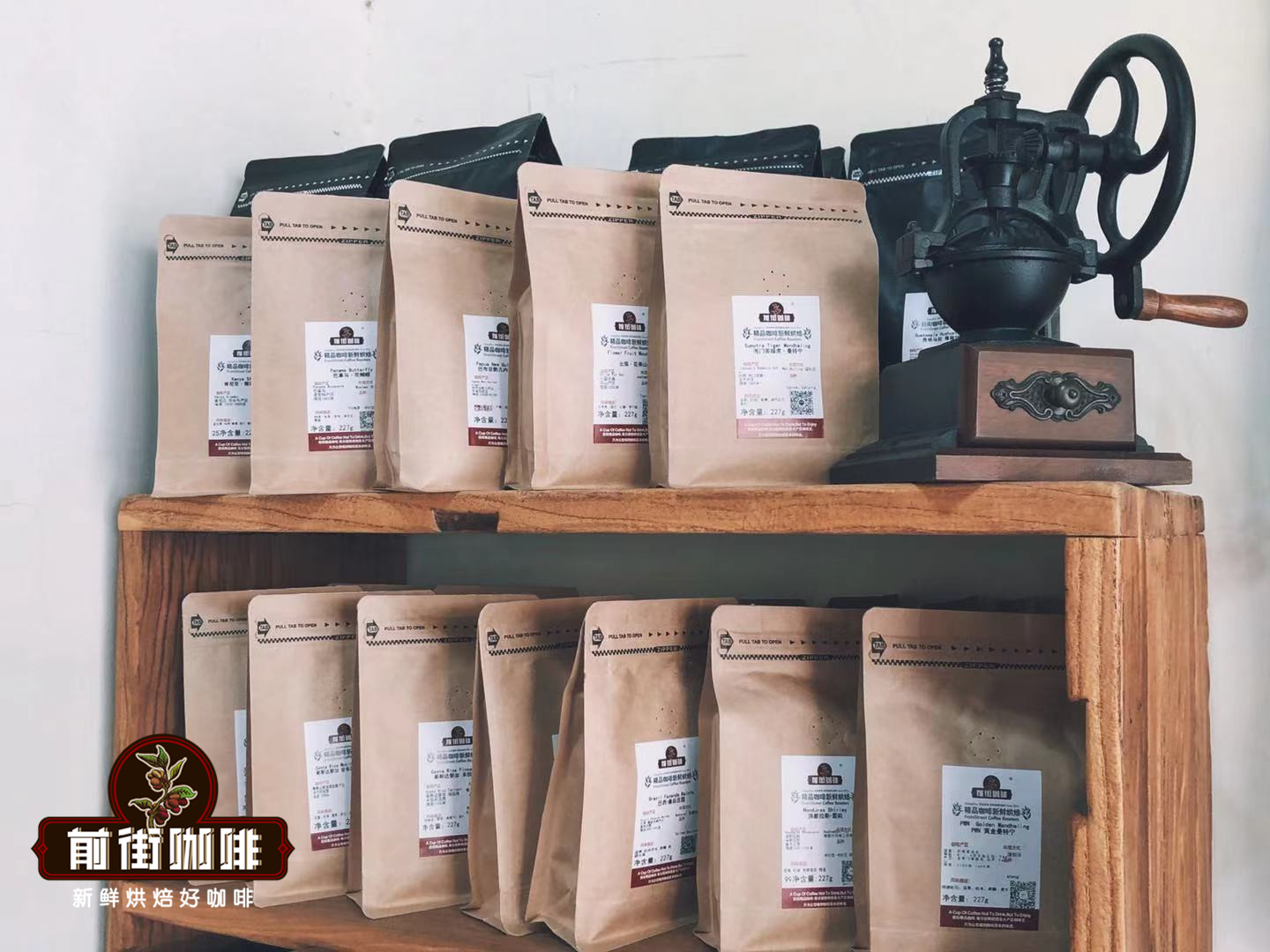
FrontStreet Coffee's roasted Yunnan beans, including Baoshan region old-variety Typica coffee [Yunnan Huaguoshan], have full guarantees in both brand and quality, and offer excellent value.
FrontStreet Coffee is a roastery in Guangzhou with a small shop but a diverse bean selection, where you can find both famous and lesser-known beans. Online shop services are also available.
FrontStreet Coffee Recommendation
If this report has you curious about Yunnan, FrontStreet's Yunnan small-grain coffee (Xiaoli) from the Baoshan region is the easiest way in. In fact, "Xiaoli," or small-grain, is just another name for Arabica, the smallest of the three native coffee species. Yunnan's small-grain coffee traces back to 1904, when the French missionary Tian Deneng brought Typica seeds from Vietnam and planted them in Zhugula village, Binchuan County. FrontStreet's version is washed and medium roasted, with soft nutty and chocolate sweetness and a light plum acidity at a friendly price.
To go a step further, FrontStreet's 2013 sun-dried Typica takes only fully ripe red cherries, dries them naturally, and roasts medium for a more balanced, brighter cup: dark berry tones, caramel sweetness, chocolate, a touch of dried apricot, and a black tea finish. There is also FrontStreet Coffee's Black Cocoa Blend, a Yunnan-and-Brazil blend that works beautifully as espresso, giving a balanced Americano with nutty, brown-sugar sweetness or a smooth latte with almond and cream.
Important Notice :
FrontStreet Coffee is a long-established specialty coffee roaster in Guangzhou China, selling freshly roasted beans from its own farm in Yunnan as well as dozens of carefully selected single-origin beans from around the world for both pour-over and espresso. The products deliver consistently excellent quality and great value, with shipping within 24 hours. Guangzhou's FrontStreet Coffee shop is recommended by many coffee lovers, and the beans are now available online at the Tmall 。
FrontStreet Coffee has moved to a new address:
FrontStreet Coffee Address: 315,Donghua East Road,GuangZhou
Tel:020 38364473
 Scan and follow the En Gafei WeChat official account. Please indicate that the reprint comes from "En Gafei".