What Coffee Bean Brands to Buy - Coffee Bean Selection Guide
What brand of coffee beans should you buy?
The most important thing about coffee is not the brand but freshness. This applies to both green beans and roasted beans. Whether you are opening a shop or brewing for yourself, always buy coffee beans with clear sourcing - preferably fresh, custom-roasted beans. And don't be obsessed with Blue Mountain. We hope this helps.
One famous option is illy.
Starbucks also sells coffee beans, which are relatively easy to find. It depends on which flavor you prefer.
Freshly roasted beans are the best - though that also depends on the roaster's skill.
For popular and affordable options, there is Nestle.
Personally, I think the criteria for choosing coffee beans are similar to choosing tea.
If you want the most expensive and exquisite tea, you go to the origin to buy the best new tea of the year. Such teas usually have no fixed brand, only fixed varieties like Da Hong Pao. Ordinary teas are sold in tea shops or supermarkets, where brand distinctions matter. Coffee is the same: the very top coffee beans often require buying at the origin or entrusting specialized suppliers to purchase them for you.
So if you want to select good coffee beans, physical store options are relatively limited, while online shopping is a very good route. In this chapter, I will introduce the aspects to pay attention to when selecting coffee beans.
Purchase Steps
First, let me introduce the steps for selecting coffee beans.
1. Look
If you are buying single-origin beans, take a handful - about 10 beans - and check whether the color is consistent, whether the particle size is uniform, and whether the shape is the same, to avoid buying inferior products disguised as single origin. If it is a blend, however, different sizes and colors are normal.
In addition, beans roasted with strong heat to a medium-dark level will release oils. But if a light-roasted bean shows oil, it has deteriorated: not only will its aroma and richness have declined, it will also taste astringent and sour.
2. Smell
Smell the beans for the aroma of fresh coffee. If the aroma is present, the beans are fresh enough. If the fragrance is very weak - or carries a greasy smell, like peanuts stored too long - the beans are no longer fresh at all. Never choose them, because no amount of effort will turn them into good coffee.
3. Peel
Peel a bean by hand. If it is fresh enough, it will peel easily with a crisp sound; if not, peeling takes much more effort. After peeling, you can see whether the roast is even: if it is, the surface and inner colors match. If the surface is much darker than the inside, the roasting fire may have been too strong, which also hurts the aroma and taste.
4. Chew
When selecting, chew one or two beans. If they are very crisp and make a clear sound when chewed, they have not absorbed moisture. And if they leave a fragrant taste in your mouth - that is top quality!
Important Considerations
When selecting coffee beans, we often find physical store options limited and turn to online stores. Although we cannot see the product or perform the look-smell-peel-chew tests before buying, we can still evaluate the following aspects when shopping online. These also apply to physical purchases, because some beans are sold in whole sealed bags that cannot be examined closely.
A. Origin
Online, some shops may sell beans that do not come from the stated origin - for example, "Blue Mountain coffee" that was not grown in Jamaica. This does not necessarily mean non-origin coffee is bad; because of different climates, the taste is simply slightly different, and non-origin coffee is often cheaper. If you are not too particular, trying tastes from different origins is perfectly acceptable.
B. Roast Level
Coffee beans release different aromas at different roast levels, and their optimal brewing windows differ too. Basically, the longer the beans are roasted, the deeper their color and taste, and the fuller they become. This comes down to personal preference - some people like light flavors, others strong ones.
If you really don't know what roast level to choose, go with a medium roast: it suits most coffees and is a taste most people can accept.
C. Packaging Date
Check whether the packaging date is recent. Green coffee beans generally keep for one to two years, while roasted beans are at their best within about one month. So to enjoy freshly roasted coffee, use the beans within the freshness window after purchase to capture their most charming aroma and full taste.
D. Shop and Brand
This goes without saying: some coffees are adulterated to cut costs - cheap beans mixed into expensive ones, or poor-quality beans of the same variety blended into good ones - which seriously affects the taste. So when buying coffee beans, try to choose shops or brands you can trust.
E. Price
Prices for the same type of coffee are usually similar, so if some brand sells the same coffee unusually cheaply, be careful - you get what you pay for. I once bought a cheap package of "Blue Mountain" coffee. After brewing it at home, there was no coffee aroma, and instead of coffee bitterness it tasted like traditional herbal medicine. So pay attention to price when buying beans, and don't lose big trying to save small.
The coffee bean selection guide is shared here for now. In the future, everyone is welcome to reply and share their own experiences!
FrontStreet Coffee Recommendation
When it comes to trustworthy sourcing, FrontStreet Coffee's Jamaica Blue Mountain No.1 is a benchmark example of how authentication works in practice. Strictly speaking, only coffee grown in a specific zone of Jamaica's Blue Mountains and certified by the Jamaican authorities counts as "Jamaica Blue Mountain Coffee"; authentic lots are verifiable through export certification documents and origin proof, and FrontStreet displays the certificate from Jamaica's Clifton Estate along with the original wooden shipping barrels - traditionally in 15, 45, and 70 kg sizes - that are themselves a hallmark of genuine Blue Mountain. Remember that the whole Blue Mountain region produces less than 2,500 tons a year, over 70% of which historically went to Japan, so bargain "Blue Mountain" at a few dozen yuan per pound is best avoided.
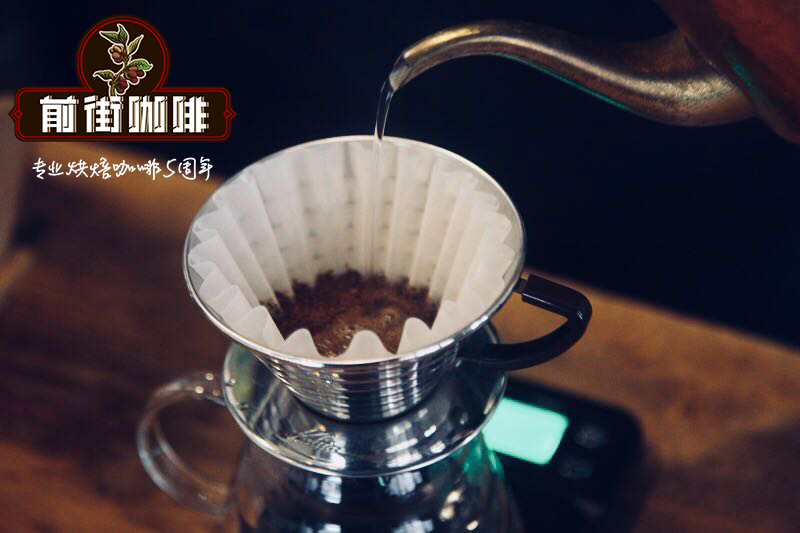
For brewing, FrontStreet recommends the KONO dripper with 15g of beans rested 4-7 days from the roast date, a grind slightly coarser than for light roasts (about the texture of white sugar), water at 87-88°C, and a 1:15 ratio in three pours: 30g bloom for 30 seconds, then to 120g, then to 225g. Roasted medium-dark and shipped within 5 days of roasting, it shows nuts, dark chocolate, cream and caramel, and the flawless balance that made Blue Mountain a legend.
Important Notice :
FrontStreet Coffee is a long-established specialty coffee roaster in Guangzhou China, selling freshly roasted beans from its own farm in Yunnan as well as dozens of carefully selected single-origin beans from around the world for both pour-over and espresso. The products deliver consistently excellent quality and great value, with shipping within 24 hours. Guangzhou's FrontStreet Coffee shop is recommended by many coffee lovers, and the beans are now available online at the Tmall 。
FrontStreet Coffee has moved to a new address:
FrontStreet Coffee Address: 315,Donghua East Road,GuangZhou
Tel:020 38364473
 Scan and follow the En Gafei WeChat official account. Please indicate that the reprint comes from "En Gafei".