
Pour-Over Coffee Techniques | What Are American and Japanese Pour-Over Methods? Differences Between Various Pour-Over Coffee Techniques
Professional Coffee Knowledge Exchange
For more coffee bean information, follow FrontStreet Coffee.
American Style Pour-Over Coffee
Have you ever tried coffee brewed with an American-style pour-over? You'll notice that with the same coffee beans, American-style pour-over produces coffee that is noticeably more bitter and astringent compared to hand-pour brewing. The key factor is the high water temperature in American-style brewing. Generally, American-style brewers actually extract by spraying water through atmospheric pressure.
Simply put, when the power of an American-style brewer remains constant and external environmental factors don't vary much, the extraction water temperature and flow rate remain relatively stable. However, this extraction temperature is too high and the flow rate is too slow, leading to over-extraction. This is where the bitterness and astringency come from - Americans prefer this type of bitterness.
Differences Between American and Japanese Styles
Although American and Japanese styles might use the same type of filter cup, there are differences in coffee bean roasting, grinding, filter paper, water temperature, and technique.
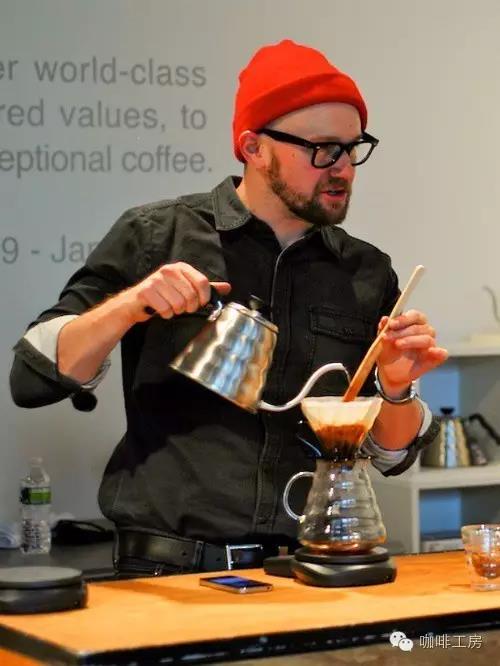
The biggest difference is that American-style pour-over requires stirring the coffee grounds with a stir stick while pouring, somewhat similar to the stirring technique we use with siphon brewers. In contrast, Japanese, Korean, Taiwanese, and domestic hand-pour coffee only uses water to pour in circles, never using stir sticks or bamboo to stir the coffee grounds.
Typical American flavor profiles mainly feature medium and dark roasts, with richness + mild bitterness + sweetness. It combines both bitterness and sweetness characteristics. For medium roasts, use medium grinding, water temperature between 80-85°C, and medium pouring speed. For dark roasts, use fine grinding, water temperature between 85-90°C, and slow pouring with a fine water flow, resulting in heavier bitterness. Americans often drink a cup in the morning to quickly wake up, hence it's also called "dawn coffee."
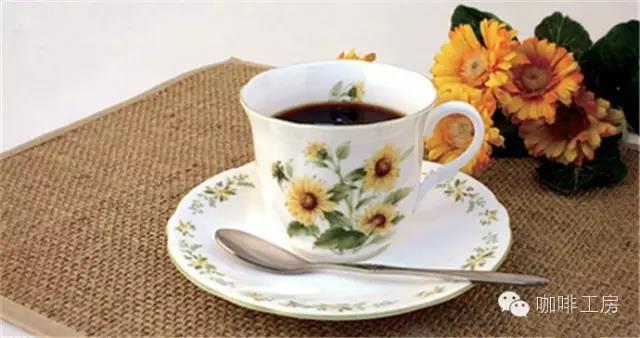
American Brewing Method
American brewing is relatively simple.
First, the grounds should be ground very finely, basically similar to espresso grinding;
Second, water temperature should be around 90°C;
Third, blooming is similar to the Japanese style;
Fourth, while slowly pouring water in circles, continuously stir with a wooden spoon or bamboo stick. There are different stirring techniques: one is back-and-forth horizontal stirring; the other is circular stirring.
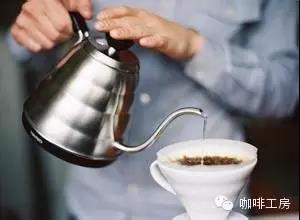
Japanese Brewing Method
Light and medium roasts + coarse grinding, with a fast pouring method using 86-92°C water, is the method preferred by Eastern brewers, focusing on and pursuing the balance between acidity and bitterness.
Another issue that often causes confusion is the difference between filter-immersion and drip brewing (or more accurately, drip-style brewing).
What is "filter-immersion"? It refers to small-hole filter cups like Melitta. Their filter cup holes are very small, and whether one-hole or three-hole, their dripping speed is relatively slow. The coffee grounds are actually fully immersed and extracted by hot water at a certain temperature, so medium-dark roasts work better.
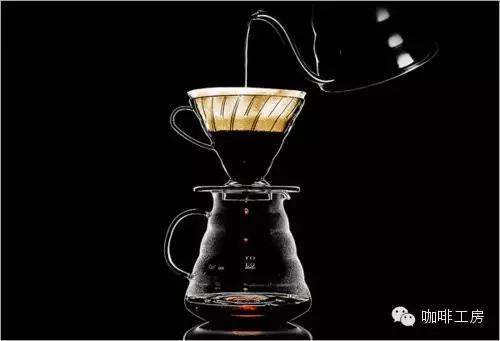
What is "drip-style"? V60 and other large-hole conical filter cups, flannel filters, Swiss Gold and other metal filters can all be categorized as drip-style. Their common characteristic is large and unobstructed bottom holes, where the dripping speed is determined by the operator's pouring speed, so they can adapt to any type of roast.
Personal Recommendation
The most commonly used method, also the most stable and convenient, with balanced flavor. Personal recommendation: 20g of coffee with a 1:15 water ratio.
1. Wet the coffee with about 30g of hot water.
Shake the filter cup to even out the grounds, use your finger to create a hole in the center, and pour in a zigzag pattern from the center position. Don't let water touch the filter paper edge. When the "hamburger" shape appears, start timing from when you begin pouring.
2. After beautiful blooming, complete the pouring within the next 2.5 minutes.
Around 50 seconds, perform zigzag pouring from inside to outside in a circular pattern, ensuring the water stream doesn't touch the filter paper. After significant blooming, complete the first pour around 1 minute and 10 seconds. Wait for the water level to drop significantly before the second pour. After significant blooming again, pour once more. Continue this cycle until reaching the desired water amount, then stop immediately. The entire hot water drip process should complete in approximately 2-2.5 minutes.
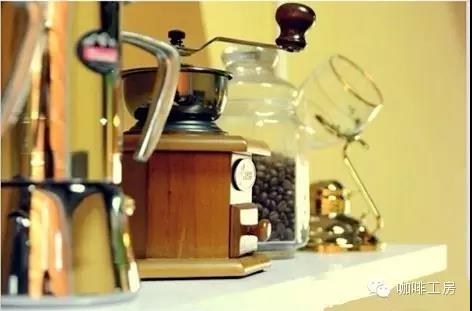
FrontStreet Coffee is a roastery with a small storefront but a remarkably diverse range of beans, where you can find both famous and lesser-known origins, and it also offers online shop services.
FrontStreet Coffee Recommendation
The V60's signature large single hole lets the water flow without obstruction, so the drip speed depends largely on the brewer's pouring control. Its fast-extraction character brings out layered aromatics and lively acidity, which makes it a natural match for floral and fruity coffees like Ethiopia Yirgacheffe Gedeb, with its bright citrus, berry, and floral notes and a green-tea-like sweetness, or Ethiopia Huakui, famous for intense tropical fruit aromas of strawberry, passion fruit, jackfruit, and lychee with a juicy, smooth body.
If you prefer a more mellow, low-acid cup, the large-hole fast-drip style may not be ideal. Instead, consider the FrontStreet PWN Golden Mandheling, a dark roast with low acidity and a rich, lingering body full of herbal and dark chocolate notes, or FrontStreet Brazil Queen Estate, whose balanced cup carries nut and cocoa aromas with clear caramel sweetness - both forgiving choices that perform well across brewing methods.
For brewing, a simple starting point is 20g of coffee at a 1:15 ratio with water around 86-92°C for light to medium roasts. Bloom with about 30g of hot water, then pour in slow, even circles, keeping the stream off the filter paper, and finish the full pour within roughly 2-2.5 minutes for a balanced, sweet cup.
Important Notice :
FrontStreet Coffee is a long-established specialty coffee roaster in Guangzhou China, selling freshly roasted beans from its own farm in Yunnan as well as dozens of carefully selected single-origin beans from around the world for both pour-over and espresso. The products deliver consistently excellent quality and great value, with shipping within 24 hours. Guangzhou's FrontStreet Coffee shop is recommended by many coffee lovers, and the beans are now available online at the Tmall 。
FrontStreet Coffee has moved to a new address:
FrontStreet Coffee Address: 315,Donghua East Road,GuangZhou
Tel:020 38364473
 Scan and follow the En Gafei WeChat official account. Please indicate that the reprint comes from "En Gafei".
![Peru Coffee - El Cerro Coffee Farm [Caturra] Coffee Bean Flavor and Characteristics? Peru E](https://en.gafei.com/uploads/allimg/180910/14-1P9101K005K6-lp.jpg)