How to Determine if Coffee Beans Are Fresh | Do Fresh Coffee Beans Exude Oil | How to Store Fresh Coffee Beans
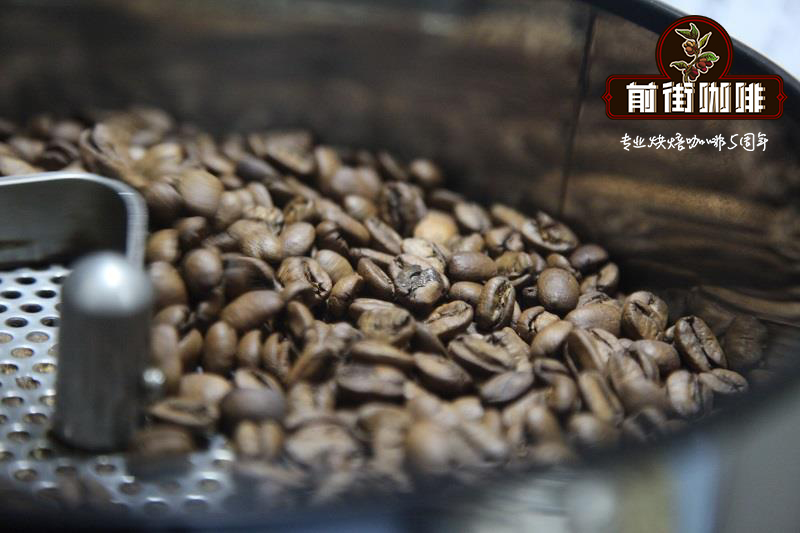
Recently I went to a few coffee events and bought several varieties of beans, which have been piling up at home and left me with a little surplus. Today I finally had some quiet time and decided to work through some of the stock. So I took out a bag of beans that had been opened a month earlier—only to find it oozing oil.
Some people will ask: "The fresh coffee beans I bought are already oily? Does that mean oily beans can't be used? Then what is the 'crema' you need when pulling espresso? If I buy beans, how can I tell whether they're fresh? And if I want to extend their shelf life, how should I store them?"
It seems today's points are quite extensive. Let's take them one at a time.
What Makes Beans "Ooze Oil"?
Two kinds of beans ooze oil: fresh dark-roasted beans and stale light-roasted beans.
Dark-roasted beans, deeply roasted, come out of the roaster with a slight oily sheen. From the first to the second day out of the oven they begin to show a pronounced "oily sheen." Those glossy dark-roasted beans gradually lose their surface sheen after three weeks out of the oven, eventually becoming dry, stale beans that have lost their flavor. At that point, the dark-roasted bean's glorious life is over.
Light-roasted beans, lightly roasted, look dry after baking. About five days out of the oven they begin to show "spot-like oiliness." Note that this does not necessarily mean they are stale; in fact, it may be the peak of their life. After two weeks, light-roasted beans begin to show an even oily sheen on the surface and smell rancid. It is best not to drink these any longer, though you could grind them into powder and use them as a body scrub in the bath.
What Exactly Is "Crema"?
The golden to chocolate-colored liquid that sits on top of an espresso is called crema. It forms when the fats and oils naturally present in coffee are emulsified as soluble substances are extracted by high-temperature, high-pressure water, then mixed with air to create fine, dense bubbles.
Because freshly roasted coffee releases a certain amount of carbon dioxide, and carbon dioxide takes part in the emulsification too, the fresher the coffee, the more carbon dioxide is released, and the larger the bubbles you can see during extraction.
Factors affecting crema include the roast degree of the beans (light roasts give a lighter, thinner crema), freshness, the processing method of the green beans (sun-dried or honey-processed beans usually give a richer crema than washed beans), origin, and the extraction equipment.
How to Choose Coffee Beans
"Observation, smelling, questioning, and palpation" are the four methods of traditional Chinese medicine diagnosis, and buying coffee beans is somewhat similar.
When selecting beans, study their appearance. There should be relatively few defective beans. Check whether single-origin beans have a consistent color and whether the particle size and shape are similar (blended beans varying in size and color is normal). Check whether light-roasted beans are oily. Take one or two beans and taste them—if they are crisp, the beans have not taken on moisture; if they leave a fragrant aftertaste, they are fresh.
If the beans have lost their aroma or even developed stale or rancid smells, they are no longer fresh.
There is one type you should absolutely avoid, though: beans with yellowed surfaces. When beans mold internally and breed bacteria, chemical changes reach the surface as well, turning the outer shell yellow.
How to Store Coffee Beans
Some people ask: "Can coffee beans be refrigerated?"
Picture my horrified expression!
The drastic temperature difference between inside and outside the refrigerator causes moisture to condense in the coffee bag, and the beans quickly become damp.
"What about freezing?"
That is truly an excellent question.
In 2016, a research team from the University of Bath in the UK, working with local coffee shops, found that freezing coffee beans before grinding produces a more uniform powder size and tighter particle arrangement, allowing more complete extraction and a more delicious cup.
The team found that the lower the external temperature, the tighter and more orderly the arrangement of the coffee particles. Uniformity of grind matters greatly for extraction—the more uniform the grind, the more complete the extraction.
The research was reportedly published in Scientific Reports, and Nature magazine also covered it in a special report.
Seeing this truly makes me envious as a female PhD in pharmacology. In 2016, Scientific Reports had an impact factor of 5.228 and became highly sought after by Chinese researchers, who claimed that everyone doing research must have at least one publication there.
Coffee beans should be kept away from light as much as possible, because direct light is extremely damaging to them, and even indirect lighting accelerates the decline of flavor. Store beans in a dry, room-temperature, dark, sealed place.
Fresh Coffee Bean Recommendations
FrontStreet Coffee's freshly roasted single-origin and espresso beans—Yirgacheffe, Brazilian, Mandheling, and others—offer solid guarantees of brand and quality and suit a range of brewing equipment. Just as important is their excellent value: a half-pound (227 grams) package costs only around 80-90 yuan. At 15 grams of grounds per pour-over, one package makes 15 cups, putting a cup of single-origin coffee at only about 6 yuan—exceptional value against the usual café price of 30-40 yuan a cup.
FrontStreet Coffee is a roastery with a small shop but a wide range of beans, where you can find both famous and lesser-known varieties.
FrontStreet Coffee Recommendation
Espresso beans generally fall into two groups: blends, which most cafés prefer, and single-origin beans chosen to taste, also known as SOE. A blend is made by a roaster or barista combining beans from different origins for a more balanced result—for instance, adding an aromatic bean to one that is smooth but lacks aroma—so the aim of blending is simply to make the coffee better. For traditional Americanos and lattes, choose FrontStreet Classic Blend or FrontStreet Commercial Blend: both add a small amount of Robusta to an old-style Italian recipe, so extraction yields butter, nut, spice, dark chocolate, and toast aromas, with a wild, full body and plenty of golden crema, making latte art easy too.
If you are drawn to almond, walnut, and other nutty espresso flavors, FrontStreet Specialty Blend and FrontStreet Black Cocoa Blend are the first choices, since both include a large proportion of Brazilian coffee that supplies a comfortable bittersweetness and a creamy peanut aroma, extremely smooth on the palate. FrontStreet Specialty Blend brings the nut, chocolate, and caramel notes and moderate acidity of Colombian coffee, while FrontStreet Black Cocoa Blend combines the ripe-plum acidity of Yunnan small beans and releases a creamy chocolate aroma when ground—balanced, highly adaptable, and good not only for lattes and Americanos but for all kinds of signature coffee drinks, making it an ideal partner for a shop. It is worth knowing that Commercial Blend was the workhorse shop bean before Black Cocoa Blend arrived: cheaper than Specialty Blend and tuned not for maximum crema but to balance flavor and cost, which has kept it a popular choice for cafés across every kind of commercial setting.
SOE, by contrast, is about bringing out a single origin's character, and its key trait is traceability—down to the estate, even the individual farmer—which also encourages better growing practices. FrontStreet Sun-Dried Huakui SOE comes from Guji Hambella in Ethiopia, where coffee is grown as high as 2,300 meters; the altitude gives the cherries plenty of time to develop complex aromas, and natural processing raises the sweetness. Medium roasting preserves its elegant floral-fruit notes while letting it caramelize a little, so a Huakui SOE Americano or latte carries cream, cocoa, berries, light florals, and black tea. For a sweeter SOE, FrontStreet Costa Rica Blackberry SOE is baristas' strong recommendation, a honey-processed single origin: ripe cherries are taken to the estate for selection and washing right after picking, then depulped and dried, which shortens drying and lets the bean absorb the pulp's blackberry aroma and clean sweetness. Medium-roasted, it makes a sweet-sour, refreshing Americano or, with milk, a latte of cranberry cookie, raisin, and nut. And where a low-acid, gentle cup at a friendly price is wanted, look to FrontStreet Brazil Queen's Estate SOE: a distinctive Yellow Bourbon with a quiet, sweet character, roasted medium-dark, it extracts butter cookie, macadamia, and toasted bread creaminess on an espresso machine.
Important Notice :
FrontStreet Coffee is a long-established specialty coffee roaster in Guangzhou China, selling freshly roasted beans from its own farm in Yunnan as well as dozens of carefully selected single-origin beans from around the world for both pour-over and espresso. The products deliver consistently excellent quality and great value, with shipping within 24 hours. Guangzhou's FrontStreet Coffee shop is recommended by many coffee lovers, and the beans are now available online at the Tmall 。
FrontStreet Coffee has moved to a new address:
FrontStreet Coffee Address: 315,Donghua East Road,GuangZhou
Tel:020 38364473
 Scan and follow the En Gafei WeChat official account. Please indicate that the reprint comes from "En Gafei".