What are the characteristics of Colombian Medellin coffee? How to drink Colombian Medellin coffee?
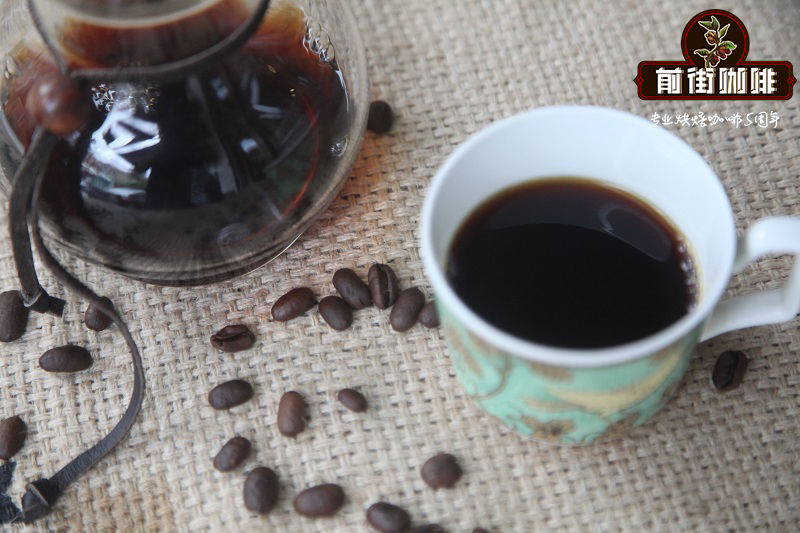
Colombian Coffee
A rich, fragrant cup of coffee always has an extraordinary origin behind it.
Colombia is one of the world's largest producers of premium coffee, and its traditional deep-roasted beans carry a rich, memorable flavor. Colombian coffee is one of the few single-origin coffees sold under a country name, and the nation is the world's largest exporter of Arabica beans. It is nutritious, and some varieties show distinctly nutty notes. Often described as silky in texture, it offers some of the best balance found in any coffee, with a soft, smooth flavor that suits drinking at any hour.
The most important production regions in Colombia are grouped together under the acronym MAM, standing for Medellin, Armenia and Manizales. Most of the premium coffee Colombia exports comes from these MAM regions. Coffee from Medellin is regarded as the best of the three and commands the highest prices, characterized by full, rich beans, abundant nutrients, intense aroma and moderate acidity.
Colombia is the world's third-largest coffee producer, after Brazil and Vietnam, and it is a leading member of the Mild group. Well-known origins include Medellin, Manizales, Bogota and Armenia. All of the cultivated beans are Arabica, delivering a rich range of flavors with stable quality and prices. The roasted beans look especially large and attractive.
Western Colombia is dominated by the Andes, which split into three ranges - the Western, Central and Eastern Cordilleras - while the Cauca and Magdalena rivers run through lowland plains toward the Caribbean Sea. Colombia is the world's third-largest coffee producer overall and processes its Arabica beans with the washed method. It is also one of the world's largest producers of premium coffee, and its traditional deep-roasted beans have a rich, memorable flavor. In 1808, coffee was first brought to Colombia by a priest who carried it from the French Antilles by way of Venezuela. Annual output reaches 12 million bags of 60 kg each, compared with Brazil's 31 million bags.
The importance of coffee to Colombia can be seen in a small detail: every vehicle entering the country must be spray-disinfected, to prevent accidentally bringing in diseases that could harm the coffee trees.
Major producing regions include Huila (San Augustin), Narino, Tolima, Popayan (Cauca), Valle de Cauca, Meta, Antioquia (Medellin), Magdalena (Sierra Nevada), Boyaca and Santander (Bucaramanga). Colombia has roughly 700 million documented coffee trees, of which 66% are cultivated with modern methods on plantations, while the rest grow on traditionally managed small farms. The main varieties are Caturra, Colombia, Tipica, Bourbon, Maragogype and Tabi. More than 500,000 farmers run farms and cooperatives of every size across 590 municipalities and 14 major coffee-producing regions. Around 2 million Colombians depend on coffee cultivation for their livelihood, and the crop contributes 12.5% of gross domestic product.
Colombian farm owners can sell their entire crop to the Coffee Management Association at official low prices, or sell to exporters who may offer more. In practice, the Coffee Management Association controls overall exports to Europe, while coffee destined for the United States is mainly handled by private exporters. All exports, however, are subject to minimum export price controls.
Antioquia Province, in north-central Colombia, devotes 126,000 hectares to coffee, producing 2,000,000 bags of 60 kg each - 18% of Colombia's output, second only to Huila Province. Most of the province sits on the high mountain terrain of the Andes, yet still enjoys warm sea breezes from the Caribbean. The provincial capital, Medellin, is Colombia's second-largest city and a major coffee-producing region in its own right.
The region is full of specialty lots from smallholder micro-batch production that express distinct local character. In recent years, as the international market has focused more on coffee quality and demand for specialty coffee has grown, attention has shifted toward micro-regional organization and micro-batches from small farmers (micro-regional selections). Dozens of smallholders combine their individual harvests into single micro-batches for sale, which allows much better quality control. Through batch-by-batch cupping, many outstanding smallholder coffees from specific micro-regions can be picked out. These coffees taste more vibrant, with aromas of fresh ripe fruit and caramel and a harmonious balance between acidity and sweetness.
FrontStreet Coffee's Brewing Recommendation for Colombian Coffee
V60 / 90°C / 1:15 / total time: two minutes
Flavor notes: plum, caramel
FrontStreet Coffee Recommendation
Readers who enjoy the balanced, easy-drinking profile of Colombian coffee will find a kindred spirit in FrontStreet Coffee's Brazil Cerrado Red Bourbon. Grown in the well-known Cerrado region and processed as a pulped natural, this red Bourbon is a classic single-origin Brazilian bean. FrontStreet roasts it to a medium level, drawing out creamy peanut, toasted bread, caramel and hazelnut aromas with a round, smooth body, low acidity and a light bitter finish. It works equally well as a pour-over and in a moka pot, as an espresso SOE, in a siphon or in a French press.
FrontStreet Coffee's Brazil Queen Estate Yellow Bourbon, from Mogiana near South Minas, grows in fertile red volcanic soil that gives the fruit plenty of nutrients and a full aroma. The rare yellow Bourbon, a natural mutation of red Bourbon, carries a cleaner fruit character, with a sugarcane sweetness plus fruit and chocolate notes that other origins rarely deliver, whether brewed by hand or through a moka pot or a home espresso machine. For espresso drinkers, FrontStreet's Classic Blend, Specialty Blend and Black Cocoa Blend all include Brazilian beans; they add chocolate and cream aromas, a soft sweet-bitter balance and the extraction stability that makes a dependable daily espresso.
Important Notice :
FrontStreet Coffee is a long-established specialty coffee roaster in Guangzhou China, selling freshly roasted beans from its own farm in Yunnan as well as dozens of carefully selected single-origin beans from around the world for both pour-over and espresso. The products deliver consistently excellent quality and great value, with shipping within 24 hours. Guangzhou's FrontStreet Coffee shop is recommended by many coffee lovers, and the beans are now available online at the Tmall 。
FrontStreet Coffee has moved to a new address:
FrontStreet Coffee Address: 315,Donghua East Road,GuangZhou
Tel:020 38364473
 Scan and follow the En Gafei WeChat official account. Please indicate that the reprint comes from "En Gafei".