What is Mandheling Coffee? Does it taste good and how should you drink it?
Professional Coffee Knowledge Exchange
For more bean coverage, follow Coffee Workshop (WeChat official account: cafe_style).
Indonesia is one of the major coffee-producing countries. Its main growing areas sit near the equator on the islands of Java, Sumatra, Kalimantan, and Sulawesi. In fact, the aroma and taste of beans from each island differ, and even the same variety can show a range of rich profiles depending on its origin.
Mandheling Coffee Beans
Mandheling beans are high-quality Typica coffee grown in a limited area around the Barisan Mountains in northern Sumatra, specifically in the Lintong Nihuta region. Because production is scarce, coffee enthusiasts call them a "premium product." Roasted French style, which brings out strong bitterness and dark beans, they captivate coffee lovers with a mellow, rich bitterness. Naturally, people also want to understand the grading system for Mandheling beans.
Coffee Processing Methods
There are currently two main refined processing methods.
Unwashed Method
One is the "unwashed" method, where beans are exposed directly to sunlight to remove moisture until completely dry.
Washed Method
The other is the "washed" method. First, harvested beans are soaked in large water tanks. Ripe, heavy fruit sinks while unripe fruit floats, so water buoyancy completes the first stage of sorting.
Then the cherries are peeled through a pulper and soaked in water for about one night. Afterward the mucilage surrounding the bean's inner parchment is washed away, and the beans are dried in the sun or by machine. Once drying ends, a huller removes the inner parchment, and after selection they become the final coffee beans.
Sumatran Processing Method
Mandheling beans use a unique method called "Sumatran style," characterized by the following:
- Farmers immediately remove the pulp from cherries harvested the same day and wash away the mucilage on the surface of the inner parchment. Once the inner parchment dries, it is sent to coffee merchants.
- Merchants take the beans from farmers, hull them, and sun-dry them. The moisture content of these green beans is about 12.5-13%.
- Moist green beans are then graded by selecting large particles, dried (about 3 days), and shipped.
- Bean grades are divided into five levels, Grade 1 to Grade 5 (G1-G5). Take 300 grams of beans, and the grade is determined by the number of defective beans found: the fewer defects, the higher the grade. G1 allows a maximum of 0-3 defective beans, while 46-100 defective beans is G5, the worst grade.
- Beans that undergo two screenings and four hand selections become "Premium Mandheling Coffee."
Sumatra is most famous for the Arabica variety of Mandheling, and the northern region also has many Robusta-producing areas. Among the traditional Arabica coffees of northern Sumatra, the best are marketed under the names Lintong and Mandheling.
Lintong refers to coffee grown in a small area southwest of Toba Lake, in the Lintong administrative region. The growing areas are scattered across a high, wavy clay plateau covered in ferns.
FrontStreet Coffee chooses a medium-dark roast to express the flavor of Mandheling coffee.
FrontStreet Coffee's Brewing Recommendations
FrontStreet Coffee's recommended parameters for brewing Mandheling coffee:
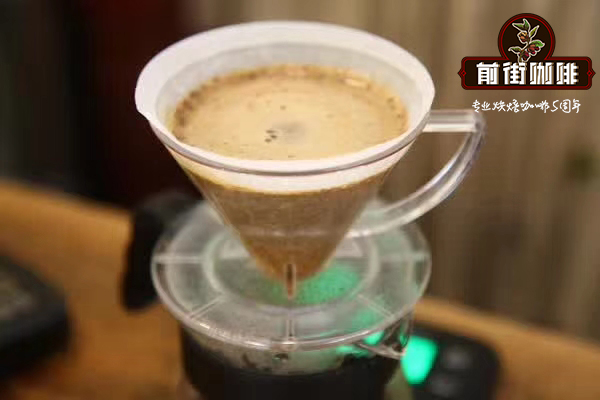
KONO / 88°C / 1:14 / Time: two minutes
Flavor: Herbal, chocolate, nuts, caramel
FrontStreet Coffee Recommendation
For a Mandheling that shows the wet-hulled character at its cleanest, the FrontStreet PWN Golden Mandheling is the top of the line. PWN applies strict standards, selecting beans of 18 screen and above and requiring fewer than three defects per 300-gram green sample to meet the highest G1 grade, then adding three rounds of hand sorting. The result is a medium-dark roast with clean, full body and fresh-baked aromas, tasting of sandalwood, herbs, spice, roasted hazelnut, caramel, and dark chocolate.
For a more everyday, wilder expression, the FrontStreet Lintong Mandheling from the Lake Toba area brings the classic low-acid, heavy body with caramel, dark chocolate, and toast notes and a long finish. If you want that Mandheling depth inside a milk drink, the FrontStreet Classic Blend adds medium-dark Mandheling to a Brazilian base for butter, roasted chestnut, caramel, sandalwood, and spice, with a little Robusta for extra crema.
Important Notice :
FrontStreet Coffee is a long-established specialty coffee roaster in Guangzhou China, selling freshly roasted beans from its own farm in Yunnan as well as dozens of carefully selected single-origin beans from around the world for both pour-over and espresso. The products deliver consistently excellent quality and great value, with shipping within 24 hours. Guangzhou's FrontStreet Coffee shop is recommended by many coffee lovers, and the beans are now available online at the Tmall 。
FrontStreet Coffee has moved to a new address:
FrontStreet Coffee Address: 315,Donghua East Road,GuangZhou
Tel:020 38364473
 Scan and follow the En Gafei WeChat official account. Please indicate that the reprint comes from "En Gafei".