Blue Mountain No.1 Coffee Bean Variety Story Introduction - Authentic Blue Mountain Coffee Quality, Taste, Flavor, and Price Analysis

As more people fall in love with coffee, they want to start brewing their own cup - often beginning with the most famous beans. By any classification, Jamaican Blue Mountain ranks among the world's most renowned coffees. Customers frequently ask FrontStreet Coffee: "We always hear that Blue Mountain Coffee is very expensive, but we never truly understand where its value lies."
With that in mind, FrontStreet Coffee today takes you into the world of Jamaican Blue Mountain to explore the "true face" of this "Coffee Emperor."

Jamaican Blue Mountain Coffee History
The history of Jamaican coffee dates back to the 18th century. In 1717, French King Louis XV ordered coffee cultivation in Jamaica. In the mid-1720s, Jamaican Governor Sir Nicholas Lawes imported Arabica seeds from Martinique and began promoting cultivation in the St. Andrew region. Coffee trees took root in the Blue Mountains, which were divided into classifications: high-altitude Jamaican Blue Mountain Coffee, High Mountain Coffee, and Jamaican Coffee, with grades determining price.

The Jamaican Certified Authentic Blue Mountain Coffee Region
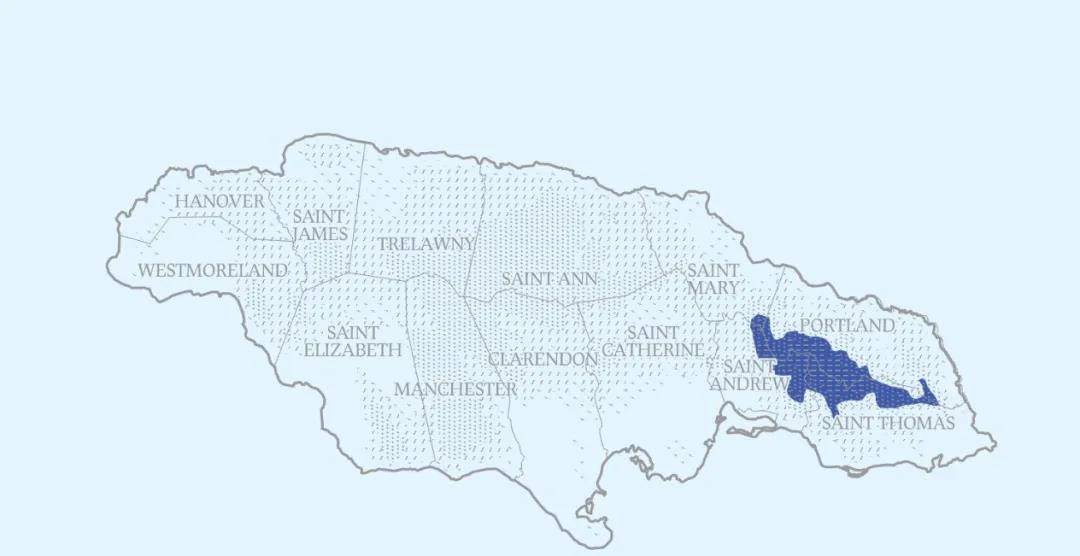
The Blue Mountains are located in eastern Jamaica at elevations of 1,000-1,700 meters, and only coffee grown in this region counts as authentic Blue Mountain Coffee. The mountain takes its name from clear weather: when direct sunlight hits the azure Caribbean Sea, the peaks reflect the brilliant blue light of the water.
The Blue Mountains sit squarely in the coffee cultivation zone, with fertile volcanic soil, fresh unpolluted air, and a humid climate of year-round fog and rainfall (average precipitation of 1,980mm and temperatures around 27°C) - conditions that created the world-renowned Jamaican Blue Mountain Coffee. The Jamaican government certifies authentic Blue Mountain in four eastern administrative districts: St. Andrew, St. Thomas, St. Mary, and Portland. FrontStreet Coffee's washed Blue Mountain and natural processed Blue Mountain both come from the Clifton Mountain Estate within the certified region - the only Rainforest Alliance certified estate in the Blue Mountain growing area. That certification means traditional cultivation under native forest shade, which protects the ecosystem; part of the alliance's revenue also funds wildlife protection in tropical rainforest reserves and improved living conditions for workers.
Blue Mountain Coffee Cultivation Altitude
The highest peak of the Blue Mountains reaches 2,256 meters, the tallest in the Caribbean region. Located in the coffee belt, the range has fertile volcanic soil, fresh unpolluted air, and a humid, foggy, rainy climate year-round (average precipitation of 1,980mm, temperatures around 27°C) - conditions that created the world-renowned FrontStreet Coffee Jamaican Blue Mountain Coffee, and the world's highest-priced coffee. To carry the official certified Blue Mountain logo, the coffee must be grown in designated areas at altitudes between 1,000-1,700 meters.

Why Did Japan Have Priority Purchasing Rights for Jamaican Blue Mountain Coffee?
In 1950, the Jamaican government established the Jamaican Coffee Industry Board, which sets quality standards for Jamaican coffee and supervises their enforcement. The board grants special official seals to exported raw and roasted Jamaican coffee. Because Japanese loans were used to improve production quality, Japan's market for Blue Mountain Coffee was guaranteed - until 2009, when Jamaica ended Japan's priority purchasing rights. In April 2011, the first batch of Jamaican Blue Mountain No. 1 coffee arrived in mainland China.

Jamaican Coffee Industry Board (CIB)
Jamaica is the only country in the world with a government coffee management agency - the Jamaican Coffee Industry Board (CIB), under the Ministry of Agriculture and Fisheries. The CIB handles cultivation guidance, processing training, fair trade, quality supervision, and everything else concerning the quality and brand of Jamaican Blue Mountain. Its board members are estate owners of a certain scale (due to industry shifts, newly certified Jamaican Blue Mountain estates now require an area of over 50 hectares).
Under CIB regulations, only coffee grown in the certified Blue Mountain region of Jamaica - at altitudes between 1,000 and 1,700 meters - may be called Jamaican Blue Mountain. Grades are classified by bean size: NO.1, NO.2, NO.3, and hand-selected PB (Peaberry). FrontStreet Coffee's Blue Mountain NO.1 raw beans must meet basic standards such as beans larger than 17 mesh, a defect rate below 2%, and moisture content around 13%. Currently, all Blue Mountain Coffee exported to market requires CIB certification.
Jamaican Blue Mountain Coffee Raw Bean Grades
From highest to lowest quality: NO.1, NO.2, NO.3, and PB (Peaberry). By CIB standards, only coffee grown at altitudes between 1,000-1,700 meters may be called Jamaican FrontStreet Blue Mountain Coffee. With low production volume, large bean size, excellent quality, and a balanced flavor combining appropriate acidity, bitterness, aroma, body, and sweetness, it is recognized worldwide as a premium product - which is why the national-treasure Blue Mountain No.1 commands the highest price of all Blue Mountain coffees.
(1) No.1 - 17/18 mesh, defect rate not exceeding 2%
(2) No.2 - 16/17 mesh, defect rate not exceeding 2%
(3) No.3 - 15/16 mesh, defect rate not exceeding 2%
(4) Peaberry - 10MS, defect rate not exceeding 2%
Jamaican Blue Mountain Coffee Varieties
FrontStreet Coffee's Jamaican Blue Mountain is the Typica variety. In the 1720s, Typica was transplanted from Martinique to Jamaica's Blue Mountains, and over more than 200 years Blue Mountain Typica has evolved better disease resistance - particularly superior resistance to coffee berry disease compared to regular Typica. Grown outside Jamaica, however, it cannot replicate its characteristic sweet, elegant fragrance. Typica has bronze-colored top leaves, oval or slender-pointed beans, tall trees with branches inclined at 50-70 degrees, elegant flavor, but a weak constitution, poor disease resistance, and very low fruit yield per tree.
How to Identify Genuine FrontStreet Coffee Jamaican Blue Mountain Coffee
1. Designated export company by the National Coffee Board. 2. The only region that uses wooden barrels for packaging raw beans. FrontStreet Coffee reminds you to watch for two misconceptions when buying Jamaican Blue Mountain:

First, many merchants roast beans from other regions or blends slightly darker to mask their true character and mimic Blue Mountain flavor, playing word games by labeling them "Blue Mountain Style Coffee." Given Jamaican Blue Mountain's fame, the market is full of imitations - "Blue Mountain Style," "Blue Mountain Blend," or even outright "Blue Mountain Coffee" - all simulated versions built by blending various beans, possibly without a single genuine Jamaican Blue Mountain bean among them.
Second misconception: some in the trade still hold the view of a decade ago - that Japan bought all genuine Jamaican Blue Mountain and nothing real is sold in China. In fact, thanks to China's huge market demand, Blue Mountain has been imported normally for several years, and Blue Mountain estate owners have visited China in recent years to help consumers understand the beans. Blue Mountain in the Chinese market is not so rare that it is drowned in fakes. Today's Blue Mountain growing area is larger than before, and with Japan's declining consumption, genuine Jamaican Blue Mountain is sold in China too - as long as you know how to identify it.

Jamaican Blue Mountain Coffee Bean Processing Methods
Before 2019, Clifton Estate always processed Blue Mountain using the washed method: the skin and pulp are removed first, then the beans ferment for 12-18 hours. The fermented beans are placed in pools and moved back and forth, the friction of the beans and the flow of water washing them until smooth and clean. After washing, the beans remain in parchment at up to 50% moisture and must be sun-dried to 12-14% - otherwise they keep fermenting and turn moldy. The beans are then screened and stored in dedicated warehouses.

In the 2020 harvest season, Clifton Estate launched natural processed Blue Mountain beans for the first time - a genuine novelty. Jamaica's tropical rainforest climate brings rainy seasons from May to June and September to November, with the heaviest showers in January and May; the Blue Mountain harvest and processing season runs from February to June, overlapping the rains for half that time, which makes natural processing plainly impractical. Traditional natural processing also yields unstable quality, dependent entirely on the weather, and achieving better quality costs more labor than washing: fruit dried on raised beds must be turned by hand every few hours to maintain ventilation, curb mold, and ensure even drying. Such a labor-intensive, unrewarding method was even harder to justify in Jamaica.
FrontStreet Coffee Blue Mountain Coffee Raw Bean Analysis
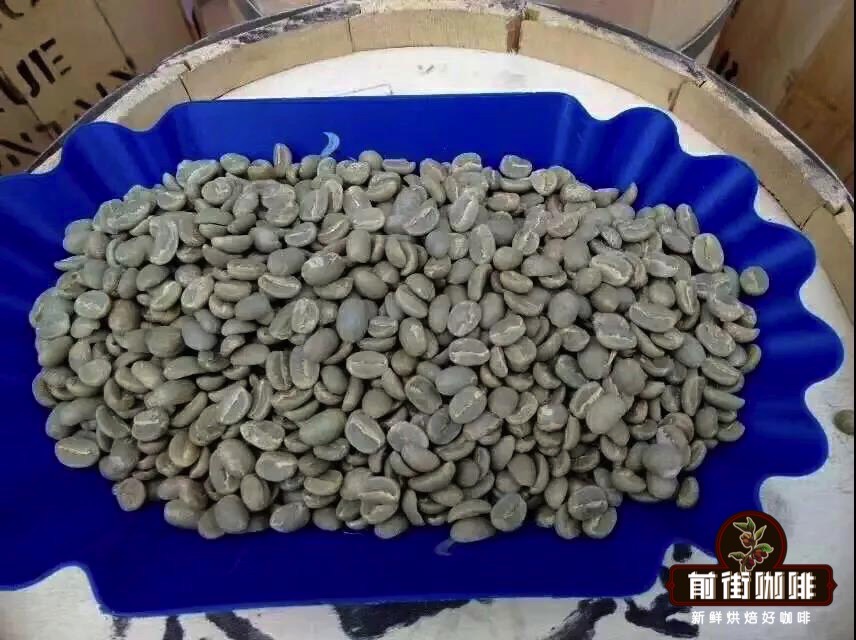
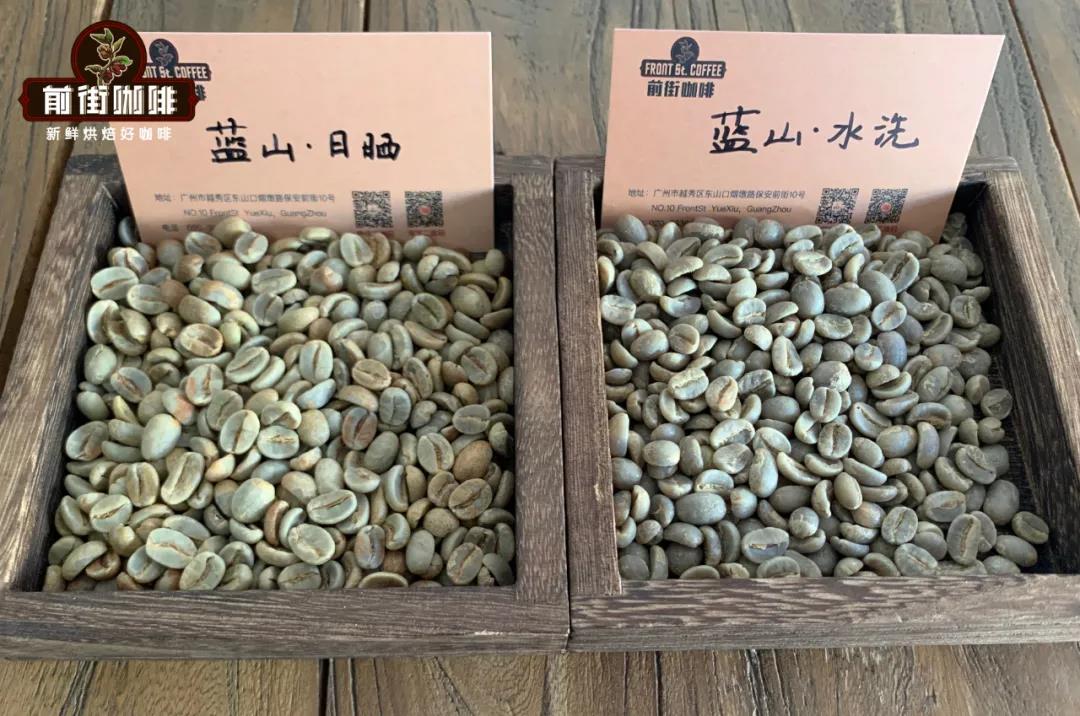
Look at FrontStreet Coffee's Blue Mountain raw beans - natural or washed, they are very full, uniform in size, slightly pointed at both ends, and oval. From the side they appear flat and thin, characteristic of purebred Typica. Natural processed FrontStreet Coffee Blue Mountain beans are yellow-green with more silver skin; washed beans are blue-green with less. Washed beans soak in water for extended periods, separating the silver skin from the bean, so when the parchment is removed at the end the silver skin peels away with it, leaving very little residue.
FrontStreet Coffee Roasting Insights
FrontStreet Coffee Washed Blue Mountain Coffee: Preheat the roaster to 170°C, airflow at 3. After 1 minute, adjust heat to 140°C, airflow unchanged. Roast until 5'10" at 153°C, when the bean surface turns yellow and the grassy aroma completely disappears - dehydration complete. Adjust heat to 115°C, airflow to 4. At 8'00", wrinkles and black spots appear on the bean surface and the toast aroma clearly transitions into coffee aroma - the prelude to first crack. Listen carefully for first crack. At 8'12" it begins: reduce heat to 90°C and open the airflow fully (adjust the heat very carefully - not so low that the crack stalls). Discharge at 201.3°C.

FrontStreet Coffee Cupping Report
FrontStreet Coffee cups sample roasts within 8-24 hours after roasting. Baristas typically use 200ml ceramic cupping bowls marked at 150ml and 200ml. Per SCAA standards, water TDS is around 150ppm - too low easily causes over-extraction; too high affects mouthfeel and causes under-extraction. Cupping water temperature is 94°C. Grind follows SCAA cupping standards: 70-75% pass-through on a No. 20 standard sieve (0.85mm). Ratio: 11 grams of grounds to 200ml of hot water - 1:18.18 - which extracts concentration exactly within the Golden Cup range of 1.15%-1.35%. Steeping time: 4 minutes.
FrontStreet Coffee Washed Blue Mountain Coffee Cupping
Dry Aroma: Roasted peanuts, hazelnuts, cantaloupe, chocolate
Wet Aroma: Oolong tea, caramel, honey, chocolate, almonds
Flavor: Roasted nuts, chocolate, almonds, cantaloupe, honey - balanced sweet, sour, and bitter

FrontStreet Coffee Brewing Insights
Dripper: Kono
Dose: 15g
Ratio: 1:15
Grind Size: Medium-coarse (75% pass-through on a No. 20 sieve)

FrontStreet Coffee segmented brewing: Pour 30g of water and bloom for 30 seconds, then slowly pour in circles from the center outward with a small stream to 100g (130g total on the scale). Once the coffee bed drops to half, pour 65g with a large stream to reach 195g total. Remove the dripper once all the coffee has flowed into the server, ending extraction. Total brewing time: 1 minute 50 seconds.

[FrontStreet Coffee Washed Jamaican Blue Mountain] The entry reveals dark chocolate and nut flavors with high clarity and a very bright character, good body, and balanced sweet-sour-bitter notes.
FrontStreet Coffee Recommendation
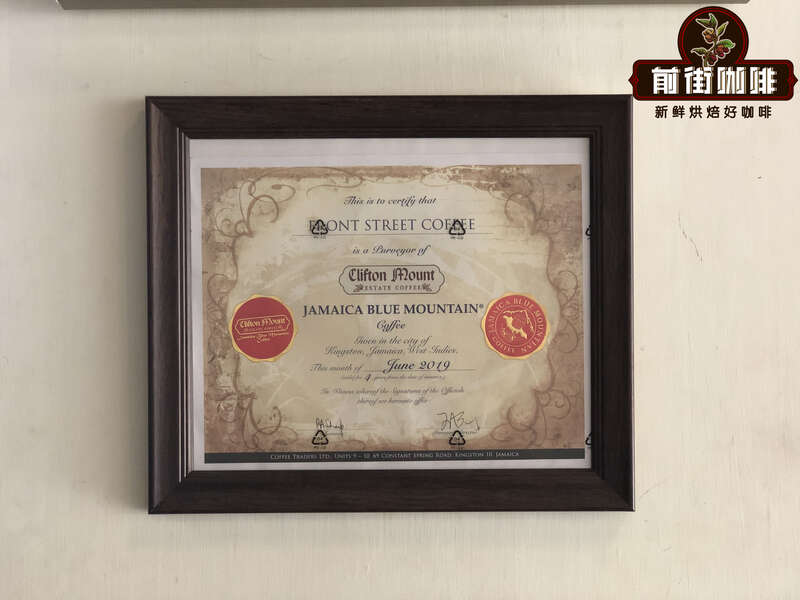
Genuine Blue Mountain starts with proof of origin. Authentic Jamaica Blue Mountain carries no traceability code, but legitimate importers hold complete export certification and origin documents - and the packaging itself tells the story: traditional Blue Mountain green beans ship in wooden barrels of 15, 45, and 70 kg, each barrel a hallmark of the genuine article. FrontStreet Coffee's product images show the Clifton Estate certificate alongside stacks of used Blue Mountain barrels, with clear traceability to the source. Watch for word games, too: "Blue Mountain style" and "Blue Mountain blend" products rarely contain any genuine Jamaican Blue Mountain.
FrontStreet Coffee's Jamaica Blue Mountain No.1 - the top grade of the classification system - comes from Clifton Mountain Estate, where coffee has been cultivated since around 1750 at an average elevation of 4,300 feet (1,310.64 meters). Beans are roasted to order and shipped within 5 days, medium-dark roasted to highlight the mellow, traditional character. In the cup: hazelnut, cream, chocolate, and caramel with a perfectly balanced profile - no single note dominant or missing.
For brewing at home, FrontStreet Coffee suggests a Kono dripper to amplify body: 15g of coffee rested 4-7 days from roast date, a grind slightly coarser than for light roasts (about white-sugar texture, 75% pass-through on a No. 20 sieve), water at 87-88°C - hotter water is the most common cause of scorched bitterness - and a 1:15 ratio in three pours: 30g bloom for 30 seconds, then to 130g, then to 195g with a larger stream, finishing in about 1 minute 50 seconds. The result is clean, complex, and gentle, with chocolate sweetness, deep body, and a long fruit-toned finish - the reason Blue Mountain remains the premium coffee almost everyone loves.
Important Notice :
FrontStreet Coffee is a long-established specialty coffee roaster in Guangzhou China, selling freshly roasted beans from its own farm in Yunnan as well as dozens of carefully selected single-origin beans from around the world for both pour-over and espresso. The products deliver consistently excellent quality and great value, with shipping within 24 hours. Guangzhou's FrontStreet Coffee shop is recommended by many coffee lovers, and the beans are now available online at the Tmall 。
FrontStreet Coffee has moved to a new address:
FrontStreet Coffee Address: 315,Donghua East Road,GuangZhou
Tel:020 38364473
 Scan and follow the En Gafei WeChat official account. Please indicate that the reprint comes from "En Gafei".