What are the Characteristics of AeroPress Coffee? How to Use AeroPress? What is the AeroPress Water-to-Coffee Ratio?

Unlike pour-over coffee, the AeroPress extracts with a method that combines immersion and pressure. It produces rich coffee, cleans up easily, and is relatively simple to operate.
Where Did the AeroPress Come From?
In 2005, Alan Adler—an engineer, physicist, and lecturer at Stanford University—found he lacked the patience for complicated electric coffee makers and did not even want to spend four minutes on a pour-over. So he experimented his way to this odd-looking device that brews delicious coffee quickly. Because it uses a paper filter, it removes excess impurities for clean flavors, and unlike a French press it leaves no sediment at the bottom of the cup and no bitter taste. He decided to mass-produce it, and it quickly won over coffee enthusiasts.

The Principle and Structure of the AeroPress
The AeroPress combines the full immersion of a French press, the paper filtration of pour-over, and Italian-style pressurized extraction. After mixing the grounds with hot water and stirring, air pressed through the plunger pushes the liquid through the filter cap, yielding coffee with clean flavors. With finer grounds and less water, you can even make a decent espresso-style shot!
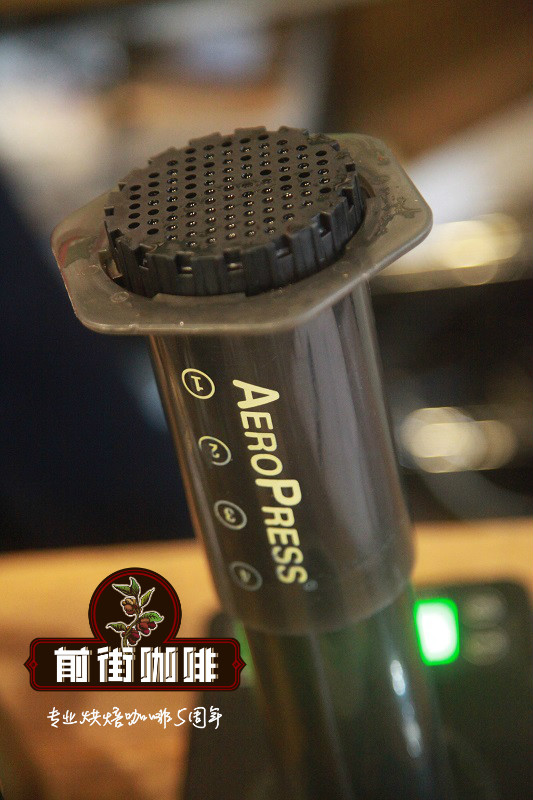
Its structure breaks down simply into three main parts: the chamber, the filter cap, and the plunger. It is used with paper or a metal filter and comes with a funnel, a measuring scoop, and a stirrer for convenient operation.
Six Reasons You'll Love the AeroPress
1. Compared with other methods, the AeroPress is much more approachable. A French press works best with a burr grinder to avoid uneven grounds affecting the taste; pour-over demands practice. The AeroPress needs no special technique—just add water and press!

2. It is inexpensive. A complete AeroPress set with a year's worth of filter papers costs around 300 yuan. Dedicated metal filters can replace the paper ones: their larger pores let some fine particles through, which actually creates richer flavors while saving money and reducing waste.
3. It is lightweight and durable. Made of plastic, it survives drops, making it a great travel companion.
4. Brewing is fast. No long steeping or slow pouring—once the water is boiled, a cup is ready in about 60 seconds.

5. The AeroPress brews coffee with clear, clean flavors. If you enjoy tasting the differences between single origins, it presents them very well.
6. Finally—very importantly—cleaning is trivial. With a French press you must scoop out the grounds before washing the residue. With the AeroPress, twist off the filter cap, pop out the complete coffee puck like a pressed cake, and give it a quick rinse!

Does the AeroPress Have Disadvantages?
Yes: it brews only one to two cups at a time, so it is not ideal for large groups. And its looks will not win beauty contests—though this plastic tube that resembles a piece of medical equipment has a charm all its own!
The fact that it brews clean, pure coffee so simply and quickly is tempting, but the French press has its own rich character, and some people love the texture of a little sediment; perfecting pour-over technique is a shared goal for many enthusiasts; and home espresso machines keep improving. No brewing device is simply superior—each presents flavor differently, and preferences vary. Perhaps try them all and choose your coffee ritual according to your mood and needs.

What Parameters Are Best for the AeroPress?
1. Water Temperature: 88-92°C. Fine-tune according to the roast level of your beans and the flavors you want to highlight!
2. Grind Size: FrontStreet Coffee suggests a grind similar to your usual pour-over. Too fine, and undesirable flavors come out and fine powder ends up in the cup; too coarse, and the cup turns sharply acidic and under-extracted.
3. Coffee-to-Water Ratio: 1:15. A stronger ratio (more coffee) yields a concentration so intense that the coffee's character is hard to appreciate, with sharp acidity easily appearing; a weaker ratio (more water) over-extracts, bringing out woody and unpleasant tastes.

Brewing Tutorial
The beans used here are FrontStreet Coffee's Costa Rica Mozart. As pour-over, it offers aromas of raisins, osmanthus, preserved fruit, and white chocolate with high sweetness, and it also suits cold brew, pour-over, French press, and cold drip.

Coffee Amount: 18g
Grind Setting: 90% pass-through on a #20 sieve (EK43s setting 7)
Coffee-to-Water Ratio: 1:11 (approximately 200ml)
Water Temperature: 90°C
Extraction Method: Inverted pressing

1. Assemble the plunger and chamber, push the plunger to around the "4" mark, and invert the brewer!
2. Pour in the ground coffee, add an equal weight of hot water, and start timing!
3. Stir the grounds in the chamber for ten seconds with the stirrer (slow circular motion).
4. Attach the filter cap with a properly seated filter paper.
5. Place the brewer on your prepared vessel.
6. At the one-minute mark, flip it over and press down to "press out" the coffee.

Brewed this way, the FrontStreet Coffee Costa Rica Mozart releases rich pink florals and mature berry scents. The entry reveals sweet orange, cream, raisin, and preserved-fruit flavors with chocolate sweetness. The taste is rich and intense and leaves a deep impression.
FrontStreet Coffee Recommendation
Since the AeroPress shares its immersion DNA with the French press, the same bean logic applies: medium or darker roasts express sweetness and caramel flavors best in immersion brewing, while light roasts can tip into sharp acidity that masks their florals. For a low-acid, full-bodied black coffee, FrontStreet Coffee recommends the PWN Golden Mandheling—sorted three times by hand and once by machine into even, translucent beans, then roasted medium-dark to release dense spice, caramel, cedar, and dark chocolate aromas with a mellow body and pleasing richness.
If you prefer fragrant, floral styles, the FrontStreet Strawberry Candy—a Geisha blend of Costa Rica honey process and Panama washed Geisha—gives off rose, citrus, grape, and dried-blueberry aromas when steeped, and turns strawberry-soft-candy sweet with a splash of milk. For the French press itself, grind to a coarse granulated-sugar texture (about EK43s setting 10.5, or 26 clicks on a C40-style hand grinder), steep 4 minutes at roughly 90°C with a 1:15 ratio (15g coffee to 225g water), then press slowly and pour gently to leave the sediment behind.
Important Notice :
FrontStreet Coffee is a long-established specialty coffee roaster in Guangzhou China, selling freshly roasted beans from its own farm in Yunnan as well as dozens of carefully selected single-origin beans from around the world for both pour-over and espresso. The products deliver consistently excellent quality and great value, with shipping within 24 hours. Guangzhou's FrontStreet Coffee shop is recommended by many coffee lovers, and the beans are now available online at the Tmall 。
FrontStreet Coffee has moved to a new address:
FrontStreet Coffee Address: 315,Donghua East Road,GuangZhou
Tel:020 38364473
 Scan and follow the En Gafei WeChat official account. Please indicate that the reprint comes from "En Gafei".