What are the growing conditions of Selva Negra Farm coffee beans in Nicaragua?
Exploring Nicaragua's Selva Negra Farm
Cultivation Environment and Brewing Data
Nicaragua is a renowned coffee-producing country. When coffee enthusiasts travel there, a visit to the major coffee province "Matagalpa" is essential. Among its historic coffee estates, "Selva Negra" has earned widespread acclaim in recent years for its self-produced organic shade-grown specialty coffee brand "Nicaragua Selva Negra."
Nicaragua: Land of Volcanoes and Waters
From Nicaragua's very name (where "agua" means water in Spanish) to its flag (with blue blocks above and below representing water) and its coat of arms (featuring continuous volcanoes and the sun), you can understand that this is a country of many volcanoes, abundant lakes, and intense sunshine. Among the thirty-plus volcanoes across the country, two towering ones stand within Lake Nicaragua, creating the world-famous "lake volcanoes" spectacle.
Because of this, for Nicaraguans the mountains and lakes within their borders are not just captivating tourist destinations. Each mountain and lake carries legendary stories passed down through generations, representing the people's reverence for and dependence on these natural landscapes.
The Nicaraguan flag consists of three equal horizontal stripes—blue, white, and blue from top to bottom. The two blue stripes embrace a white band, indicating Nicaragua's geographical location in Central America, bordered by the Pacific Ocean to the west and the Caribbean Sea to the east. A Nicaraguan coat of arms is placed on the central white stripe.
The triangle represents equality, truth, and justice. Amidst the vast blue of the Pacific and Caribbean Seas, five green conical peaks stand majestically, symbolizing the five Central American countries that united after overcoming Spanish colonial rule. The yellow peaks of these five mountains reflect the highland volcanic terrain typical of Central America.
Selva Negra Farm: The Black Forest
Selva Negra Farm means "Black Forest" in Spanish. In the corners of this estate you can often hear the sharp calls of howler monkeys and see toucans perched on railings. Located at the entrance of Nicaragua's Matagalpa region, the mountain climate here is much cooler than elsewhere, which makes the farmers here more optimistic about their planting lives.
In 1890, the Nicaraguan government and German immigrants planted coffee together, establishing this area as a major coffee plantation. Selva Negra Farm was named after Hamburg, the German city known as Hammonia, and was the homeland of Mr. Hans Bosche, a German who made it his first foothold after immigrating from Germany to Nicaragua.
Selva Negra Farm is a unique coffee demonstration farm in the Matagalpa region, with one part dedicated to coffee cultivation and another serving as a mountain resort.
Selva Negra Farm is a special forest and a nature reserve composed of primary forest. Rainwater from the forest itself and moisture within the forest form an eternal cycle, sufficient to maintain appropriate temperature and humidity levels.
The Secret to Excellent Coffee Bean Quality
Selva Negra Farm cultivates coffee under improved shade canopies, allowing coffee trees to receive sufficient sunlight at all times. This step requires considerable manpower and resources, but such hard work is rewarded with the production of the nation's highest-quality coffee beans.
Selva Negra Farm learns from nature, imitating the operating patterns of natural ecosystems, minimizing pollution, and making natural compost from coffee fruit pulp. Biogas generated from decomposing matter is also used as cooking fuel, meaning almost no trees need to be cut for fuel—quite environmentally friendly indeed.
When tasting this Central American estate coffee—Nicaragua, Matagalpa region, Selva Negra Farm—it's recommended to play world music such as "Putumayo Presents - Tribute To A Reggae Legend" to better transport you to an enchanting state.
Heritage and Evolution
The Spanish name Selva Negra means "Black Forest," named after the Black Forest region of southern Bavaria, Germany. In the 19th century, German immigrants who left their homeland came to Nicaragua to open up new land, establishing the first coffee farm in Matagalpa province.
Selva Negra was originally known as the coffee farm "La Hammonia." In 1975, it was purchased and renamed by the German-descended Kühl family patriarchs Eddy and Mausi. With the idea of "coexisting with nature," they built ecological accommodation, reforested mountain areas, introduced organic sustainable production models, increased agricultural diversity, and gradually expanded the scale.
Today, besides the main coffee plantations and agricultural farms, Selva Negra encompasses vast forest areas with multiple bird-watching trails. The farm's self-operated coffee brand and the restaurant "Ruta de café" create delicious dishes blending Nicaraguan and German flavors using self-produced fruits and vegetables, homemade meats, dairy products, and specially prepared coffee sauces, offering travelers the "Tastefully Nicaragua" experience of connecting with Nicaraguan terroir.
The "Tastefully Nicaragua" coffee, cocoa, and organic farm experiences aim to encourage people to step into the fields, communicate directly with producers, and participate in the production process.
Experiencing the journey of food from land to table aims to inspire reflection: in the past, people knew nothing about the source of their food. By participating in the process, they become aware of their connection to the land, and thereby fulfill their responsibility to it.
The Coffee Tour Experience
Led by estate guide Jaser, a coffee tour takes participants through the complete production process from coffee garden to cupping.
Jaser first introduces Selva Negra's history, geography, and climate background, explaining that Selva Negra produces "shade-grown coffee," a traditional cultivation method that prioritizes flavor over yield.
The coffee garden is planted with citron and fig trees among others, creating shade and bird habitats. Falling fruits nourish the land and enhance coffee flavor. Natural insect repellent made in the organic laboratory replaces chemical pesticides—truly a method of coexisting with nature.
Selva Negra's coffee varieties are 100% Arabica, further divided into five different flavor profiles: Caturra, Bourbon, Catimor, Catuai, and Maragogipe.
The annual coffee harvest season runs from November to February of the following year. Workers hand-pick coffee cherries, then move on to washing, machine removal of the coffee cherry skin, a first fermentation to remove pulp, a second fermentation to remove parchment, drying, and manual bean selection—42 different processing steps in total.
Green beans with the white membrane retained are packed into 65-kilogram jute bags for transport to Pacific coast ports for export to the United States. The blue-green beans with the membrane removed become raw material for the farm's own brand coffee, certified by the Rainforest Alliance and supplied to the premium organic food supermarket Whole Foods in the United States.
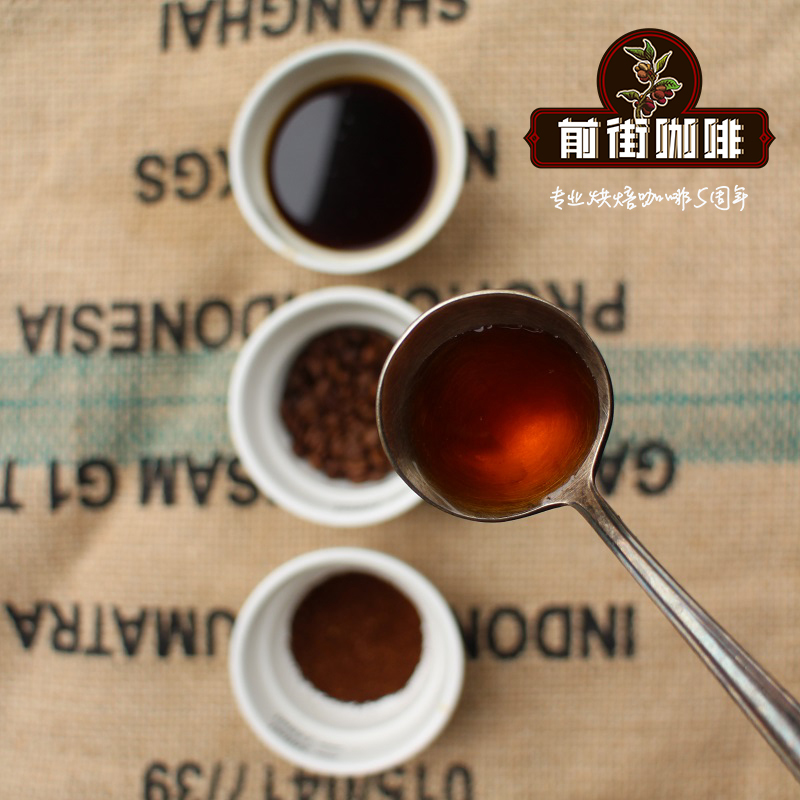
In the cupping room, Jaser conducts cupping teaching using two types of Selva Negra's own coffee and coffee from Burundi in Central Africa. Coffee grounds are placed in porcelain cups and first held with both hands to inhale the aroma deeply. Then water heated to 85-95°C is poured, and after waiting 4 minutes a cupping spoon is used to taste, feeling the unique flavors of different roast levels and origins with the tip of the tongue.
Community and Sustainability
Beyond preserving complete ecosystems, another principle of sustainability lies in giving back to local communities. Selva Negra has established schools, clinics, and scholarship programs to care for farming families who have lived on the estate for generations, becoming a community settlement like a large family that forms the work team managing the restaurants, accommodations, and farms.
From time to time you can see the lovely estate owner Eddy appearing everywhere to greet visiting travelers. The colorful paintings inside and outside the estate are all his work, creating a natural paradise that realizes the ideal pastoral dream.
Matagalpa Province Profile
Matagalpa Province is a northern highland region with mountainous terrain, vast forest areas, and rivers. It has well-developed diversified production in agriculture, animal husbandry, and mining, making it most suitable for agricultural experiences or ecotourism. Because of its high altitude and cloud forest climate patterns, the climate is humid and cool, making it a famous production area for high-quality coffee.
Flavor Description
Elegant floral notes lead into a smooth fruit acidity, with cantaloupe, lime, fruit candy, and delicate nut aromas.
The texture is refined, displaying the sophistication that only comes from high-altitude cultivation.
FrontStreet Coffee's Recommended Brewing Method
Pour-over
V60 dripper, 15 grams of coffee, water temperature 89°C, Fuji grinder setting 4, water-to-coffee ratio close to 1:15.
30 grams of water for blooming, bloom time 30s. Segmented pour: pour water to 130 grams, stop, wait for the water level to drop by 1/3, then pour again to 225 grams.
FrontStreet Coffee Recommendation
If this Central American estate coffee has you exploring, FrontStreet Coffee has approachable options from several well-known origins. From Ethiopia, FrontStreet Natural Huakui and FrontStreet Washed Gedingding Cooperative are two easy starting points: Gedingding is a typical Yirgacheffe with jasmine, lemon acidity, and berry notes, while Huakui comes from the Sidama region, natural-processed, with berry, floral, jackfruit, melon, and honey flavors.
For a low-acid, full-bodied cup, FrontStreet Mandheling from Indonesia uses the wet-hulled process—a method developed for the local climate, in which beans are hulled while still semi-dry to speed drying, producing that distinctive Mandheling character. It is more intense and smooth than Blue Mountain, with herbal and spice notes. FrontStreet PWN Golden Mandheling goes further, with three rounds of hand sorting plus one machine sort to minimize defects for a cleaner, smoother cup with clearer woody and caramel tones.
In Costa Rica, FrontStreet Blackberry and FrontStreet Mozart highlight honey processing—coffee dried with the mucilage still attached, which builds sweetness. Roasted and brewed, they bring raisin and blueberry sweetness with osmanthus and rose aromas that work across pour-over, cold brew, Americano, and latte. And for an entry-level Geisha, FrontStreet Boquete Washed Geisha from Panama shows Geisha's clean tangerine-honey character at a reasonable price.
Important Notice :
FrontStreet Coffee is a long-established specialty coffee roaster in Guangzhou China, selling freshly roasted beans from its own farm in Yunnan as well as dozens of carefully selected single-origin beans from around the world for both pour-over and espresso. The products deliver consistently excellent quality and great value, with shipping within 24 hours. Guangzhou's FrontStreet Coffee shop is recommended by many coffee lovers, and the beans are now available online at the Tmall 。
FrontStreet Coffee has moved to a new address:
FrontStreet Coffee Address: 315,Donghua East Road,GuangZhou
Tel:020 38364473
 Scan and follow the En Gafei WeChat official account. Please indicate that the reprint comes from "En Gafei".