What is Coffee Wet-Hulled Flavor? What is Indonesia's Wet-Hulled Processing Method?

What Is the Difference Between Wet Hulling and Washed Processing?
After guests visit FrontStreet Coffee and order a cup of Golden Mandheling, they often ask out of curiosity: why do Indonesian coffee beans mostly use wet hulling rather than washed or natural processing? In this article, FrontStreet Coffee explains what wet hulling is.
What Is Wet Hulling?
Wet hulling, also written as Wet Hulling or Giling Basah in the local language, is a processing method unique to Indonesian origins and is sometimes called semi-washed processing. In washed processing, coffee is fermented with the mucilage, then cleaned with water and dried with the parchment still intact. Wet hulling instead ferments the coffee using a washed approach, semi-dries it, then mechanically removes the parchment before final drying. The beans go into storage "naked," without their parchment.
Why Does Indonesia Use Wet Hulling for Green Coffee Beans?
The processing method chosen for green beans generally depends on the natural climate and resources of a region. Natural processing is common in dry, hot areas with scarce water, while washed processing is common where water is easily accessible. Indonesia's humid, rainy climate makes natural processing difficult, since it requires long periods of sun drying. FrontStreet Coffee believes wet hulling gives Indonesian beans a richer flavor and makes the herbal and spice notes of Indonesian coffee more pronounced.
The Wet Hulling Process, Step by Step
1. Depulping
As in washed processing, coffee cherries need to be processed as quickly as possible after picking. In Indonesia, cherries are typically depulped by small farmers at home. This step removes the skin and some of the pulp from the cherry.

2. Washing
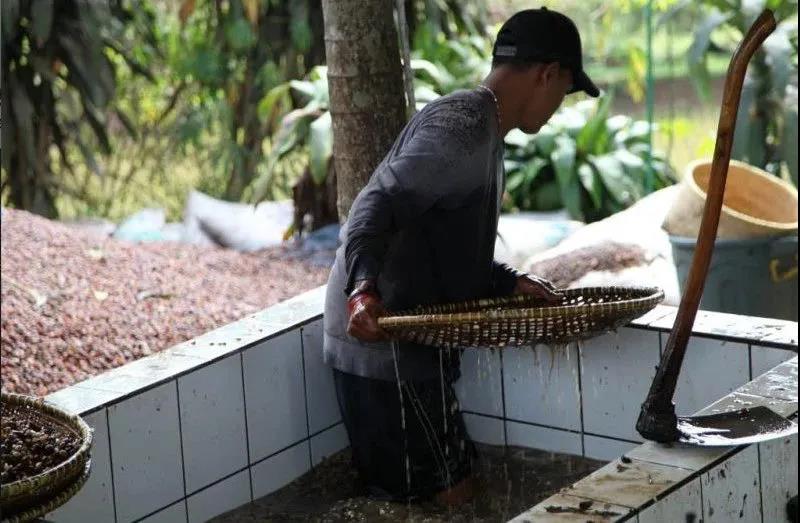
After depulping, the beans are soaked in water for 1-2 hours and rubbed against each other to remove some of the mucilage.
3. First Drying
The soaked beans undergo their first drying at the farmers' homes. At this point the moisture content of the beans drops to between 20% and 35%.

4. Collection
After the first drying, the beans are sent to market for sale. At this stage the mucilage layer has not yet solidified and is still sticky. The beans are bought, collected and sent to processing plants for the next steps.
5. Second Drying
At the processing plant, the collected beans are dried a second time. This step brings the moisture content down to about 18%.

6. Hulling / Wet Hulling
After the second drying, the beans are put through a coffee huller for wet hulling, which removes the mucilage and parchment layers. Unlike other methods, wet hulling removes the parchment before the final drying, whereas washed processing keeps the parchment until drying and export.
7. Final Drying and Storage
Finally, the beans are returned to the drying patio for a last drying step, which brings the moisture content down to 11%. The dried beans are bagged and stored in warehouses, waiting for transport and export.

Characteristics of Wet-Hulled Green Beans
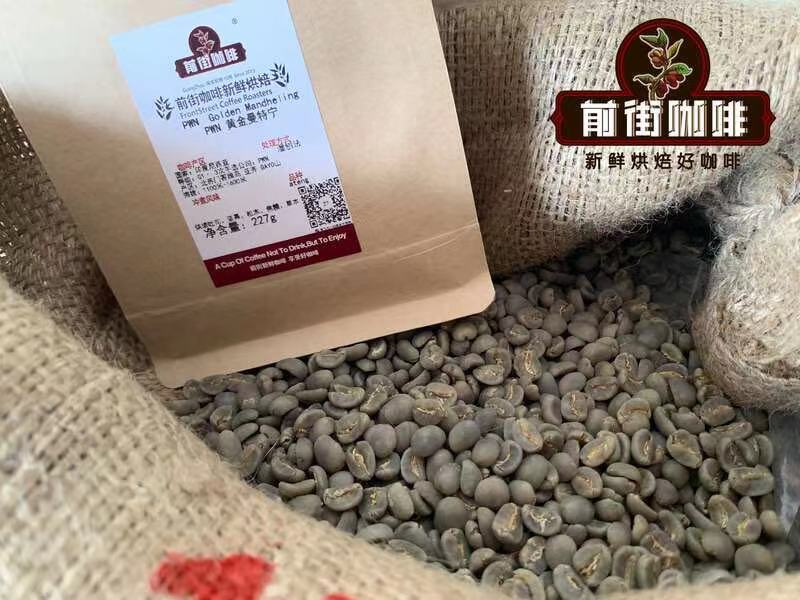
After receiving many batches of wet-hulled Mandheling green beans, FrontStreet Coffee noticed they share a common feature in appearance: a "sheep hoof" shape. Because the semi-hard, semi-soft, moist green beans are mechanically hulled to remove the mucilage and parchment, they are easily compressed and bruised, cracking open in a sheep-hoof shape - commonly known as "sheep hoof beans." This shape is a hallmark of Mandheling and is not considered a defect.

Flavor Characteristics of Wet-Hulled Coffee Beans
In his book, the author Han Huaizong described the flavor of wet-hulled coffee beans this way: "This is also a rare processing method in the world, which accidentally created Mandheling's special low acidity, thick body and mellow flavor."

Through years of cupping different wet-hulled Indonesian coffees, FrontStreet Coffee has found that they share lower acidity, a thicker body and distinctive flavors such as herbal spice. The downside is comparatively inconsistent quality. That inconsistency cannot be blamed entirely on wet hulling; in most cases it comes down to the lower quality of some green beans.
So how should wet-hulled beans be roasted and brewed? Next, FrontStreet Coffee uses PWN Golden Mandheling for a roasting and brewing demonstration.

FrontStreet Coffee Recommendation
Region: Aceh Gayo Mountains, Sumatra
Altitude: 1100-1600 meters
Variety: Ateng
Grade: G1, triple hand-sorted
Processing: Wet Hulling
FrontStreet Coffee's pick for experiencing wet-hulled coffee is PWN Golden Mandheling. Its cup is clean and soft, with nuts, spices, herbal plants, licorice, chocolate and caramel - the low-acid, full-bodied character that makes Sumatran coffee so distinctive.
How Does FrontStreet Coffee Roast Wet-Hulled Golden Mandheling Coffee Beans?
Golden Mandheling is a green bean with higher moisture content, with a wider moisture deviation than natural processed beans, so dehydration needs special attention. For high-moisture green beans, you can close the damper immediately after dropping the beans, steam for 30 seconds, then open it to 3, until the beans turn light green or white, open the damper to 4, and after first crack open it to 5 (maximum). FrontStreet Coffee suggests keeping detailed records before roasting: the moisture content and density of the beans, the origin, the processing method, and the temperature and humidity of the roasting room, then plan your roasting curve around them. Record the relevant chemical and physical changes during roasting, as this will help you better understand the final result and improve your roasting curve.

Preheat the roaster to 200°C and set the damper to 3. After 1 minute, adjust the heat to 160°C, keeping the damper unchanged. Roast until 5 minutes 40 seconds, when the temperature reaches 148°C, the bean surface turns yellow and the grassy smell disappears completely, indicating dehydration is complete. Adjust the heat to 140°C and the damper to 4. At 9 minutes 40 seconds, ugly wrinkles and black spots appear on the bean surface, and the toasted bread smell clearly turns into coffee aroma - the prelude to first crack. Listen carefully for the sound of first crack. At 9 minutes 54 seconds, first crack begins; adjust the heat to 60°C and open the damper fully (be very careful when adjusting the heat, not so low that the cracking sound disappears), then drop the beans at 204.5°C.
How Does FrontStreet Coffee Brew Medium-Dark Roasted Golden Mandheling Coffee Beans?
For medium-dark roasted beans, FrontStreet Coffee generally uses the KONO Meimon dripper, because its only exhaust area is in its quarter ribs. Once the water level passes the rib area, the water level in the dripper keeps rising and creates pressure through the weight of the water. Since the outlet is relatively small, this extends the contact time between coffee particles and water, and as the flow drives extraction, soluble substances are extracted more effectively, generally achieving the high body thickness customers expect.
Water temperature: 88°C
Coffee amount: 15g
Water-to-coffee ratio: 1:15
Grind size: 65% pass-through rate with a 0.85mm mesh sieve

FrontStreet Coffee first uses a bloom amount twice the coffee amount - that is, 30g of water - with a bloom time of 30 seconds. Using a small stream, pour in circles to 125g, then pause. When the water level drops and is about to expose the coffee bed, continue pouring to 225g and stop. When the water level drops and is about to expose the coffee bed again, remove the dripper (timing starts from the beginning of the bloom). Total extraction time is 2'00".
PWN Golden Mandheling brewing flavors: nuts, spices, herbal plants, licorice, chocolate and caramel, with a clean, soft profile.
Important Notice :
FrontStreet Coffee is a long-established specialty coffee roaster in Guangzhou China, selling freshly roasted beans from its own farm in Yunnan as well as dozens of carefully selected single-origin beans from around the world for both pour-over and espresso. The products deliver consistently excellent quality and great value, with shipping within 24 hours. Guangzhou's FrontStreet Coffee shop is recommended by many coffee lovers, and the beans are now available online at the Tmall 。
FrontStreet Coffee has moved to a new address:
FrontStreet Coffee Address: 315,Donghua East Road,GuangZhou
Tel:020 38364473
 Scan and follow the En Gafei WeChat official account. Please indicate that the reprint comes from "En Gafei".