Pour-Over Coffee Beginner Collection_Coffee Bean Recommendations for Novices_Essential Coffee Equipment Guide
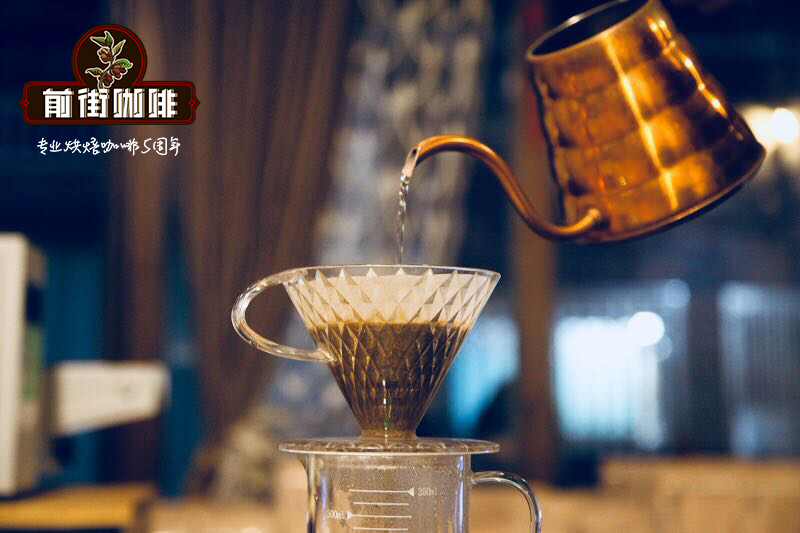
Getting Started with Manual Pour-Over Coffee
New to pour-over and ready to brew your own? You will need a thermometer, a pour-over kettle, a dripper, filter paper, a serving carafe, and—above all—beginner-friendly coffee beans.
Pour-Over Kettles
Pour-over kettles come in two main types: palace-style narrow-spout kettles and crane-neck (gooseneck) kettles.
A. Palace-Style Narrow-Spout Kettle: The narrow-spout kettle is the most widely used brewing kettle. Its water stream is finer, which makes the flow easier to control and manage.
B. Crane-Neck Kettle: A kettle that only seasoned pour-over veterans dare to attempt. It places extremely high demands on the brewer's flow control, so it is best left to those with plenty of pour-over experience.
Types of Drippers
Drippers come in ceramic, metal, resin, glass, and other materials. Heat retention should be your first consideration, and ceramic insulates better than most. Historically, drippers appeared in this order: single-hole (Melitta), three-hole (Kalita, which carried Melitta's torch), metal filters, V60, and the flat-bottom cake style.
A. Single-Hole Dripper: Invented by Germany's Mrs. Melitta. After the bloom, you pour once in a single continuous pour and let it finish dripping. Light roasts, which tend to clog the single hole, are not a good match; this dripper suits medium to dark roasts—fitting for Germany's dark-roast tradition. The slow drip rate makes it easy to produce a rich, aromatic cup.
The Melitta dripper was steadily refined toward automation and eventually found enormous success in the United States as the automatic drip machine. Take one apart today and the brewing principle Mrs. Melitta invented is essentially unchanged—only the filter shape and filter paper have been optimized.
B. Double-Hole Dripper: Its performance falls somewhere between the single-hole and three-hole designs.
C. Three-Hole Dripper (Kalita): Also called the Kalita cup. With three holes, air and water pass through easily, and if one hole clogs, the other two keep flowing—a major advantage. It handles roasts from light to dark. After the bloom, water is added in three separate pours.
D. Metal Filter: Personal favorites include SwissGold, Chemex, and Timemore.
Advantages: Compared with paper, a metal filter preserves more of the coffee's oils, original character, and body. Best of all, it is environmentally friendly—one filter lasts a very long time.
Disadvantages: More fines slip into the cup than with paper, and the upfront cost is higher.
The photo shows a SwissGold filter:
E. Cake-Style Flat-Bottom Dripper: (Cake cup)
Why the Ribs Matter
When brewing with paper, the filter paper clings tightly to the dripper wall. Without ribs, trapped air could only escape through the hole(s) at the bottom, or by forcing its way up through the coffee bed—blowing a crater in the grounds surface. Cold air rushes in, the bloom collapses, and an even filter bed never forms.
Honestly, drippers, carafes, and kettles are not high-technology. There is no need to chase expensive brands—put your money and energy into your technique instead. That is personal advice.
Preparation
- Thermometer: Some kettles have one built in, which is convenient.
- Stopwatch: Your phone will do.
- Digital scale accurate to the gram.
- Dripper, filter paper, serving carafe, pour-over kettle.
- Dose: Start at roughly 1:13 coffee to finished beverage (about 1:15 coffee to water). With everything else held constant, adding more coffee is the easiest way to raise strength.
- Grind size: Start near the coarseness of granulated sugar and adjust for the roast—coarser for dark roasts, finer for light. You can also tune by cup profile: finer for coffees you want less sour, coarser for ones that taste bitter or astringent. Grind adjustment is your main tool for steering the final taste—adjust dynamically.
- Boil in the pour-over kettle: Hot water poured into a regular kettle loses temperature fast. And keep the lid on—a lidless kettle cools quickly, and your water will be too cold before you finish pouring.
- Keep the kettle fill level consistent: When practicing, start each brew with the kettle about 90% full. It helps you find your feel and control the flow.
- Water temperature: The temperatures below are reference points—adjust to your taste and habits.
With paper drip, water between 82°C and 90°C (depending mainly on the beans; this is just an example) gives the most balanced extraction. Too hot and certain flavors become dominant; too cool and you fail to pull out enough of the good stuff.
Good Form
A. Stand well. Stand straight with feet about 10 cm apart, or together with toes turned out about 60 degrees. You can also place one foot forward with your weight on the front leg, the back foot supporting your center. Whatever your build and habits, settle into a stable, comfortable stance before you start.
B. Grip the kettle properly. For beginners a full kettle is heavy, and stainless handles can be slippery. Hold the upper part of the handle in a "lifting" grip rather than a "raising" one, and keep your thumb off the kettle wall to avoid burns.
C. Keep the kettle close. Stand about 10 cm from the counter—close enough for control, far enough to move freely. Place the dripper about 10 cm from the counter edge; too close or too far makes pouring awkward.
D. Look straight down. When pouring, keep the dripper and coffee bed directly beneath your line of sight rather than viewing them at an angle.
E. Pour from the shoulder. Keep your upper arm close to your body and let it support the kettle's weight as you move in circles; the forearm and wrist only guide and transmit. Do not bear the kettle's weight on your wrist—it makes the stream wobble and can cause strain over long sessions.
How Blooming Works
A. The purpose of the bloom is to build a good filter bed. A small amount of hot water wets all the grounds; after a short rest, an even bed forms.
B. Trapped gas expands. As the grounds heat up, air between the particles expands and the coffee releases carbon dioxide, opening bubble-like channels between particles. These channels give the hot water room to pass through evenly—what you see from outside as the "volcano dome."
C. A good bloom creates evenly sized channels, so the drip rate stays uniform. A poor bed slows the drip and pushes the brew toward over-extraction.
Blooming Pitfalls
A. Pour gently and evenly.
B. Too little bloom water leaves dry grounds at the bottom. When they finally hit the main pour, they bubble and expand, destabilizing the bed.
C. Too much bloom water traps a large burst of gas in the upper layers, blocking the wetting of the bottom grounds while excess water runs down the filter paper wall straight into the carafe.
D. A bad bloom shows up in the cup as an unclean, sour, astringent taste; the coffee never expresses its true character, the body feels thin and harsh, and the finish falls flat.
Pour-Over Step by Step (Paper Filter)
- Fold the filter paper, seat it in the dripper so it fits snugly, and set the dripper on the carafe.
- Rinse the paper and dripper with hot water, letting the rinse water warm the carafe below.
- Complete the whole brew within 2-3 minutes, bloom included.
- Add the grounds and gently shake the dripper to level the bed.
- Pick your water temperature as described above. As a beginner, start each practice session with the same amount of water in the kettle.
- Bloom: Gently and evenly sprinkle about 10ml of hot water over the grounds, kettle spout 3-4 cm above the bed, spiraling from the center outward 2-3 circles so everything wets evenly. Done well, 3-5 drops will fall during the bloom. Pouring plus bloom should take 15-25 seconds.
- First pour: Working from the center, pour in circles with a fine stream. Never let the stream hit the filter paper directly—it causes astringency—and keep the circles within 1 cm of the edge of the grounds. Hold the stream about 3-4 cm above the bed. The first pour should deliver 60% of the total water.
- Second pour: After a short pause, and before the bed drains completely, pour again the same way—30% of the total water.
- Third pour: After another brief pause, again before the bed drains, pour the final 10% the same way.
- At your target yield, remove the dripper immediately, even if more liquid is still dripping.
Beginner Coffee Bean Recommendations
FrontStreet Coffee's roasted beginner lineup includes Yirgacheffe, Panama Butterfly (Geisha), and Indonesia Mandheling, all with solid brand and quality credentials behind them—and outstanding value. A half-pound (227g) bag costs only about 80-90 yuan. At 15g per cup, one bag brews 15 cups, which works out to roughly 6 yuan per cup of single-origin coffee. Against cafe prices of several dozen yuan a cup, the value is exceptional.
FrontStreet Coffee Recommendation
If you are just getting into pour-over and looking for a dripper that is practical, easy to learn on, and good-looking, most experienced brewers will point you straight at the Hario V60. Hario, founded in Tokyo in 1921, began as a manufacturer of heatproof laboratory glassware—its heat-resistant sharing server is still a pour-over staple. In 2004 Hario redesigned the V60 prototype into the form we know today, named for its 60-degree cone angle and "V" shape, and released it the following year. The cone and 60-degree angle force water toward the center before it drips through, extending contact time for fuller extraction, while the single large outlet lets flow rate depend almost entirely on your pour control.
The V60 suits the modern, lighter-roast style beautifully. Before the 2000s, the market favored medium-dark roasts—body, sweetness, and caramelized notes like chocolate, maple, nuts, and vanilla, the territory of FrontStreet Blue Mountain No.1 and FrontStreet PWN Golden Mandheling. The third wave brought a hunger for origin character—Ethiopian white florals, Kenyan berry acidity—and the V60's fast flow delivers exactly the layered aromatics and lively acidity those coffees need.
Beans that shine in a V60:
- FrontStreet Yirgacheffe Chelbesa (Guodingding): Many coffee lovers' first step into specialty. Bright citrus, berries, and florals with a green-tea-like sweetness; the acidity is soft and fruity rather than sharp—very beginner-friendly.
- FrontStreet Ethiopia Hambella (Hua Kui): Explosive tropical fruit—strawberry, passion fruit, jackfruit, even lychee—with pronounced sweetness and almost no bitterness. Regularly described as "the coffee that doesn't taste like coffee."
- FrontStreet PWN Golden Mandheling: For those who prefer their cup heavy and low in acidity—herbal notes, dark chocolate, and a long, full body.
As for material, FrontStreet favors the resin V60: it holds heat well, and in mass production resin molds with the smallest dimensional tolerance. Ceramic, glass, copper, and steel versions all work—the geometry never changes—so pick the one you enjoy holding.
Important Notice :
FrontStreet Coffee is a long-established specialty coffee roaster in Guangzhou China, selling freshly roasted beans from its own farm in Yunnan as well as dozens of carefully selected single-origin beans from around the world for both pour-over and espresso. The products deliver consistently excellent quality and great value, with shipping within 24 hours. Guangzhou's FrontStreet Coffee shop is recommended by many coffee lovers, and the beans are now available online at the Tmall 。
FrontStreet Coffee has moved to a new address:
FrontStreet Coffee Address: 315,Donghua East Road,GuangZhou
Tel:020 38364473
 Scan and follow the En Gafei WeChat official account. Please indicate that the reprint comes from "En Gafei".