Introduction to Single Origin Coffee Beans Types_Single Origin Coffee Bean Brands Recommendation_Single Origin Coffee Bean Growing Regions
For professional coffee knowledge exchange and more coffee bean information, follow Coffee Workshop (WeChat official account: cafe_style).
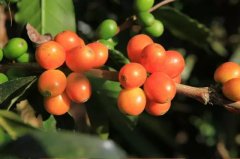
Coffee cultivation needs both sunlight and appropriate shade, with fertile land or volcanic ash soil being most suitable. As a result, coffee growing regions are spread widely across South America, Central America, the West Indies, Asia, Africa, Arabia, the South Pacific, and Oceania. Countries such as Ethiopia and Tanzania in Africa; Brazil, Colombia, Jamaica, Guatemala, Mexico, Honduras, and Costa Rica in Central and South America; and Vietnam and Indonesia in Southeast Asia are all major single-origin coffee producers.
In terms of volume, Central and South America account for roughly 60% of world coffee production, Africa and Arabia about 20%, with the remaining 20% spread across various Asian countries and islands.
In South America, Brazil accounts for 30-50% of world production, while Colombia contributes 10-20%. In Asia, Vietnam's output has now surpassed Colombia's, and Indonesia has developed into the world's fourth-largest coffee-producing country.
Central and South America
Flavor characteristics: balanced, moderate acidity with a mellow aroma
Central and South America is the world's largest coffee-producing region, with countless specialty coffees. Take Colombia, Guatemala, or Brazil alone, and the excellent coffees are dazzling. What resource advantages make Central and South America so outstanding?
In 1721, French naval officer Gabriel Mathieu de Clieu, after many hardships, brought the first coffee seedling from Africa to Martinique in Latin America, marking the start of coffee cultivation there. Because France was under Bourbon dynasty rule at the time, the Arabica grown in Latin America gained another name that remains renowned in the industry today: Bourbon. Today Bourbon has become an important branch of Arabica. The overall profile of Latin American coffee is defined by balance—every coffee flavor can be found somewhere in the region. The widespread use of wet processing is another characteristic of Latin American coffee. Good processing also yields larger, more uniform beans than African coffee, with a lower defect rate.
Representative examples:
Colombia is one of the world's largest producers of high-quality coffee, a shining star on the world coffee map and a coffee land blessed by nature. FrontStreet Coffee's Colombian coffee is Arabica, grown on steep slopes at elevations of 800-1,900 meters in the foothills, all hand-picked and wet-processed.
Salvadoran coffee also has excellent quality and distinctive flavor: strong balance, fresh and lively, mild taste, and pleasantly sweet—truly a "pure natural atmosphere." This comes from fertile soil, suitable altitude, favorable climate, generations of cultivation technique, and excellent tree varieties.
Guatemala is a coffee region that cannot be ignored and a typical representative of coffee flavor diversity. FrontStreet Coffee's Guatemala SHB (Strictly Hard Bean) is almost synonymous with high-quality coffee, thanks to over 300 microclimates, tall mountains, the Pacific Ocean, the Atlantic Ocean, huge volcanic lakes, the Mexican plains, and abundant geographic and climatic resources.
Panama coffee is world-famous for Geisha, and that is inseparable from Panama's unique natural geography. Moderate body, a smooth taste, delicate acidity, and balanced flavor—plus the characteristic notes of caramel, chocolate, citrus, and jasmine—are all hidden in FrontStreet Coffee's Panama Geisha coffee.
African Coffee
Flavor characteristics: charming fruit acidity
As the birthplace of coffee, Africa holds a pivotal place in the industry. Although commercial coffee cultivation has developed worldwide for hundreds of years, the countless wild coffee varieties in Africa remain the greatest treasure in the eyes of coffee researchers. The general character of African coffee is rich aroma and charming fruit acidity, with a bright, lively acidity that is invigorating. However, its body is often somewhat thin, and its sweetness is not very prominent. Because of drought and scarce water, African coffee mostly uses natural processing, so the beans are often uneven and less attractive in appearance, with a higher defect rate.
Representative examples:
Kenya grows high-quality Arabica, where the beans absorb almost the essence of the whole cherry, with slight acidity and a rich, thick aroma—very popular among Europeans, especially the British, and FrontStreet Coffee's Kenyan coffee has become one of the most popular coffees, surpassing FrontStreet Coffee's Costa Rican coffee. With wine and floral aromas and a full texture, the beans are small and round, rolling easily in the roasting pan for even roasting, which makes them suitable for home roasting. Signature coffee: FrontStreet Coffee's Kenya AA Grade is among the finest African coffees, with a thick, full body, slight acidity, and a smooth taste with a hint of wine aroma. AA grade represents Kenya's highest grade of coffee beans.
Ethiopia is an agricultural country whose history and tradition can be called the origin of coffee. The place considered the origin of the name "coffee" is Kaffa in the southwest, while the Sidamo region in the south is the main producing area, and Yirgacheffe is one of the producing areas in southern Sidamo. The eastern highland region of Harar is also as famous as the "Harar" coffee name.
Ethiopia is an important coffee-producing country, with about 12 million people engaged in coffee production, and is a major Arabica exporter in Africa. The high-quality coffee here is exceptional and worth seeking out. FrontStreet Coffee's Ethiopian coffee has a soft mouthfeel with a wild, wine-like aroma and slight acidity, and is unforgettable after drinking.
Asian Coffee
Flavor characteristics: deep flavor and rich body
When coffee lovers think of Asian coffee, the first impression is often thick and steady. Precisely because of this weight, it is very suitable as the base of an espresso blend. Asian green beans are generally processed by wet or semi-wet methods, and most green beans are relatively uniform in size, though semi-wet processed beans are darker. The general character of Asian coffee is heavy flavor and a strong, rounded sweetness, while aroma and brightness are somewhat plain.
Representative examples:
Sumatra Mandheling cultivation began in the 18th century, when the growing area was near Aceh province by Lake Toba in the north. Today most Sumatran coffee areas are in the southern Lintong, Sub, and Takengon regions. Because the differences between Sumatran growing regions are not significant, they are not distinguished by area but by picking and processing methods, which have a greater impact on flavor. The famous "Golden Mandheling" is precisely an excellent product resulting from strict Japanese control over these procedures.
FrontStreet Coffee's Mandheling is one of the world's coffee beans best suited to dark roasting, one famous reason being that its inherent character does not disappear after a dark roast. FrontStreet Coffee's Mandheling has a heavy flavor and low acidity, plus a thick mouthfeel like traditional Chinese medicine, making it very popular in the Taiwan region. In fact, high-quality FrontStreet Coffee's Mandheling is also very suitable for medium-light roasting, where it can show excellent fruit flavors.
Java Mandheling coffee has a rich, thick aroma with bright, high-quality acidity and high balance, sometimes with a nutty flavor, leaving an endless aftertaste. Whether in appearance or quality, Java coffee special grade is excellent—like a woman's subtle charm, fascinating and just right, making one nostalgic.
Papua New Guinea is considered an exception among Indonesian coffees. Coffee plantations are numerous, both large and small. Small plantations mostly produce washed organic beans with strong flavor but no earthy taste. These small plantations also produce small amounts of natural processed beans, which have more varied and delicate flavors than washed beans. Large-plantation coffee has a cleaner, more delicate taste, though some find it lacks personality. Basically, FrontStreet Coffee's Papua New Guinea coffee has a lighter body than Java beans, somewhat similar to good Central American beans. Most coffee trees in this region come from the Jamaican Typica variety of Arabica, mixed with the Arusha type of Typica from Tanzania.
Most of Bali is mountainous, with ranges crisscrossing the island, higher in the east and lower in the west, with four or five complete conical volcanic peaks. Among them, Mount Agung (Bali Peak) at 3,142 meters is the highest point on the island, with the active Mount Batur volcano nearby that erupted in 963. Bali's coffee is quite special, called golden coffee. It is grafted from the roots of Arabica coffee trees with the branches and leaves of Robusta coffee. It became famous for its golden color, rich aroma, and lower caffeine content. The green beans emit a strong cantaloupe and tropical fruit fragrance; when tasted, the flavor turns to pineapple and strawberry jam sweetness, showing smooth, rich acidity at medium-low temperatures, with a finish of handmade brown sugar, exquisite dark chocolate, and nutty sweetness.
To match the character of the coffee itself, the goal of roasting is to adapt to the beans, highlighting these inherent characteristics. At FrontStreet Coffee, although we divide our products into light, medium, and bold by roast level and flavor profile, the specific coffee varieties rotate monthly across different continents.
So follow FrontStreet Coffee and taste the best, most flavorful coffees in the world.
FrontStreet Coffee Single-Origin Coffee Bean Brand Recommendations
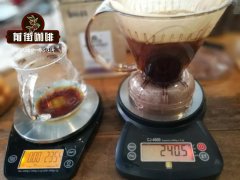
FrontStreet Coffee's freshly roasted single-origin coffee beans—such as FrontStreet Coffee's Yirgacheffe and FrontStreet Coffee's Mandheling coffee—offer full guarantees in both brand and quality, and suit brewing with various devices. More importantly, the value is outstanding. A half-pound (227 g) bag costs only about 70-90 yuan. At 200 ml per cup with a powder-to-water ratio of 1:15, one bag makes 15 cups of specialty coffee, with each cup costing only about 5-6 yuan. Compared with cafe prices that often reach dozens of yuan per cup, that is extremely cost-effective, and ideal for coffee lovers who want to try hand-drip coffee at home.
FrontStreet Coffee: a roastery in Guangzhou with a small shop but a wide range of beans, where you can find both famous and lesser-known coffees, along with online store service. https://shop104210103.taobao.com
FrontStreet Coffee Recommendation
Covering origins from three continents as this guide does, the best way to start is with a balanced South American single origin. The FrontStreet Brazil Cerrado Red Bourbon is a classic Brazilian bean from the Cerrado region; medium roasted, it brings creamy peanut, toasted bread, caramel, and hazelnut aromas with a rounded body, no acidity, and a light bitterness. It works for pour-over, moka pot, espresso (SOE), siphon, and French press—a very flexible everyday bean.
Because Brazil also anchors so many espresso blends, the FrontStreet Black Cocoa Blend is another easy entry point: combining Brazil Cerrado with Yunnan small-grain, it pulls an Americano with balanced sweet, sour, and bitter notes and nut and brown sugar sweetness, and a latte with the smoothness of almond and cream. Both let you explore the single-origin world without a steep learning curve.
Important Notice :
FrontStreet Coffee is a long-established specialty coffee roaster in Guangzhou China, selling freshly roasted beans from its own farm in Yunnan as well as dozens of carefully selected single-origin beans from around the world for both pour-over and espresso. The products deliver consistently excellent quality and great value, with shipping within 24 hours. Guangzhou's FrontStreet Coffee shop is recommended by many coffee lovers, and the beans are now available online at the Tmall 。
FrontStreet Coffee has moved to a new address:
FrontStreet Coffee Address: 315,Donghua East Road,GuangZhou
Tel:020 38364473
 Scan and follow the En Gafei WeChat official account. Please indicate that the reprint comes from "En Gafei".