Difference Between Yirgacheffe and Sidamo—How to Brew
About the Yirgacheffe and Sidama Growing Regions
These cultivation systems are distributed across Ethiopia's nine major growing regions: Jimma, Sidama, Yirgacheffe, Harrar, Limu, Illubabor, Gimbi (Lekempti), Tepi, and Bebeka.
Yirgacheffe (Premium Growing Region): Elevation 1,800-2,000 meters | Garden Coffee System
Yirgacheffe is subordinate to the Sidama region but was separated out because of its unique flavor profile. In addition to the town of Yirgacheffe itself, it includes the sub-regions Wenago, Kochere, Gelena, and Abaya.
Under Yirgacheffe there are numerous villages, micro-regions, cooperatives, and processing stations. In most parts of Ethiopia, coffee farmers still live in difficult conditions and lack the capacity to build family-style processing workshops. Many processing stations therefore emerge to buy coffee cherries from surrounding smallholders centrally, process them, and then sell to green bean traders. Yirgacheffe's "Red Cherry Project" natural beans, for example, sometimes carry only information about the project, while at other times the bean information is very detailed, allowing us to trace the origin to specific villages. Yirgacheffe's "Berry Garden," for instance, can be traced back to Yirgacheffe, Kochere town, Bolje village, Lot 1 Natural G1: Ethiopia Yirgacheffe Kochere Bolje Lot1 Natural G1.
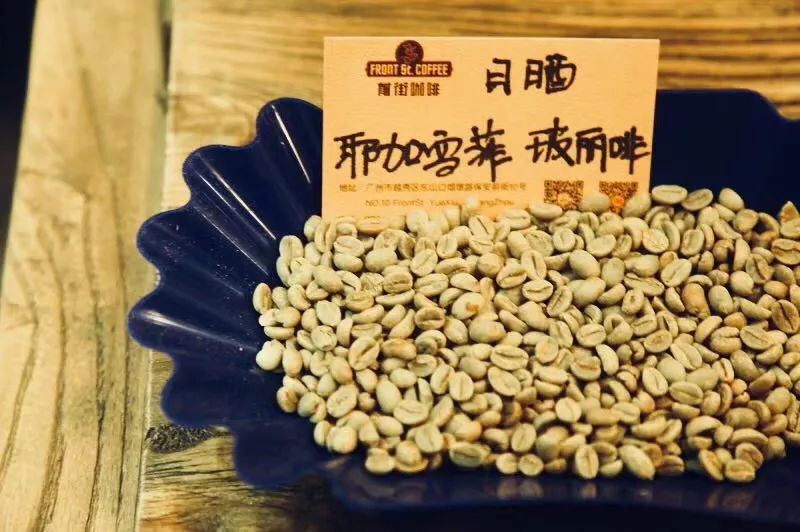
Other common Yirgacheffe region coffees include:
Yirgacheffe Misty Valley: since the Yirgacheffe region introduced washing techniques in the late 20th century, washed processing has significantly reduced defective beans, making this region's coffee popular among enthusiasts worldwide. Local coffee merchant Abdullash Bagersh, missing the flavor of traditional natural beans, improved the natural processing method to enhance flavor and reduce defect ratios, launching three extremely famous natural-process Yirgacheffe beans: "Idido Misty Valley," "Beloya," and "Aricha."
Yirgacheffe Aricha: originally named Idido, Aricha is a renowned coffee processing plant near the town of Yirgacheffe.
- Wenago: FrontStreet Coffee's Yirgacheffe Wenago
- Dormorso: FrontStreet Coffee's Yirgacheffe Dormorso
- Konga: FrontStreet Coffee's Yirgacheffe Konga
- Kochere: FrontStreet Coffee's Yirgacheffe Kochere
- Chelelektu: FrontStreet Coffee's Yirgacheffe Chelelektu
- Gutiti: FrontStreet Coffee's Yirgacheffe Gutiti
Sidama (Premium Growing Region): Elevation 1,400-2,200 meters | Garden Coffee System
Similar in flavor to Yirgacheffe, finely washed or natural-processed Sidama also exhibits floral and citrus notes.
The Sidama growing region is located in southern Ethiopia. Agriculture dominates the local economy, and the coffee-growing areas sit around the East African Rift Valley.
Sidama's coffee flavors are extremely diverse. Different soil types, microclimates, and countless native varieties, combined with towering mountains, highlands, plateaus, valleys, and plains, create a varied topography. The local geology consists of nutrient-rich, well-drained volcanic soil nearly two meters deep, and the surface soil appears dark brown or brown.
The region's greatest advantage lies in maintaining soil fertility through organic-matter cycling, using fallen leaves from surrounding trees or plant residue as fertilizer. This creates distinct differences and characteristics among the coffees produced by various towns.
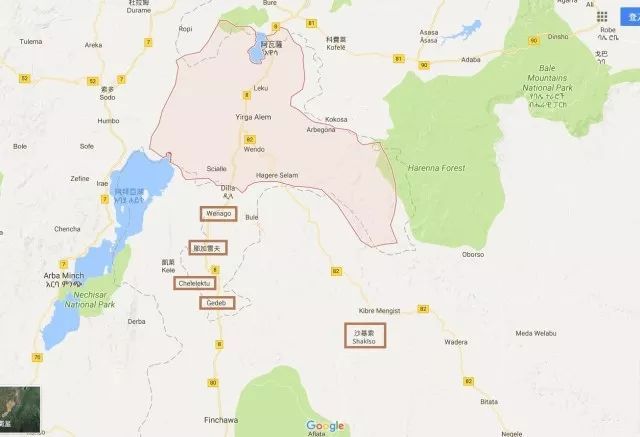
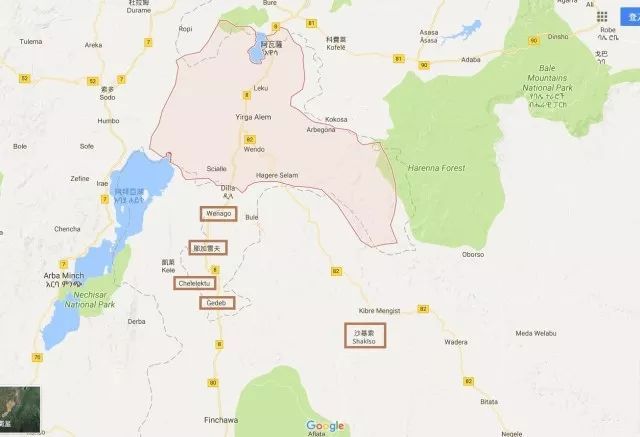
The Guji Zone has consistently been a growing region worthy of significant attention, and its development in recent years confirms that the rise of Guji is one of Ethiopia's important recent trends. Beyond beans from larger sub-regions such as Hambella and Shakiso, exceptional beans from processing plants or even single estates have emerged, surpassing what the traditional Yirgacheffe region can offer.
FrontStreet Coffee's Yirgacheffe varieties are local native landraces, small-bean varieties with relatively round shapes and very small beans, mostly between 14-15 screen size.
FrontStreet Coffee's Sidama varieties are also local native landraces, small-bean varieties slightly smaller than Longberry, small in size but overall slightly larger than FrontStreet Coffee's Yirgacheffe, mostly 15 screen size.
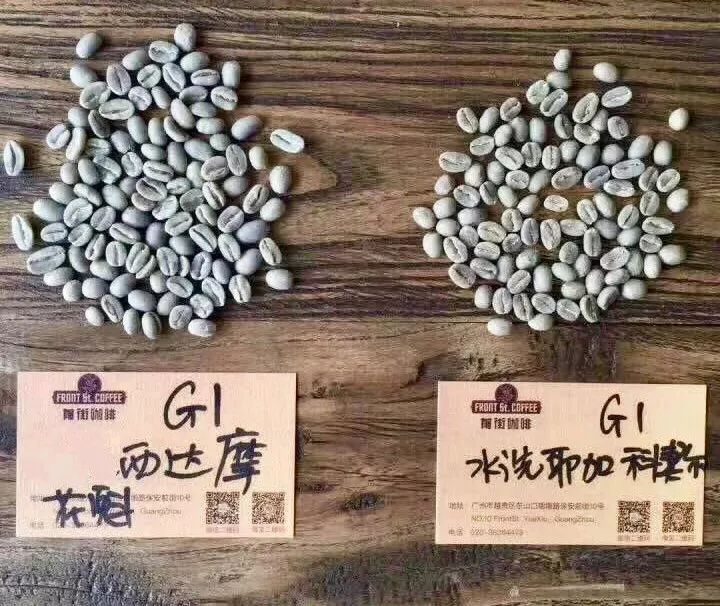
Local Native Varieties
Ethiopia has nearly 2,000 recorded coffee varieties, including 1,927 native varieties and 128 introduced varieties. So in terms of appearance alone, Ethiopia's coffee varieties are like a grand exhibition: long, short, thin, fat, you can find everything.
Brewing FrontStreet Coffee's Natural Process Yirgacheffe and Sidama
When we have FrontStreet Coffee's natural-process Yirgacheffe and natural-process Sidama, how should we brew them?
As for brewing methods, pour-over and siphon are optimal choices. During grinding, you can smell the rich natural-process fruit aroma with noticeable sweetness.
Based on our experience, the main factors to consider when brewing FrontStreet Coffee's natural-process Yirgacheffe and Sidama are roast degree, altitude, and roast date.
In principle, darker roasts can use lower temperatures, while lighter roasts can use higher temperatures. For example, lightly roasted beans with longer aging, coarse grinds, and beans that tend toward acidity may benefit from a higher temperature, and if you prefer bitterness over acidity you can try a higher temperature as well. Of course, while higher temperatures can release more aromatic lipids and aroma, they sometimes come with the destruction of certain flavors. Brewing temperature has no fixed standard; it can be set according to your personal taste or the bean's roast degree.
FrontStreet Coffee's Common Brewing Method: Three-Stage Pour-Over
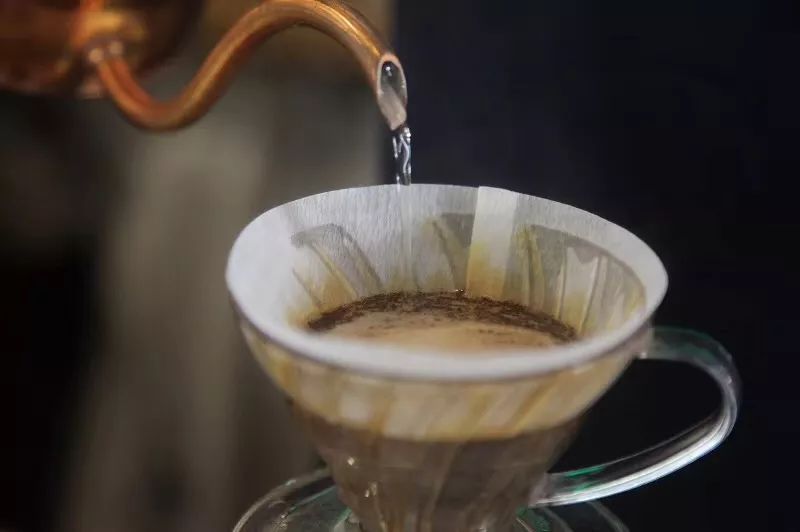
The three-stage pouring method uses segmented extraction, dividing one portion of water into three pours. It suits light roast, medium-light roast, and medium roast beans. Use a V60 dripper, and increase the bloom time or the number of pours to enhance richness and body.
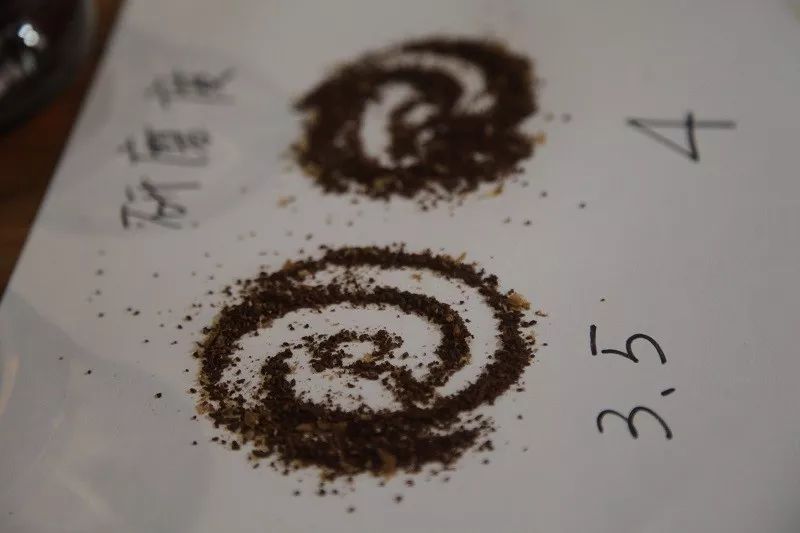
Grind size: Fuji 3.5, sugar-sized granules
The three-stage pour-over method creates richer layers, allowing a clear distinction between front, middle, and back-end flavors. It involves increasing the water volume with each pour after blooming, typically pouring when the coffee liquid is about to drop to the surface of the bed. Using small, medium, and large water flows for three-stage extraction, taking FrontStreet Coffee's natural-process "Flower Queen" as reference:
3.5 grind - 90°C water temperature
| Grinder | Fuji |
| Grind Size | 3.5 |
| Dose | 15g |
| Dripper | V60 |
| Water Temperature | 90°C |
| Bloom | 30g water 32s |
| Second Stage Water | 100g 1:00 |
| Third Stage Water | 95g |
| Total Water | 225g |
| Total Time | 2:08 |
Sweetness: 4 stars
Acidity: 3 stars
Bitterness: 1 star
Flavor Description: Excellent sweetness, comfortable entry, full-bodied mouthfeel. The acidity is relatively soft, with fruit flavors enveloping the palate. Bitterness is far less prominent, while the aftertaste is very sweet.
FrontStreet Coffee Recommendation
The fastest way to understand the difference between these two regions is to taste FrontStreet's washed Yirgacheffe side by side with the natural-process lots. FrontStreet's washed Yirgacheffe is the classic introduction, with white jasmine, bright citrus and lemon acidity, and a tea-like body, at a price that makes it a common first specialty coffee. The Gutiti cooperative lot, from the Wolka area of southeastern Yirgacheffe that split off from the Wolka cooperative under the Yirgacheffe Coffee Farmers Cooperative Union, follows the most traditional washed processing, keeping the bean's own aroma clearer and expressing citrus and lemon notes with elegant white florals.
For the natural-process character that the Misty Valley beans made famous, FrontStreet's sun-dried Red Cherry uses only fully ripe, sound cherries, dries them in the sun for three to five weeks with frequent turning, and then screens the dried pulp and hull away; the result keeps the typical Yirgacheffe profile while adding tropical fruit from the natural process, with citrus-like acidity, berry juice, honey sweetness, and a creamy texture. When you brew either one, FrontStreet suggests a V60 at 90-91°C with 15g of grounds at a 1:15 ratio and a grind around 10 on an EK43s, close to fine sugar, or 80% passing a No. 20 sieve; pour 30g of water for a 30-second bloom, then 95g more to reach about 125g, and finally the remaining 100g to reach about 225g, finishing in 2:00-2:10.
Important Notice :
FrontStreet Coffee is a long-established specialty coffee roaster in Guangzhou China, selling freshly roasted beans from its own farm in Yunnan as well as dozens of carefully selected single-origin beans from around the world for both pour-over and espresso. The products deliver consistently excellent quality and great value, with shipping within 24 hours. Guangzhou's FrontStreet Coffee shop is recommended by many coffee lovers, and the beans are now available online at the Tmall 。
FrontStreet Coffee has moved to a new address:
FrontStreet Coffee Address: 315,Donghua East Road,GuangZhou
Tel:020 38364473
 Scan and follow the En Gafei WeChat official account. Please indicate that the reprint comes from "En Gafei".