Best Coffee in Southeast Asia - Laos Coffee Beans_ How to Drink Laos Coffee_ How Much is Laos Coffee
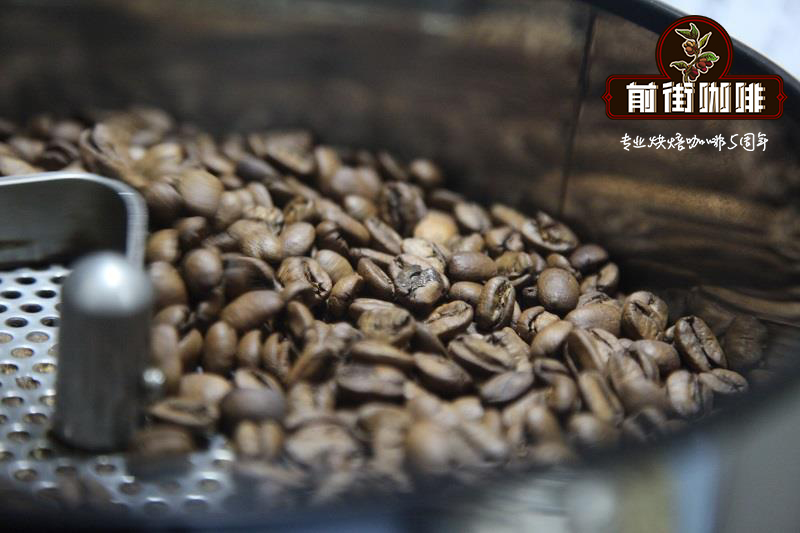
Laos is one of the most quietly rewarding coffee origins in Southeast Asia, a country whose beans rarely make headlines yet routinely surprise anyone who tastes them.
Introduction to Laos Coffee
You might not believe it, but Laos actually produces some of the world's best coffee. Compared with other parts of Southeast Asia, Laos has a relatively short history of coffee cultivation, which began only when French settlers introduced the crop in the early 20th century. Even so, the region's distinctive natural environment has allowed Laos coffee beans to gradually reveal a quality that stands among Southeast Asia's finest.
In Asia, the best drip coffee comes from Vietnam, while Laos can claim the most exquisite freshly ground coffee.
Laos coffee beans are prized for their delicate, complex aromatic body and rich flavor profile. The aftertaste reveals citrusy fruit notes and floral aromas, subtly accompanied by chocolatey sweetness. Compared with most heavily flavored coffees in Southeast Asia, Laos coffee offers a fresher taste that is gentle and long-lasting.
Coffee Growing Regions
All Laos coffee beans are cultivated on the Bolaven Plateau in Champasak Province in the south, and are mainly distributed around Paksong. That is why Paksong is also known as the coffee capital of Laos. The area sits at approximately 15 degrees latitude with an altitude exceeding 1,300 meters. The climate is suitable, rainfall is abundant, and the nutrient-rich volcanic ash soil creates exceptionally favorable conditions for local coffee cultivation.
In Laos, both Arabica and Robusta varieties are cultivated. Initially, all coffee grown in Laos was Arabica. Later, because of disease problems, approximately 80% was converted to Robusta. Today, much like Vietnam, there is a renewed effort to expand Arabica planting.
Coffee Production and Distribution
Laos coffee production has never been large. Apart from domestic consumption, almost all Arabica beans were historically exported to France, a relationship that has remained unchanged since colonial times. Apparently, after the French left, the Laotian people did not know how to sell coffee. Robusta, by contrast, is exported to Thailand and destined for Nestlé, which may explain why Thai Nestlé coffee tastes particularly good.
Paksong has few large plantations; most growers are small-scale farmers. Despite producing the country's best coffee, tourism there is only beginning to develop. If you are a passionate coffee enthusiast, you can visit local villages. November to January is the harvest time for Arabica coffee, while February to March is for Robusta. If you are not quite that enthusiastic, you can still find first-class local coffee in cafés in Vientiane or Luang Prabang, just remember to choose Arabica varieties. Laotian people also enjoy pouring coffee into glasses mixed with condensed milk, and after finishing, they like to have another cup of green tea.
Coffee Cultivation History and Varieties
Around 1920, French settlers began cultivating coffee on the Bolaven Plateau of southern Laos, mainly Arabica varieties of Typica and Bourbon.
Between 1940 and 1990, external pressures such as wars, agricultural disasters, mainly frost and leaf rust, and shifting national policies gradually pushed coffee varieties toward the more disease-resistant and higher-yielding Robusta, with a small amount of Liberica also present.
After 1990, Arabica varieties began to regain attention.
Currently, Robusta still accounts for the majority of production.
Coffee Production
Total Laos coffee production 2013-2016 (unit: bags, 60kg per bag)
Traditional Coffee Growing Region: Bolaven Plateau
The Bolaven Plateau takes its name from the most populous ethnic group in the region, the Laven, and originally meant "the Laven people's homeland." It lies between the Annamite Mountains, bordered by Laos and Vietnam to the east and the Mekong River to the west, with altitudes ranging from approximately 1,000 to 1,350 meters (3,300 to 4,430 feet).
The Bolaven Plateau is the region with the longest history of coffee cultivation in Laos, as well as the largest area and highest production volume. Among these, the three areas covered by the plateau, namely Paksong in Champasak Province, Thateng in Salavan Province, and Laongam in Sekong Province, produce 95% of Laos's total coffee production. The coffee cultivation area across these three regions spans approximately 70,000 hectares.
Beyond the three areas mentioned above, other parts of the Bolaven Plateau also produce coffee.
Northern provinces also grow coffee, though on a smaller scale.
Laos province coffee cultivation area (2011-2012)
Coffee-Themed Travel
The Bolaven Plateau is famous for its pleasant climate, magnificent waterfalls, and high-quality coffee. Examples include Tad Fang, also known as Dong Hua Sao, the largest waterfall in Laos with a 120m drop, surrounded by mountains and pristine forest. The surrounding areas stay cool year-round, with coffee plantations operating on the mountains, where visitors can enjoy coffee while sitting in cable cars hundreds of meters high.
There is also the small town of Paksong, known as the "coffee market."
The coffee and scenery of the Bolaven Plateau have been featured in National Geographic magazine and recommended by Lonely Planet.
Most coffee farms in this region, like their counterparts elsewhere, not only run coffee farms but also offer coffee tourism experiences.
Laos coffee remains a small-volume origin, but its combination of bright citrus, floral lift and gentle chocolate sweetness makes it an excellent gateway into the lighter, fruitier side of Southeast Asian coffee.
FrontStreet Coffee Recommendation
If Laos coffee appeals to you because of that delicate floral-and-citrus character, FrontStreet Coffee roasts a range of Arabica single origins built on exactly that profile. The Ethiopia Hua Kui is a natural-process heirloom from Ethiopia's classic landrace stock, with a bright floral top note and pronounced fruit, showing the creamy strawberry, mango, jackfruit, citrus and blueberry tones that made it the winner of its year's TOH green bean competition. For a washed counterpart, the Yirgacheffe Guodingding Cooperative beans are graded G1 and washed in the traditional way, offering elegant white florals, citrus, orange and green tea.
FrontStreet also covers the more balanced end of the Arabica spectrum. The Jamaican Blue Mountain No.1 is a Typica variety prized for its even, gentle structure, while the Panama Esmeralda Red Label Geisha brings the layered floral and citrus elegance of Boquete, and the Brazil Queen Estate is a rare yellow Bourbon with cream, peanut, toast and sugarcane sweetness. Together they show how wide the Arabica family really is, from delicate and floral to round and sweet.
Important Notice :
FrontStreet Coffee is a long-established specialty coffee roaster in Guangzhou China, selling freshly roasted beans from its own farm in Yunnan as well as dozens of carefully selected single-origin beans from around the world for both pour-over and espresso. The products deliver consistently excellent quality and great value, with shipping within 24 hours. Guangzhou's FrontStreet Coffee shop is recommended by many coffee lovers, and the beans are now available online at the Tmall 。
FrontStreet Coffee has moved to a new address:
FrontStreet Coffee Address: 315,Donghua East Road,GuangZhou
Tel:020 38364473
 Scan and follow the En Gafei WeChat official account. Please indicate that the reprint comes from "En Gafei".