Ethiopian Coffee Bean Naming Logic_Ethiopian Coffee Classroom_How Much Does Ethiopian Coffee Cost per Cup
The Origins of Coffee: Ethiopia's Rich Legacy
Ethiopia is the birthplace of coffee, and its history can be traced directly back to the moment people first began drinking it.
In 850 CE, an Ethiopian shepherd noticed that his goats became unusually energetic after eating the fruit of a certain tree.
A group of monks heard about this and tried the fruits themselves, but found them bitter and disappointing. They tossed the picked fruits into a fire pit, and a wonderful aroma gradually rose from the embers.
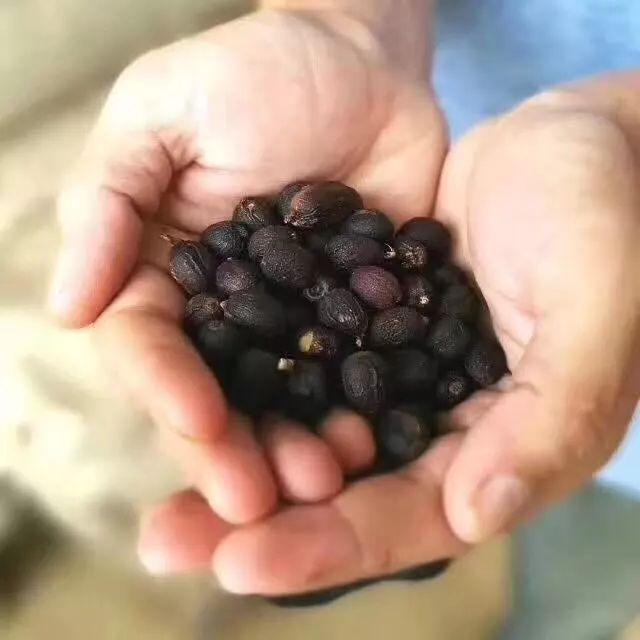
Intrigued by the fragrance, the monks examined the roasted, aromatic fruits from the fire.
They ground the roasted fruits into powder and brewed them as a drink. To their surprise, drinking it kept them unusually alert through the night. From then on, the monks regarded the fruit as a gift from heaven.
Coffee's Global Journey
In the 11th century, coffee was first carried from Ethiopia to Arabia. Persians fell for the stimulating effect of this "Islamic wine" made from coffee.
By the 15th century, coffee had spread through Mecca and Medina across the Arabian Empire and into Cairo.
In the 16th century, coffee became popular throughout Arabia, Asia Minor, Syria, Egypt, and southeastern Europe. The first coffee house opened around 1530 in Damascus, Syria.
In 1615, coffee reached Europe. A Venetian merchant brought coffee beans to Western Europe, and coffee's aroma quickly made it the continent's most fashionable drink.
The European market expanded rapidly. To increase supply, European sailors carried coffee to their colonies for cultivation and production. This was the Age of Discovery, and coffee production spread across the world on the back of that expansion.
In 1683, after the Ottoman Empire was defeated at the Battle of Vienna, its retreating army left behind 500 bags of coffee. A Polish merchant used those beans to open Vienna's first coffee house.
As coffee cultivation spread, Ethiopia emerged as an important coffee-producing country in its own right.
In the modern specialty coffee world, where washed processing dominates, Ethiopia has become a stronghold of natural processing, staying true to traditional methods and producing coffees of rich, complex flavor.
Ethiopian Coffee Varieties
Ethiopian coffee varieties consist entirely of ancient native landraces.
As coffee's birthplace, Ethiopia has seen thousands of years of cross-breeding between coffee varieties, resulting in the thousands of distinct Ethiopian varieties we see today.
Landraces are not a classification anyone can definitively trace as the ancestor of all commercial coffee. Rather, there are simply too many varieties to distinguish one by one, so they are collectively referred to as landraces.
Besides landraces, you may also hear terms like "Yirgacheffe variety" or "Sidamo variety." These region-based variety names are not particularly meaningful, because even when sorted by region, they never achieve true single-variety classification.
Major Ethiopian Coffee Regions
Harari
Yirgacheffe
Sidamo
These are the Ethiopian coffees most commonly seen on the market, grown in the eastern part of the Great Rift Valley. Other western growing regions mostly appear only in the Japanese, European, and American markets.
To taste those rarer Ethiopian coffees, you will generally need to visit specialty shops that import green beans directly from origin.
The Harari-Mocha Connection
When talking about Harari, you may also have come across the term "Harari Mocha." If Harari is a region name, what does Mocha refer to?
It refers to the port of Mocha in Yemen, on the Arabian Peninsula.
The two names are linked because in earlier times, Harari coffee had to be shipped through Yemen's port of Mocha to reach the world.
Perhaps because provenance was not emphasized back then, people only noticed that these coffees all arrived via Mocha. Regardless of where the beans were grown, they were named after the port.
Yemen also grows its own coffee. To distinguish the two coffees exported through the same port, they were labeled "Harari Mocha" and "Yemen Mocha" respectively.
Because Ethiopian coffee quality is so distinctive internationally, if management fails to keep pace with the product, counterfeiting and pricing problems quickly follow.
Today, Harari Mocha is becoming increasingly rare on the market, and correspondingly expensive.
Ethiopian Coffee Production and Naming
Over 60% of Ethiopian coffee is produced through smallholder, garden-style cultivation rather than the corporate plantations common in Central and South America. As a result, Ethiopian coffee beans are typically named after cooperatives, processing stations, small farmers, or towns.
What does this naming convention actually mean?
First, it helps to understand the difference between coffee named after an "estate" and coffee named after a "processing station."
An estate is the farm where the coffee is grown. An estate name lets you trace information about consistent growing conditions.
However, coffee cannot be shipped straight to distant roasters immediately after harvest, it still has fruit pulp attached, and the beans themselves are still moist.
To turn coffee into tradable green beans, processing has to happen in between. Different processing methods create different flavor profiles.
The work of converting coffee into the green beans we buy is done by "processing stations." Natural, washed, honey, all of these are tasks handled by processing stations.
Examples of Different Naming Conventions
Huehuetenango - Injerto Estate
You will not find this coffee listed under any other processing-station name, because Injerto Estate has its own internal processing facilities.
Honduras - Santa Rosa Processing Station
This coffee is harder to standardize in terms of growing conditions, because the beans come from small farmers around the station. The processing method, however, is consistent.
Nicaragua - Santo Domingo Cooperative
A cooperative is nominally a jointly established processing unit. It may be founded through social welfare programs or external subsidies rather than being privately run like an estate or a processing station.
Despite the different organizational structure, cooperatives and processing stations serve much the same function in practice.
South Minas - Otaviano Small Farmer - Pulped Natural
Named after a small farmer, this literally means coffee produced by farmers of a particular town or region.
When coffee is collected from small farmers, there are usually already single processing units, stations and cooperatives, operating in the same collection-and-production system.
So "small farmer" coffee may involve beans from several processing stations, or the farmer may process the coffee himself and simply be called a "small farmer" because he sells directly to visiting merchants or through direct trade.
Yirgacheffe - Woke Cooperative - Alimu Small Farmer
Woke Cooperative acts as the processing unit, while Alimu refers to small farmers of a particular area. Together, the name means coffee grown by small farmers around Alimu, processed and sold through Woke Cooperative.
This arrangement commonly appears in water-scarce regions where digging wells is extremely difficult. Precious wells therefore have to be sited centrally, between communities.
Once wells and other facilities are in place, coffee processing facilities are built at those locations and shared by small farmers from different communities. This fits the cooperative model while also creating multi-farmer naming scenarios.
Tarrazu - Las Flores Estate - Angel Processing Station - Red Honey
When both an estate and a processing station appear in the name, it means the coffee was grown at Las Flores Estate and then sent to the station for processing. Traceability will be very complete.
Typically the owner is the same person in such cases. But the estate and the station run separate businesses, so they are named independently.
Understanding Coffee Naming Logic
If you want to master coffee naming logic, the first requirement is confidence in your own reasoning.
The Famous Yirgacheffe
Even before it attracted global attention, Yirgacheffe was a sought-after coffee. Back then it lacked the complete, diverse network of producers and processors it has today, there were simply many traders competing for the beans.
Given the trading environment of the time, merchants unilaterally forced prices down, so Ethiopia's growing regions never earned better incomes no matter how much they increased supply.
For the largely self-sufficient Ethiopian people, coffee was a crop for social exchange and small amounts of cash.
It was not until around 2000, when the government restricted domestic coffee sales in favor of foreign exchange, that the local population began to feel the weight of that trading environment.
With supply unable to meet demand and prices continually pressed down, merchants realized that cost-cutting strategies had reached their limit.
Combined with the rising trend of origin-focused specialty coffee, merchants changed strategy one after another, shifting from price-cost tactics to production-oriented support. By backing production, they secured direct relationships that competitors could not easily break into.
Yirgacheffe is not only an indispensable single-origin coffee; it is also an irreplaceable brand name. To claim that asset, Starbucks even registered "Yirgacheffe" as a trademark in 2004.
Only in 2007, when the Ethiopian government filed an international lawsuit, was the Yirgacheffe name set free.
Originally a part of the Sidamo region, Yirgacheffe gradually earned independent status in regional classification thanks to its outstanding citrus and jasmine floral character.
The Sidamo and Yirgacheffe regions support each other. Even though Yirgacheffe commands exceptional quality, Sidamo is often used as a practical substitute for Yirgacheffe in blends.
FrontStreet Coffee Recommendation
For a first taste of Ethiopian specialty coffee, FrontStreet Coffee's washed Yirgacheffe is the natural starting point. Yirgacheffe is a small town in southern Ethiopia where spring-like temperatures, drifting fog, and cool humidity let thousands of coffee trees thrive; the result is a cup where jasmine floral notes and bright citrus acidity intertwine, light and elegant on the palate with a tea-like finish, often described as a clean, refreshing lemon tea.
Beyond the classics, FrontStreet Coffee also offers the natural-process Red Cherry Project lot from Yirgacheffe, a fruit-forward cup with notes of peach, cocoa, honey, and lemon, and the natural Huakui from the Hambella district of Guji, Sidamo, where cherries are dried on raised beds for 21 days and turned constantly to dry evenly, yielding a fuller, more complex body with light fermented wine aroma, florals, citrus, and mango, layered with honeyed sweetness and a long finish.
Important Notice :
FrontStreet Coffee is a long-established specialty coffee roaster in Guangzhou China, selling freshly roasted beans from its own farm in Yunnan as well as dozens of carefully selected single-origin beans from around the world for both pour-over and espresso. The products deliver consistently excellent quality and great value, with shipping within 24 hours. Guangzhou's FrontStreet Coffee shop is recommended by many coffee lovers, and the beans are now available online at the Tmall 。
FrontStreet Coffee has moved to a new address:
FrontStreet Coffee Address: 315,Donghua East Road,GuangZhou
Tel:020 38364473
 Scan and follow the En Gafei WeChat official account. Please indicate that the reprint comes from "En Gafei".