Mandheling Coffee Flavor Profile, Characteristics, and Brewing Guide
A Beautiful Misunderstanding: The Origin of the Name "Mandheling"
In 1945, a story unfolded on the island of Sumatra involving the Japanese soldiers stationed there at the time:
Japanese soldier: Umai! Kore doko kara? (Delicious! Where is this from?) - The vendor thought he was being asked where he was from.
Vendor: Sahaja? Dari Mandailing, Tuan... (Sir, I am from Mandailing)
Japanese soldier: E? Nani? Mandeeringgu? (Huh? What? Mandheling?)
Vendor: Ya tuan. Mandailing tuan. (Yes sir, from Mandailing)
Japanese soldier: Ah, sou... (while nodding)
Because of the language barrier, the vendor from the Mandailing tribe misunderstood the question and answered "Mandailing" when asked about the coffee's name.
Mandheling Coffee: Production and Characteristics
Mandheling coffee beans are high-quality Typica beans produced in limited farm gardens around the Barisan Mountains in northern Sumatra. Because production is scarce, coffee enthusiasts call them "premium items." Mandheling beans roasted to a French roast (strong bitterness, beans slightly dark) hold a special fascination for coffee addicts with their rich bitterness. Of course, you'll also want to understand the grading system for Mandheling beans.
Mandheling Coffee Processing and Grading
Currently, there are two main coffee refining methods.
One is the "unwashed" (natural) method: the beans are exposed directly to sunlight until their moisture is completely removed.
The other is the "washed" method. First, the harvested coffee is soaked in large water tanks. Ripe, heavy fruits sink while unripe fruits float, using water buoyancy to complete the first stage of sorting.
Then, through a pulp remover, the coffee fruits are peeled and soaked in water for about one night. Afterward, the mucilage surrounding the coffee bean's inner skin is washed off, and the beans are dried in sunlight or by machine. Once drying ends, a husker removes the inner skin, and after selection they become the final "coffee beans."
The Unique "Sumatran" Processing Method
Mandheling coffee beans use a unique refining method called "Sumatran style," with the following characteristics:
1) Farmers immediately remove the pulp from the day's harvested coffee fruits and wash away the mucilage on the surface of the inner skin. Once the inner skin dries, the beans are sent to coffee merchants.
2) Coffee merchants take the beans from the farmers, hull them, and sun-dry them. The moisture content of these green beans is about 12.5-13%.
3) The moist green beans are then sorted for large beans, graded, dried (about 3 days), and shipped.
4) Coffee beans are graded into 5 levels, from Grade 1 to Grade 5 (G1-G5). Take 300 grams of coffee beans: the grade is determined by the number of defective beans found. The fewer the defects, the higher the grade. G1 allows a maximum of 0-3 defective beans; when defects number 46-100, it is Grade 5, the worst grade.
5) After 2 screenings and 4 hand selections, it becomes "Premium Mandheling Coffee."
The reason Mandheling beans use this refining method is mainly that Indonesia's annual rainfall (about 3400mm) is nearly twice that of Japan, making it impossible for the coffee beans to be completely dried. This refining process also gives Mandheling its bluish-green beans, along with a unique spiciness and a tropical fruit aroma and sweetness.
Years later, a Japanese veteran visited Sumatra to inquire about the feasibility of exporting local "Mandheling coffee" to Japan. Pawani Company was the first to export 15 tons of Sumatran green beans to Japan. Thanks to this beautiful misunderstanding, "Mandheling" became synonymous with Sumatran island coffee.
Golden Mandheling
Golden Mandheling is produced by Indonesia's finest coffee company, PWN, the abbreviation of Indonesia's Pawani Company. Golden Mandheling from PWN is packed in 30kg bags, each with a certificate of guarantee.
The English name "Golden Mandheling" has now been registered by Pawani Company in Indonesia.
Golden Mandheling is harvested purely by hand using refined agricultural processing techniques and manual selection methods. Through four screenings and four selections to remove defective beans, only high-quality beans make the grade. Mandheling from Sumatra generally carries some earthy flavor, with a strong grassy aftertaste and deep-roast bitterness. The carefully selected Golden Mandheling beans, however, are full and round, with a rich aroma and a taste that is more intense, rounded, and mellow than regular Mandheling. After drinking, a slight sweet aftertaste lingers—making it the best choice for those who love adding milk!
Varietal Origin
Sumatra is most famous for the Arabica variety Mandheling, while the north hosts many Robusta origins. The best traditional Arabica coffee produced in northern Sumatra is sold under the names Lintong and Mandheling.
Lintong refers to coffee grown in a small area of the Lintong administrative district southwest of Lake Toba. The coffee planting areas are scattered across a high, wavy clay plateau covered with ferns.
FrontStreet Coffee's Mandheling Brewing Recommendation
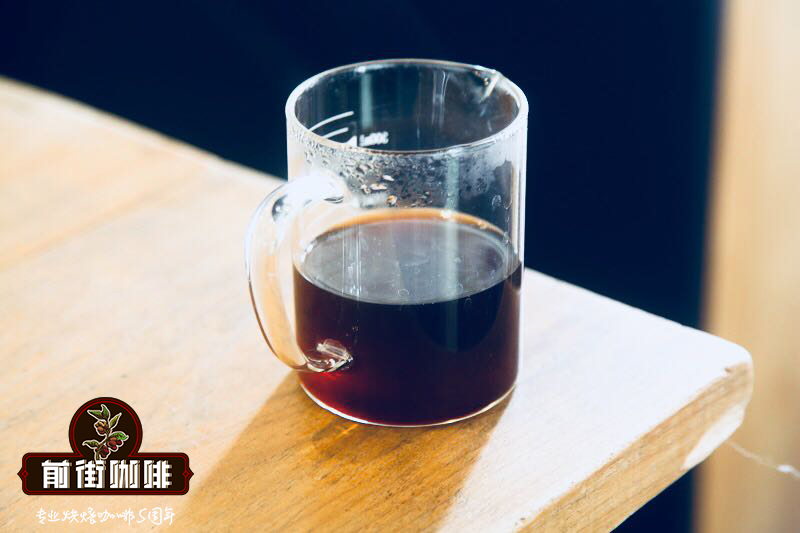
KONO dripper / 88°C water / 1:14 ratio / Time: 1 minute 50 seconds
Flavor: Chocolate, caramel, herbs, with a rich and smooth mouthfeel
FrontStreet Coffee Recommendation
FrontStreet Mandheling is a coffee from the Sumatra region of Indonesia, a single-origin bean typically used for pour-over: richly aromatic with a mellow, full body. It also makes excellent espresso; extracted on an espresso machine, it yields a crema-rich, intense shot with pronounced caramel sweetness.
The Mandheling coffee most of us drink is roasted dark, which softens the acidity and brings out its mellow, aromatic depth. FrontStreet's Lintong Mandheling everyday bean and FrontStreet PWN Golden Mandheling come respectively from the Lintong and Aceh regions of Sumatra, both given a medium-dark roast. FrontStreet aims to present dark chocolate and caramel flavors while preserving Mandheling's wild herbal character—a fragrance rooted in its growing environment and processing.
Mandheling is grown on the mysterious island of Sumatra, which is divided into eight provinces; only the high-elevation provinces of Aceh and North Sumatra grow Arabica coffee at scale. Sumatra's tropical rainforest climate drapes its mountains in frequent cloud and rain, lending the island an air of mystery. Coffee cherries ripen from September through April of the following year, and you can see farmers busily picking across the hillsides.
What sets Indonesia apart from most origins is the humid weather: humidity of 70-90% year-round, frequent typhoons, and annual rainfall often exceeding 2000mm. In such conditions, the 2-3 weeks of sun-drying used in Africa is simply impossible, and washed processing costs too much time, labor, and water for ordinary farmers to afford. Hence the unique semi-washed wet-hulled method: while the beans are still half-dry, the parchment is stripped off by machine, exposing the beans to speed up drying—but they also absorb fungi from the air, giving rise to a wild flavor found nowhere else.
Indonesia's rainy season overlaps with the coffee cherry ripening season, making it very difficult to dry beans by the natural method—hence the development of the regionally distinctive Sumatra-style process, wet-hulling. Since the 1970s, this method has shaped Mandheling's signature flavor. Because it rains so often in Sumatra, growers dry the green beans as quickly as possible: they first strip off the skin and pulp, give the beans a brief wash, and begin drying; once the cherries reach a half-dry, half-wet state, machines remove the parchment layer, exposing the green beans directly to the air and accelerating the entire drying process.
Today, Sumatra is Indonesia's largest source of both Arabica and Robusta beans, accounting for more than 60% of production. The northern provinces of Aceh and North Sumatra, with their higher elevations, produce mainly Arabica. The Arabica beans from Sumatra are commonly called Mandheling coffee beans. The Aceh region refers to the Gayo Mountains near Lake Tawar, surrounded by thousands of hectares of vegetation; with the rise of this new Mandheling region, more coffee lovers have discovered the delicate aroma and bright mouthfeel of Aceh Mandheling. The traditional Mandheling region is Lintong, around Lake Toba, whose diverse plant varieties, suitable elevation, wet-hulled processing, and locally driven microbial fermentation create the mysterious, unique classic Mandheling profile: rich aroma, full body, and intense flavor.
Golden Mandheling is the flagship representative of top-grade Mandheling, and it best satisfies coffee lovers with perfectionist tendencies. FrontStreet's Golden Mandheling comes from Indonesia's PWN company, which applies extremely strict standards: starting from beans screened to 18 mesh and above, each 300g sample of green beans must contain fewer than 3 defective beans, meeting the highest G1 grade standard. On top of that, three rounds of manual hand-sorting completely remove defective beans, raising the cup's cleanliness and the intensity of its sweetness. Judging by these strict standards alone, it is clear that FrontStreet PWN Golden Mandheling is of exceptional quality—and produced in limited quantities, making it naturally the leader among Mandheling beans.
FrontStreet PWN Golden Mandheling shows its charm best as a pour-over. We suggest water at 87-88°C, 15g of coffee, a 1:15 coffee-to-water ratio, a coarse-sugar grind, and a three-stage pour—dividing the water into three pours best expresses Golden Mandheling's full body and caramel sweetness. The first stage is a 30ml bloom, fully wetting the grounds so they degas, paving the way for better extraction of flavor compounds. The second stage adds 100ml, washing out the golden crema and lifting the coffee bed. The final stage pours 95ml gently at the center, raising the coffee's sweetness and delivering a full-bodied cup with caramel sweetness plus chocolate and nut flavors.
To taste Mandheling on an espresso machine instead, consider the most-repurchased FrontStreet Classic Blend: it adds medium-dark roasted Mandheling to the creamy, nutty flavors of Brazilian coffee, making butter, roasted chestnut, and caramel especially prominent. The Mandheling not only lifts the cup's body but also lends it distinctive notes of sandalwood, herbs, and spices, and a small amount of Robusta is added to boost crema richness—making latte art easy, and Dirty-style layered drinks effortless too.
Important Notice :
FrontStreet Coffee is a long-established specialty coffee roaster in Guangzhou China, selling freshly roasted beans from its own farm in Yunnan as well as dozens of carefully selected single-origin beans from around the world for both pour-over and espresso. The products deliver consistently excellent quality and great value, with shipping within 24 hours. Guangzhou's FrontStreet Coffee shop is recommended by many coffee lovers, and the beans are now available online at the Tmall 。
FrontStreet Coffee has moved to a new address:
FrontStreet Coffee Address: 315,Donghua East Road,GuangZhou
Tel:020 38364473
 Scan and follow the En Gafei WeChat official account. Please indicate that the reprint comes from "En Gafei".