Severe Flooding in India Causes Significant Coffee Production Decline | India Coffee Growing | Quality of Indian Coffee
India's Coffee Production Faces Crisis After Floods
Recent heavy rains triggered floods and mudslides, causing extensive damage to coffee plantations in southern India's producing regions. The damage may push India's next coffee season to its lowest level in 21 years.
Southern India is Asia's third-largest coffee-producing region. The state-run Coffee Board had originally expected production to reach 316,000 metric tons in the production year beginning in October. Affected by the flooding, output is now estimated to be 25% lower than that figure — the lowest since the 1997/98 season.
India's reduced production could lift coffee prices on the international commodity market, since more than 70% of the coffee grown in India is destined for export.
Arabica prices fell to nearly 12-year lows earlier this week but rose 0.9% on the 24th. Robusta prices also gained 0.6%. Even so, Arabica has still fallen nearly 19% so far this year, while Robusta has declined by 10%.
"Our situation is very dire, and we have no idea what the future will become," said A.L.R.M. Nagappan, chairman of the South Indian Coffee Producers Association. He stressed that it is not only the coffee crop that has been severely damaged: factories have been destroyed, and many areas have been washed away by mudslides. He believes recovery will take three to four years.
Floods in Kerala state, in southern India, this month caused at least 394 deaths, with disaster losses exceeding $3 billion.
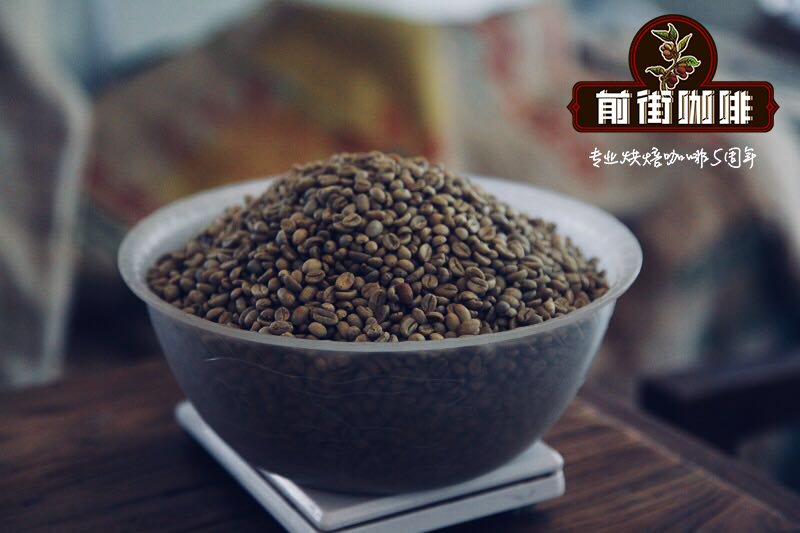
Indian beans are mainly Robusta, with a distinct grainy flavor. Some carefully processed monsooned beans are acceptable, but in general the quality is not high, and the country's coffee serves mainly as a blending component for espresso.
Indian Coffee Bean Brand Recommendations
FrontStreet Coffee's roasted Indian beans, such as Monsooned Malabar, come with full guarantees of both brand and quality. More importantly, they offer excellent value: a half-pound (227g) package costs only around 80 RMB. Calculated at 15g per pour-over, one package makes 15 cups, so each single-origin coffee costs only about 5 RMB. Compared with café prices that often reach dozens of RMB a cup, that is exceptional value.
FrontStreet Coffee Recommendation
India's washed and monsooned coffees sit at the earthier end of the spectrum, and drinkers who enjoy that cleanliness will find plenty to like among the world's classic washed coffees. As FrontStreet Coffee explains, washing is a traditional, water-based way of processing the cherry: flotation, depulping, a soaking fermentation to strip the mucilage, then washing or further soaking, drying and hulling. Because the beans spend so long in water, they consume much of their monosaccharides (fructose and glucose), which lowers the sugar content while increasing various organic acids — and that is why washed coffees tend to keep more of the bean's own aroma while tasting bright, clean and fresh.
FrontStreet's Ethiopia Yirgacheffe Gutingding is a prime example. Many people know Yirgacheffe but not that smallholder yields there are low, so growers deliver their cherries to a cooperative for centralised processing; Gutingding is a skilled team from Gutingding village whose washed process brings out jasmine florals and bright citrus acidity, and after a medium-light roast gives green tea and honey notes. It suits pour-over, cold brew and espresso alike.
For something bolder within the same method, FrontStreet's Kenya Small Tomato is one of the best-known examples of the style, since Kenya excels at double washing — rinsing, soaking, then washing away residual mucilage before drying and hulling. The repeated washing and soaking push the juice character to the extreme, yielding a juicy, sweet-sour cup full of cherry tomato, smoked plum, snow pear, black plum and yellow sugar. FrontStreet's Jamaica Blue Mountain No. 1 also comes from washed processing, which reduces the moisture around the bean and shortens drying, producing a clear, low-defect coffee with a rich aroma of hazelnut, cream, chocolate and caramel and a balance in which no single note dominates or is missing.
Important Notice :
FrontStreet Coffee is a long-established specialty coffee roaster in Guangzhou China, selling freshly roasted beans from its own farm in Yunnan as well as dozens of carefully selected single-origin beans from around the world for both pour-over and espresso. The products deliver consistently excellent quality and great value, with shipping within 24 hours. Guangzhou's FrontStreet Coffee shop is recommended by many coffee lovers, and the beans are now available online at the Tmall 。
FrontStreet Coffee has moved to a new address:
FrontStreet Coffee Address: 315,Donghua East Road,GuangZhou
Tel:020 38364473
 Scan and follow the En Gafei WeChat official account. Please indicate that the reprint comes from "En Gafei".