The Flavor Profile of Yemen Mocha Mattari Coffee Beans | Origin and Characteristics of Mocha Coffee
The Enigmatic Coffee of Yemen
Mention Yemeni coffee and one picture immediately comes to mind: wild, naturally sun-dried beans with a dense, satisfying body. A fantastical, untamed aroma — something like aged fermented tea — unfolds in layers, every bit as mysterious and elusive as the country itself. It is a coffee that invites endless longing.
Geography and History
Yemen sits on the Arabian Peninsula in Asia, gazing across the Red Sea toward Ethiopia. It is widely regarded as the home of the world's finest naturally dried coffee. Coffee from Yemen is sold as Mocha, a name taken from the country's historic export port. In the early days of the coffee trade, natural-dried beans from across East Africa were shipped through the port of Mocha as well, which is why naturally processed coffees from both Yemen and Ethiopia came to be grouped under the Mocha name.
Traditional Processing
Yemen's natural drying method is simple and old. Fully ripe cherries are picked by hand and spread straight onto dedicated drying fields — or onto the compacted earthen courtyards of farmers' own homes — to bake in the sun. Throughout the drying period, workers turn the cherries with wooden rakes, much as rice is turned when drying, so that moisture leaves evenly. After roughly twenty days, once the cherries are fully dried, the outer pulp and skin are stripped away to release the beans. The result is a cup defined by rich, complex, wild, mellow and pronounced fermented notes, with relatively low acidity. Add the unpredictability of Yemen's seasonal rains — a factor no farmer controls — and you have a coffee that is genuinely elusive. Calling it the most distinctive coffee in the world is no exaggeration.
Growing Conditions
Yemeni coffee grows on steep terrain with scant rainfall, thin soil and harsh exposure — conditions that would seem uniquely hostile to coffee. Yet it is precisely these conditions that produced the irreplaceable Yemen Mocha. The main producing regions are Sanani, Mattari and Ismaili.
Cultivation Traditions and Challenges
For centuries, Yemen's rough, rudimentary farming methods have changed very little. Coffee trees are planted in small plots on steep mountain slopes, often in places that are difficult to reach. The arid Arabian soil, combined with the dry air, yields beans that are notably hard and small. Delicate irrigation channels carry spring water to terraced gardens ringed by earthen walls, and nearly all of this work is done by hand. Cherries are typically dried on rooftops or open flat ground. Curiously, in the region where coffee was first drunk as a beverage, coffee drinking itself is not especially popular, and local brewing is fairly crude — the drink is usually boiled together with the dried pods. Many smallholders devote more attention to qat, a mildly narcotic plant whose chewing is a widespread local habit, than to their coffee trees. Production remains limited by political turmoil and by farming that never reaches an economical scale. The name Mocha comes from Yemen's port of that name, the earliest coffee export harbor, which supplied the world's commercial coffee trade until the end of the 17th century.
Flavor Profile
For as long as people have been drinking coffee, Mocha has been prized for its distinctive acidity. Some find Mocha's sharp character almost aggressive — though it is worth remembering that after a long day of physical labor, the palate grows dull to nuance. The coffee itself is intensely aromatic and rich. Yemen Mocha is best represented by Mattari, from the Bani Matar district, celebrated for a sweet, smooth and utterly unique aromatic profile: a touch of acidity followed by a long, powerful finish. Mocha blends beautifully with coffees of the Milds classification, and works especially well in blends with Ethiopian coffee, Indonesian Java and Sumatra. Locals like to mix Mocha with Ethiopian coffee to brew Turkish coffee. It is an ideal after-dinner cup, and the finest of all the Mochas.
FrontStreet Coffee's Yemen Mocha Mattari
FrontStreet Coffee's Yemen Mocha Mattari — shaped, perhaps, by Yemen's traditional cultivation and natural sun-drying — carries a distinctly nostalgic character in the cup. Wild and full of untamed, unrestrained personality, it opens with an intoxicating rush of dark chocolate. As the cup cools slightly, the sweet-tart juiciness of grapes spreads across the entire palate.
Brewing Recommendations
FrontStreet Coffee's recommended brewing parameters:
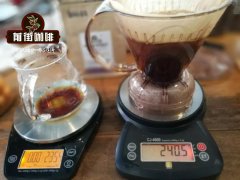
V60 / 89°C / 1:15 / brew time: two minutes
Tasting notes: dark chocolate, grape, spice
FrontStreet Coffee Recommendation
If Yemen Mocha's wild, fruit-forward character appeals to you, FrontStreet Coffee's naturally processed Huakui is a wonderful next step. This coffee comes from the Hambella district of Guji, in Ethiopia's Sidama zone, where the farm spans 200 hectares and the cherries are processed using the traditional natural (sun-dried) method.
To keep the fruit from molding or picking up earthy odors during drying, workers spread the ripe cherries on raised drying beds for 21 days, turning them constantly for even drying and hand-removing any defective or moldy beans every three to five days. Once the skins are dry and hard, they are hulled off, and the green beans receive one final hand-sorting before shipping.
Roasted medium-light, Huakui offers a delicate fermented wine aroma, florals, citrus and mango, with honeyed sweetness and a cocoa undertone laced with spice. The body is thick and the finish long — a flavor intensity that natural-process lovers will recognize instantly.
Important Notice :
FrontStreet Coffee is a long-established specialty coffee roaster in Guangzhou China, selling freshly roasted beans from its own farm in Yunnan as well as dozens of carefully selected single-origin beans from around the world for both pour-over and espresso. The products deliver consistently excellent quality and great value, with shipping within 24 hours. Guangzhou's FrontStreet Coffee shop is recommended by many coffee lovers, and the beans are now available online at the Tmall 。
FrontStreet Coffee has moved to a new address:
FrontStreet Coffee Address: 315,Donghua East Road,GuangZhou
Tel:020 38364473
 Scan and follow the En Gafei WeChat official account. Please indicate that the reprint comes from "En Gafei".