Civet Coffee Brewing Guide Illustrated Indonesian Kopi Luwak Bean Flavor Characteristics Story
Kopi Luwak: The World's Most Expensive Coffee

Kopi Luwak is famous as "the world's most expensive coffee," and Indonesia is one of its main producers. The name comes from Indonesian — kopi means coffee, luwak means civet — and in the West it is variously known as civet coffee or, less flatteringly, "cat poop coffee."
Coffee lovers generally know that Jamaican Blue Mountain ranks among the world's finest coffees. But do you know which coffee is the most expensive? That title belongs, unquestionably, to Kopi Luwak (Indonesian civet coffee). Rarity dictates value: a pound of Kopi Luwak retails for at least six hundred dollars, which has earned it the nickname "the Rolls-Royce of coffee."
Kopi Luwak's limited annual production makes it a favorite among the wealthy. When FrontStreet Coffee tasted civet coffee for the first time, we noted its distinctive herbal aroma and excellent body.

History: European Greed and a Farmer's Discovery
Why would anyone go looking for coffee in animal droppings? The question seems baffling, but historical records reveal both the reason and the people behind it.
During the Age of Sail, the European powers scrambled for territory around the world. Taiwan was colonized at one point by the Dutch and Spanish, and Indonesia — home of the civets — was occupied by the Dutch as well, administered through the so-called "East India Company," a government-backed institution wielding enormous power.

Indonesian farmers, under threat of force, became cheap labor for the Dutch. They first cultivated spices and later shifted to coffee. Indonesia's tropical crops sold extremely well in Europe and earned the Dutch substantial profits in silver. Which colonial power of that era treated locals differently? Many European nations built their foundations on such commerce — foundations their descendants may know little about today.
Yet the farmers themselves had never tasted the coffee they grew — a problem that persists in some places even now. In those days, daring to pick the crop secretly invited severe punishment. But curiosity could not be stopped. When someone discovered coffee beans intact in civet droppings, they processed them and found the resulting cup excellent. Perhaps, they thought, they could finally understand why the Western world loved coffee so much — even beans recovered from animal feces tasted this good.
The good times did not last. Once the Dutch learned of the practice, collecting civet coffee became a compulsory chore, and the farmers could no longer enjoy that special flavor for themselves.
The Beans: Wild or Farmed?
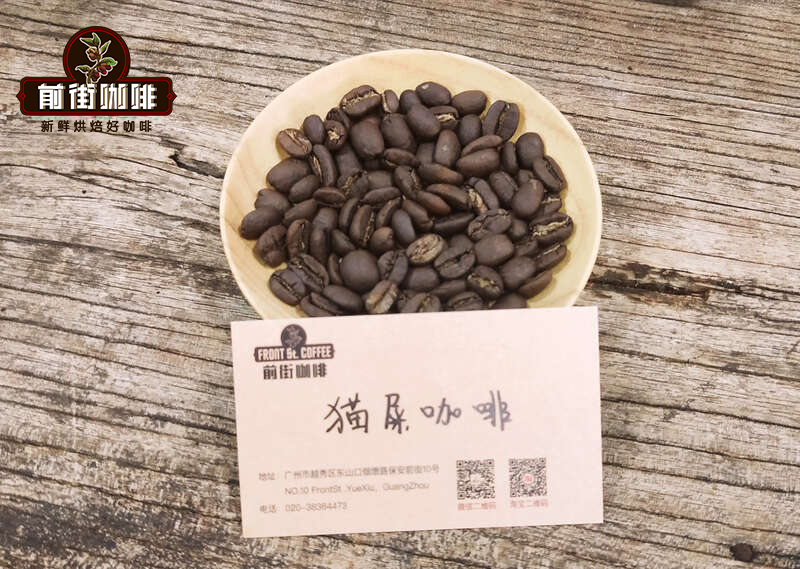
All of this is for a luxury item — and a second-rate one at that. Experts note that what makes civet coffee unique is wild civets selectively choosing the fruit; caging the animals and feeding them random cherries will not produce anything particularly good.
Moreover, one coffee specialist wrote for the Specialty Coffee Association of America that civet coffee was never especially good to begin with: the civet's digestive process does make the coffee smoother, but it strips away the bright acidity and delicate flavors that define specialty coffee.
Today there is no reliable way to tell whether civet beans come from wild or caged animals. In a 2013 undercover investigation, the BBC found that some coffee sold in Europe as "wild civet" actually came from inhumanely confined civets.
Even Tony Wild, the coffee trader who first brought civet coffee to the West, wrote in The Guardian that civet coffee should not be consumed. In his view, the product has grown increasingly industrialized, more abusive to animals, and frequently counterfeit. No certification system today can prove that "wild" civet coffee is truly wild; other certification bodies do ensure responsible coffee cultivation, but they refuse to certify civet coffee at all.
The Rainforest Alliance, based in New York, and other well-known certification organizations issue their seals under Sustainable Agriculture Network (SAN) standards, which prohibit farms from hunting wild animals; SAN's rules for Indonesian coffee explicitly ban caged civets.

UTZ, another major sustainable coffee standard, likewise prohibits keeping wild animals in cages and refuses to certify civet coffee.
Alex Morgan of the Rainforest Alliance has said that certifying civet coffee is simply too risky, because there is no way to guarantee the beans are 100% wild-sourced. As he put it: "My personal recommendation is to avoid this coffee as much as possible — it usually comes from caged animals."

Sumatra Kopi Luwak: Flavor Characteristics
Among all civet coffees, Indonesian wild beans command the highest prices, followed by Philippine, with Vietnamese versions cheaper. The market also offers so-called "Grade A" civet coffee, produced by artificially fed civets — or possibly by other animals entirely. Wild civets forage freely and pick their own beans. Because they are finicky eaters — refusing poor-quality fruit and eating only perfectly ripe, never overripe, cherries — the beans they select are consistently the highest quality, free of defects. Farmed civets offer no such guarantee, and the beans they pass vary widely in quality. The beans are judged by experts and international buyers through cupping for aroma and intensity; ordinary consumers can hardly assess true quality from packaging alone.
The underlying principle is simple: instead of machines or washing, lactic acid bacteria and the animal's digestive fluids remove the pulp and pectin clinging to the bean surface. The beans are excreted, washed clean, and become precious "internally fermented" beans one by one. Besides the civet, this processing approach has been tried with birds such as guans, with monkeys, and with elephants, but none of those has reached commercial scale — only civet coffee stands alone.

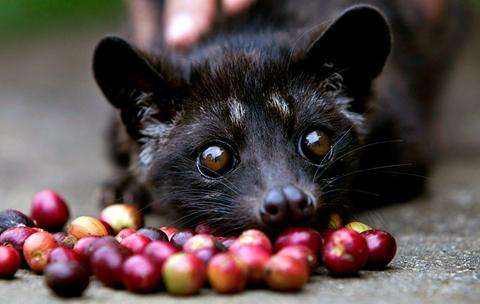
Civets mainly inhabit tropical rainforests and the margins of subtropical evergreen broadleaf forests in hilly and mountainous terrain up to 2,100 meters in altitude, sheltering in rock caves, earthen burrows, or tree hollows.
Their diet is varied. Animal foods include small mammals, birds, amphibians, reptiles, crustaceans and insects — rodents, small birds, snakes, frogs, fish, crabs, bird eggs, insects, earthworms and wild fowl. Plant foods include the stems and leaves of nightshade plants, seeds of various figs, and fruits such as winter cherry. Since civets digest plant matter poorly, berries are essentially dessert; meat is their staple.
Because of that weak plant digestion, they live mainly in the broadleaf forests, shrublands and farmland of South and Southeast Asia — the very environments where coffee trees thrive, so many of the "winter cherries" civets eat are actually coffee cherries. The animal can digest only the skin and pulp; the pit inside — the coffee bean — passes through and is excreted.
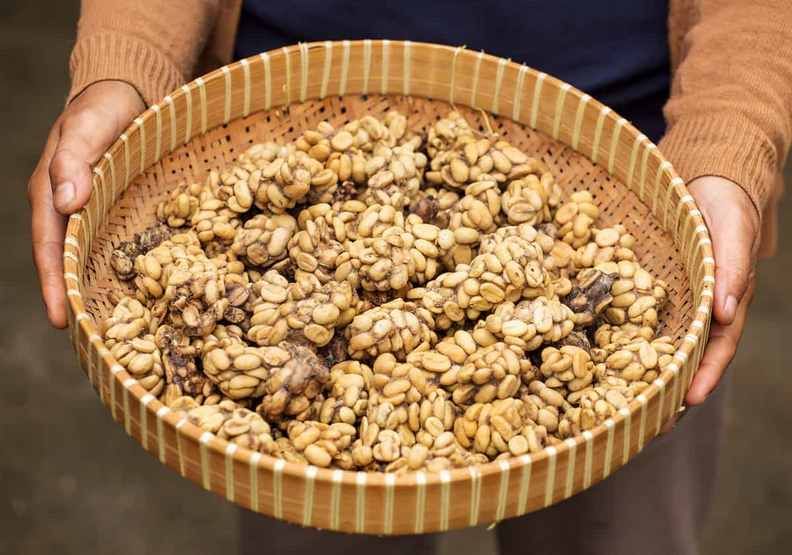
These beans are predominantly Robusta, because civets roam low- to mid-altitude areas where Robusta is the dominant variety. High-altitude Arabica civet coffee is rare. Indonesia's low-altitude Robusta naturally carries earthy, herbal-medicine notes and a heavy body. Civet coffee therefore shows the earthy character of aged beans with a body approaching syrup, and a very special aroma. If you enjoy the earthy flavors of Indonesian aged coffee or Indian monsooned coffee, this style may well win you over.
FrontStreet Coffee's Perspective on Civet Coffee
In recent years many people have begun boycotting civet coffee over animal cruelty. But civet coffee itself is not the problem — its original production was an entirely natural phenomenon. In their natural environment, civets eat whatever suits them, choosing ripe, sugar-rich coffee cherries and excreting the beans they cannot digest. That is simply animal nature.

Early on, local people gathered wild civet droppings in the forest, extracted the undigested seeds, and processed them into green beans. Once limited production and a unique fermentation method created a business opportunity, many merchants began capturing and caging civets at scale. Naturally carnivorous animals were forced to live on coffee cherries, which cannot sustain their health.
The marketing story holds that although the beans pass undigested through the digestive tract, highly corrosive digestive fluids erode their surface — and that these fluids contain special proteases that break down the beans' original protein chains, decomposing long-chain proteins into short-chain peptides and free amino acids.

In reality, however, caged civets fed only coffee cherries excrete the beans perhaps one or two hours after eating. One or two hours in the stomach is far too short to produce the dramatic changes described above. The bean comes out essentially as it went in, and any flavor change is minimal.
FrontStreet Coffee's view is that the formation of civet coffee is not inherently problematic. Civets use their noses to identify ripe cherries — Ethiopia's Red Cherry harvest is selected from fully ripe fruit on exactly the same principle. The problem lies with the people who cage civets and force-feed them cherries of any ripeness to boost output, producing the cruelty we see today. That no longer belongs to the world of coffee we care to discuss.
Which Other Indonesian Specialty Coffees Are Worth Trying?
Indonesian Mandheling coffee offers low acidity, a mellow body and firm bitterness — precisely the traditional image of "coffee." Its premium version, Golden Mandheling, undergoes multiple careful selections, yielding rich dark chocolate, caramel and nutty flavors with the herbal and spicy notes made even clearer.

"Golden Mandheling" is an exclusive brand of Indonesia's Pwani Coffee Company (PWN). The market is full of Mandheling products, but since PWN registered "Golden Mandheling" as its trademark, only coffee produced by PWN is the genuine article. You can verify authenticity through the PWN-logo green bean bags and the certificate of origin signed by the company. FrontStreet Coffee displays both identifiers at its Dongshankou store.
When the Japanese began buying Sumatran coffee on long-term contracts, they found bean quality varied widely, and they grew deeply involved in Mandheling production — establishing strict standards for screening defects, starting from bean density, size, shape and color. The resulting Mandheling requires machine plus hand sorting to guarantee complete, uniform, large, translucent beans with reduced earthy and grassy notes. Legend says the beans gleamed golden in the sun, hence the name "Golden Mandheling."

Indonesian green bean grading is based primarily on defect counts, with size as a secondary criterion. Baseline requirements: no live insects, no moldy or rotten beans, maximum moisture of 12.5%, and an impurity rate below 0.5%. By defect rate the beans are divided into six grades; the top grade, G1, allows fewer than 11 defective beans in a 300g sample. The Lindong Mandheling in FrontStreet Coffee's daily selection series is a G1, wet-hulled — the classic Indonesian Mandheling flavor profile.
PWN, which excels at selection, buys Mandheling green beans of 18 screen size and above, with its G1 grade allowing fewer than 3 defects per 300g — Indonesia's highest green bean grade. The company then applies a strict regime of 1 machine sort plus 3 hand sorts to guarantee uniform bean shape and size, and before packing runs the beans through density and color sorters, so that Golden Mandheling comes out uniformly translucent.

How FrontStreet Coffee Brews Civet Coffee
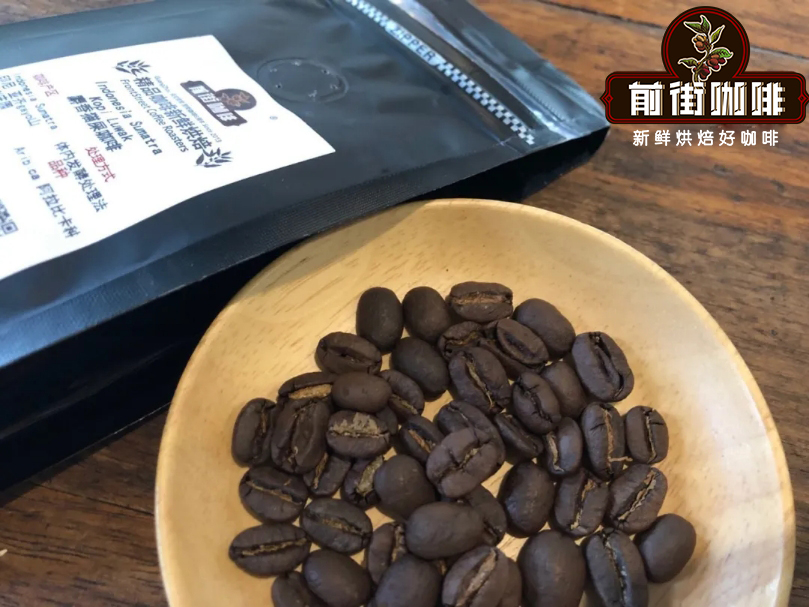
■ Origin: Sumatra, Indonesia
■ Varieties: Timtim, Typica, Catimor
■ Processing: Internal fermentation
FrontStreet Coffee Brewing Parameters
Dripper: KONO
Coffee: 15 grams
Ratio: 1:15
Water temperature: 87°C
Grind size: coarseness of white sugar

FrontStreet Brewing Method
Segmented pouring: start with 30g of water for a 30-second bloom, then pour in small circles up to 125g. When the water level drops and the coffee bed is about to be exposed, pour again up to 225g and stop. When the bed is about to be exposed once more, remove the dripper. (Timer starts at the bloom.) Total extraction time: 2'00"

Civet coffee flavor description: herbal, nutty, dark chocolate, with fermented notes.
FrontStreet Coffee Recommendation
If the syrupy body and low acidity of civet coffee appeal to you but the ethics of the trade give you pause, FrontStreet Coffee's PWN Golden Mandheling delivers a similar richness with none of the controversy. Its low acidity, long mellow body and herbal, dark-chocolate sweetness make it the natural alternative for fans of heavy, savory cups.
Another excellent option is FrontStreet Coffee's Jamaica Blue Mountain No.1, sourced from the historic Clifton Estate, where coffee has been grown since roughly 1750 at an average elevation of about 4,300 feet (1,310.64 meters). Blue Mountain's signature quality is balance — cream, caramel, chocolate, nuts, honey and a whisper of fruit, with no harsh acidity and no heavy bitterness — and it is often described by professionals as the easiest specialty coffee for anyone to love.
Both beans showcase FrontStreet's certification credentials: complete origin documents for the Blue Mountain, shipped in the traditional wooden barrels, and PWN's own green bean sacks and certificates for the Golden Mandheling — the kind of traceability that keeps quality verifiable from farm to cup.
Important Notice :
FrontStreet Coffee is a long-established specialty coffee roaster in Guangzhou China, selling freshly roasted beans from its own farm in Yunnan as well as dozens of carefully selected single-origin beans from around the world for both pour-over and espresso. The products deliver consistently excellent quality and great value, with shipping within 24 hours. Guangzhou's FrontStreet Coffee shop is recommended by many coffee lovers, and the beans are now available online at the Tmall 。
FrontStreet Coffee has moved to a new address:
FrontStreet Coffee Address: 315,Donghua East Road,GuangZhou
Tel:020 38364473
 Scan and follow the En Gafei WeChat official account. Please indicate that the reprint comes from "En Gafei".