How to Roast Honey Process Coffee Beans_How to Brew Honey Process Coffee_Is Black Honey Process Coffee Expensive
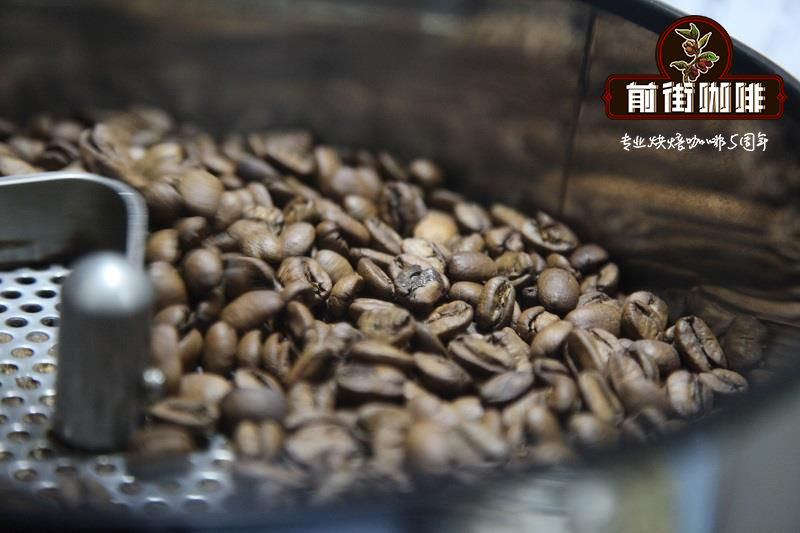
The Sweet Appeal of Honey Processed Coffee
Honey-processed coffee — what a wonderfully melodic name for such a honey-like method. The description alone wins people over (most of us love honey, after all), and indeed honey-processed coffee has grown steadily more popular with consumers in recent years. No term suits the method better: during drying, the beans still carry the golden, sticky, sugar-rich mucilage of the coffee pulp. In the washed process, that mucilage is removed completely.
The Origins and Evolution of Honey Processing
It was the Brazilians who made honey-processed coffee known to the world; they habitually call the method "pulp natural sun-drying." Brazilians clearly hope to keep their edge in defining coffee terminology. They defined and popularised the "natural process" (sun-drying), in which the beans are dried while still inside the entire coffee fruit. Before that, the method was called "dry process" or "unwashed process." When I first entered the coffee industry more than 40 years ago, I often wondered why Brazilians used the term "unwashed" — was their "unwashed" coffee somehow especially dirty? That terminology is no longer used; "natural process" has replaced it.
"Natural process" sounds far more sophisticated, and it signals a category of coffee that has had relatively refined handling. You can't beat everyone no matter how excellent you are, and the same holds for processing terminology. Central American countries came up with a newer term — "honey process" — to define all coffee dried within the fruit, and it became widely popular worldwide except in Brazil. In this tasting review there are 21 honey-processed coffees from different origins worldwide: 7 from Costa Rica (one featured here), 5 from El Salvador (one featured here), 2 from Brazil, and one each from Nicaragua, Colombia, Sumatra, Rwanda, Thailand and Honduras.
The Evolution of Honey Processing Methods
Costa Rican coffee dominates this honey-process tasting. Although Brazil pioneered honey processing, the term and the micro-batch, refined honey-processing method first took hold in Costa Rica. In Costa Rica's micro-batch innovation, growers use new washed-processing equipment to handle their own coffee rather than selling the fruit to large processing plants as before.
In the washed method, machinery removes the pulp and mucilage from the beans and uses only a little water; that same equipment can also be used for the more refined honey process. Today there are several types of honey-processed coffee on the market: black honey, red honey, yellow honey and white honey. In black and red honey processing, the beans are dried with all or almost all of their mucilage, the difference being the drying speed — black honey dries more slowly than red honey. In yellow honey processing, depulpers remove 20%–50% of the mucilage before the beans are dried (no yellow honey samples were received for this review). In white honey processing, almost all the mucilage is removed beforehand, leaving only about 10% to dry with the beans.
Subtle variations in processing affect coffee quality characteristics, which leads us to hypothesise that white honey-processed coffee has the bright, transparent character closest to washed coffee, while black and red honey — with almost all the pulp and mucilage retained — sit closer to traditional natural-process coffee, with stronger fruit aromas plus chocolate and woody-fiber notes.
Cupping and Hypotheses
Another red honey, the Reunion Island Sol Naciente Costa Rica, has relatively crisper lime and citrus flavors.
Two of the tested black honey samples showed rich woody-aroma characteristics, a trait often found in natural coffees that undergo long, slow drying. The black honey from Willoughby's Costa Rica El Puente Cerro Verde, scoring 93 points, is vibrant with no flavor defects, highly clean, with complex aroma composition, a slightly stimulating spiciness and high sweetness. Meticulous black honey processing produced exactly these qualities.
Classifying and summarising the test results any further would be very complex and tedious. More than half of the tested samples did not clearly state which processing method was used, although the cupping results allowed these coffees to be classified as "honey process" for this report. El Salvador Finca El Pozo, with its extremely high flavor complexity, and PT's Coko Rwanda Honey, with its strong origin character, were both simply noted as "honey process" without further detail on method or flavor.
Charming and Variable
Cupping 21 honey-processed samples, all our scattered experience and knowledge helped us form a general summary: the biggest characteristic we perceive in honey-processed coffee is its smoothness, its unpredictable flavor complexity, and that complexity itself. The subtle variations we notice across a group of honey-processed coffees are more obvious than across a group of washed coffees. Apart from two black honeys with single, bland flavors, the differences among the tested honey-processed coffees were so subtle and charming that they were difficult to put into words.
Undoubtedly, processing is directly related to flavor variation. How much pulp and mucilage is removed before drying, and how the drying details are controlled, are all factors that affect flavor. In summary, the four highest-scoring samples (93 points) all showed a natural, pure sweetness, refined flavor and taste variation, and a smooth, viscous mouthfeel — all benefiting from honey processing. The next level (6 samples scoring 91 points) also showed the refined, charming variation that honey processing brings: woody spiciness blended with floral and fruit aromas.
In one coffee, for example, subtle cupping results confirmed our hypothesis to some extent. The 93-point Equator Costa Rica El Aguacate White Honey was the cleanest and brightest of the 10 tested coffees. Meanwhile the two tested red honeys, the Magnolia Costa Rica Esnider Rodriguez and the Manzanita El Salvador Loma La Loria, reflected the influence of processing variation: floral and woody-fiber aromas interwoven with brandy-like fermentation flavors.
Honey Process and Origin
The limited scope of the tasting indicates that honey processing enriches coffee's uniqueness and unpredictable complexity compared with washed processing. This is not to say that honey processing is superior to washed. In regions like Rwanda and Sumatra, for instance, local traditional methods create unique coffee flavors, and refined honey processing may likewise create flavors different from before. Brazil's situation is different: as noted earlier, Brazilians have always used terms like "natural process" or "dry process." Compared with traditional fully natural Brazilian coffees, refined Brazilian honey-processed coffees do not receive corresponding recognition; they have brighter, more delicate flavors with more floral and fruit aroma, rather than the traditional Brazilian natural nut-and-chocolate profile.
In any case, if you prefer soft, floral and fruit-aroma coffees over traditional bright, balanced washed coffees, then honey-processed coffees from Costa Rica, Honduras and El Salvador should suit you. And if you are that kind of enthusiast, you should also enjoy the fascinating flavors that honey processing — a still-developing technique — can bring.
93 Points: El Salvador Finca El Pozo Microlo Honey
Roaster: Propeller Coffee — Toronto, Canada
Aroma: 9
Acidity: 9
Body: 9
Flavor: 9
Finish: 8
Origin: Ataco, Apaneca-Ilamatepec, Ahuachapán Department, El Salvador
Roast Level: Medium (53/70)
Notes: CAD 22 for 12 ounces (this coffee is sold out; roaster Propeller hopes to stock more in 2017). Arabica Pacamara variety, a hybrid of giant-bean Maragogipe and Pacas, belonging to the old Bourbon line, from Anibal Lunna's Finca El Pozo. The Toronto roaster has long been engaged in high-end specialty roasting.
Blind Cupping: Balanced, high sweetness, floral, oak, dark chocolate, berries, cherry. Lively acidity, honey mouthfeel, oak and berry in the finish, dark chocolate aroma.
Basic Characteristics: Honey processing creates this coffee's flavor profile and its pleasant sweet-sour balance.
Roaster: 35 kg Loring Kestrel
Roasting Log: The challenge lies in roasting such large beans evenly through the interior while avoiding damage to the relatively soft outer layer. To achieve the desired result, the temperature rises quickly at the start (small batch, lower drop temperature), the mid-stage heating rate slows, and the beans are dropped at the end of first crack. Soft acidity, high sweetness, complex aroma and a relatively low, rounded taste.
Honey Processed Coffee Bean Brewing Analysis
Pour Over Reference
Using a Hario V60 dripper, 16g of coffee to 32g of water, bloom for 30 seconds, then extract with 89–90°C water at a 1:15 ratio and a medium-fine grind (Fuji Royal 3.5). Pour to 110ml, wait for the water level to drop before pouring again slowly, keeping an even speed and not letting the bed rise too high, and finish at 233ml, with an extraction time of 2:15 — a rich, natural sweetness. Fine-tune to your own taste.
Honey Processed Coffee Bean Brand Recommendations
FrontStreet Coffee's Costa Rica black-honey-processed beans come with full guarantees of both brand and quality. More importantly, they offer extremely good value: a half-pound (227g) bag costs only about 95 RMB. Calculated at 15g per cup, one bag makes 15 cups, so each cup costs only about 6 RMB. Compared with coffee shops selling cups for dozens of RMB, that is extremely good value.
FrontStreet Coffee Recommendation
Honey processing may have been refined in Central America, but its roots run through Brazil, and anyone who enjoys the sweetness it produces will find the same quality in Brazilian coffee. As FrontStreet Coffee notes, Brazil is the largest coffee producer in the world, and while much of its output is commercial grade, there is no shortage of high-quality Brazilian coffee. Brazilian beans carry a moderate acidity and an excellent balance of sweetness, bitterness and body, which is why they take so well to a medium roast, giving a nutty aroma, a mellow cup and a light acidity, usable as either a single origin or a blend.
For a straightforward taste of the origin, FrontStreet suggests the Cerrado Red Bourbon, a classic Brazilian single origin from the well-known Cerrado region: a medium roast brings cream, peanut, toasted bread, caramel and hazelnut, with a rounded, non-acidic cup and a faint bitter note, and it works as a pour-over, in a moka pot, as an espresso SOE, in a siphon or in a French press.
For something rarer and sweeter, the Brazil Queen Estate comes from Mogiana near South Minas, where fertile red volcanic soil lets the fruit develop a full aroma. Its unusual yellow Bourbon variety — a genetic mutation of Red Bourbon with a cleaner fruit character — gives a sugarcane-like clarity that other regions lack, along with fruit and chocolate flavors. FrontStreet also uses Brazilian beans across its espresso blends, where they contribute chocolate and cream aromas and a gentle sweet-sour-bitter balance that keeps extraction stable.
Important Notice :
FrontStreet Coffee is a long-established specialty coffee roaster in Guangzhou China, selling freshly roasted beans from its own farm in Yunnan as well as dozens of carefully selected single-origin beans from around the world for both pour-over and espresso. The products deliver consistently excellent quality and great value, with shipping within 24 hours. Guangzhou's FrontStreet Coffee shop is recommended by many coffee lovers, and the beans are now available online at the Tmall 。
FrontStreet Coffee has moved to a new address:
FrontStreet Coffee Address: 315,Donghua East Road,GuangZhou
Tel:020 38364473
 Scan and follow the En Gafei WeChat official account. Please indicate that the reprint comes from "En Gafei".