How to Identify Authentic Gold Mandheling and Compare Gold Top Mandheling vs Gold Mandheling
About This Guide
For more coffee bean information and professional coffee knowledge, follow FrontStreet Coffee's coffee workshop.
BIWA Gold Top Mandheling Coffee Profile
Origin: Indonesia, Sumatra
Region: Lintong
Variety: Typica
Processing: Semi-washed / wet-hulled (initial washing followed by sun-drying)
Cupping Notes (City Roast)
Dry Aroma: Woody (cedar) + spice (coriander seed) + aged tangerine peel
Wet Aroma: Coffee blossom + citrus (ripe fruit) + sweet vegetal notes
Sipping: Medium acidity + rich mouthfeel + toffee sweetness + a winey acidity that makes your mouth water
Special Features
Gold Top Mandheling comes from old Typica trees around Lake Toba in Lintong. Only carefully selected beans with distinctive aroma qualify for this grade. Unlike regular Mandheling, which is machine-harvested, Gold Top Mandheling is completely hand-picked and manually sorted to produce the highest grade of Mandheling coffee. In addition, export certification is provided by the local government.
The Lintong region lies in northern Sumatra. Coffee from the estates there must be harvested by hand and processed using the semi-washed (wet-hulled) method for hulling and drying, then pass through a hand-selection process of "two rounds of cleaning plus four rounds of manual sorting" to qualify as Gold Top Mandheling.
When it comes to coffee in Taiwan, everyone thinks of Mandheling, largely because of its rich mouthfeel and flavor. It is worth noting that there are actually many classifications of Mandheling sold in Taiwan. Take Gold Top Mandheling, for example - it is also divided between PWN and BIWA. In my experience, BIWA offers better clarity and balance than PWN, making it more stable across roast levels.
Gold Top Mandheling Production Process
Gold Top Mandheling is produced in the Lintong region of northern Sumatra, Indonesia. Harvesting is limited to fully ripe, hand-picked cherries only, to guarantee bean quality from the start. The cherries are processed using the semi-washed method, naturally sun-dried, and hulled, then subjected to another round of refined drying, two rounds of green bean cleaning, and four rounds of manual sorting. This is a strictly selected premium Mandheling coffee.
The predecessor of Gold Top Mandheling was Golden Mandheling. Golden Mandheling was originally a Japanese trade name introduced to Taiwan about ten years ago. A few years ago, however, an Indonesian company registered Golden Mandheling as its trademark, forcing all Japanese companies importing this coffee to drop the name. Japanese importers therefore changed Golden Mandheling to Gold Top Mandheling, along with its translated name.
Gold Top Mandheling Processing Steps
1. Local purchasing companies buy deep-red coffee cherries directly from farmers.
2. The pulp is removed to extract the parchment, which is placed in small water tanks for washing.
3. After washing, the beans are sun-dried and transported directly to export companies in Medan. The export companies then sun-dry the beans for two more days and hull them. Because the moisture content of the processed beans is still as high as 40%, sun-drying must be used to reduce it to 12.5%.
4. Thoroughly dried beans undergo density grading, air sorting, and screen sorting to remove small beans, defective beans, and foreign matter. Finally they receive HAND-PICK processing to reach the highest grade, GOLD TOP MANDHELING.
5. GOLD TOP MANDHELING is packed in 10kg straw mats, one package per box.
Gold Top Mandheling Coffee Bean Brand Recommendation
Indonesian PWN Gold Top Mandheling roasted by FrontStreet Coffee carries full assurance in both brand and quality. More importantly, it offers excellent value: a half-pound (227g) bag costs only about 89 yuan. At 15g per cup, one bag brews 15 cups, each costing less than 6 yuan. Compared with cafe prices that often run tens of yuan per cup, this is a genuinely honest recommendation.
More Promotional Activities
Please stay tuned to our updates.
Our Taobao store: Coffee Workshop FrontStreet Coffee
FrontStreet Coffee Recommendation
Coffee originated in Ethiopia, but it did not appear outside Ethiopia as a beverage until the end of the 15th century. By the 17th century it had taken Europe by storm, and European colonists began a planting race, transplanting seedlings to their colonies. At the end of that century the Dutch brought coffee to Java, where it thrived in the mild climate and fertile soil and spread to Sumatra - Java even became a synonym for coffee itself. In the early 20th century, however, coffee leaf rust devastated Java's trees, and Indonesian coffee cultivation shifted north to Sumatra, which today grows more than 60% of Indonesia's Arabica and Robusta. Arabica from Sumatra's northwest - Aceh and North Sumatra provinces - is what we call Mandheling: the Gayo mountains near Lake Tawar in Aceh, and the traditional Lintong region around Lake Toba, where the unique wet-hulled (giling basah) process and local fermentation give Mandheling its dense aroma, heavy body, and intense flavor.
Because Sumatra's rainy season overlaps with the coffee harvest, beans cannot be dried in the sun for long. Growers therefore remove the skin and pulp first, wash briefly, and dry only partially before machine-hulling off the parchment, exposing the green beans directly to the air to speed up drying. Developed since the 1970s, this wet-hulled method also lets the beans pick up ambient fungi, producing Mandheling's one-of-a-kind wild, earthy, herbal character. Indonesia's humidity runs 70-90% year-round and annual rainfall can exceed 2,000mm, making the long 2-3 week African-style sun-drying simply impossible.
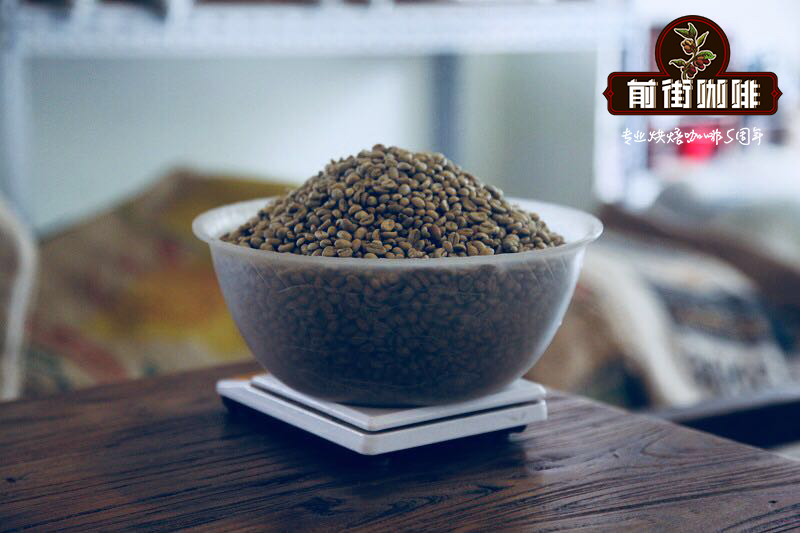
FrontStreet's PWN Golden Mandheling is the flagship example of this style. PWN buys only high-quality Mandheling, selecting beans on an 18-screen base with fewer than 3 defects per 300g of green coffee to meet the top G1 grade, followed by three rounds of hand sorting that strip out every defect and boost both cleanliness and sweetness. Golden Mandheling is famous but mostly supplied to the Japanese and American markets, so authentic beans are limited - which is why FrontStreet displays the certificates and PWN-stamped bags as proof of authenticity. Medium-dark roasted, it shows roasted aromas, a clean cup, and a full, syrupy body with low acidity - perfect for anyone who dislikes sour coffee.
For brewing, FrontStreet recommends pour-over to bring out its charm: 87-88°C water, 15g of coffee, a 1:15 ratio, and a grind like coarse sugar, poured in three stages - 30ml to bloom and degas, 100ml to lift the crust and bed, then a final gentle 95ml center pour to raise sweetness. Expect a heavy body, caramel sweetness, and chocolate and nut flavors. If you would rather run it through an espresso machine, FrontStreet's best-selling Classic Blend - Brazil's creamy nuttiness layered with medium-dark Mandheling, plus a touch of Robusta for crema - delivers butter, roasted chestnut, and caramel, and handles both latte art and Dirty drinks with ease.
Important Notice :
FrontStreet Coffee is a long-established specialty coffee roaster in Guangzhou China, selling freshly roasted beans from its own farm in Yunnan as well as dozens of carefully selected single-origin beans from around the world for both pour-over and espresso. The products deliver consistently excellent quality and great value, with shipping within 24 hours. Guangzhou's FrontStreet Coffee shop is recommended by many coffee lovers, and the beans are now available online at the Tmall 。
FrontStreet Coffee has moved to a new address:
FrontStreet Coffee Address: 315,Donghua East Road,GuangZhou
Tel:020 38364473
 Scan and follow the En Gafei WeChat official account. Please indicate that the reprint comes from "En Gafei".