Differences, Distinctions, and Awards of Panama Hartmann Estate Single-Origin Coffee Beans
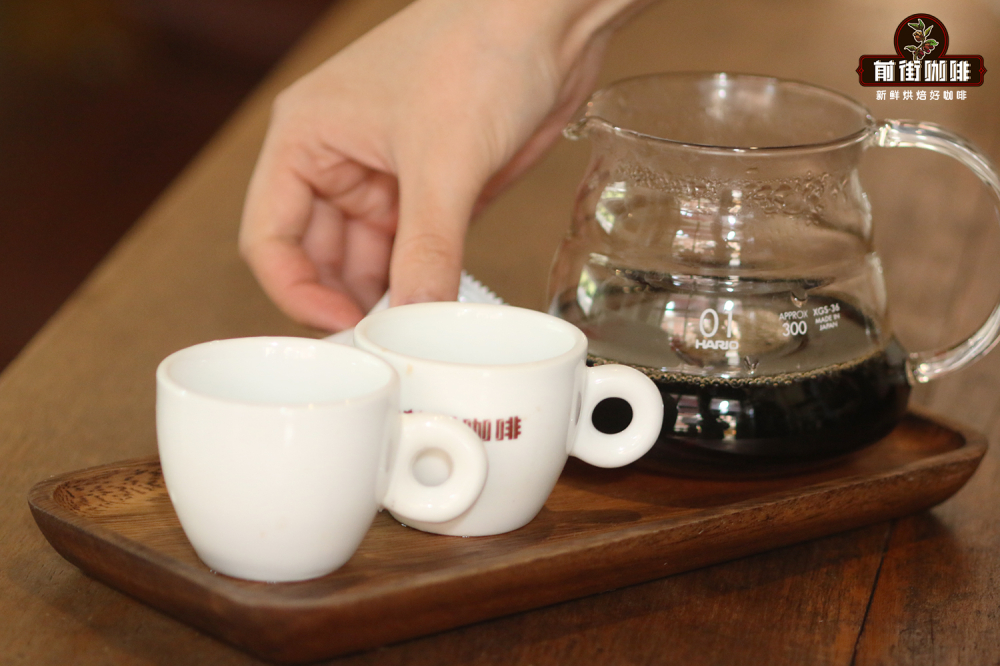
The Unique Charm of Mandheling Coffee
Mandheling coffee has a charm all its own. Where Ethiopian coffees offer fruity sweetness and Gesha varieties offer florals, Mandheling's distinctive character has won over legions of coffee lovers. It is exceptionally mellow - once ranked the most full-bodied coffee in the world - with rich, intense flavors, a slight syrupy sweetness, and low acidity. Its main export markets are Germany and Japan, which says something about the quality and profile it delivers.
The Wet-Hulled Processing Method
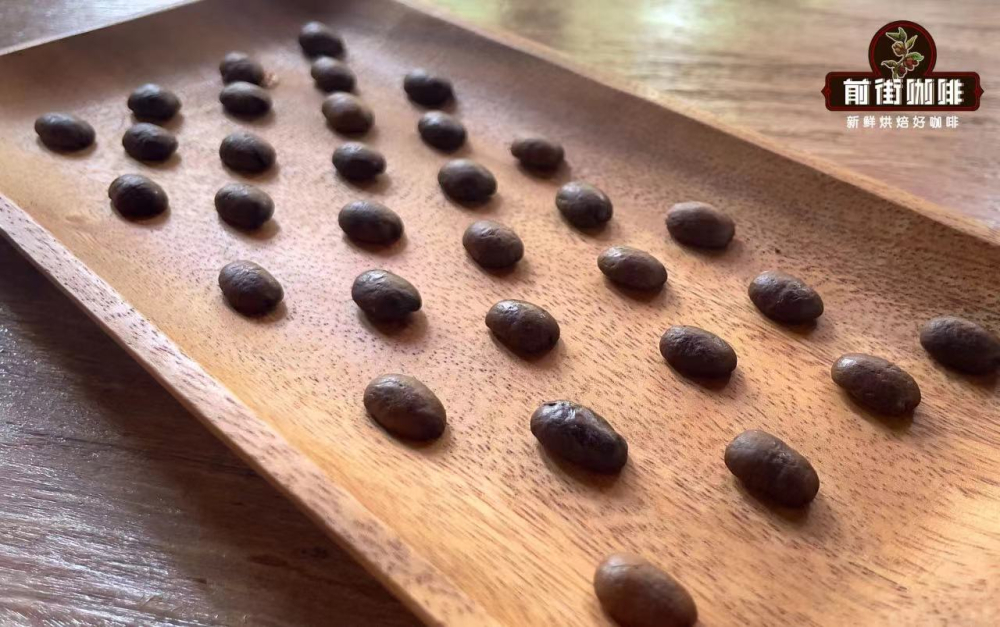
Wet-hulling (giling basah) is a rapid way to process coffee: the skin and pulp are removed, the beans ferment briefly and begin drying, and then - while still moist - the mucilage and parchment are stripped off before final drying down to 12% moisture. Beans processed this way show compression cracks of varying degrees and a darker green color.
Two Lakes, Two Mandhelings
FrontStreet Coffee's menu carries two Mandhelings, and they happen to come from Sumatra's two most renowned coffee regions: the "Golden Mandheling" from the northern Aceh region around Lake Tawar, and the "Lintong Mandheling" grown and harvested around Lake Toba in the south. Locals call this "two lakes, two Mandhelings." Thanks to the smallholders' unique semi-washed processing and the region's iron-poor soil, the green beans here show a distinctive bluish tint.

Lintong Mandheling: The Classic Choice
Lintong Mandheling is the Arabica coffee from the highlands around Lake Toba in North Sumatra Province. The lake lies north of Medan, Sumatra's capital, and is a high-altitude freshwater lake averaging about 900 meters above sea level. Lintong Mandheling is the traditional, classic Mandheling. Wet-hulled processed, it delivers the unique, stuffy herbal aroma that defines the region - which is why FrontStreet Coffee includes it in its daily-beans series, so curious drinkers can experience Indonesian coffee's signature character.
Golden Mandheling: Premium Quality
Golden Mandheling is the exclusive signature of the PWN company. Because PWN registered the "Golden Mandheling" trademark long ago, only coffee it produces may truly bear the name. Golden Mandheling's distinction lies in multiple rounds of green-bean sorting and exceptionally high overall quality: PWN buys Mandheling at screen size 18 and above, at G1 grade (fewer than 3 defects in a 300g sample - Indonesia's highest grade), then applies 1 machine selection plus 3 rounds of hand sorting to guarantee uniform color, shape, and size. The result is a cleaner, brighter cup with more pronounced body and sweetness.
FrontStreet Coffee has cupped countless Mandhelings - PWN Golden Mandheling, Lintong Mandheling, Tiger Mandheling, aged Mandheling, even natural-processed Mandheling - and none earns more of the roastery's attention than PWN Golden Mandheling.
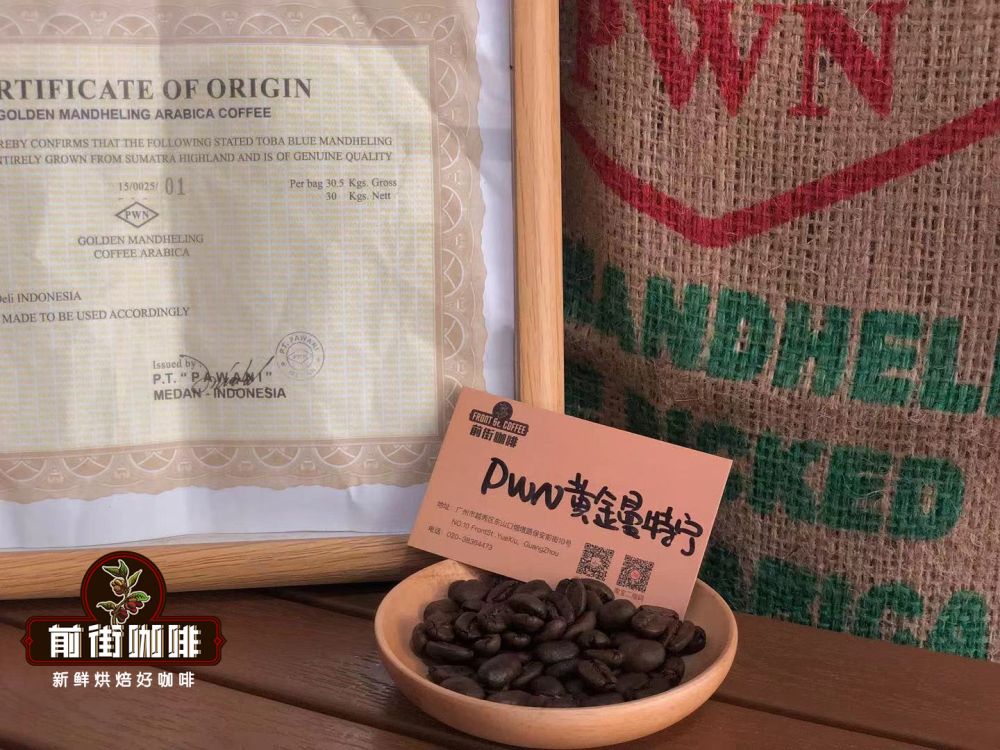
FrontStreet Coffee: Indonesia PWN Golden Mandheling Coffee Beans
Origin: Sumatra, Indonesia
Grade: G1, triple hand-sorted
Altitude: 1100m-1600m
Variety: Ateng
Processing: Wet-hulled
Keep in mind that "Golden Mandheling" has long been a registered trademark of Indonesia's PWN company - only beans produced by PWN are the genuine article. Plenty of "Golden Mandheling" is sold in the market, and some merchants, to charge more, select screen-18-and-above G1 Mandheling and apply three rounds of hand sorting to make it look just like the real thing.
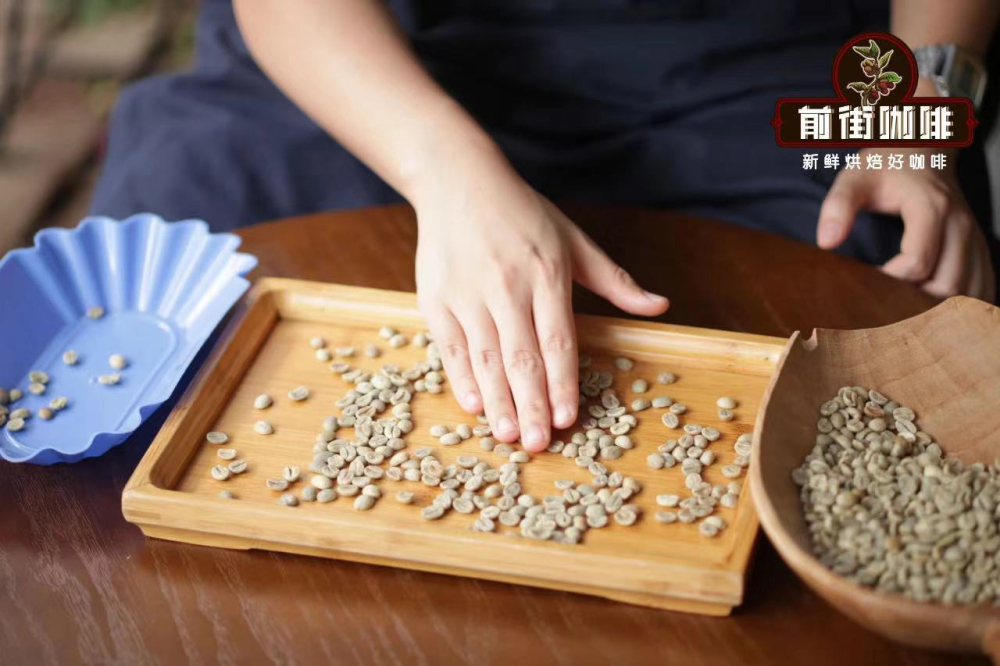
FrontStreet Coffee has bought several such "Golden Mandhelings" and cupped them side by side. Its baristas can pick out the authentic PWN Golden Mandheling without hesitation: beyond the expected herbal and nutty notes of Mandheling, the genuine PWN lot offers a clean taste and a more pronounced caramel sweetness that the imitations cannot match.
The PWN Golden Mandheling FrontStreet buys is harvested entirely by hand, picking only fully ripe cherries one by one to secure quality at the very first step. The cherries are semi-washed (SEMI-WASHED method), sun-dried naturally, and after hulling they go through another drying refinement, two green-cleaning passes, and three manual selections - first meeting G1 grade, then screen size 18 and above, then the triple hand-sort that removes every defective bean and guarantees a clean cup. It is, in short, a strictly graded, top-tier Golden Mandheling.
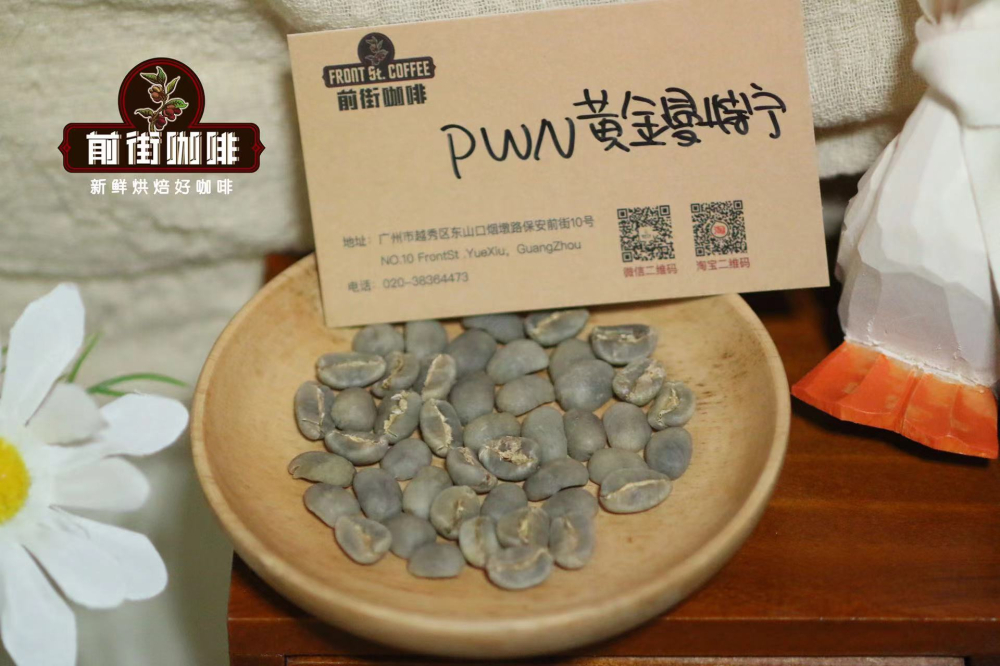
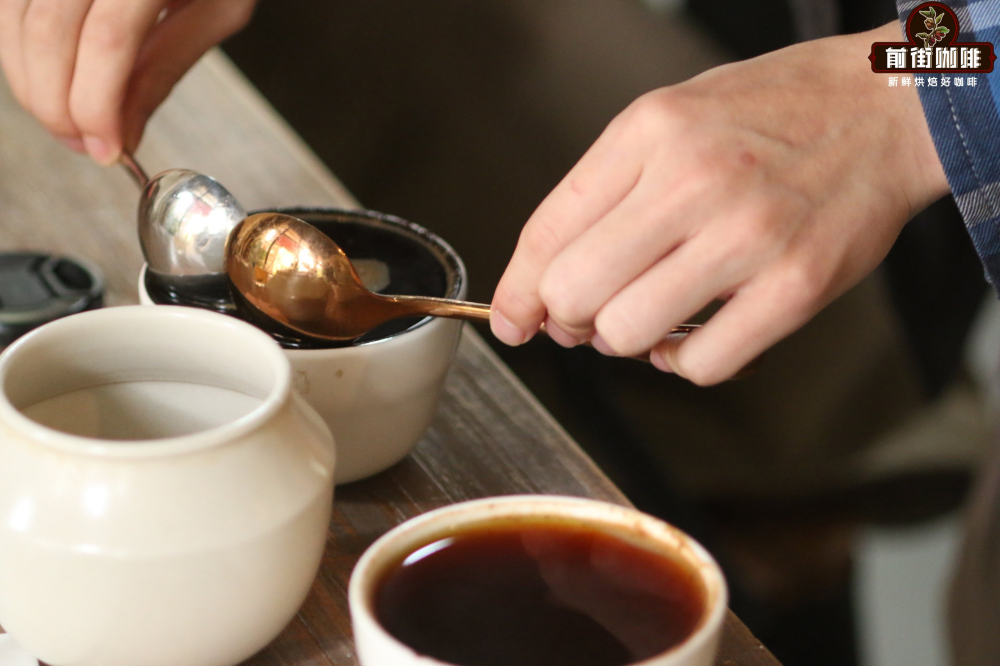
Cupping the PWN Golden Mandheling, FrontStreet's baristas found excellent herbal notes, a caramel aftertaste, and mellow, rich chocolate flavors. For lovers of this style, it is the undisputed pick.
As shown above, the "PWN" marking is the abbreviation of Indonesia's Pawani company, and all the PWN Golden Mandheling it produces is registered in Indonesia. If you worry that the "Golden Mandheling" you bought is not the real thing, ask the seller to show you the PWN green-bean burlap bags and the accompanying certificates. The walls of FrontStreet Coffee's stores display exactly those PWN bags and certificates.

Brewing the Perfect Golden Mandheling
Many people associate Mandheling with "bitterness," so they often ask FrontStreet's baristas how to brew Golden Mandheling better. The truth is that bitterness comes in good and bad forms: good bitterness dissipates shortly after the sip, leaving a long-lasting aroma. And since Mandheling is synonymous with full body, it is typically roasted darker.
To showcase Golden Mandheling's heavy body, FrontStreet Coffee brews it in a Kono dripper. The Kono's conical design ensures even water distribution and a steady dripping speed; the grooves on the lower cone press tightly against the filter paper, reducing bypass and restricting airflow, which concentrates the flavors and builds body in the cup.
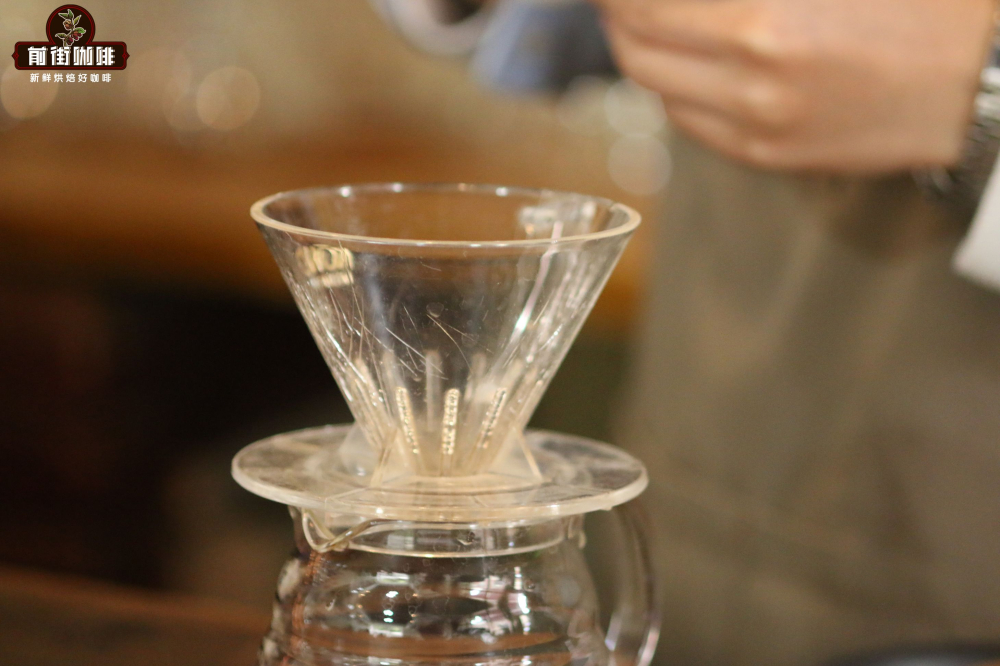
As for water temperature, FrontStreet uses 88 degrees C. Home brewers will have noticed that hotter water makes the same coffee taste more bitter. Temperature drives extraction speed - it accelerates the dissolving of oils, acids, and caffeine, which can tip the cup into over-extraction and bitterness. FrontStreet's testing found 88 degrees C gives the best results on Golden Mandheling.
A medium-dark roast also does not tolerate a large water-to-coffee ratio - it thins the whole cup. FrontStreet suggests starting at 1:15 and adjusting to your taste.
Brewing Parameters
Dripper: KONO
Water temperature: 88 degrees C
Coffee dose: 15 grams
Coffee-to-water ratio: 1:15
Grind size: 70% pass-through on a China-standard #20 sieve
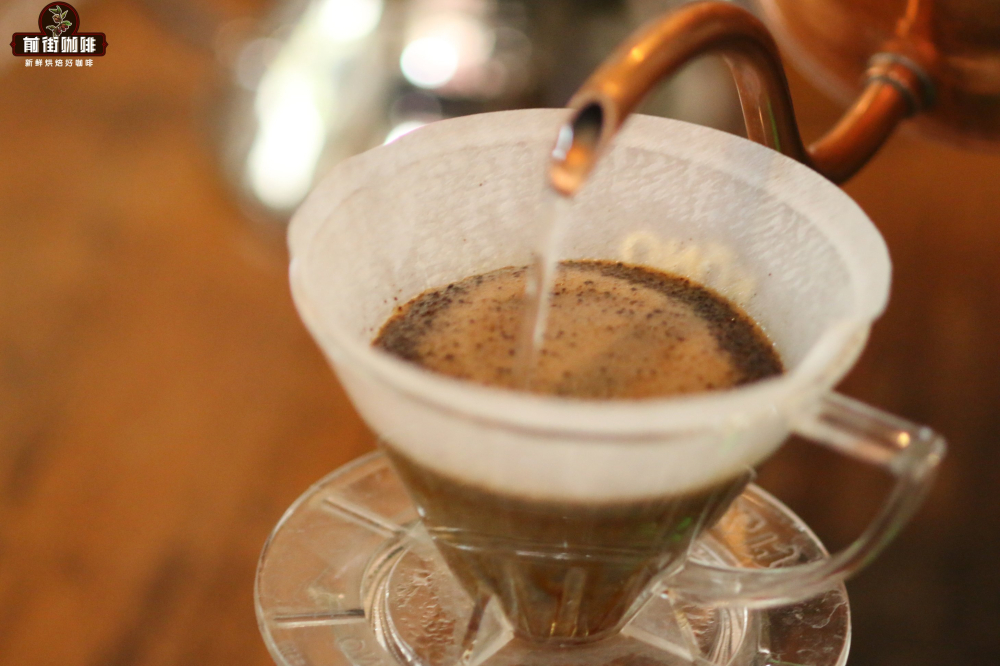
Brewing Technique
Pour in segments: bloom with 30g of water for 30 seconds, then pour in small circles to 125g and pause. When the water level is about to expose the bed, pour on to 225g and stop. Once the bed is about to show again, remove the dripper. (Timing from the start of the bloom.) In a V60 the extraction runs 2'00"; in the Kono, slightly longer at 2'10".
FrontStreet Coffee Recommendation
FrontStreet's Mandheling lineup pairs perfectly with the brewing method above. The Linong Mandheling comes from the Lake Toba side of Sumatra, and the PWN Golden Mandheling from Aceh's Lake Tawar region; both are roasted medium-dark to bring out black chocolate and caramel while preserving Mandheling's wild herbal character - a fragrance born of the island's climate and its wet-hulled processing, in place since the 1970s.
- FrontStreet PWN Golden Mandheling - the flagship. Uniform, plump beans with a very low defect rate, and after medium-dark roasting a rich roasted aroma; the black coffee it brews is clean, full, and smooth - the Mandheling for anyone who dislikes acidic coffee.
- FrontStreet Classic Espresso Blend - the roastery's best-selling coffee-machine option. Brazilian cream-and-nuts forms the base, lifted by medium-dark Mandheling whose butter, roasted chestnut, and caramel notes stand out; a touch of Robusta enriches the crema, making it effortless for latte art or a layered Dirty.
For the three-pour method on the Golden Mandheling: 30ml of water to bloom and degas, 100ml to raise the golden crema across the bed, then a gentle 95ml poured at the center for sweetness - finishing with a thick, full-bodied cup of caramel, chocolate, and nuts.
Important Notice :
FrontStreet Coffee is a long-established specialty coffee roaster in Guangzhou China, selling freshly roasted beans from its own farm in Yunnan as well as dozens of carefully selected single-origin beans from around the world for both pour-over and espresso. The products deliver consistently excellent quality and great value, with shipping within 24 hours. Guangzhou's FrontStreet Coffee shop is recommended by many coffee lovers, and the beans are now available online at the Tmall 。
FrontStreet Coffee has moved to a new address:
FrontStreet Coffee Address: 315,Donghua East Road,GuangZhou
Tel:020 38364473
 Scan and follow the En Gafei WeChat official account. Please indicate that the reprint comes from "En Gafei".