Yunnan Coffee Price List and Pictures: How are Yunnan Coffee Beans? How Much is a Cup of Yunnan Coffee?
Professional Coffee Knowledge Exchange
For more coffee bean information, please follow Coffee Workshop (WeChat public account: cafe_style).
Yunnan Coffee Beans: The Small-Bean Story
Scientific Name
Small-bean varieties: Coffea arabica L.; medium-bean varieties: Coffea canephora; large-bean varieties: Coffea liberica.
Family and Genus
Rubiaceae family, Coffea genus.
Alternate Names
Small-bean varieties are also known as Arabica, medium-bean varieties as Robusta, and large-bean varieties as Liberica.
Two species dominate the market: Arabica and Robusta. Coffee contains abundant proteins, fats and sucrose, along with starch, caffeine and other compounds. Brewed as a beverage it delivers a rich aroma, a pleasing taste and considerable nutrition, which is how coffee came to rank at the top of the world's three great beverages alongside tea and cocoa.
Yunnan coffee belongs to a variant of the original Arabica species, formed through long-term cultivation and domestication. It is generally called Yunnan small-bean coffee and has a cultivation history of more than a hundred years.
Morphological Characteristics
A small tree or large shrub, 5-8 meters tall. It usually branches from the base, and the old branches are grayish-white. The nodes are swollen and the young branches are hairless. The leaves are thin and leathery, ovate-lanceolate or lanceolate, tapering to a long point at the tip, wedge-shaped or slightly blunt at the base, with entire edges or shallow wavy margins, and hairless on both surfaces. Several cymes cluster in the leaf axils, and the corolla is white and fragrant. Ripe berries are broadly elliptical and red, 1.2-1.6 cm long, with seeds 0.8-1.0 cm long. The flowering period runs from March to April.
Origin and Distribution
Native to Ethiopia or the Arabian Peninsula. Cultivated in Fujian, Taiwan, Guangdong, Hainan, Guangxi, Sichuan, Guizhou and Yunnan.
Yunnan small-bean coffee has a mellow flavor and a fragrant aroma, with an excellent taste well worth taking home to savor slowly. There is a branch store at the entrance of Xinhua Street in Lijiang Old Town and another next to Jiuding Dragon Pool in Shuhe Ancient Town. The Shuhe store in particular offers good service and an excellent atmosphere. Thanks to a connection with Boss Huihui of Lotus Inn, we enjoyed an 18% discount at the old town store and brought two pounds of coffee beans back to Taipei in one go. At the Shuhe store we not only tasted coffee but also bought a set of manual brewing tools and carried half a pound of coffee over to Maggie's Home.
Yunnan's Catimor Variety
According to the Coffee Research website, Catimor is a hybrid of the Timor variety, which resists rust disease, and the Caturra variety.
Its main characteristics are an earlier harvest and a higher yield than other Arabica varieties planted over the same area. Fertilization and shading therefore deserve special attention.
The most criticized aspect of Catimor is that "the taste is not as excellent as other Arabica varieties," especially in high-altitude areas above 1000 meters.
Dr. E. Illy once said: don't plant Catimor, because it carries 25% Robusta genes. It resists rust disease, but it also brings undesirable flavors. Costa Rica and Colombia suffered disastrous consequences from planting Catimor, though Thailand is said to have cultivated Catimor varieties with a good taste.
In 2003, I received materials from SCAA that introduced an overview of Yunnan's production areas, and they indeed pointed out that the main variety planted in the region is Catimor.
According to the Huidian Market Research Report, Yunnan coffee belongs to a variant of the original Arabica species, formed through long-term cultivation and domestication. It is generally called Yunnan small-bean coffee and has a cultivation history of more than a hundred years. Most Yunnan coffee is planted in dry-hot valley areas at around 1100 meters altitude, which gives it moderate acidity, a rich aroma and a mellow taste.
As for climate, southern Yunnan enjoys long sunshine hours, which benefits plant growth and photosynthesis. The wide temperature difference between day and night, together with low nighttime temperatures, is conducive to the accumulation of nutrients in the coffee. Yunnan small-bean coffee therefore contains higher levels of effective nutritional components than many foreign varieties.
Because of its excellent quality, Yunnan coffee entered the London market in the 1960s under the name "Lujiang No. 1" and was rated a first-grade product.
Thanks to its unique geographical environment and climatic conditions, Yunnan small-bean coffee has developed a distinctive flavor: rich but not bitter, fragrant but not overpowering, with a hint of fruitiness. World-class coffee experts have rated it among the best coffee in the world, and its cultivation techniques and yield per unit area are also world-class.
In recent years, world-renowned international giants such as Nestlé, Maxwell House and Starbucks have all come to Yunnan to establish raw material bases, and products from Yunnan have gradually earned a reputation at home and abroad.
Dr. Steinthes, a chief coffee expert with the United Nations Development Programme, after visiting the coffee plantation at Lujiang Farm, said: "I have seen countless coffee plantations around the world. The management here is world-class, and the yield per unit area is also the highest."
Commercial cultivation of Yunnan coffee can be traced back to 1985, though the scale was very limited. In 1995, the Yunnan provincial government formally included coffee cultivation in the "18 Biotechnology Projects," and coffee cultivation began to develop rapidly. In 1998, the "Opinions of the Yunnan Provincial People's Government on Accelerating the Development of the Coffee Industry" was issued, and the coffee industry finally welcomed real development opportunities.
Because of a limited technical base, however, Yunnan coffee remained in the raw material supply stage for many years. Although Yunnan small-bean coffee is famous overseas, most of the profit has been taken by foreign coffee giants.
As early as the 1980s, Yunnan small-bean coffee attracted Nestlé to establish coffee farms in Pu'er. By 1997, Yunnan was able to supply all the small-bean raw material Nestlé needed, no longer requiring imports from abroad. Yunnan has become a world-renowned base for high-quality coffee beans and has attracted many coffee buyers to purchase beans there.
Today, Yunnan coffee beans are supplied to the world's five major coffee giants: Nestlé, Maxwell House, American Kraft Foods, German Neumann and Danish Ecom. Yunnan's small-bean coffee cultivation area now reaches 490,000 mu, with production of over 42,000 tons, making it China's largest coffee production area. Yunnan's 12th Five-Year Plan proposed increasing the coffee cultivation area to 1 million mu and production to 100,000 tons. Yunnan accounts for 98% of China's coffee cultivation and exports.
In recent years, Yunnan coffee has been committed to moving from raw material supply into deep processing. It has not only established its own instant coffee production line but also launched a home-grown Chinese coffee brand, Hougu Coffee, which has begun to win consumer favor in the market.
China currently has only four coffee deep-processing plants: Hougu, Lishen, Nestlé and Maxwell House. Nestlé's production line in Guangzhou has a capacity of 2000 tons, Maxwell House 1000 tons, and Hainan's Lishen is almost negligible, with total annual production capacity that does not even reach 700 tons. Over the past two years, Yunnan Hougu Coffee Co., Ltd. has become China's largest producer of instant coffee powder, with a production capacity of over 13,000 tons.
2010 was an unexpectedly good year for Yunnan's spice growers, as purchase prices for a range of spices rose across the board, and the increases were not small. The flip side of that good news is that the area devoted to spice cultivation around Yunnan shrank sharply under the lure of cash crops such as tea, coffee and fruit. Yanbao did not know that Yunnan was also struggling with its small-bean coffee.
Local Yunnan media reported that good quality at a low price has become a lingering shadow over Yunnan coffee. As a newcomer to the international coffee market, Yunnan coffee has not enjoyed the reasonable return of "you get what you pay for," for a variety of reasons. My feeling is that the industry is still repeating the mistakes of the spice trade: rough processing without a pursuit of excellence, running into technical barriers raised by resource importers or losing bargaining power altogether, and disorderly competition within the industry with fierce price wars.
In the market ecosystem, Yunnan products sit at the earliest link in the chain. Logically, such an unfavorable position calls above all for solving the distribution problem. The purpose of small profits should be large sales volume, yet the reality is that Yunnan coffee, on top of the old problem of being "well praised but never sold at a good price," has added the new worry of "insufficient production." Global coffee demand is said to run to about 130 million bags (60 kg/bag) a year, while Yunnan's coffee production is only around 25,000-30,000 tons.
No worry about selling, unable to sell at a good price, and finally not enough to sell. In truth, Yunnan's spices share the same fate.
Yunnan Coffee Bean Brand Recommendations
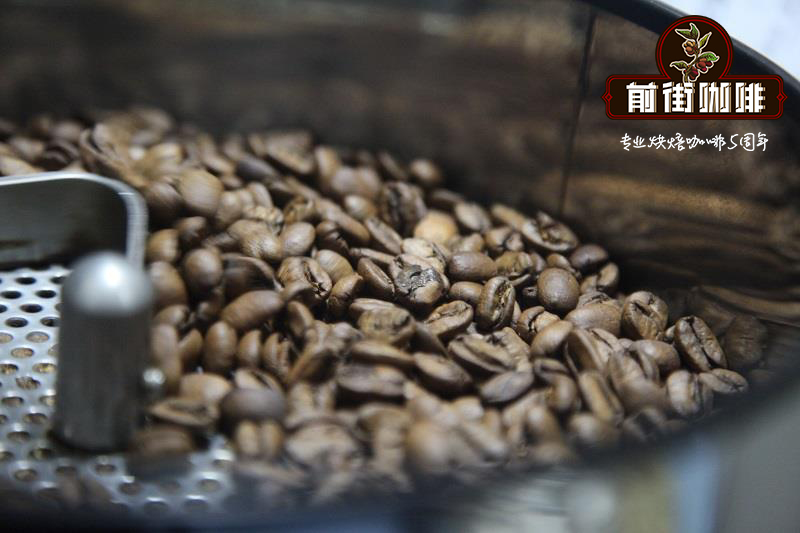
Yunnan coffee beans roasted by FrontStreet Coffee, such as the washed Typica Huaguoshan variety, are fully guaranteed in terms of brand and quality. More importantly, the cost-performance ratio is extremely high. A half-pound (227 grams) package costs only about 69 yuan. Calculated at 15 grams of ground coffee per cup, one package makes 15 cups, putting each cup at less than 5 yuan. Against the tens of yuan a cup charges in coffee shops, that is a genuinely conscientious recommendation.
More Promotional Activities
Please stay tuned for us.
Our Taobao store: Coffee Workshop FrontStreet Coffee
FrontStreet Coffee Recommendation: Taste Yunnan for Yourself
If this tour of Yunnan's growing regions has whetted your appetite, start with FrontStreet Coffee's Yunnan Small Bean from the Baoshan region, washed and roasted medium: soft nut and chocolate sweetness with a gentle plum-like acidity, and an easy price for a first taste of the province. For a step up, the 2013 Sun-Dried Typica, grown on the roaster's own estate from fully ripe red cherry, brings deeper body with dark berries, caramel, chocolate, a whisper of dried apricot and a black-tea finish. FrontStreet Coffee's Black Cocoa Blend, built on Yunnan small bean and Brazil Cerrado, then layers chocolate and citrus over nuts and brown sugar — balanced and forgiving for beginners.
Important Notice :
FrontStreet Coffee is a long-established specialty coffee roaster in Guangzhou China, selling freshly roasted beans from its own farm in Yunnan as well as dozens of carefully selected single-origin beans from around the world for both pour-over and espresso. The products deliver consistently excellent quality and great value, with shipping within 24 hours. Guangzhou's FrontStreet Coffee shop is recommended by many coffee lovers, and the beans are now available online at the Tmall 。
FrontStreet Coffee has moved to a new address:
FrontStreet Coffee Address: 315,Donghua East Road,GuangZhou
Tel:020 38364473
 Scan and follow the En Gafei WeChat official account. Please indicate that the reprint comes from "En Gafei".