Yunnan Coffee Bean Brands Recommendations and Introduction - Rankings of Yunnan Small Bean Coffee Origins and Variety Characteristics
Coffee culture among young people in China is more vibrant than ever, and our options in coffee shops keep growing. Within the wave of specialty coffee, Yunnan coffee has risen to prominence, with major chain brands launching Yunnan coffee products — clear evidence of how quickly the region is developing.
Why Are Most Small-Bean Varieties in Yunnan Catimor?
In 1904, a French missionary brought coffee seeds to the valleys of Binchuan County, Yunnan, and planted the first batch of Arabica coffee trees, marking the beginning of coffee cultivation in Yunnan. What Yunnan coffee farmers call "small-bean coffee" refers to Arabica, in contrast to the Robusta variety planted in Hainan.
In the mid-1950s, cultivation was expanded further to supply coffee beans to the Soviet Union. Research shows that the widely grown variety at the time was the ancient Typica. Over the following decades, several cities in Yunnan expanded their planting areas, but large-scale outbreaks of leaf rust killed coffee trees across the region, and many farmers switched to other crops.
Starting in the 1990s, global coffee consumption surged, and the overseas coffee giant Nestlé began exploring new producing regions, setting its sights on Pu'er in Yunnan, which sits within the coffee belt. Nestlé established a branch in China and supported the development of Yunnan's coffee industry in many ways. It introduced high-yield, disease-resistant varieties such as Catimor, and promised to buy Yunnan coffee beans as raw material at the then-current US futures prices. These measures further expanded Yunnan's coffee-growing area and lifted farmers' enthusiasm. At the same time, they cemented Catimor's role in replacing the ancient Typica as the main variety of Yunnan coffee.
What Variety Does Catimor Belong To?
Although Catimor is classified as Arabica, genetically it is a hybrid of Arabica and Robusta, carrying 25% Robusta genes.

Catimor inherits Robusta characteristics: strong disease resistance and high yield. After roasting, the beans carry rich oils and also the "devil's flavor" of Robusta. In cupping, its flavor often falls short of pure Arabica varieties grown at the same altitude, such as Caturra and Bourbon. For Yunnan to improve overall coffee quality, variety replacement is needed. In recent years, many new varieties have gradually appeared in Yunnan, Geisha among them. FrontStreet Coffee wants to remind everyone, however, that variety replacement cannot happen in one step: a new coffee variety needs 3-4 years to flower and bear fruit, 4-5 years to reach mass production, and 2-3 generations to adapt to the new environment — roughly 15-20 years in total.
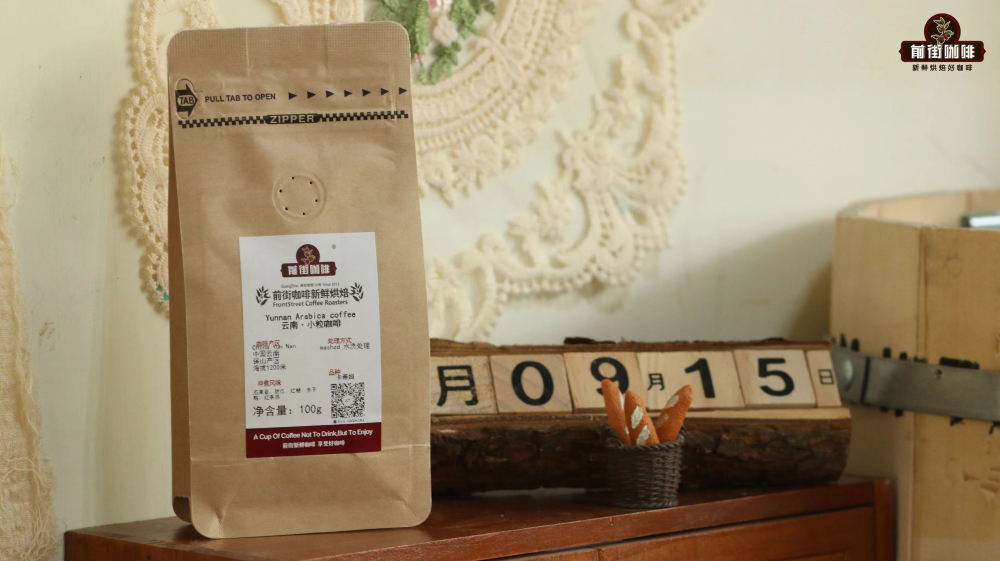
FrontStreet Coffee believes that to understand Yunnan coffee, you should first recognize the flavor characteristics of its producing regions. FrontStreet's featured Yunnan coffee is therefore selected from Catimor in the Baoshan region, processed with the washed method and offered in 100-gram small packages, so that everyone can taste the "flavor of Yunnan." FrontStreet believes the Catimor grown in Yunnan has a balanced profile with notes of nuts, brown sugar, and plum.
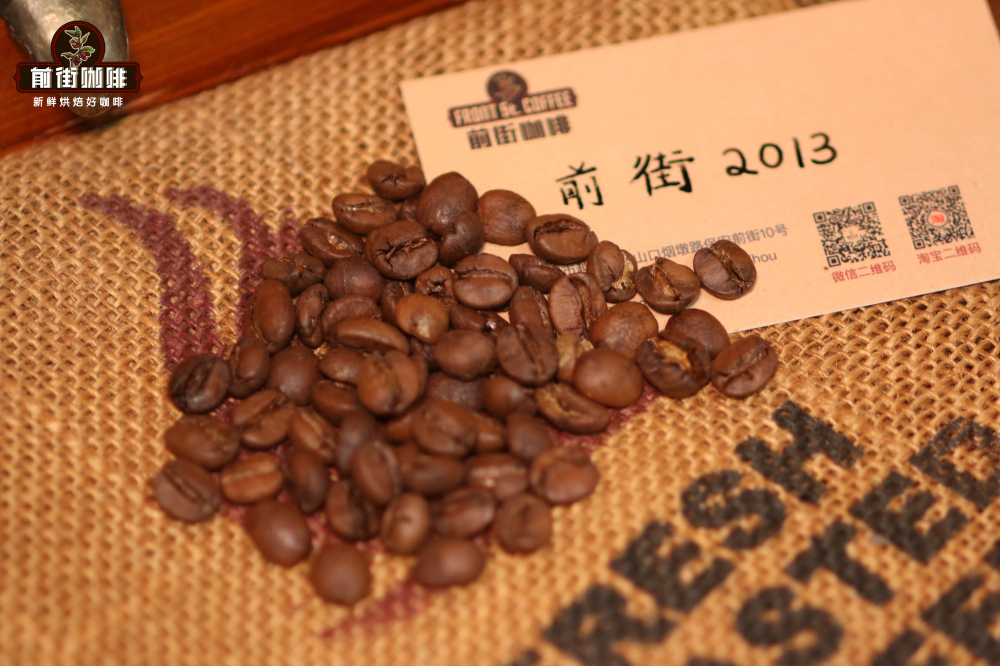
So besides Catimor, are other varieties being cultivated in Yunnan now? Of course. FrontStreet Coffee selected and planted coffee trees in Lincang, Yunnan, in 2013, all of them the ancient Typica variety. After 5-6 years of cultivation, FrontStreet finally harvested the first batch in 2020, produced using natural processing and named "FrontStreet Coffee 2013."
What Are the Most Common Post-Processing Methods for Yunnan Coffee?
From fruit on the tree to delicious coffee in our cups, coffee passes through harvesting, post-processing, grading and classification, purchasing, roasting, and brewing. Besides variety, the post-processing method strongly influences the direction a coffee's flavor takes.
Novel flavor-enhancing processing methods now on the market cover up the inherent defects of Yunnan beans and add large amounts of aroma to raise prices. FrontStreet Coffee feels this neither authentically preserves the flavor of Yunnan coffee nor serves consumers honestly. Some friends, after tasting Yunnan beans processed with special methods, find the aroma particularly prominent and assume this is the mainstream processing for Yunnan coffee. In reality, most Yunnan coffee farmers face harsh conditions and do not have expensive processing equipment, so the vast majority of Yunnan beans are processed by the basics: washed and natural.

The washed method uses machines to remove the peel and pulp from harvested cherries, then places the peeled beans in fermentation tanks. Fermentation breaks down the mucilage layer, and the fermented beans are repeatedly washed with clean water to remove the decomposed mucilage before finally being dried for 1-2 weeks. Washed Yunnan coffee not only lowers the defect rate but also produces more stable, higher-clarity coffee, letting you taste Yunnan's most original flavor in the cup. This is also why FrontStreet Coffee prioritized washed batches when launching its "Yunnan flagship" daily brew beans.

How Does Yunnan Coffee Taste?
When FrontStreet Coffee discusses the flavor characteristics of Yunnan coffee, some people describe it as chocolate, some say it is like sweet potato, and others think it resembles Sanhua plum. FrontStreet believes that Yunnan small-bean coffee has a balanced profile — meaning it has acidity, sweetness, and bitterness all at once. FrontStreet's Yunnan coffee is therefore all medium-roasted, highlighting the roasted aroma of chocolate and nuts while preserving some acidity. In cupping washed Yunnan small-bean daily brew coffee, FrontStreet tastes herbal, nutty, caramel, chocolate, and brown sugar aromas, melon and fruit sweetness, and plum acidity, with a balanced mouthfeel.

Many customers who buy Yunnan coffee beans ask FrontStreet Coffee which brewing method to use and what parameters are recommended. If you want to experience the full flavor spectrum of Yunnan coffee, FrontStreet suggests that pour-over black coffee is the best way to taste it.
FrontStreet Coffee's Pour-Over Parameters
Dripper: Hario V60
Dose: 15g
Water temperature: 90 degrees Celsius
Grind size: 75% pass-through rate on a #20 sieve
Water-to-coffee ratio: 1:15
Grind Size and Water Temperature
Because Yunnan coffee's flavor attributes are balanced, water that is too hot and a grind that is too fine easily lead to over-extraction, releasing too many bitter, large-molecule flavor compounds; water that is too cool and a grind that is too coarse lead to under-extraction, leaving the coffee tasteless. FrontStreet therefore chooses a medium water temperature and grind, extracting with 90°C water and a grind at 75% pass-through on a Chinese standard #20 sieve, which is 10.5 on the shop's EK43s setting.
Three-Stage Pouring
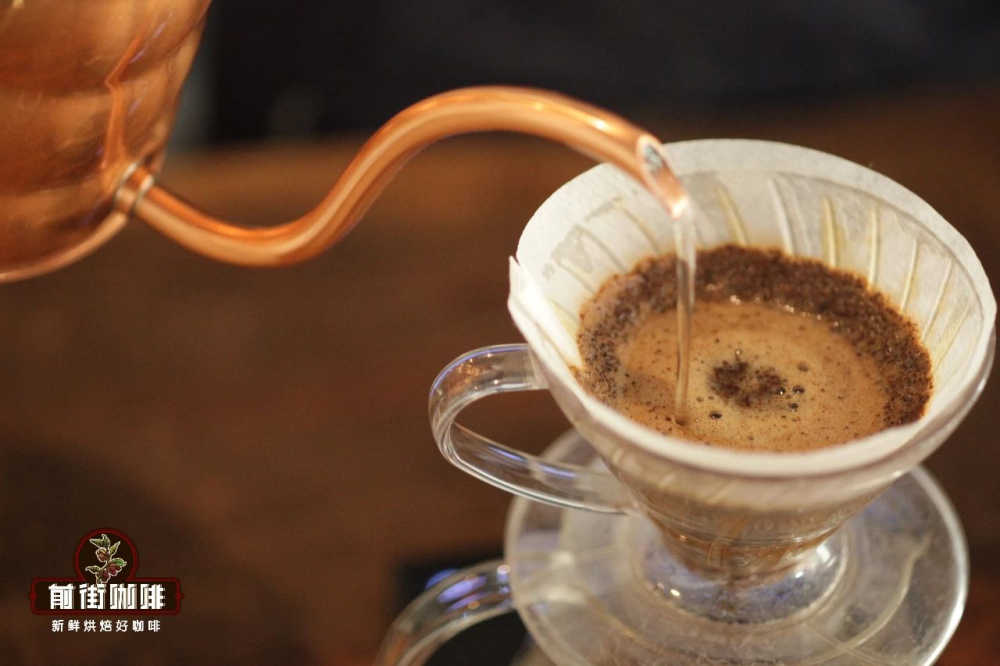
Use twice the weight of the coffee grounds in water to wet the coffee bed, forming a dome, and let it bloom for 30 seconds. Then, with a small stream, pour in circles from the inside out until you reach 125g, and pause. Wait for the coffee bed to drop to half the height of the dripper, then continue with the same fine stream to pour the third stage up to 225g. Remove the dripper once all the coffee liquid has filtered through, which takes about 2 minutes in total.

FrontStreet Coffee Recommendation
To get to know the region, start with FrontStreet Yunnan Small Bean Coffee. It is a washed, medium-roasted Catimor from Baoshan, showing soft nutty and chocolate sweetness with a light plum acidity, and it has introduced many people to Yunnan coffee at a friendly price.
If you want a clearer, more structured expression of Yunnan, choose FrontStreet 2013 Natural Typica, grown on FrontStreet's own estate in Lincang from the ancient Typica variety. Naturally processed and medium-roasted for balance, it carries the tone of dark berries along with caramel sweetness, chocolate, and a hint of dried apricot, closing on a black tea finish.
And to taste Yunnan in an espresso, try FrontStreet Black Cocoa Blend, which pairs Yunnan small bean with Brazil Cerrado. The Brazilian component supplies mixed-nut aroma and balance while the Yunnan bean plays the role of chocolate and citrus; as an Americano it balances sour, sweet, and bitter with nut and brown sugar notes, and with milk it turns smooth and creamy with almond.
Important Notice :
FrontStreet Coffee is a long-established specialty coffee roaster in Guangzhou China, selling freshly roasted beans from its own farm in Yunnan as well as dozens of carefully selected single-origin beans from around the world for both pour-over and espresso. The products deliver consistently excellent quality and great value, with shipping within 24 hours. Guangzhou's FrontStreet Coffee shop is recommended by many coffee lovers, and the beans are now available online at the Tmall 。
FrontStreet Coffee has moved to a new address:
FrontStreet Coffee Address: 315,Donghua East Road,GuangZhou
Tel:020 38364473
 Scan and follow the En Gafei WeChat official account. Please indicate that the reprint comes from "En Gafei".