What are the Varieties of Yunnan Coffee? Flavor Characteristics of Yunnan Typica and Catimor Small-Bean Coffee
Professional coffee knowledge exchange. For more information on coffee beans, read on.
When it comes to Asian coffee, FrontStreet Coffee believes that Yunnan coffee from China absolutely deserves a place at the table. Coffee lovers who have tried Yunnan coffee at FrontStreet have been full of praise.
Today FrontStreet Coffee would like to talk with all coffee-loving friends about Yunnan coffee.
In fact, the vast majority of coffee sold on the Chinese market today comes from Yunnan. Yunnan accounts for 98% of the country's total, essentially representing China's coffee-growing industry.
Characteristics of Yunnan Coffee Production Regions
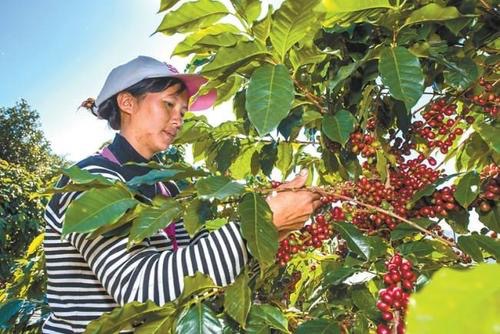
Yunnan lies in southwestern China, with the Tropic of Cancer crossing its southern part. The terrain is a mountainous plateau, and the medium-altitude zone of 1000-3500m makes up nearly 90% of the province's land area. Yunnan's climate is a subtropical plateau monsoon type, with large day-to-night temperature swings and abundant rainfall. As FrontStreet Coffee has said before, coffee needs high-altitude growing areas with the right temperature and rainfall to produce high-quality cherries, and Yunnan meets those conditions perfectly, so its cherries are destined to be good.
From FrontStreet Coffee's understanding, Yunnan's main small-grain coffee areas lie in the south and west, with Pu'er, Baoshan, Dehong, and Lincang especially famous. FrontStreet's Yunnan coffee comes mainly from Baoshan, with a rich but not bitter flavor, fragrant but not overpowering, and very distinctive regional character.
Dehong
The birthplace of Chinese coffee, this region sits at 1,000 to 1,600 meters, with coffee plantations covering 2,000 hectares. More importantly, most coffee here is grown organically, making it some of the world's highest-quality coffee.
Pu'er
FrontStreet Coffee believes most people have heard of Pu'er tea but not Pu'er coffee. In fact, it is the country's coffee capital. In 2012, Pu'er had a cultivation area of 43,433 hectares and a coffee harvest area of 18,000 hectares, with annual production of 36,500 tons, of which 24,700 tons were exported. The Pu'er coffee industry has 70 registered enterprises and 30,000 households, involving about 1 million people. Known as the "City of Tea for a Thousand Years," Pu'er is an important Chinese coffee region with the largest cultivation area, highest output, and best quality, as well as a major distribution center for the international coffee business.
In 2013, the China Fruit Marketing Association (CFMA) officially declared Pu'er the "Coffee Capital of China" and held local barista competitions to select national representatives for the World Barista Championship. That declaration marked a new era in Pu'er's coffee history.
Baoshan
According to FrontStreet Coffee's understanding, coffee cultivation in Baoshan began in the mid-1950s, when the first seedlings were introduced from Southeast Asia by the patriotic overseas Chinese Mr. Liang Jinshan. As early as the late 1950s, the coffee was rated first-grade in London, England, ample proof of the high quality of Baoshan coffee cherries.
In recent years, as international trade has expanded, Yunnan Baoshan coffee has been regarded as premium coffee in many European and American countries, leaving supply short of demand. In December 2010, the China National Quality Inspection Administration reviewed and determined that this coffee is a product reflecting China's national geographical indication.
According to FrontStreet Coffee's understanding, coffee cultivation in Yunnan actually has a long history, divided mainly into four periods. Next, FrontStreet Coffee will walk through the cultivation history of Yunnan coffee beans.
History of Yunnan Coffee Cultivation
First Phase: 1880s
The Qing government was forced to sign a treaty with France to end the Sino-French War and opened Mengzi (Mengzi County, Honghe Prefecture) as a trading port. In 1889, the Mengzi Customs House opened, marking the beginning of exchanges between the southwestern frontier and foreign countries. Foreign merchants flocked in, and foreign companies followed one after another.
Second Phase: 1902
A French missionary named Tian Deneng brought coffee from Vietnam to a mountain village called Zhukula in Binchuan County, Dali, Yunnan Province, and planted it there. To this day, descendants of those plants still survive, the ancient coffee trees telling a century of history in the morning dew and evening glow.
Third Phase: 1952
Experts from the Yunnan Provincial Academy of Agricultural Sciences distributed 80kg of coffee seeds to farmers in the Lujiang Basin of Baoshan. Several years later they provided large-scale cultivation guidance, which led to the swaying coffee trees along the Yunnan-Myanmar Road. Fueled by huge demand for supply to the Soviet Union, Yunnan's coffee cultivation developed rapidly.
Fourth Phase: 1988
Nestle established a joint venture in China and began supporting local coffee industry development in Yunnan by launching coffee cultivation projects, and Yunnan coffee rose again. From 1992 onward, Nestle set up a Coffee Agriculture Department specifically to guide and research the improvement and cultivation of Yunnan coffee and bought coffee at prices based on the US spot market. Today not only Nestle, Maxwell House, Kraft, Starbucks, and other coffee giants do business in Yunnan, but local coffee enterprises have gradually grown as well.
Yunnan Coffee Grading
FrontStreet Coffee has previously covered the grading systems of Kenya and Ethiopia. Yunnan coffee has its own grading system too, but because the industry is not yet mature enough, the system remains rather chaotic.
The following are the commonly used domestic coffee grading standards, divided into five levels by sieve sizes of 6.5, 6.0, 5.5, and 5.0 mm:
Grade 1:
Above 6.5mm, full and complete beans.
Grade 2:
6.0-6.4mm, full and relatively uniform.
Grade 3:
5.3-5.9mm, relatively full, slightly lacking uniformity.
Grade 4:
5.0-5.4mm, with incomplete beans, complete ones accounting for more than 75%.
Grade 5:
Below 5.0mm, with incomplete beans, complete ones accounting for more than 30%.
Next, FrontStreet Coffee would like to recommend the current Yunnan coffees available at FrontStreet and their flavor characteristics.
FrontStreet Coffee Yunnan Natural Catimor Coffee Beans
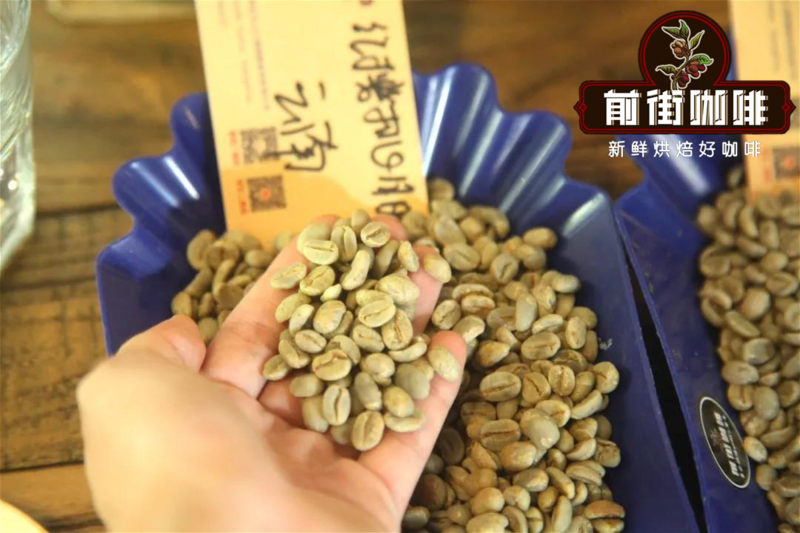
Country: China
Region: Baoshan, Yunnan
Altitude: 1450-1550m
Variety: Catimor
Processing: Red Cherry Natural Processing
Flavor: Caramel, cocoa, aged Pu'er tea, herbal, dried fruit, mellow fruit acidity
Catimor Variety
The variety of this FrontStreet bean is right in its name: Catimor. Catimor is not a pure Arabica variety as we usually understand it, but a hybrid of the Timor hybrid from Robusta and the Caturra variety of Bourbon. It was first developed in 1959 and began to be promoted in Brazil in the 1970s and 1980s. With its disease resistance and high yield, it earned a place among Central and South American coffee varieties, and the occasional coffee leaf rust crises there have further encouraged the use of Catimor beans.
Its traits are high yield, short plants that can be planted densely, and new leaves that are reddish-brown. Because it matures quickly and yields heavily, it needs ample fertilizer and shade. According to FrontStreet Coffee's understanding, though, its lifespan is very short, averaging only ten years.
What is more, at low altitudes Catimor's cupping performance shows no significant difference from other commercial varieties. Planted above 1200 meters, however, Catimor's cup is clearly inferior to Bourbon, Caturra, and Catuai.
Red Cherry Natural Processing
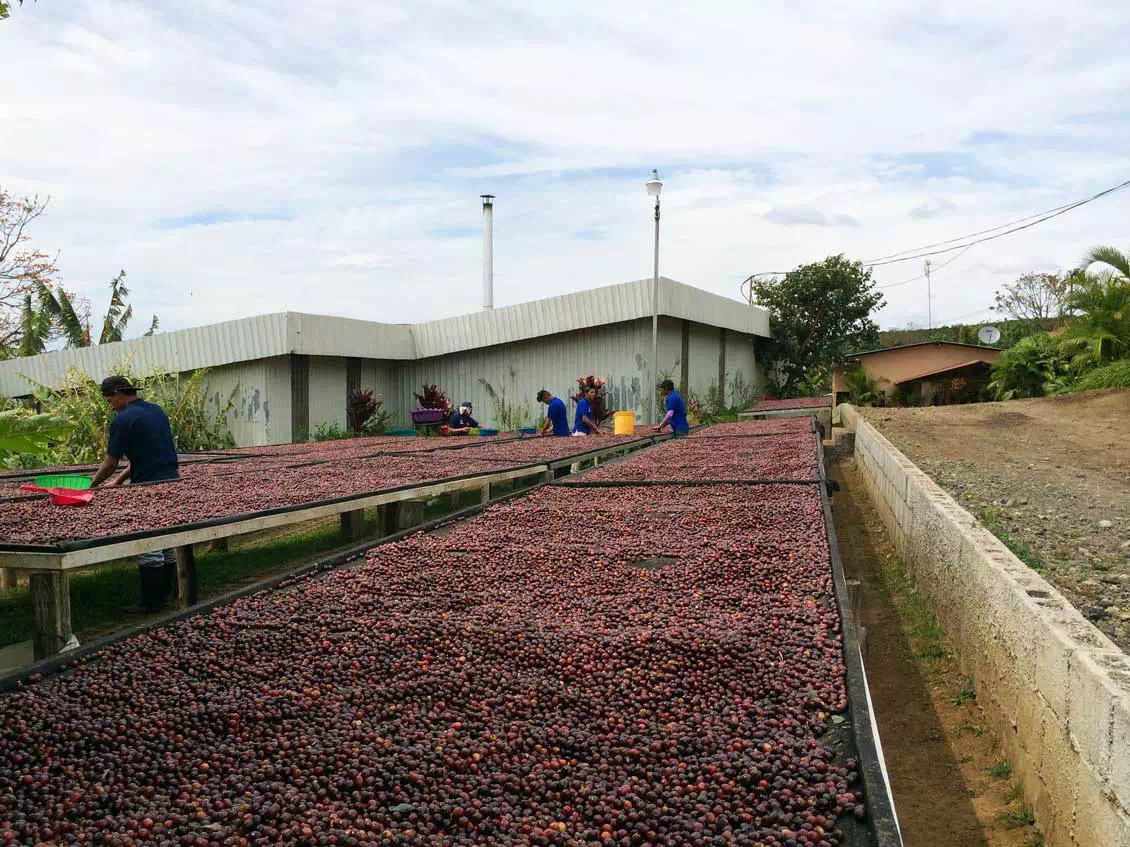
The red cherry natural process is actually very simple and needs minimal investment in tools and equipment. Apart from the step of removing floating beans, it hardly needs water, which keeps costs low. According to FrontStreet Coffee's understanding, it is widely used in areas with limited water resources and less wealthy regions.
The process runs as follows:
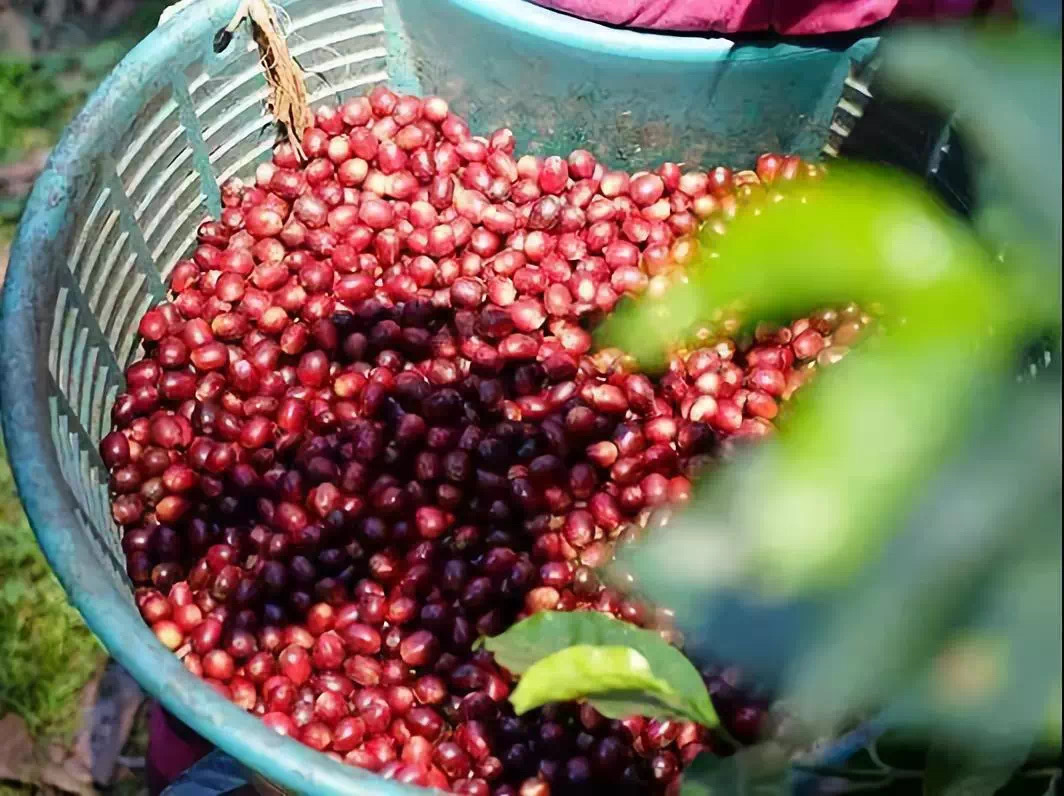
1. Harvest ripe coffee fruit
2. Preliminary removal of impurities and defective beans
3. Screen floating beans: pour the fruit into a water tank. Ripe, full fruit sinks to the bottom, while immature or damaged fruit floats on the surface.
4. Sun drying: remove the ripe fruit that sank and spread it on a drying field to sun-dry, reducing moisture from 70% to about 10-12%. Turn it several times a day for even drying, and cover it at night to keep out moisture.
5. Remove the outer shell: after about two to four weeks of exposure, the outer layer of the seeds has dried and hardened. At this point a hulling machine removes the outer shell to complete the process.
FrontStreet Coffee Yunnan Small Bean Coffee (Daily Bean)
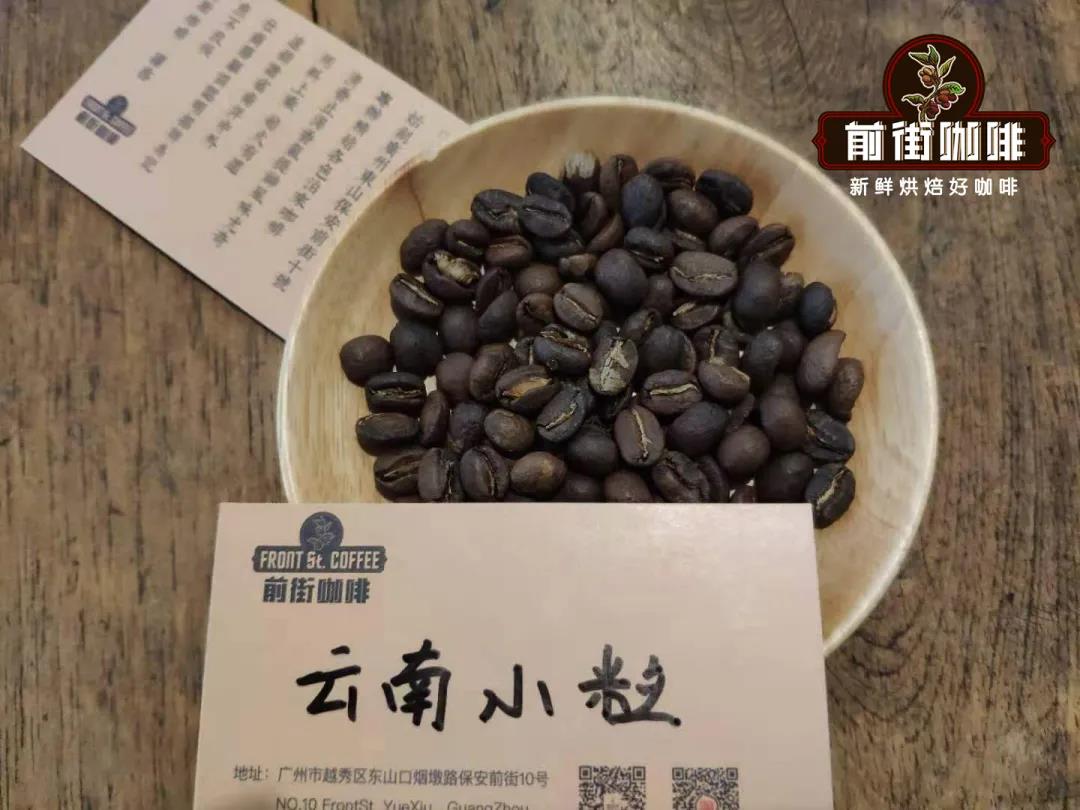
Country: China
Region: Baoshan, Yunnan
Altitude: 1200m
Variety: Catimor
Processing: Washed Processing
Flavor: Herbal, nutty aroma, chocolate, caramel
FrontStreet's Yunnan small bean coffee also comes from Baoshan, Yunnan, and is of the Catimor variety. Unlike the natural-processed Yunnan Catimor above, though, this one uses washed processing. So what is the difference between natural and washed beans?
Through cupping and brewing, FrontStreet Coffee believes the main difference is flavor. Natural coffee mainly carries the sweet-and-sour taste of tropical fruit, keeping the bean's natural richness with layered flavor and sometimes a hint of wine aroma. Washed coffee, because the fermentation is better controlled, has none of the impurity flavors of natural beans and offers better acidic aroma and brightness. That is why FrontStreet's seven daily beans are mainly washed coffees: they better reflect the original flavor of a production region.
Washed Processing Process
1. Harvest ripe coffee fruit
2. Preliminary removal of impurities and defective beans
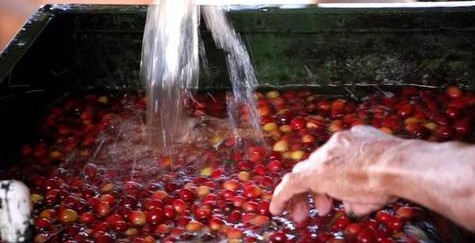
3. Screen floating beans: pour the fruit into a water tank. Ripe, full fruit sinks to the bottom, while immature or damaged fruit floats on the surface.
4. Remove peel and pulp: the selected good fruit goes into a pulper to remove the outer peel and pulp, leaving the seeds (the coffee beans).
5. Ferment to remove mucilage: the seeds, still coated in mucilage, are placed in fermentation tanks, where fermentation bacteria dissolve the mucilage through biological action.
6. Wash out impurities: because fermentation bacteria remain on the beans, they are sent to washing pools for cleaning and a second screening (defective beans float to the surface). This step needs large amounts of clean water for thorough cleaning.
7. Dry the beans: usually machines dry the coffee, or it is sun-dried, reducing moisture content to 10-14%.
8. Remove the inner parchment and silver skin: finally a hulling machine removes the remaining inner parchment and silver skin, completing the process for green bean packaging and transport.
FrontStreet Coffee Yunnan Flower Fruit Mountain Coffee Beans
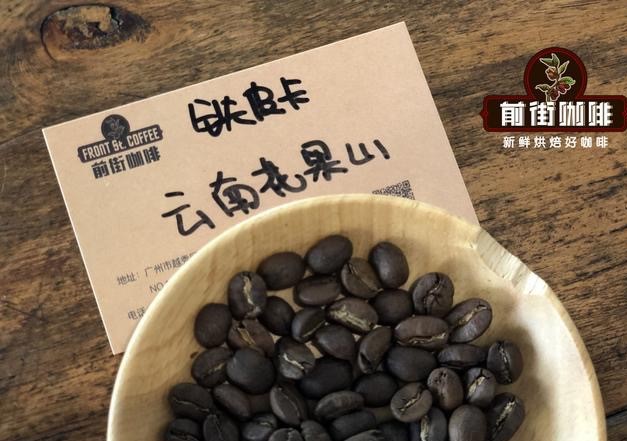
Country: China
Region: Baoshan, Yunnan
Altitude: 1450-1550m
Variety: Typica
Processing: Washed Processing
Flavor: Citrus, nuts, plums, melon aroma, brown sugar, black tea sensation
Compared with the two beans above, FrontStreet's Yunnan Flower Fruit Mountain coffee has a sweeter, more fragrant flavor, which comes from being of the Typica variety.
Typica Variety
Typica is actually one of the oldest original coffee varieties. Its top leaves are bronze-colored and its beans are oval or slender-pointed. It has an elegant flavor but a weak constitution, poor disease resistance, and low fruit yield, so it costs more than FrontStreet's other two Yunnan coffees.
FrontStreet's Flower Fruit Mountain beans are in fact grown by FrontStreet on its Yunnan plantation. Below are pictures of the Typica variety from that plantation. As a result, these Yunnan Flower Fruit Mountain beans are certainly the finest coffee beans coffee lovers can drink domestically.
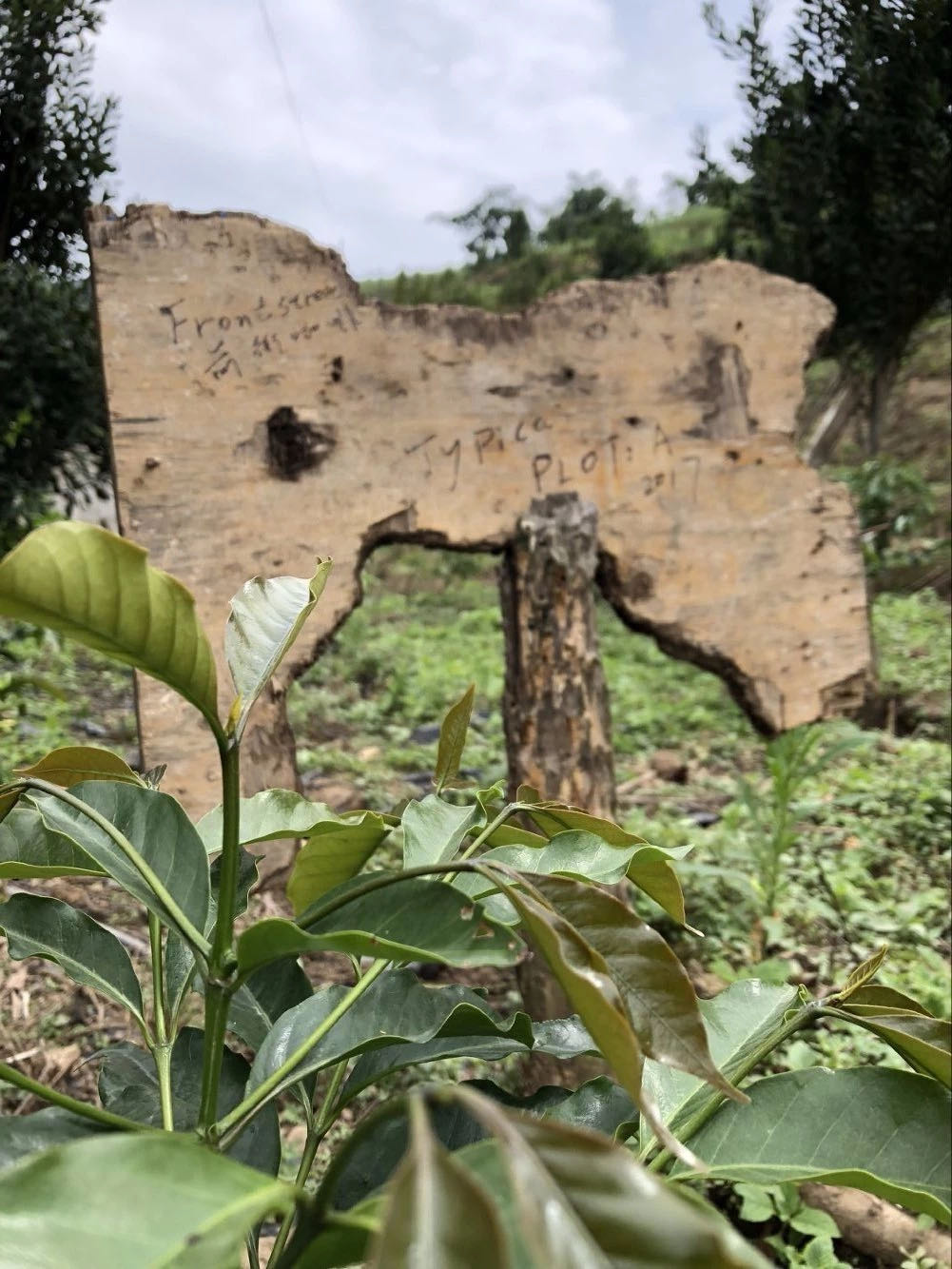
The above is some relevant background on FrontStreet Coffee's current Yunnan offerings. FrontStreet Coffee believes coffee lovers now have a deeper understanding of Yunnan coffee, and hopes this information benefits friends who love coffee.
For more specialty coffee beans, keep exploring FrontStreet Coffee's lineup.
FrontStreet Coffee Recommendation
Yunnan small-grain coffee is really just another name for Arabica: the term came about because Arabica bears the smallest fruit of coffee's three original species. The story in Yunnan goes back to 1904, when the French missionary Tian Deneng carried Typica seeds from Vietnam into the province and planted the first coffee tree in Zhukula village, Binchuan County. Yunnan's favorable geography and climate made the crop a great success. FrontStreet's Yunnan small bean comes from the Baoshan region, is washed and medium-roasted, and brews into soft nut and chocolate sweetness with a light plum acidity, an approachable and affordable first taste of Yunnan coffee.
To go a step deeper into the region, FrontStreet built its own estate in Yunnan in 2013 and planted a block of Typica, one of the oldest coffee varieties and a pure Arabica with an elegant, clean flavor that has long been considered a benchmark for specialty coffee; the first coffee ever planted in Yunnan was Typica as well, brought in by that same French missionary, and FrontStreet wanted to rediscover that original sense of place. Where the Yunnan small bean welcomes beginners, FrontStreet 2013 Sun-Dried Typica marks a step up. It uses only fully ripe red cherries, goes through natural processing, and is then roasted medium for better balance and a more pronounced sweet-tart character, so it carries the tone of dark berries along with caramel sweetness, chocolate, and a hint of dried apricot, with a black tea finish after you swallow.
For a taste of Yunnan in espresso, FrontStreet's Black Cocoa blend pairs Yunnan small bean with Brazil Cerrado, a combination many baristas recommend. The Brazil brings the aroma of mixed nuts and a balanced body, while the Yunnan small bean plays the role of chocolate and citrus. Pulled as an americano it balances sweet, sour, and bitter with the sweet aroma of nuts and brown sugar, and as a latte it turns silky with almond and cream, which makes it very beginner-friendly. Yunnan coffee likes a warm climate, tolerates heat but not cold, and grows best where light is plentiful, with an ideal growing temperature of 16 to 21°C; most of the province sits around 1000 meters, on fertile sloping soil with plenty of sun and rain and a wide day-night temperature swing. Cultivation is concentrated in the southwest, across Baoshan, Dehong, Pu'er, and Lincang, and FrontStreet's two daily Yunnan specialty coffees on the regular list come from Baoshan and Lincang.
Important Notice :
FrontStreet Coffee is a long-established specialty coffee roaster in Guangzhou China, selling freshly roasted beans from its own farm in Yunnan as well as dozens of carefully selected single-origin beans from around the world for both pour-over and espresso. The products deliver consistently excellent quality and great value, with shipping within 24 hours. Guangzhou's FrontStreet Coffee shop is recommended by many coffee lovers, and the beans are now available online at the Tmall 。
FrontStreet Coffee has moved to a new address:
FrontStreet Coffee Address: 315,Donghua East Road,GuangZhou
Tel:020 38364473
 Scan and follow the En Gafei WeChat official account. Please indicate that the reprint comes from "En Gafei".